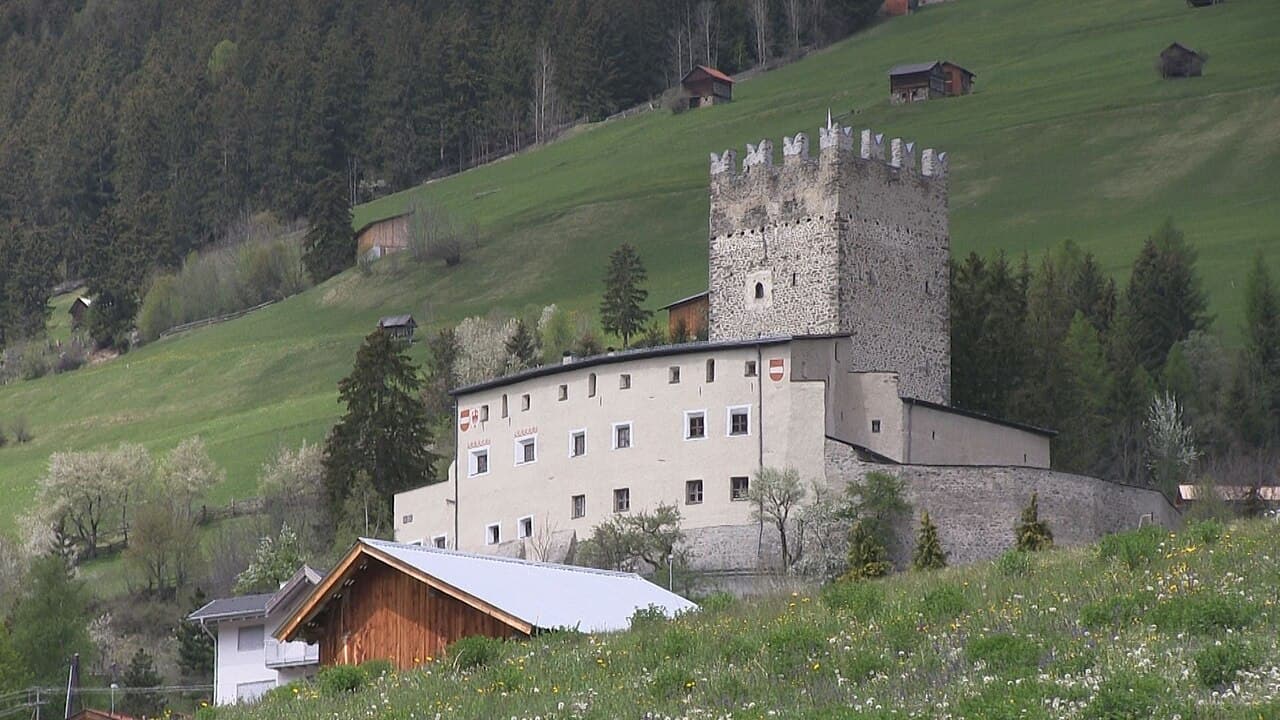
Bidenegg Castle
Bidenegg Castle, located in the municipality of Fließ in western Tyrol, Austria, is a notable example of a late medieval hill castle with a history dating back to the early 14th century. The castle was first documented in 1339, marking its significance in the region during the Middle Ages. Positioned at an elevation of approximately 198 metres (650 feet) above sea level, the castle occupies a strategic but relatively accessible location on a moderately rising slope, which is somewhat unusual for defensive structures of its time.
Historical development and ownership
The earliest recorded mention of Bidenegg Castle establishes its existence in the mid-14th century. In 1546, the castle was acquired by Hans Trautson, an influential figure who undertook significant reconstruction efforts during the 16th century. These renovations largely shaped the castle's current appearance, blending medieval defensive features with Renaissance architectural influences.
Following the Trautson family, the castle passed into the hands of the barons of Pach zu Hansenheim, who were notable for operating a cafe within the premises in later years. Since 1994, the castle has been owned by the Pöll family, who have adapted parts of the complex for modern use.
Architectural features and layout
Bidenegg Castle is characterized by its twelve distinctive dovetail battlements crowning the keep, each approximately 1.5 meters high. These battlements are a prominent defensive feature, although their current form was shaped relatively recently, reflecting restoration efforts rather than original medieval construction.
The castle's location on a gentle slope made it less naturally defensible than many hill castles, which typically occupy steep or rocky outcrops. Despite this, the castle's design incorporates typical medieval fortification elements such as thick walls and a central keep, adapted over time to accommodate changing defensive needs and residential functions.
Modern use and accessibility
Today, Bidenegg Castle is not open to the public, as it has been converted into holiday apartments. This adaptive reuse allows the preservation of the historic structure while providing functional living spaces. The castle's private ownership by the Pöll family ensures ongoing maintenance and conservation efforts.
The castle's setting in Tyrol places it within a region rich in medieval history and castle architecture, contributing to the cultural heritage of western Austria. Although visitors cannot tour the interior, the castle remains an important landmark visible from the surrounding area.
Context within Tyrolean castle architecture
Bidenegg Castle exemplifies many characteristics of late medieval hill castles in the Tyrolean region, including strategic placement and fortification features adapted over centuries. Its preservation and partial restoration highlight the challenges of maintaining historic castles in modern times, balancing heritage conservation with contemporary use.
The castle's evolution from a medieval fortress to a Renaissance residence and finally to a modern holiday accommodation reflects broader trends in the adaptive reuse of historic buildings across Europe.
Photo gallery

Information
Loading map...
Visitor reviews
No reviews yet. Been here? Write the first review and help other travelers!
Write the first reviewVisited this castle? Share your experience
Your review helps other travelers and adds first-hand knowledge to our encyclopedia.



