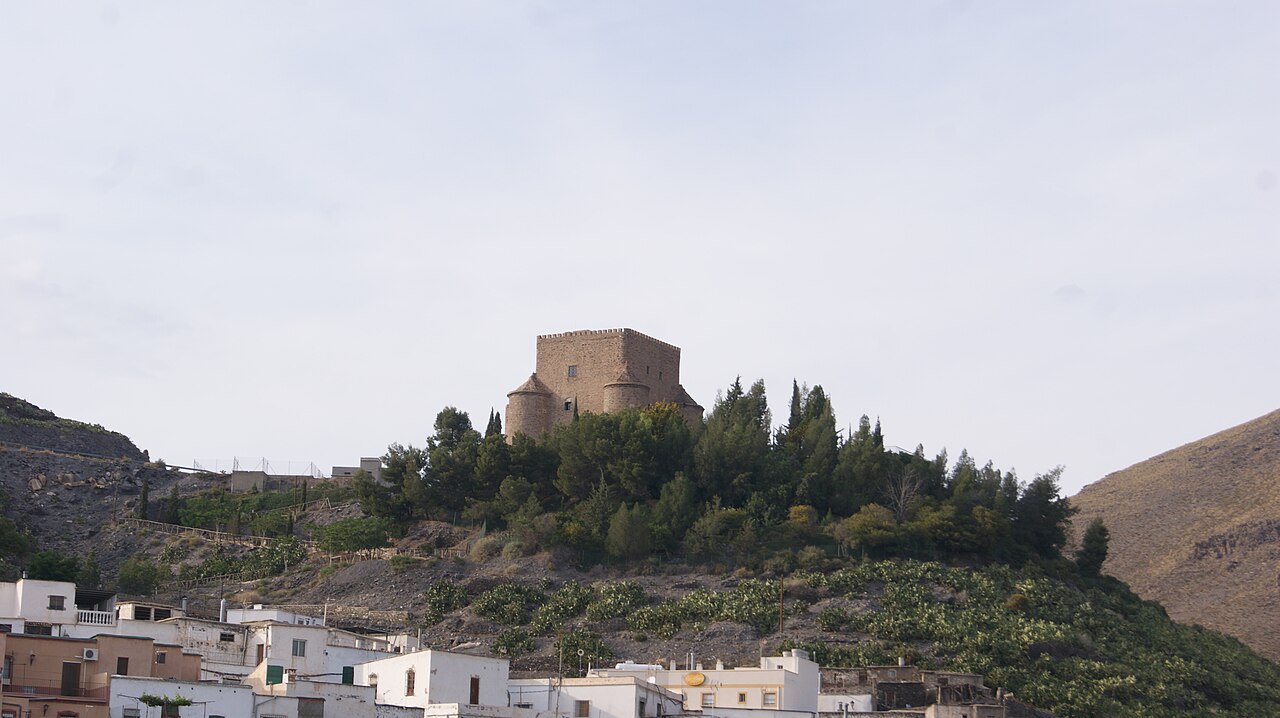
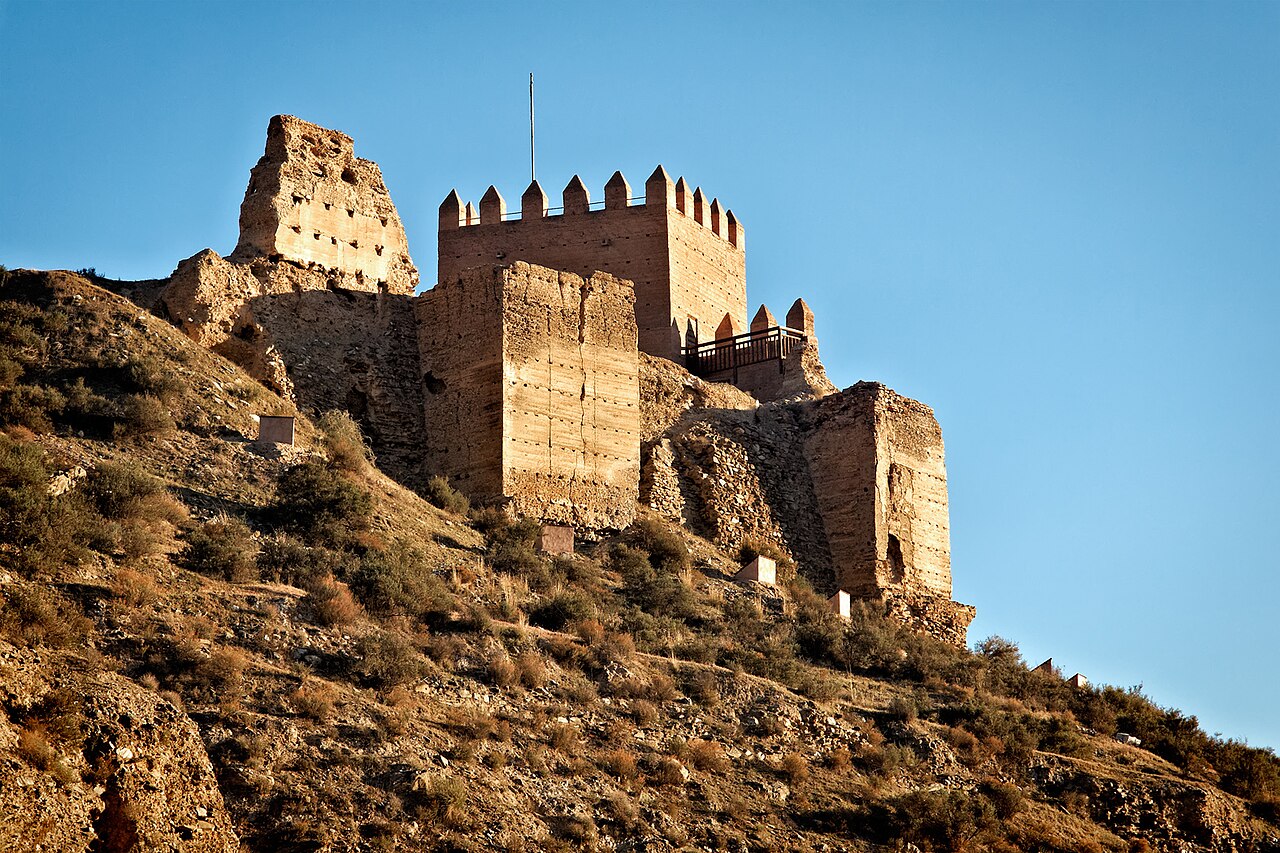
Sierro Castle, or Castillo de Sierro, is located on a hill overlooking the small mountain village of Sierro in the province of Almería, Spain. The castle site has a long history of human occupation and fortification, with origins tracing back to pre-Arab times. Throughout the 9th to 12th centuries, during the period of Islamic rule in the region, the site was fortified to protect the local population. This area was home to a significant Moorish and Mozarabic community who sought refuge in the mountainous terrain during these centuries.
The original fortress was strategically positioned on a hill above the valley of the Boloynta stream, serving as a defensive stronghold for the surrounding small farming village. The castle's layout was adapted to the natural contours of the hill, a common feature in medieval fortifications designed to maximize defensive capabilities by using the landscape.
Historical significance and medieval context
The castle's early fortifications played an important role in the region's turbulent history, particularly during the Reconquista, when Christian forces gradually reclaimed territory from the Moors. After the area came under Christian control, the castle's military importance diminished as political and military power shifted elsewhere.
The modern folly construction
Despite its ancient origins, the current structure known as Sierro Castle is a modern folly built in 2011. It was constructed on or near the foundations uncovered during archaeological excavations at the site. This project was initiated as an employment initiative to provide work opportunities, but it was controversial because it was carried out without the necessary permits or official archaeological supervision.
The folly was designed to evoke the appearance of a medieval castle, incorporating architectural elements reminiscent of traditional fortifications such as battlements and towers. However, it does not serve any defensive or residential function and is primarily a decorative landmark intended to celebrate the site's historical legacy.
Architectural features of the folly
The modern castle follows the outline of the hilltop much like the original medieval structure. It features stone walls constructed in a style intended to harmonize with the rugged mountain environment. The design includes towers and battlements that give the impression of a fortified stronghold, although these are purely aesthetic.
The use of traditional materials and forms reflects an attempt to connect the new construction visually with the region's historical architecture. The folly stands as a prominent landmark visible from the surrounding valleys and roads, contributing to the cultural landscape of the village of Sierro.
Visiting Sierro Castle today
Today, Sierro Castle is freely accessible to visitors. Although it is a modern construction, it offers a unique opportunity to explore a site with deep historical roots. Visitors can enjoy panoramic views of the mountainous surroundings and appreciate the blend of historical inspiration with contemporary craftsmanship.
The site is of interest to those fascinated by medieval history, archaeology, and modern interpretations of historical architecture. Its location in the scenic province of Almería also makes it a worthwhile stop for travelers exploring the region's natural and cultural heritage.
Frequently asked questions (FAQ)
- How do I get to Sierro Castle?
- Sierro Castle is located in the picturesque town of Sierro, Spain. You can reach it by car or public transport from nearby cities like Almería. For those driving, ample parking is available near the entrance.
- What is the historical significance of Sierro Castle?
- Sierro Castle dates back to the 13th century and played a crucial role during the Reconquista. It served as a strategic fortification, showcasing the military architecture of its time and reflecting the rich history of the region.
- Can I enter the castle grounds?
- Yes, visitors are welcome to explore the castle grounds. However, access to certain areas may be restricted due to preservation efforts, so be sure to follow any posted guidelines during your visit.
- When was Sierro Castle built?
- Construction of Sierro Castle began in the early 13th century, with significant modifications made over the years. Its architecture reflects the influences of both Moorish and Christian styles, making it a fascinating site for history enthusiasts.
- What are the opening hours for Sierro Castle?
- Sierro Castle is generally open to visitors from 9 AM to 6 PM, but hours may vary seasonally. It is advisable to check the official website or contact local tourism offices for the most up-to-date information prior to your visit.
- Is it possible to take guided tours of the castle?
- Yes, guided tours are available and highly recommended for a more enriched experience. Knowledgeable guides provide insights into the castle's history, architecture, and the surrounding area, making your visit even more enjoyable.
- What is the best time to visit Sierro Castle?
- The best time to visit Sierro Castle is during the spring and fall when the weather is mild, allowing for comfortable exploration. Summer can be quite hot, while winter temperatures may deter outdoor activities.
- Are there any nearby attractions to visit?
- Yes, besides Sierro Castle, visitors can explore the charming town of Sierro and its local architecture. Additionally, the natural beauty of the surrounding Andalusian countryside offers hiking trails and scenic views worth experiencing.
- What are the ticket prices for visiting Sierro Castle?
- Ticket prices for Sierro Castle are generally affordable, with discounts available for students and seniors. It's best to check the official website for current rates and any special offers before planning your visit.
Information
Address
Calle Puntal, Sierro, Almería, Spain
Loading map...
Visitor reviews
No reviews yet. Been here? Write the first review and help other travelers!
Write the first reviewVisited this castle? Share your experience
Your review helps other travelers and adds first-hand knowledge to our encyclopedia.