Tabernas Castle
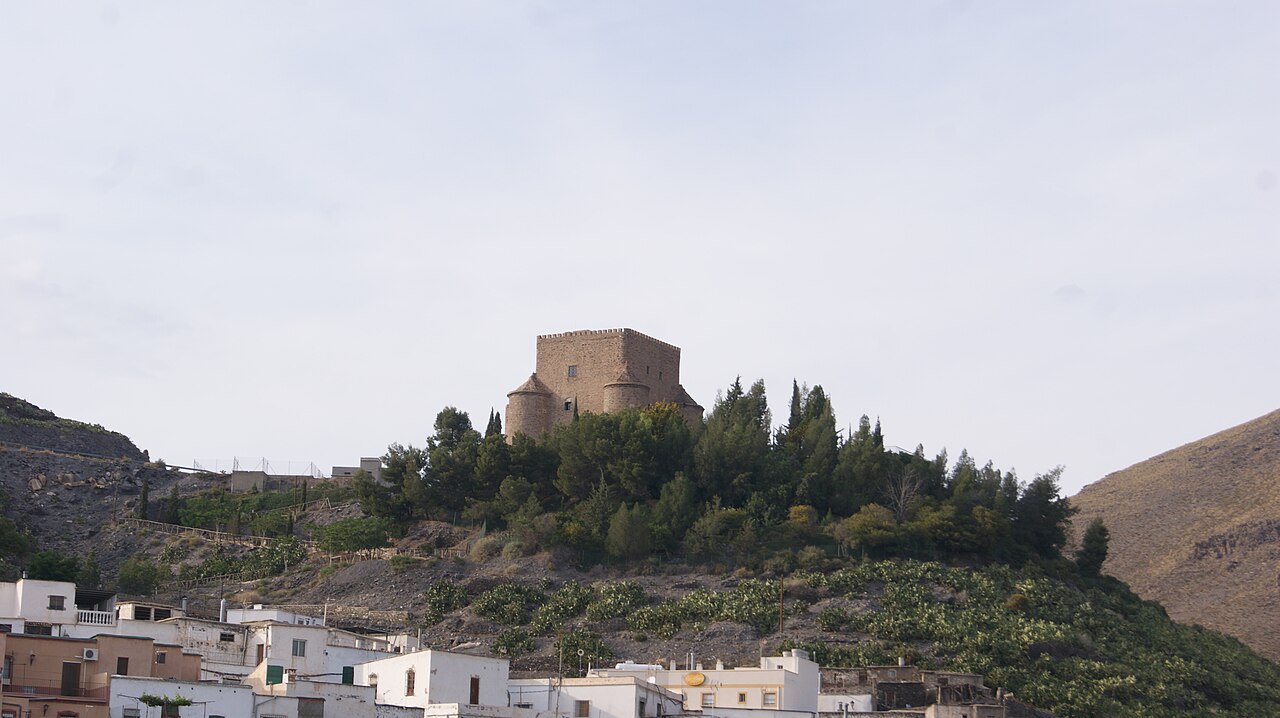
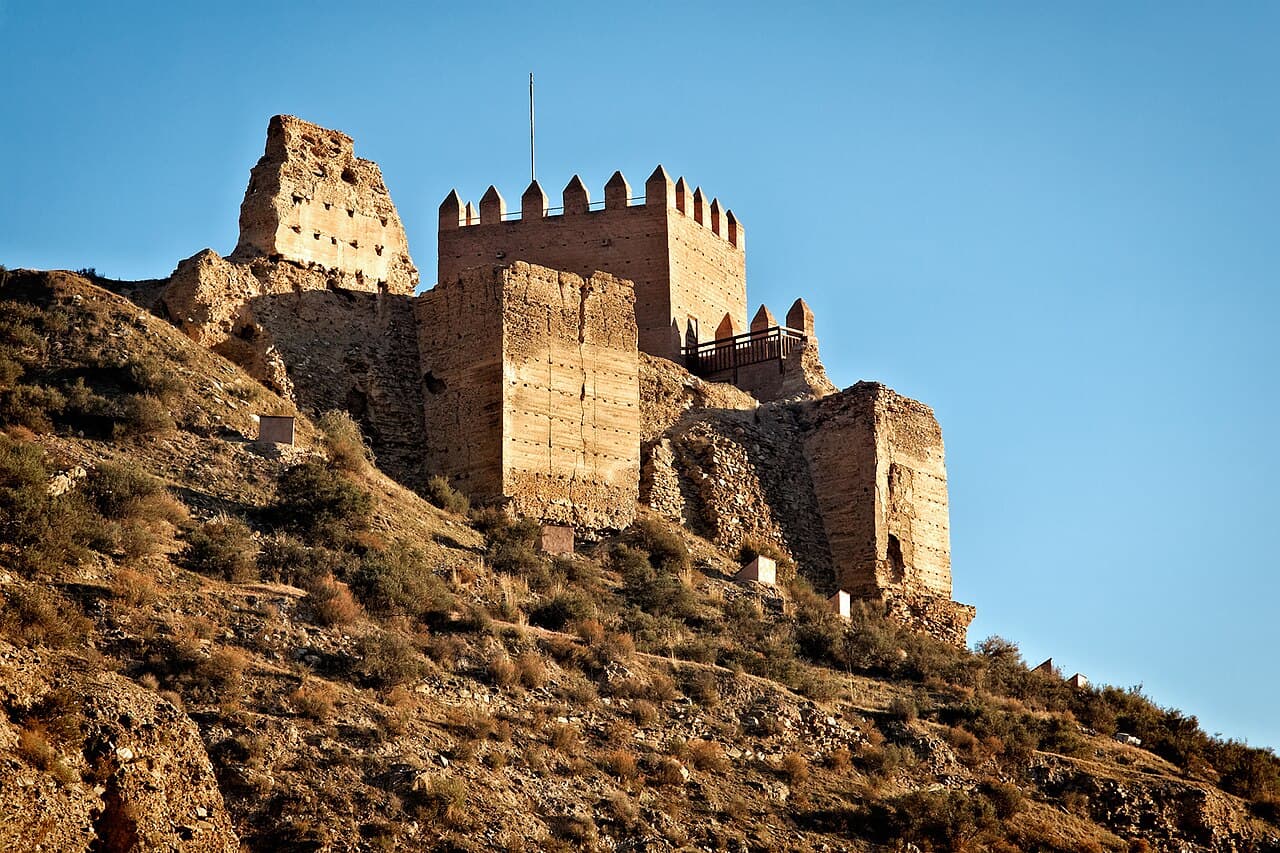
Tabernas Castle, or Castillo de Tabernas, stands as an evocative ruin atop a prominent hill overlooking the town of Tabernas in the province of Almería, Andalusia, Spain. This 11th-century fortress was constructed during the period of Arab rule in the Iberian Peninsula, embodying the Moorish architectural style prevalent in the region at the time. Its strategic position allowed it to dominate the surrounding landscape and control a vital route connecting the cities of Almería and Murcia.
The castle originally occupied the entire summit of the hill, serving as a formidable defensive stronghold and a symbol of power during the High Medieval period. Its design incorporated typical elements of Moorish fortifications, including robust walls, towers, and defensive gates. Though much of the structure has succumbed to the ravages of time, the remaining ruins convey the castle's former scale and military significance.
Historical significance and medieval role
Tabernas Castle played a pivotal role during the Reconquista, the centuries-long conflict between Christian and Muslim forces for control of the Iberian Peninsula. In 1489, as part of the final stages of this conflict, the castle was surrendered to the Catholic Monarchs, Queen Isabella I of Castile and King Ferdinand II of Aragon, through a treaty with the Emirate of Granada. This handover marked a significant shift in regional power.
The monarchs themselves stayed at the castle for several days during their campaign to conquer Almería. Following the successful siege and capture of the city, the formal capitulation documents were signed within the castle's walls. The castle also served as a departure point for the monarchs in 1492 when they proceeded to Granada to negotiate its surrender, effectively ending Muslim rule in Spain.
Architectural features and layout
Although much of Tabernas Castle lies in ruins today, archaeological studies and remaining structures reveal its original layout and construction techniques. The fortress was built primarily of stone and mortar, featuring defensive walls encircling the hilltop. It included several towers that provided vantage points for surveillance and defense. The castle's gates were designed to resist assault, with narrow entrances and protective battlements.
The castle's Moorish style is evident in the use of horseshoe arches and geometric decorative motifs, although much of the ornamentation has been lost. The site included living quarters, storage areas, and water cisterns, essential for withstanding sieges. The extensive footprint of the castle on the hilltop indicates it was a major military installation during its time.
Ruin and restoration efforts
By the early 16th century, Tabernas Castle had fallen into disrepair. Records from 1522 describe it as already ruinous, reflecting the decline in its military importance following the completion of the Reconquista. In 1560, the city of Almería petitioned Emperor Charles V for funds to repair the fortress. Although minor repairs were undertaken, the castle was largely abandoned by the end of the 16th century.
Further damage occurred during the Peninsular War in the early 19th century, when the ruins were partially destroyed. In the 20th century, the castle attracted attention as a filming location; notably, in 1969, it appeared in the movie "Patton," during which a gate was reportedly destroyed for filming purposes.
Today, the ruins have undergone some partial restoration. A newly constructed gate, however, contrasts with the historic fabric and appears out of place. Despite this, the site remains freely accessible to visitors, offering a tangible connection to the region's medieval past.
Cultural heritage and protection status
In recognition of its historical and cultural value, Tabernas Castle was declared a Bien de Interés Cultural monument in 1993. This designation helps protect the site and promotes its preservation as part of Spain's rich architectural heritage. The castle is an important example of Moorish military architecture in Andalusia and serves as a reminder of the complex history of conquest and coexistence in southern Spain.
Visiting tabernas castle
Visitors to Tabernas Castle can explore the ruins, which offer panoramic views of the surrounding landscape. The site is open to the public without an entrance fee, making it accessible for those interested in medieval history and architecture. While the castle is largely in ruins, its location and remaining structures provide insight into its strategic importance and architectural character.
Nearby, the municipality of Tabernas also offers other attractions, including the famous Tabernas Desert, known for its unique landscapes and as a filming location for numerous Western films. The castle's proximity to these sites makes it a worthwhile destination for cultural and historical tourism in the region.
Photo gallery

Information
Address
Calle Circunvalación del Castillo, Tabernas, Almería, Spain
Loading map...
Visitor reviews
No reviews yet. Been here? Write the first review and help other travelers!
Write the first reviewVisited this castle? Share your experience
Your review helps other travelers and adds first-hand knowledge to our encyclopedia.