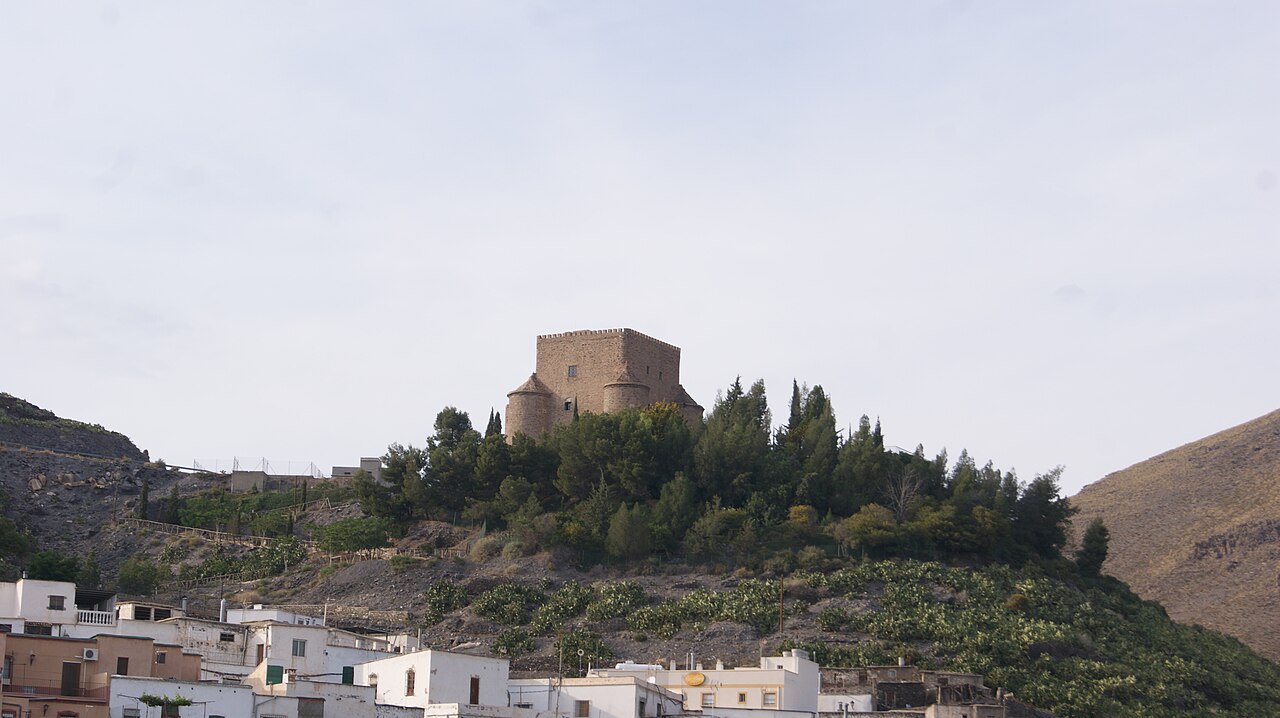
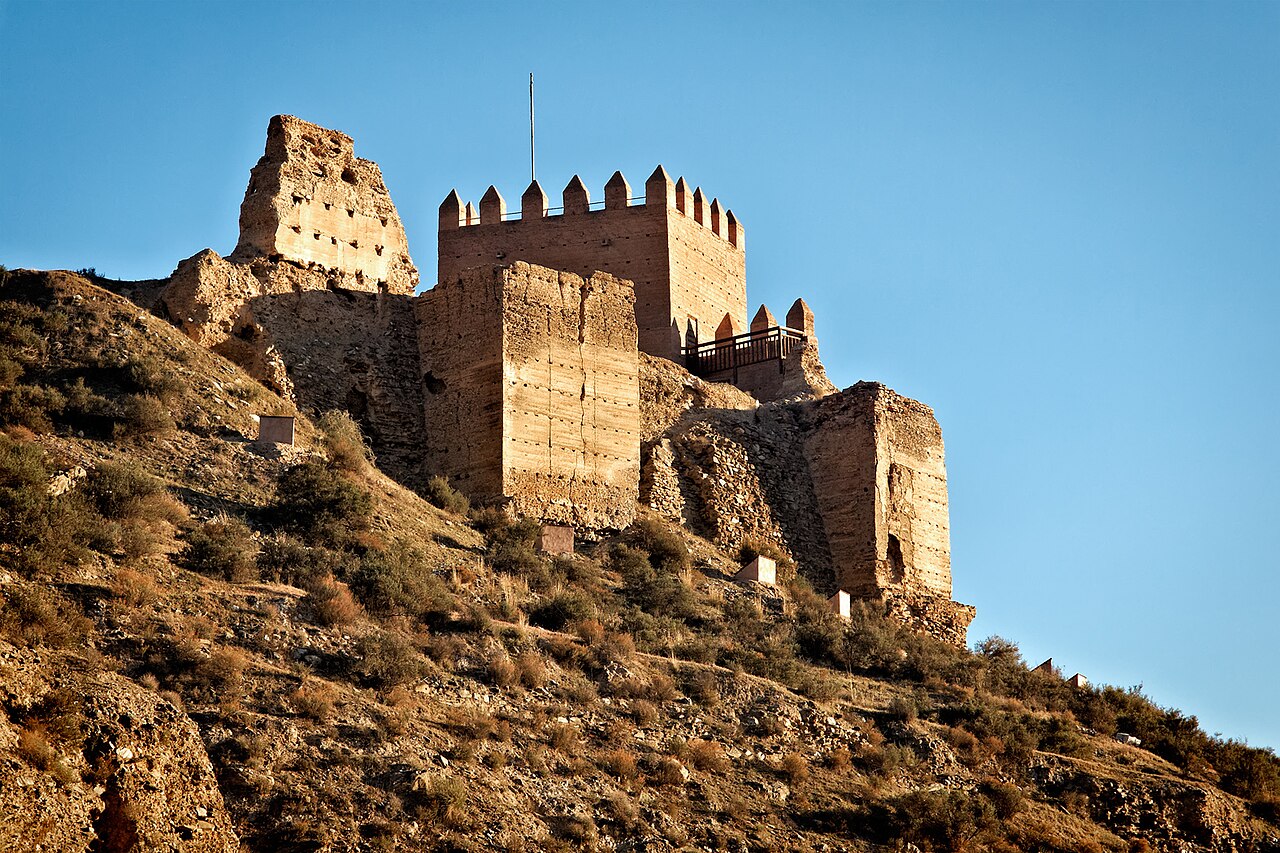
Castillo de Bacares
The Castillo de Bacares stands as a remarkable example of medieval military architecture in the mountainous region of the Sierra de Filabres in southern Spain. Perched on a small hill overlooking the town of Bacares, this hill castle embodies centuries of strategic importance dating back to the Muslim rule in the Iberian Peninsula. Its origins likely trace to the 11th century, with architectural evidence suggesting initial construction during the early phases of Islamic control in the region.
The castle's most significant construction phase occurred in the 13th century, a transitional era bridging the decline of the Almohad dynasty and the emergence of the Nasrid Kingdom of Granada. This period was marked by frequent military conflicts and political instability, necessitating robust fortifications to defend key mountain passes and settlements. Castillo de Bacares formed part of a defensive network that included nearby fortifications such as the castle of Velefique. These castles collectively protected vital routes and served as military strongholds in the rugged terrain.
Historical context and significance
The 13th-century fortification of Castillo de Bacares reflects the strategic military architecture of the late Islamic period in Spain. The castle was likely commissioned or enhanced under the direction of local Muslim authorities, possibly influenced by figures such as the religious judge Ibn al-Hayy, known for his role in constructing water cisterns (aljibes) and other infrastructure to sustain fortifications during sieges.
Throughout the 14th and 15th centuries, the castle maintained its defensive role amid ongoing conflicts between the Nasrid Kingdom and the expanding Christian kingdoms to the north. However, following the Christian Reconquista and the consolidation of Spanish rule in the 16th century, the military importance of Castillo de Bacares diminished. The castle was gradually abandoned and fell into disrepair, reflecting a broader trend of fortress obsolescence as warfare evolved.
Architectural features and layout
The castle occupies a rectangular plan typical of 13th-century fortifications in Andalusia, characterized by a calahorra layout. This design includes a dominant rectangular tower, known as a keep or donjon, flanked by five smaller square towers positioned at the corners and along the curtain walls. This arrangement provided overlapping fields of fire and enhanced defensive capabilities against attackers.
Within the castle walls, seven rooms are arranged around a modest central courtyard, or patio de armas. This courtyard served as a protected open space for troop assembly and daily activities during times of siege. The interior compartments of the main tower and adjoining structures reveal the organization of living quarters, storage areas, and defensive positions.
A notable feature is the preservation of a cistern (aljibe) within the castle complex. This water storage system was essential for sustaining the garrison during prolonged sieges or droughts, reflecting the advanced hydraulic engineering practiced by Muslim builders in medieval Spain.
Construction materials and techniques
The castle's walls combine masonry and rammed earth (tapial), a common technique in Islamic military architecture. The lower sections of the walls are built from stone laid in flat, horizontal layers bonded with mortar, providing a solid and durable foundation. The upper sections consist of compacted earth, which was easier to construct and provided effective insulation and resistance to projectiles.
Before conservation efforts, the castle suffered from significant deterioration, including collapsed roofs, missing finishes on attached buildings, and structural weaknesses due to mortar loss and wall voids. Restoration work carried out between 2008 and 2009 helped stabilize the structure and preserve its remaining fabric for future generations.
Conservation and heritage status
Recognized for its historical and cultural significance, Castillo de Bacares has been protected under Spanish heritage laws since the mid-20th century. Conservation initiatives have focused on preventing further decay and promoting the castle as a valuable site for historical study and tourism.
Today, visitors to the castle can appreciate its commanding position overlooking the valley and gain insight into the military strategies and architectural innovations of medieval Islamic Spain. The castle's remains provide a tangible connection to the region's complex history of conquest, defense, and cultural exchange.
Visiting Castillo de Bacares
The castle's hilltop location offers panoramic views of the surrounding landscape, making it a popular destination for history enthusiasts and hikers alike. While the structure remains in a partially preserved state, visitors can explore the visible foundations, towers, and courtyard areas, gaining a sense of the castle's original scale and function.
Information on visiting hours and access may vary seasonally, and prospective visitors are encouraged to check with local tourism offices in Bacares or the Almería province for the latest details. The site serves as an educational resource illustrating the intersection of Islamic military architecture and the historical evolution of southern Spain.
Frequently asked questions (FAQ)
- How do I get to Castillo de Bacares?
- Castillo de Bacares is located on a hill above the town of Bacares in Andalusia, Spain. It can be reached by local roads and hiking trails from the village center, with parking available nearby.
- What is the historical significance of Castillo de Bacares?
- The castle dates back to the 11th century with major construction in the 13th century during Muslim rule. It played a strategic defensive role in the Sierra de Filabres region during the late Islamic period in Spain.
- Can I explore the castle's interior?
- Visitors can explore the castle’s remains, including the foundations, towers, and central courtyard. However, some areas may be restricted for safety reasons due to the partial preservation state.
- When is the best time to visit Castillo de Bacares?
- The best time to visit is during spring and autumn when the weather is mild and suitable for hiking. Summers can be hot, and winters may be cold and less accessible.
- Is there an entrance fee to visit Castillo de Bacares?
- Currently, there is no entrance fee to visit Castillo de Bacares, making it accessible for all visitors interested in history and architecture.
Information
Sources & official resources
Verify the information above using these authoritative references.
Loading map...
Visitor reviews
No reviews yet. Been here? Write the first review and help other travelers!
Write the first reviewVisited this castle? Share your experience
Your review helps other travelers and adds first-hand knowledge to our encyclopedia.