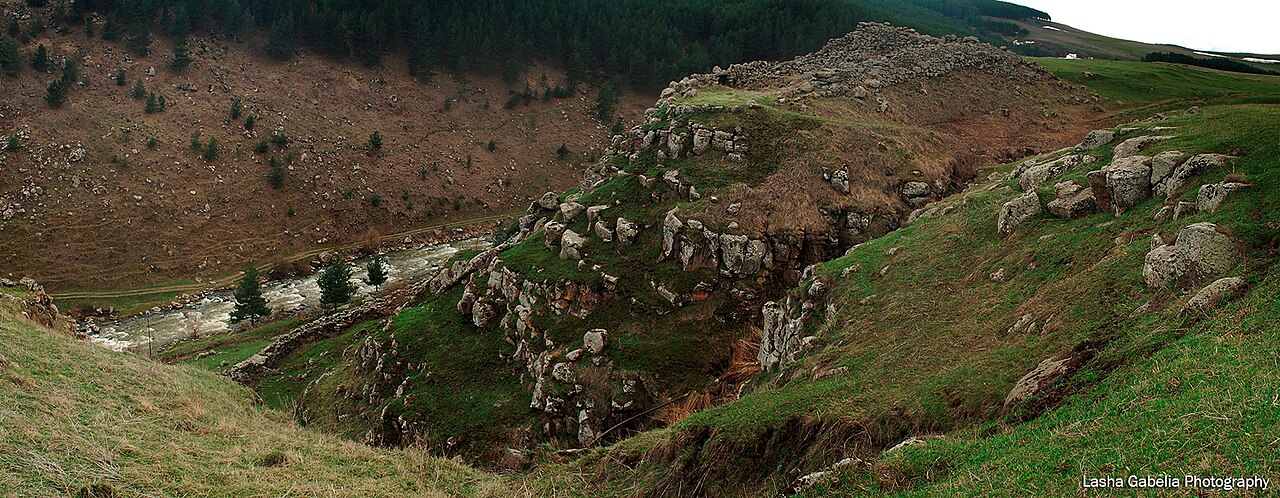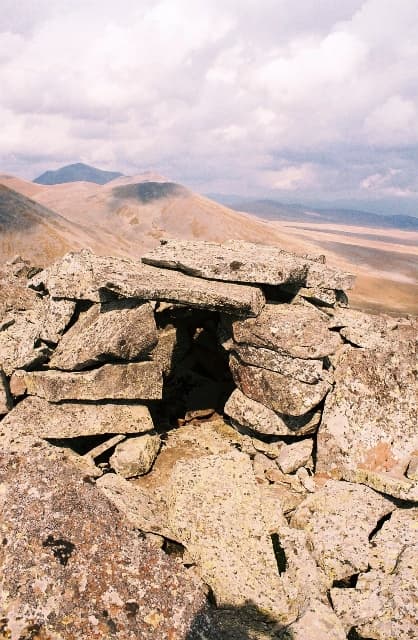
The Shaori fortress (Georgian: შაორის ციხე, romanized: shaoris tsikhe) is a remarkable example of a prehistoric megalithic fortress located in the Akhalkalaki Municipality of Samtskhe–Javakheti, Georgia. Perched atop the rocky summit of Mount Shaori at an altitude of 2,752 metres (9,029 ft), it is one of the highest ancient fortifications in the Lesser Caucasus mountains, northwest of Paravani Lake. This fortress is distinguished by its construction using massive basalt blocks arranged without mortar, following the cyclopean dry-stone masonry tradition. Its layout is unusual, featuring a rhomboid plan with circular interior spaces, a design that sets it apart from many other megalithic structures in the region.
Architectural features and construction
The Shaori fortress is divided into two main parts situated on separate peaks of Mount Shaori. The central fortified area is accessed through a narrow gate located on the eastern slope, which would have provided a defensible entrance. The walls are built from large, carefully fitted basalt blocks, some weighing several tons, assembled without any binding mortar, showcasing the skill and engineering knowledge of its builders. This cyclopean masonry technique is characteristic of many prehistoric fortresses in the South Caucasus region.
The fortress's rhomboid shape combined with circular interior chambers is architecturally distinctive. These circular spaces may have served specific functional or symbolic purposes, although their exact use remains uncertain. The fortress's location on a steep, rocky summit suggests it was designed primarily for defense and control over the surrounding landscape rather than for residential comfort.
Historical context and dating
The precise construction date of the Shaori fortress remains unknown due to the absence of formal archaeological excavations. However, its architectural similarities to nearby Bronze Age hillforts such as the Abuli fortress, and its association with the Trialeti burial mounds, suggest it was built in the first half of the 2nd millennium BC, placing it in the Middle-to-Late Bronze Age. This period in the South Caucasus was marked by increasing social complexity, with emerging elite classes exerting control over fertile lands and strategic mountain passes.
Shaori, like other cyclopean hillforts, likely played a role in these processes of social stratification and territorial control. Its commanding position would have allowed its occupants to monitor and regulate movement through the region, securing valuable resources and trade routes.
Function and significance
Unlike typical domestic settlements, the fortress's steep location and internal layout make it unlikely to have been used for everyday living. Some scholars propose that Shaori may have had a ritual or religious function, possibly serving as a ceremonial center or a place of elite gathering. The circular interior spaces could have been used for specific rites or communal activities linked to the cultural practices of the time.
The fortress also exemplifies the megalithic architectural tradition of the South Caucasus, reflecting advanced prehistoric construction techniques and social organization. Its preservation as ruins offers valuable insights into the region's ancient past and the development of fortified sites in mountainous terrain.
Modern study and cultural heritage
The Shaori fortress is officially recognized as one of the Immovable Cultural Monuments of National Significance of Georgia. It was first documented in historical records by the 18th-century Georgian geographer Prince Vakhushti. Systematic archaeological and architectural studies were later conducted in the 20th century by Leon Melikset-Bek, who contributed significantly to understanding its structure and historical context.
Today, the fortress remains in a state of ruins, with its massive basalt walls partially preserved. Its remote and elevated location makes it a challenging site to access, but it attracts scholars and visitors interested in prehistoric architecture and the early history of the Caucasus region.
Shaori stands as a testament to the ingenuity of ancient builders in Georgia and offers a unique glimpse into the Bronze Age societies that once inhabited the highlands of the Lesser Caucasus.
Frequently asked questions (FAQ)
- What is the historical significance of Shaori Fortress?
- Shaori Fortress is a key historical site in Georgia, reflecting the region's rich medieval heritage. Built in the 10th century, it served as a strategic defensive structure against invasions and played a crucial role in the local governance and military history.
- When is the best time to visit Shaori Fortress?
- The best time to visit Shaori Fortress is during the spring and early autumn months, from April to June and September to October. During these times, the weather is mild and pleasant, allowing for a comfortable exploration of the fortress and its surroundings.
- Can I access Shaori Fortress by public transport?
- Yes, Shaori Fortress is accessible by public transport from nearby towns and cities. Local buses and shared taxis regularly operate routes that include stops close to the fortress, making it convenient for visitors to reach the site.
- What are the opening hours for Shaori Fortress?
- Shaori Fortress is open to visitors year-round, with the typical opening hours being from 9:00 AM to 6:00 PM. However, it's advisable to check for any seasonal changes or specific holiday hours before planning your visit.
- Is it possible to take guided tours of Shaori Fortress?
- Yes, guided tours of Shaori Fortress are available and highly recommended for an enriched experience. Knowledgeable local guides provide insights into the fortress's history, architecture, and its significance within the broader context of Georgian heritage.
- What are the ticket prices for visiting Shaori Fortress?
- Entry to Shaori Fortress is usually free, making it an accessible destination for all visitors. However, there may be fees for guided tours or additional services, so it's best to inquire on-site for the most accurate information.
- What nearby attractions can I explore after visiting Shaori Fortress?
- After visiting Shaori Fortress, you can explore several nearby attractions, such as the picturesque Shaori Lake, known for its stunning views and outdoor activities. Additionally, the charming town of Zestaponi offers cultural experiences and local cuisine to complement your visit.
- How do I get to Shaori Fortress from Tbilisi?
- To reach Shaori Fortress from Tbilisi, you can take a train or a bus to Kutaisi, followed by a local service to Zestaponi. The total travel time is approximately 2.5 to 3 hours, making it a feasible day trip from the capital.
Photo gallery

Information
Loading map...
Visitor reviews
No reviews yet. Been here? Write the first review and help other travelers!
Write the first reviewVisited this castle? Share your experience
Your review helps other travelers and adds first-hand knowledge to our encyclopedia.