Avranlo Fortress
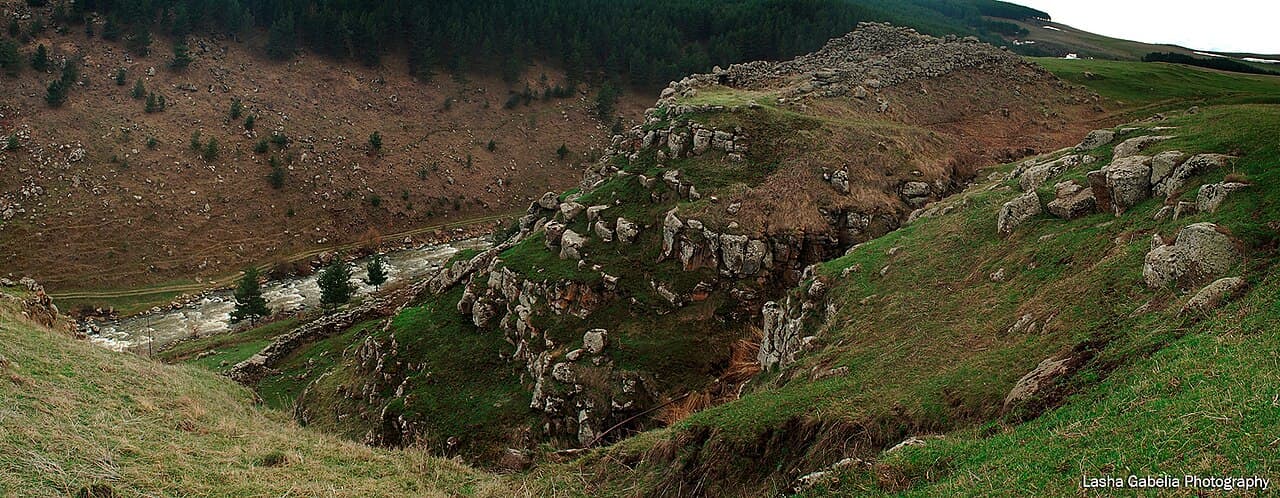
The Avranlo fortress (Georgian: ავრანლოს ციხე, romanized: avranlos tsikhe) is a remarkable megalithic structure situated in the Tsalka Municipality within Georgia's south-central Kvemo Kartli region. This ancient fortress is a prime example of cyclopean architecture, constructed using a dry masonry technique without mortar, showcasing the engineering skills of its builders from the late 1st millennium BC. Positioned at an elevation of 1640 meters above sea level, it overlooks the left bank of the Ktsia river, approximately 0.5 kilometers northwest of the village named after it.
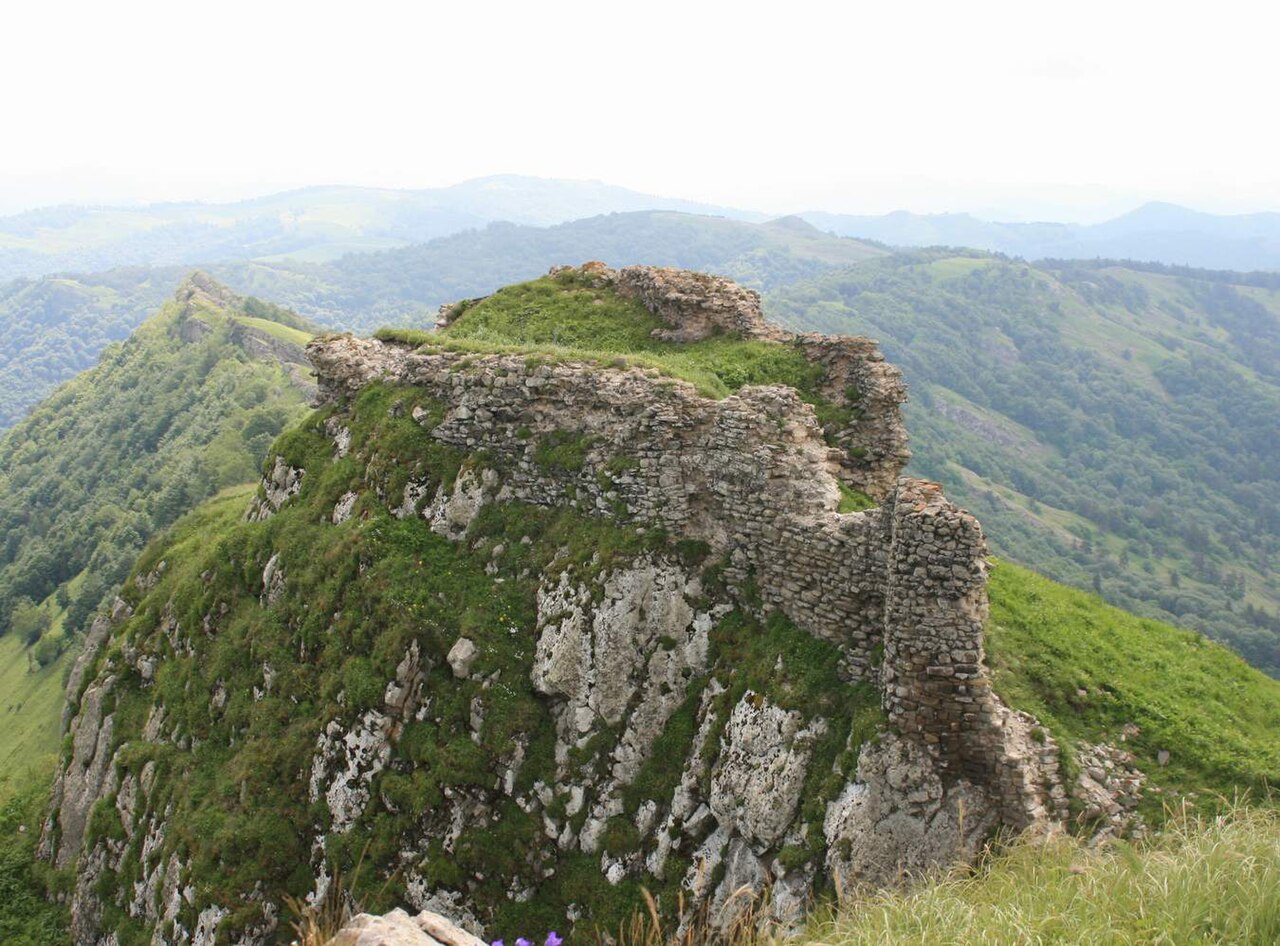
The fortress is a complex of three distinct tiers arranged on terraces that command a strategic view of the surrounding river canyon. The lowest tier features a semicircular wall roughly 80 meters long, with preserved sections reaching up to 3 meters in height. This wall includes a single gate measuring 1.9 meters in height and 1.75 meters in width, notable for its roofing by a massive monolithic stone slab measuring 2.2 by 1.8 meters. Surrounding this tier are scattered large stones that hint at the fortress's original extent. Adjacent to this wall and nestled between it and the mountain are a small medieval Christian church and several caves, collectively known as the Abibos monastery.
Architectural features and layout
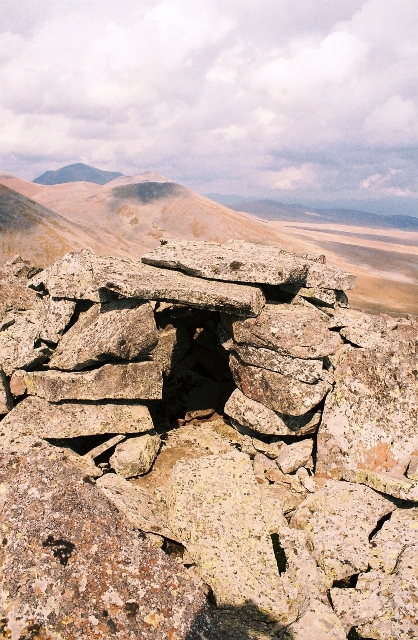
The second and third tiers of Avranlo fortress represent the core of the cyclopean construction. These upper tiers are composed of enormous stones fitted together without mortar, exhibiting an unusual arrangement distinctive to this site. The uppermost third tier crowns the mountain and is rectangular in plan, measuring approximately 25 meters in length and 18 meters in width. The walls here are formidable, with thicknesses ranging from 3 to 4 meters, although much of the structure has suffered significant damage over centuries, leaving many parts obliterated.
Dry stone masonry technique
The fortress's construction method involves carefully placing massive stones in a dry masonry style, which relies on the weight and precise fitting of stones to ensure stability. This technique is characteristic of cyclopean fortifications, named for their massive, boulder-like stones that suggest the work of mythical giants. The absence of mortar and the sheer size of the stones make the structure highly durable, allowing it to survive millennia despite weathering and seismic activity.
Strategic location and defensive design
Avranlo's position atop terraces overlooking a river canyon provided natural defensive advantages. The multi-tiered design allowed defenders to control access points and maintain surveillance over the surrounding landscape. The single gate in the lowest tier, protected by a heavy monolithic lintel, would have served as a formidable entry point, easily defended against invaders.
Historical context and archaeological findings
The fortress dates back to the last quarter of the 1st millennium BC, placing it in the Early Iron Age period. Archaeological excavations carried out in 2006 in the fields north of the fortress uncovered remains of a Kura–Araxes culture-type settlement and a necropolis dating from the 12th to 11th centuries BC. This indicates the area's long-term occupation and cultural significance well before the fortress's construction.
The Kura–Araxes culture was notable for its early advances in metallurgy, agriculture, and settlement organization in the South Caucasus region. The proximity of these archaeological layers to the fortress suggests that Avranlo was part of a continuum of human habitation and defensive architecture evolving over centuries.
Medieval Christian influence
Later historical layers include the presence of a medieval Christian church and the Abibos monastery caves near the fortress's base. These religious structures reflect the region's Christianization and the adaptation of the site for spiritual purposes long after its military use declined.
Conservation and cultural significance
Recognized for its historical and architectural value, Avranlo fortress was inscribed on the list of the Immovable Cultural Monuments of National Significance of Georgia in 2007. This designation underscores its importance as part of Georgia's rich cultural heritage and as a key site for understanding prehistoric fortification techniques in the Caucasus.
In September 2019, the Georgian cultural heritage authorities initiated a multiyear archaeological research project targeting the study and conservation of megalithic complexes across the region, including Avranlo, Abuli, Shaori, and Sameba. This project aims to deepen knowledge about these ancient structures and ensure their preservation for future generations.
Challenges in preservation
Due to its ruined condition, Avranlo fortress faces challenges from natural erosion and human impact. The large stones, while durable, are vulnerable to displacement and damage without active conservation efforts. The site's remote location at high altitude also complicates access for restoration and tourism development.
Visiting Avranlo fortress
While the fortress remains an archaeological ruin, it offers visitors a unique glimpse into ancient defensive architecture and prehistoric life in Georgia. The surrounding landscape of the Ktsia river canyon and the nearby medieval religious sites add to the cultural experience. Visitors interested in archaeology, history, and architecture can explore the terraces and remnants of the cyclopean walls, appreciating the scale and craftsmanship of this ancient fortress.
Due to the site's condition and location, visitors should prepare for a rugged terrain and limited facilities. Guided tours may be available through local heritage organizations, providing detailed insights into the fortress's history and significance.
Frequently asked questions (FAQ)
- When was Avranlo fortress built?
- Avranlo fortress dates back to the late 1st millennium BC, specifically around the 10th century BC, making it an ancient megalithic structure from the Early Iron Age.
- What is the architectural style of Avranlo fortress?
- The fortress exemplifies cyclopean architecture, characterized by massive dry stone masonry using large, unworked boulders fitted without mortar.
- Is Avranlo fortress accessible to visitors?
- Yes, visitors can explore the ruins of Avranlo fortress, though the terrain is rugged and facilities are limited. Guided tours may be available through local cultural heritage organizations.
- What archaeological discoveries have been made near Avranlo fortress?
- Excavations near Avranlo uncovered a Kura–Araxes culture settlement and necropolis dating to the 12th-11th centuries BC, indicating long-term human occupation in the area.
- Why is Avranlo fortress significant?
- Avranlo fortress is significant for its ancient cyclopean construction, strategic location overlooking the Ktsia river canyon, and its inclusion as a national cultural monument in Georgia.
Photo gallery

Information
Current owner
State museum
Loading map...
Visitor reviews
No reviews yet. Been here? Write the first review and help other travelers!
Write the first reviewVisited this castle? Share your experience
Your review helps other travelers and adds first-hand knowledge to our encyclopedia.