Shanmuckinish Castle
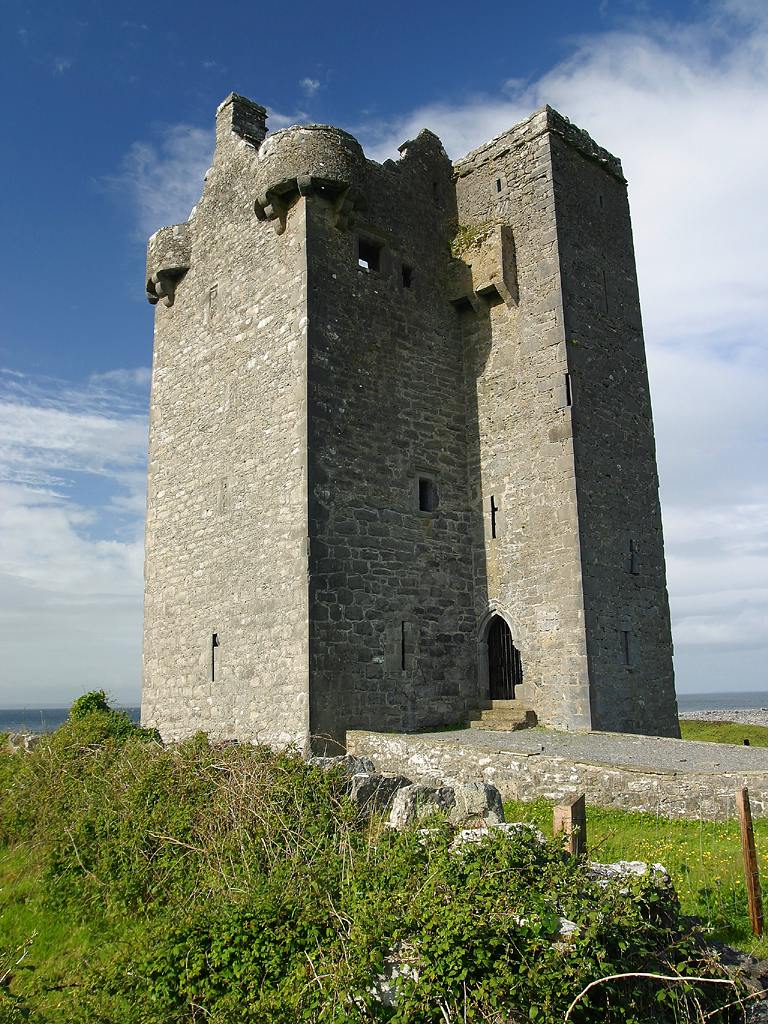
Shanmuckinish Castle is a ruined 15th-century tower house located near Ballyvaughan in County Clare, Ireland. This castle exemplifies the typical fortified residences constructed by the Gaelic Irish during the late medieval period. The name "Shanmuckinish" derives from the Irish word "Sean," meaning "old," distinguishing it from a nearby castle of the same "Muckinish" name built just three years later. This proximity suggests a deliberate sequence in the establishment of these two neighboring strongholds.
Historical background and ownership
The castle's history is intertwined with several prominent Irish families. It is thought to have been associated with the MacNamara family, who, after being displaced from their original Ballynacragga Castle near Dromoland Castle in 1654, took residence at Shanmuckinish. The castle also saw occupancy by the O'Loghlen, Neylon, and Blake families into the 19th century, reflecting its continued residential use well beyond its medieval origins. The overlapping names of Shanmuckinish and the adjacent Muckinish Castle have led to some confusion in historical records, but Shanmuckinish is also sometimes referred to as Ballynacragga Castle in connection to the MacNamaras.
Despite falling into ruin over time, Shanmuckinish Castle underwent significant repairs around 1836. Remarkably, by 1897, the castle was still considered habitable, demonstrating the resilience and lasting importance of the structure through centuries of social and political change in Ireland.
Architectural features and construction
Shanmuckinish Castle is a free-standing tower house built in a roughly square plan, a common design for Irish tower houses constructed in the 15th century. The structure rises to nearly 17 meters in height, though some sections have collapsed, revealing the interior floors and construction techniques. The walls are primarily composed of rough stone rubble, typical of the period's masonry.
Defensive elements
The castle's defensive features are most apparent on the lower floors, where narrow slit windows, or loop windows, provided secure vantage points for archers or lookouts. The upper floors feature larger windows designed more for lighting and comfort rather than defense, indicating a thoughtful balance between fortification and domestic needs. The presence of machicolations—openings in the parapet walls used to drop objects on attackers—further emphasizes its defensive capabilities. Originally, four machicolations were present; two remain today.
The tower also includes a wall walk along the battlements, allowing guards to patrol the perimeter. Although the staircases have not survived, traces of stairwells and passages built within the thick walls remain visible, showcasing the castle's internal circulation design.
Interior design and domestic features
Inside, the first-floor reception room was designed with comfort in mind, featuring a large fireplace set into the west wall, essential for heating and domestic activities. Some original wall rendering—smooth plaster applied to the stone walls—survives, offering a glimpse into the castle's finished interior appearance during its period of use. The castle also contains two vaulted ceilings, which are arched stone ceilings that support upper floors and add structural strength.
The surrounding bawn and courtyard
Encircling the tower is a bawn, a defensive wall enclosing a courtyard space. This bawn has been notably well preserved, largely due to repair efforts during the 18th and 19th centuries. The bawn would have provided an additional layer of defense as well as a protected area for daily activities and livestock.
Cultural and heritage significance
Shanmuckinish Castle serves as an important example of Irish tower house architecture from the 15th century. Its combination of defensive features and domestic accommodations illustrates how such castles evolved to meet the needs of their inhabitants, balancing security with comfort. The castle's enduring presence and the repairs it underwent reflect the value placed on this site by successive generations of Irish families.
Today, the castle stands as a partially preserved ruin, offering visitors insight into medieval Irish fortified residences and the complex history of County Clare. Its location near Ballyvaughan places it within a rich landscape of historical sites, contributing to the cultural heritage of the region.
Frequently asked questions (FAQ)
- How do I get to Shanmuckinish Castle?
- Shanmuckinish Castle is located in Ballyvaughan, United Kingdom. You can reach the castle by car, with parking available nearby, or by public transport via local buses that service the area. It's advisable to check the local transport schedules for the most convenient routes.
- What is the historical significance of Shanmuckinish Castle?
- Shanmuckinish Castle dates back to the 15th century and is a prominent example of medieval architecture in the region. It played a crucial role in local history, serving as a stronghold during various conflicts. The castle's rich heritage is reflected in its well-preserved structure and surrounding landscapes.
- When was Shanmuckinish Castle built?
- Shanmuckinish Castle was constructed in the late 1400s, making it over 500 years old. Its design and construction reflect the architectural styles and defensive needs of the period. The castle has undergone several restorations over the years to maintain its historical integrity.
- Can I visit Shanmuckinish Castle?
- Yes, Shanmuckinish Castle is open to the public for visits. Visitors can explore the grounds and learn about the castle’s history through guided tours. Be sure to check the castle's official website for any specific visitor guidelines and requirements before your visit.
- Why is Shanmuckinish Castle a popular tourist attraction?
- Shanmuckinish Castle attracts visitors due to its stunning architecture and picturesque setting in the Irish countryside. It offers a glimpse into the region's rich history and provides educational experiences through its exhibits and guided tours. Additionally, the surrounding natural beauty enhances its appeal as a sightseeing destination.
- Is it possible to host events at Shanmuckinish Castle?
- Yes, Shanmuckinish Castle offers facilities for hosting various events, including weddings and corporate gatherings. The enchanting atmosphere and historical backdrop make it a unique venue for special occasions. Interested parties should contact the castle management for booking details and availability.
- What are the opening hours for Shanmuckinish Castle?
- Shanmuckinish Castle is typically open from 10 AM to 5 PM, but hours may vary seasonally. It is advisable to check the castle's official website for the most current operating hours before planning your visit. Special events may also affect the regular schedule.
- What are the ticket prices for visiting Shanmuckinish Castle?
- Ticket prices for Shanmuckinish Castle are generally affordable, with discounts available for children and seniors. Admission fees help maintain the castle and support its educational programs. Check the castle's website for the latest pricing and any special offers available during your visit.
- What are some nearby attractions to Shanmuckinish Castle?
- Nearby attractions include the stunning Burren National Park, known for its unique geology and diverse flora. Visitors can also explore local villages, enjoy scenic walks along the coast, and discover other historical sites in the region. Planning a day trip can provide a rich experience of both culture and nature.
Information
Loading map...
Visitor reviews
No reviews yet. Been here? Write the first review and help other travelers!
Write the first reviewVisited this castle? Share your experience
Your review helps other travelers and adds first-hand knowledge to our encyclopedia.