Gleninagh Castle
Gleninagh Castle stands as a remarkable example of a 16th-century Irish tower house located in County Clare, Ireland. This Renaissance-period structure was built primarily for defense and residence, characteristic of the turbulent times in Ireland during the late medieval and early modern periods. Tower houses like Gleninagh were common across Ireland, serving as fortified homes for local chieftains and gentry.
Architectural features and design
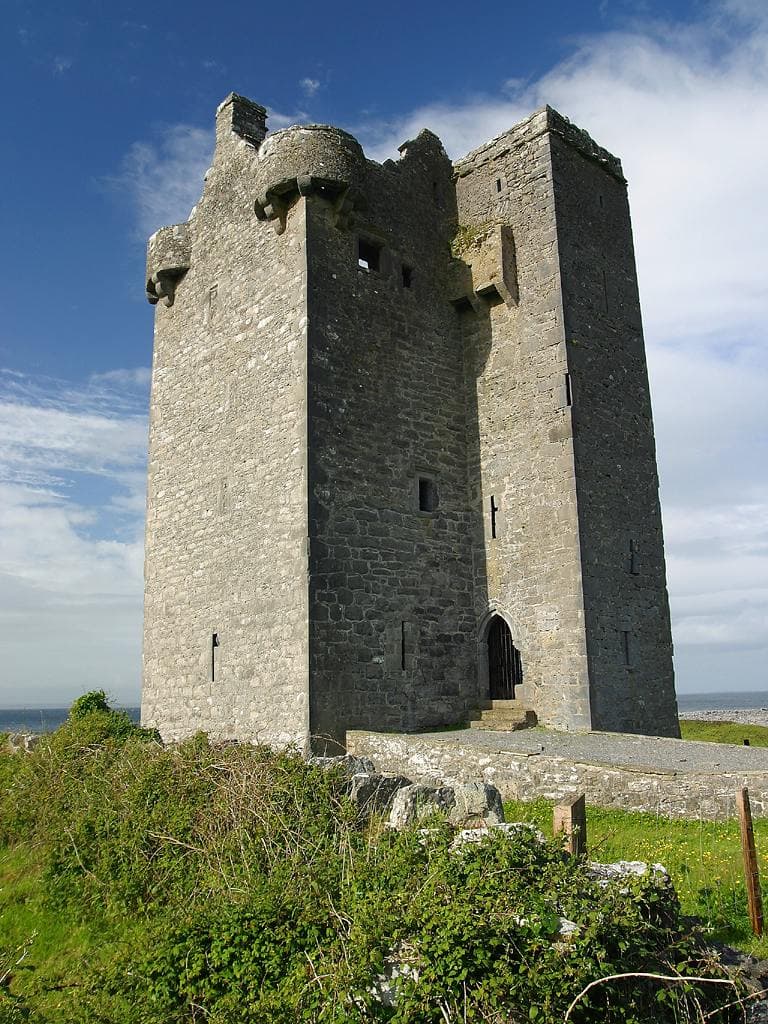
The castle is a classic hill castle built on elevated ground, providing natural defensive advantages. Gleninagh Castle is a tall, narrow stone structure typically four to five stories high, designed to maximize defense while maintaining residential functionality. One of its most notable architectural elements is the spiral staircase located in a projecting turret. This staircase winds clockwise, a design intended to favor right-handed defenders descending against attackers.
The castle's walls are thick and robust, made from local limestone, with narrow slit windows for archers and small openings for ventilation and light. The battlements at the top of the tower allowed defenders to survey the surrounding landscape and repel attackers. The entrance is usually protected by a heavy wooden door reinforced with iron, often accompanied by a murder hole or machicolations for dropping projectiles on assailants.
Defensive structures and features
Gleninagh Castle includes defensive elements such as bartizans—small overhanging turrets at the corners of the tower—and gun loops for early firearms, reflecting the transitional military technology of the period. The castle's elevated position further enhanced its defensive capabilities, allowing clear views of the surrounding countryside and early warning of approaching enemies.
Historical context and significance
Constructed in the 16th century during the Renaissance period, Gleninagh Castle was built amid a time of frequent clan conflicts and English incursions in Ireland. Tower houses like Gleninagh served as fortified residences for Gaelic lords and Anglo-Irish families. They symbolized both status and military readiness.
The castle likely belonged to a local chieftain or noble family who used it as a stronghold and a center of local administration. Its architecture reflects the need to balance domestic comfort with defense, a common theme in Irish tower houses of this era.
Ownership and preservation
Today, Gleninagh Castle is recognized for its historical and architectural value. It remains well-preserved, allowing visitors to appreciate its original defensive features and residential spaces. The castle is managed as a heritage site, often open to the public for tours and educational visits, contributing to the understanding of Ireland's turbulent history and architectural heritage.
Architectural style and period details
The castle exemplifies the Renaissance architectural style as interpreted in Ireland, blending traditional medieval defensive features with innovations suited to the evolving warfare of the 16th century. While primarily functional, certain stylistic details such as carved stonework around windows and doorways hint at Renaissance influences.
Its construction date in the 16th century places it at the height of tower house building in Ireland, a period marked by the adaptation of castles to accommodate firearms and changing social conditions.
Visiting Gleninagh Castle
Visitors to Gleninagh Castle can explore its spiral staircase, thick defensive walls, and battlements. The site offers insight into the lifestyle of Irish nobility during the Renaissance and the architectural responses to the era's military challenges. The castle's location in County Clare also provides scenic views of the Irish countryside, enhancing the visitor experience.
While specific visiting hours and ticket prices may vary, the castle is generally accessible to the public, often accompanied by guided tours that explain its historical context and architectural details.
Nearby attractions
The castle is situated within a region rich in historical sites and natural beauty. Visitors often combine a trip to Gleninagh Castle with visits to other nearby castles, ancient ruins, and the scenic landscapes of County Clare, including the famous Cliffs of Moher.
Frequently asked questions (FAQ)
- What is the historical significance of Gleninagh Castle?
- Gleninagh Castle is a 16th-century tower house that reflects the defensive architecture and social conditions of Renaissance Ireland, serving as a residence and stronghold for local nobility.
- How do I visit Gleninagh Castle?
- Gleninagh Castle is generally open to the public, often with guided tours available. Visitors should check local tourism resources for current visiting hours and ticket information.
- What are the key architectural features of Gleninagh Castle?
- Key features include a spiral staircase in a projecting turret, thick limestone walls with narrow slit windows, bartizans, gun loops, and battlements, typical of 16th-century Irish tower houses.
- Is Gleninagh Castle accessible for visitors with mobility issues?
- Due to its historic structure and narrow spiral staircases, accessibility may be limited. Visitors with mobility concerns should inquire locally about accommodations.
- When was Gleninagh Castle built?
- Gleninagh Castle was constructed in the 16th century during the Renaissance period in Ireland.
Photo gallery

Photo by PDphoto.org•Public domain
Information
Loading map...
Visitor reviews
No reviews yet. Been here? Write the first review and help other travelers!
Write the first reviewVisited this castle? Share your experience
Your review helps other travelers and adds first-hand knowledge to our encyclopedia.