Shahbulag Castle
Shahbulag castle, also known as Tarnakut Fortress, is a significant 18th-century architectural monument located in the Upper Karabakh region of Azerbaijan. Constructed between 1751 and 1752 under the direction of Karabakh khan Panahali khan, this fortress was strategically established in the Shahbulag area of Agdam. The name "Shahbulag" likely derives from the nearby Gursulu spring, a natural water source that contributed to the settlement's sustenance and defense. As the second fortress built within the Karabakh khanate, Shahbulag played a pivotal role in the region's military and administrative history.
Historical significance and role in the Karabakh khanate
Shahbulag fortress was initially constructed to serve as the administrative center of the Karabakh khanate, preceding the construction of the Bayat fortress. Although primarily a defensive stronghold, the fortress was used temporarily as a residence for the khan and his retinue. Over time, its function evolved to serve mainly as a guard post, overseeing the security of the khanate's territory. This transition reflects the dynamic political and military needs of the region during the turbulent 18th century.
Architectural features and design elements
Layout and structure
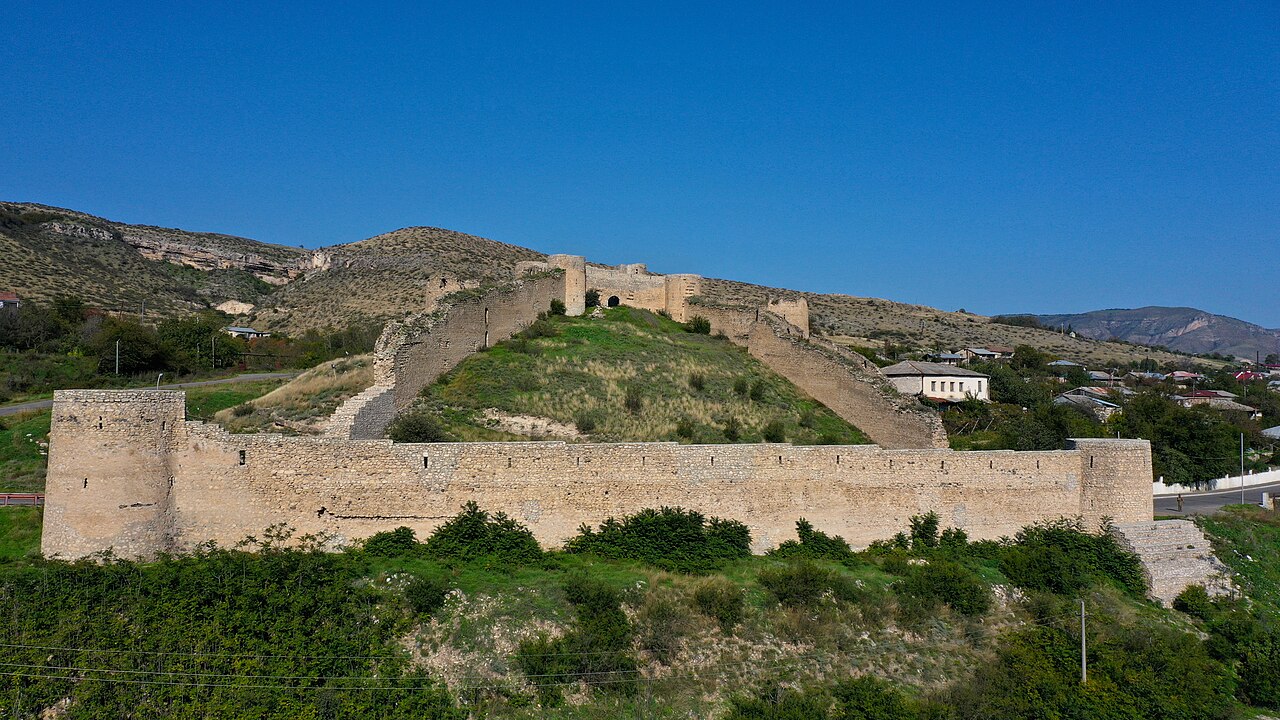
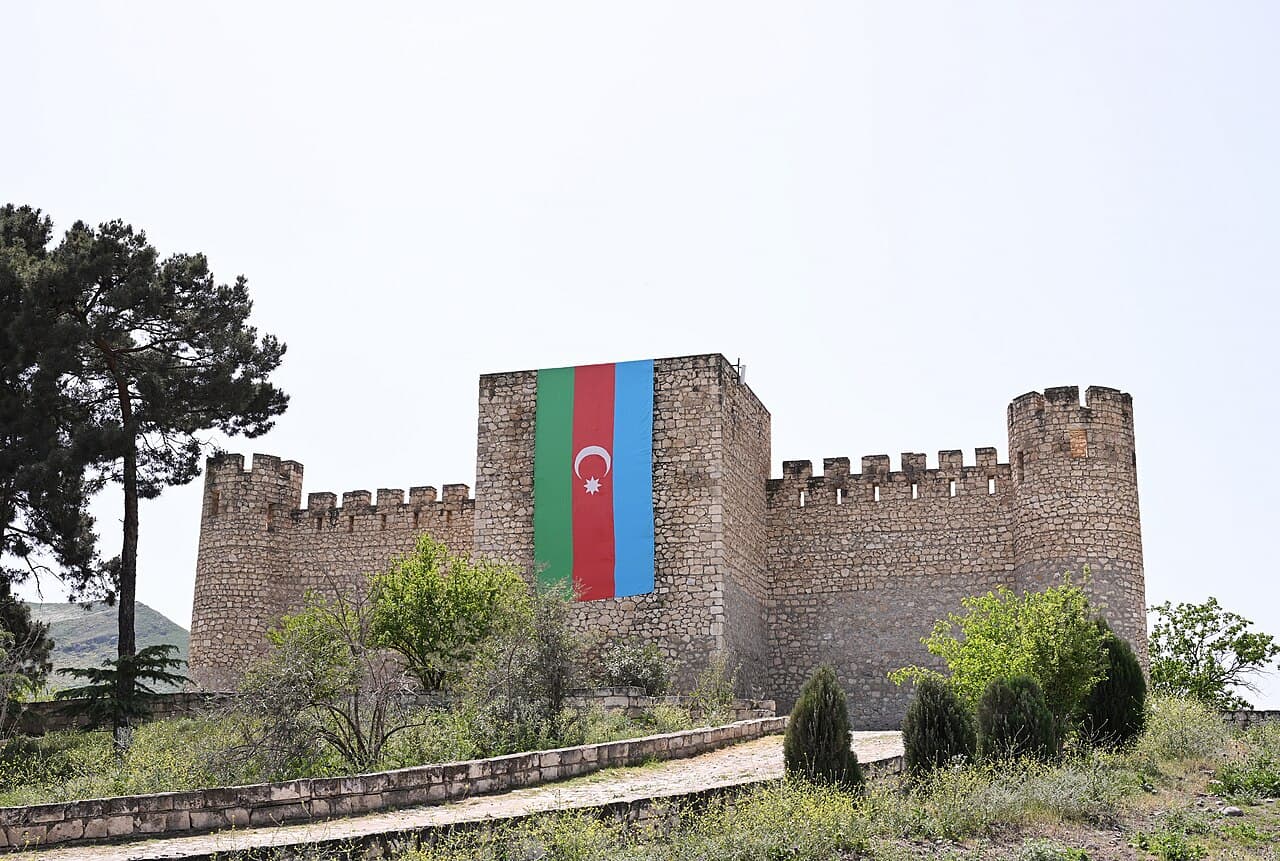
The fortress is characterized by a compact rectangular tower design, forming the core of a larger castle complex that included the khan's residence nearby. The outer walls are reinforced with a combination of circular and semi-cylindrical towers, enhancing the defensive capabilities of the structure. These towers provided vantage points for surveillance and defense against invaders.
Walls, towers, and defensive mechanisms
The castle walls rise to a height of approximately 7 meters, while the towers reach about 8.5 meters. The walls and towers taper slightly towards the top, a common feature in defensive architecture designed to reduce the impact of projectiles and improve structural stability. The fortress is equipped with labyrinthine passages and battlements (teeth), which are typical of military fortifications of the period, allowing defenders to maneuver and repel attackers effectively.
Entrance and internal features
The main entrance to the fortress is located centrally on the eastern wall, flanked externally by adjacent two-story towers that provided additional protection. The upper floor of one of these towers likely served as the khan's private chamber, accessible via a stone staircase from the castle courtyard. This arrangement highlights the blend of residential and military functions within the fortress.
Cultural and modern usage
In recent times, the fortress has seen varied uses; notably, the Armenian community has repurposed the structure as a church. This adaptive reuse underscores the fortress's enduring presence and significance in the cultural landscape of the region. Despite changes in function, Shahbulag castle remains a valuable historical and architectural landmark, reflecting the heritage of the Karabakh khanate.
Preservation and current condition
Today, Shahbulag castle stands as a partially preserved monument, retaining much of its original defensive architecture. Efforts to maintain and study the fortress contribute to our understanding of 18th-century military architecture in Azerbaijan. Its location in Upper Karabakh situates it within a region rich in history and contested heritage, making it an important site for both historical research and cultural tourism.
Frequently asked questions (FAQ)
- When was Shahbulag castle built and by whom?
- Shahbulag castle was built between 1751 and 1752 by Karabakh khan Panahali khan as a defensive and administrative fortress.
- What is the architectural style of Shahbulag castle?
- The fortress features a compact rectangular tower with circular and semi-cylindrical towers, typical of 18th-century military architecture in the region.
- Can visitors access the khan's chamber in the fortress?
- The khan's room was located on the top floor of a two-story tower accessible by a stone staircase from the courtyard, though current access may be limited due to preservation status.
- What is the current condition of Shahbulag castle?
- Shahbulag castle is partially preserved, retaining much of its original walls and towers, though it has undergone some changes in use over time.
- Is Shahbulag castle open to the public for visits?
- Visiting information is limited; prospective visitors should check local sources for access details due to the region's complex political situation.
Photo gallery

Information
Loading map...
Visitor reviews
No reviews yet. Been here? Write the first review and help other travelers!
Write the first reviewVisited this castle? Share your experience
Your review helps other travelers and adds first-hand knowledge to our encyclopedia.