Əsgəran Fortress — Azerbaijan castle

Əsgəran Fortress

Əsgəran Fortress in Azerbaijan
Post-Renaissance (17th–18th c.)
Partially Preserved

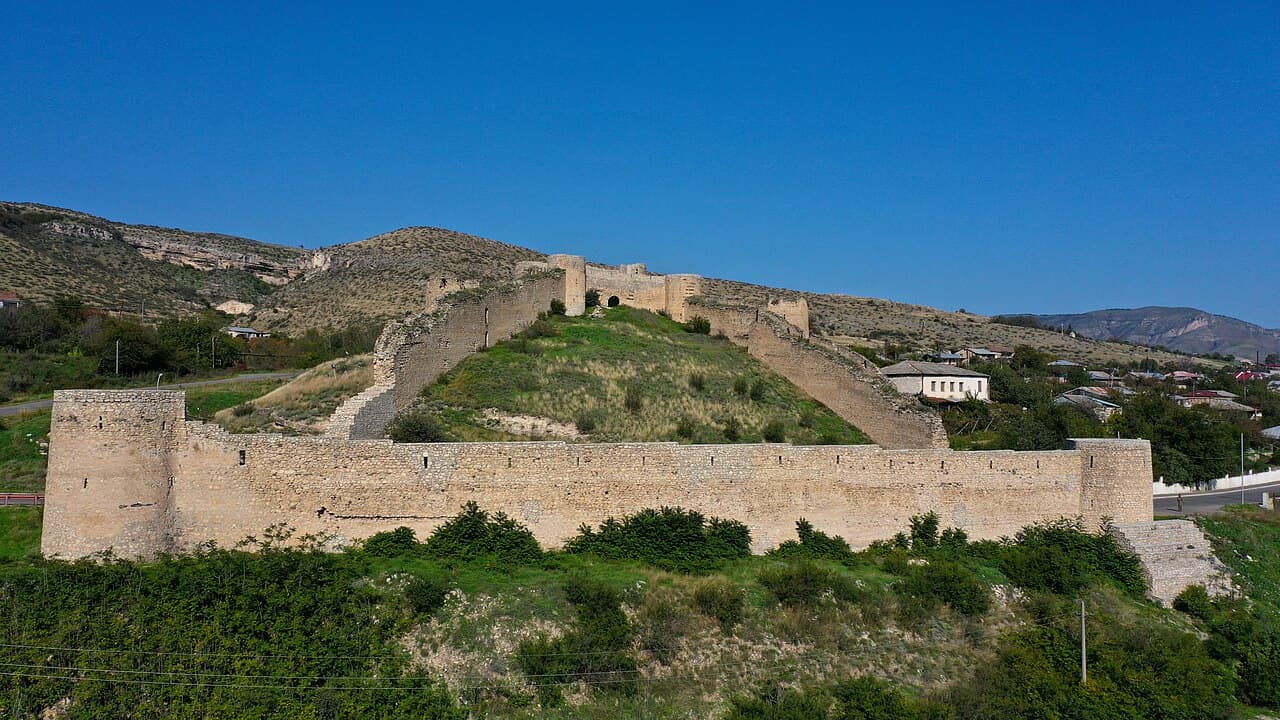
Əsgəran Fortress, also known as Askeran Fortress or Mayraberd in Armenian, is a significant historical bastioned fortress located on the banks of the Qarqar River in Azerbaijan. This fortress, dating back to the 18th century, is notable for its strategic position and architectural complexity, reflecting the military engineering advances of the post-Renaissance period.

Historical context and strategic importance

The fortress was constructed during a time of regional conflict and shifting power dynamics in the Caucasus. Its location on the Qarqar River provided a natural defensive advantage and control over the surrounding territory. The fortress played a key role in the defense strategies of local rulers, serving both as a military stronghold and a symbol of authority in the region.

Architectural features and layout

Əsgəran Fortress is classified as a bastioned fortress, characterized by its angular bastions designed to provide overlapping fields of fire, a common feature in fortifications developed after the introduction of gunpowder artillery. The fortress is divided into two main sections, with the left-bank section distinguished by a double line of stone walls. These walls were constructed to enhance the defensive capacity against artillery and infantry assaults.

Walls and bastions

The stone walls are robust and thick, built from locally sourced materials, and feature embrasures for cannons and musketry. The bastions project outward from the main walls, allowing defenders to cover adjacent walls with crossfire. This design reflects the influence of European military architecture adapted to local conditions.

Internal structures

Within the fortress walls, there are remnants of various buildings that would have supported the garrison, including barracks, storage facilities, and possibly command quarters. The layout suggests a well-planned military installation capable of housing a sizeable defensive force.

Preservation and current condition

Today, Əsgəran Fortress remains partially preserved. While some sections of the walls and bastions are intact, others have suffered from the effects of time and conflict. Restoration efforts have been limited, but the fortress still offers valuable insights into 18th-century military architecture in the Caucasus region.

Cultural and heritage significance

The fortress is an important cultural landmark in Azerbaijan, reflecting the region's complex history and the architectural responses to military challenges of its time. It attracts historians, architects, and tourists interested in the military heritage of the Caucasus. The dual naming in Azerbaijani and Armenian underscores the multicultural history of the area.

Visiting information

Visitors to Əsgəran Fortress can explore the surviving walls and bastions, gaining an understanding of its defensive design and historical context. The site is accessible year-round, although facilities and guided tours may be limited. The surrounding landscape offers scenic views of the Qarqar River valley.

Frequently asked questions

  • What is the historical period of Əsgəran Fortress?
    It was built in the 18th century during the post-Renaissance period, reflecting military architectural advances of that era.
  • What type of fortress is Əsgəran?
    It is a bastioned fortress, featuring angular bastions designed for artillery defense.
  • Is the fortress open to visitors?
    Yes, the fortress is accessible year-round, though visitor facilities may be limited.
  • What are the main architectural features?
    Notable features include the double line of stone walls on the left-bank section and projecting bastions for crossfire defense.
  • Where is Əsgəran Fortress located?
    It is situated on the banks of the Qarqar River in Azerbaijan, in the region historically associated with the town of Askeran.

Frequently asked questions (FAQ)

What is the historical significance of Əsgəran Fortress?
Əsgəran Fortress, built in the 12th century, is a significant historical monument in Azerbaijan, representing the medieval architecture and military strategies of the region. It served as a defensive structure against invasions and played a crucial role in controlling trade routes. The fortress is a symbol of the resilience and ingenuity of the local population throughout history.
When was Əsgəran Fortress built?
Əsgəran Fortress was constructed in the 12th century during the reign of the Shirvanshahs. Its strategic location and robust design allowed it to withstand numerous sieges and attacks over the centuries, making it a vital stronghold in the region. The fortress showcases the architectural prowess of its time, incorporating defensive features that were advanced for its era.
How do I get to Əsgəran Fortress?
To reach Əsgəran Fortress, you can take a bus or taxi from Baku, which is approximately 30 kilometers away. The journey typically takes around 30 to 45 minutes, depending on traffic conditions. Once you arrive, the fortress is easily accessible, and you can explore its grounds on foot.
What are the opening hours for Əsgəran Fortress?
Əsgəran Fortress is generally open to visitors from 9 AM to 6 PM, but it’s advisable to check for any seasonal changes in hours. During public holidays or special events, the hours may vary, so planning ahead is recommended. This way, you can ensure you have enough time to explore the site thoroughly.
Can I enter the fortress without a guide?
Yes, visitors can explore Əsgəran Fortress without a guide, allowing for a more personal experience. However, hiring a local guide can enhance your visit by providing in-depth historical context and insights about the fortress. This can be particularly beneficial for understanding the significance of various architectural features.
What are the ticket prices for visiting Əsgəran Fortress?
The ticket prices for visiting Əsgəran Fortress are quite affordable, typically costing around 2 to 5 AZN for adults. Discounts may be available for students and children, making it accessible for families and budget travelers. It's advisable to bring cash, as card payments may not be accepted at the site.
Is it possible to visit nearby attractions after exploring Əsgəran Fortress?
Absolutely, after visiting Əsgəran Fortress, there are several nearby attractions worth exploring. You can visit the ancient city of Sheki or enjoy the scenic landscapes of the surrounding area. This region is rich in culture and history, providing plenty of opportunities for further exploration.
What is the best time to visit Əsgəran Fortress?
The best time to visit Əsgəran Fortress is during the spring (April to June) and fall (September to October) when the weather is mild and pleasant. These seasons allow for comfortable exploration of the fortress and surrounding areas. Summer can be hot, while winter may bring colder temperatures, so plan accordingly.
Is the fortress accessible for people with disabilities?
Access to Əsgəran Fortress can be challenging for individuals with mobility issues, as the terrain is uneven and there are steep areas to navigate. While efforts have been made to improve accessibility, it is advisable to check in advance or consider visiting with a companion who can assist. Planning ahead will ensure a more enjoyable experience for all visitors.

Photo gallery

Əsgəran Fortress
Click to view

Photo by Press Service of the President of the Republic of Azerbaijan•CC BY 4.0

1 photo • Click any image to view in full screen

Information

Bastioned Fortress

Loading map...

Visitor reviews

No reviews yet. Been here? Write the first review and help other travelers!

Write the first review

Visited this castle? Share your experience

Your review helps other travelers and adds first-hand knowledge to our encyclopedia.
Write a review

(5/5)

0/2000 characters

Your review will be visible after admin approval

Nearby castles

16.3 km
Shahbulag Castle — Azerbaijan castle

Shahbulag Castle

Upper Karabakh, Azerbaijan

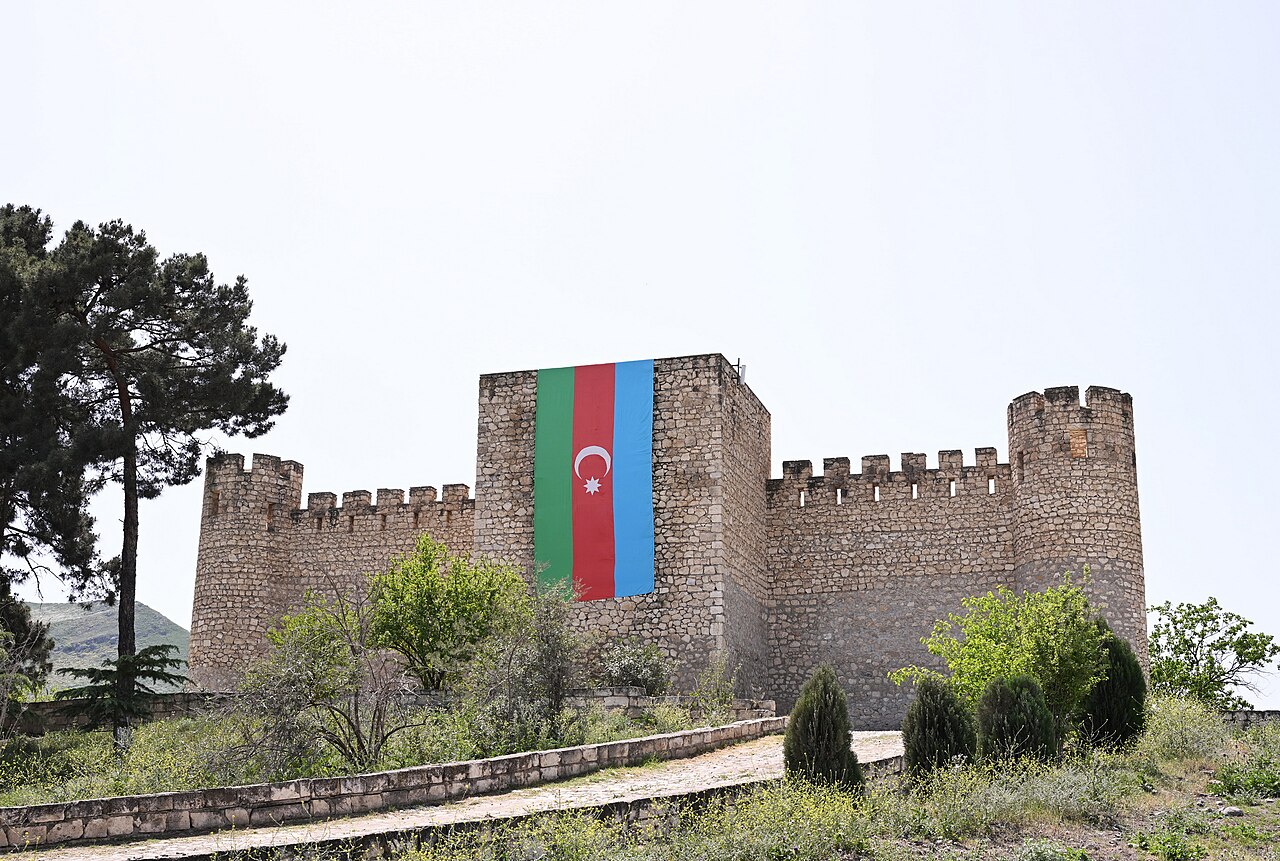
Shahbulag castle, also known as Tarnakut Fortress, is a significant 18th-century architectural monument located in the Upper Karabakh region of Azerbaijan. Constructed between 1751 and 1752 under the direction of Karabakh khan Panahali khan, this fortress was strategically established in the Shahbulag area of Agdam. The name "Shahbulag" likely derives from the nearby Gursulu spring, a natural water source that contributed to the settlement's sustenance and defense. As the second fortress built within the Karabakh khanate, Shahbulag played a pivotal role in the region's military and administrative history.Historical significance and role in the Karabakh khanateShahbulag fortress was initially constructed to serve as the administrative center of the Karabakh khanate, preceding the construction of the Bayat fortress. Although primarily a defensive stronghold, the fortress was used temporarily as a residence for the khan and his retinue. Over time, its function evolved to serve mainly as a guard post, overseeing the security of the khanate's territory. This transition reflects the dynamic political and military needs of the region during the turbulent 18th century.Architectural features and design elementsLayout and structureThe fortress is characterized by a compact rectangular tower design, forming the core of a larger castle complex that included the khan's residence nearby. The outer walls are reinforced with a combination of circular and semi-cylindrical towers, enhancing the defensive capabilities of the structure. These towers provided vantage points for surveillance and defense against invaders.Walls, towers, and defensive mechanismsThe castle walls rise to a height of approximately 7 meters, while the towers reach about 8.5 meters. The walls and towers taper slightly towards the top, a common feature in defensive architecture designed to reduce the impact of projectiles and improve structural stability. The fortress is equipped with labyrinthine passages and battlements (teeth), which are typical of military fortifications of the period, allowing defenders to maneuver and repel attackers effectively.Entrance and internal featuresThe main entrance to the fortress is located centrally on the eastern wall, flanked externally by adjacent two-story towers that provided additional protection. The upper floor of one of these towers likely served as the khan's private chamber, accessible via a stone staircase from the castle courtyard. This arrangement highlights the blend of residential and military functions within the fortress.Cultural and modern usageIn recent times, the fortress has seen varied uses; notably, the Armenian community has repurposed the structure as a church. This adaptive reuse underscores the fortress's enduring presence and significance in the cultural landscape of the region. Despite changes in function, Shahbulag castle remains a valuable historical and architectural landmark, reflecting the heritage of the Karabakh khanate.Preservation and current conditionToday, Shahbulag castle stands as a partially preserved monument, retaining much of its original defensive architecture. Efforts to maintain and study the fortress contribute to our understanding of 18th-century military architecture in Azerbaijan. Its location in Upper Karabakh situates it within a region rich in history and contested heritage, making it an important site for both historical research and cultural tourism.

Post-Renaissance (17th–18th c.)
Details
16.5 km
Tigranakert Fortress — Azerbaijan castle

Tigranakert Fortress

, Azerbaijan

Tigranakert fortress is a significant bastioned fortress located in the region of Azerbaijan. This fortress is an important example of military architecture designed to withstand artillery attacks, characteristic of the bastioned style that emerged in the late medieval to early modern periods. Although the exact city location within Azerbaijan is not definitively documented, the fortress holds a key place in the historical defensive network of the area.Historical context and strategic importanceThe fortress is named after the ancient city of Tigranakert, which was established during the reign of Tigranes the Great in the 1st century BCE, reflecting the region's long history of fortification and settlement. While the current fortress structure likely dates from a later period, its location corresponds to a historically strategic site that controlled important trade and military routes in the South Caucasus.As a bastioned fortress, the design incorporates angular bastions projecting from the curtain walls, allowing defenders to cover all approaches with overlapping fields of fire. This architectural style was developed to counter the increasing use of gunpowder artillery, marking a transition from medieval fortifications to early modern military engineering.Architectural features and design elementsThe fortress's layout typically includes thick, sloped walls designed to absorb and deflect cannon fire. The bastions are positioned at intervals around the perimeter, providing vantage points for artillery and infantry. The walls are constructed from local stone materials, carefully cut and fitted to create a robust defensive barrier.Within the fortress, there would have been essential military facilities such as barracks, armories, and storage rooms, although detailed archaeological studies are limited. The presence of a moat or other defensive water features is not well documented for this site.Defensive innovationsThe bastioned design represents an evolution from traditional medieval castles by emphasizing low, thick walls and angular bastions instead of high towers. This adaptation was crucial in the era of gunpowder warfare, allowing defenders to repel sieges more effectively. The fortress's design reflects these principles, indicating its construction or significant modification during the late medieval to early modern periods.Current condition and preservationThe current state of the Tigranakert fortress is generally considered to be partially preserved. Some walls and bastions remain standing, providing valuable insight into the fortress's original scale and defensive capabilities. However, much of the structure has suffered from the effects of time and possible neglect, with portions in ruins or heavily eroded.Efforts to study and preserve the fortress are ongoing, highlighting its cultural and historical importance in Azerbaijan's heritage. The site attracts historians and archaeologists interested in the evolution of military architecture in the Caucasus region.Visiting and cultural significanceWhile detailed visitor information is limited due to the fortress's remote location and preservation status, Tigranakert fortress remains a point of interest for those exploring Azerbaijan's rich historical landscape. Its bastioned design offers a tangible example of the region's adaptation to changing military technologies.The fortress serves as a reminder of the strategic importance of the South Caucasus throughout history, reflecting the complex interactions between various empires and local powers.

Late Medieval (14th–15th c.)
Details
19.9 km
Shusha Fortress — Azerbaijan castle

Shusha Fortress

Shusha, Azerbaijan

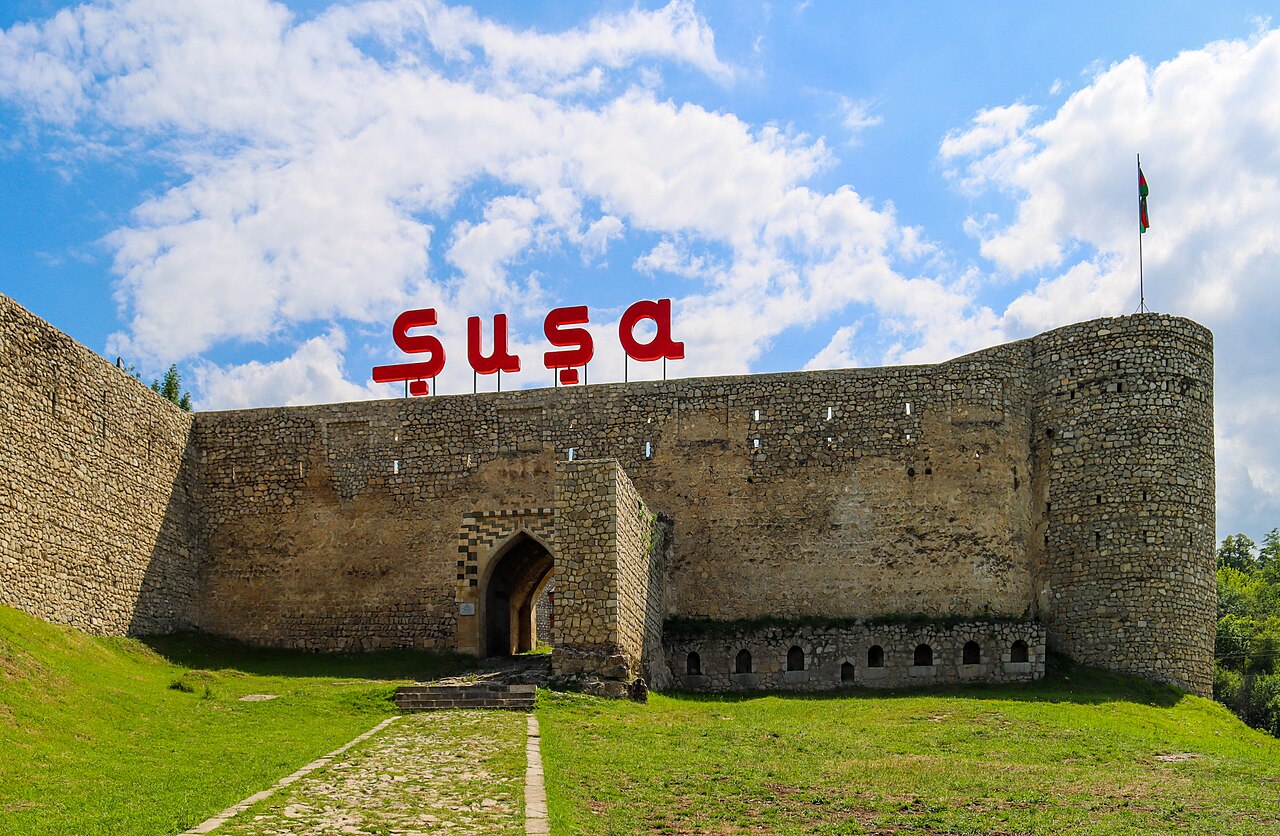
The Shusha fortress (Azerbaijani: Şuşa qalası, Persian: قلعه شوش, Armenian: Շուշիի բերդ) is a bastioned fortress that encloses the historical center of Shusha city in Azerbaijan. Constructed in the 18th century during the post-Renaissance period, this fortress was originally known as the Panahabad fortress, named after its founder Panah Ali Khan. Alongside Melik Shahnazar, Panah Ali Khan established this fortification as a strategic stronghold. Over time, the settlement became commonly referred to simply as the "Fortress." The earliest record of a settlement in the area dates back to a 15th-century illustrated Armenian gospel, which mentions the "Shushu village," indicating the longstanding historical significance of this location. The fortress itself is situated on a mountainous plateau that forms a natural amphitheater on its western side, characterized by numerous hills and rifts. The elevation ranges from 1300 to 1600 metres above sea level, with the highest point located centrally along the length of the plateau. Strategic location and terrain The choice of location for the Shusha fortress reflects typical feudal architectural principles, emphasizing natural defense advantages. The fortress commands a dominant position on the plateau, surrounded by steep slopes and natural barriers that enhance its defensive capabilities. The central hill running lengthwise through the plateau provides a vantage point for surveillance and control over the surrounding region. Architectural features and fortifications The fortress is a prime example of bastioned fortress design, a style that became prominent in the post-Renaissance era, incorporating angled bastions to provide overlapping fields of fire and improved defense against artillery. The walls of Shusha fortress are constructed to adapt to the uneven terrain, with fortifications following the natural contours of the plateau. The fortress had three main gates, each named after significant nearby cities or regions: the Ganja Gate, the Iravan Gate, and the Aghoghlan Gate. These gates are frequently mentioned in historical records and appear in the 19th-century plans of Shusha, underscoring their importance for access and defense. The gates were fortified and likely equipped with defensive towers and mechanisms to control entry and exit. Defensive structures and layout The fortress walls are punctuated by bastions and towers positioned to maximize defensive coverage. The bastions allowed defenders to cover adjacent walls with crossfire, a significant advancement over earlier medieval fortifications. The layout of the fortress integrates natural features such as cliffs and steep slopes, reducing the need for extensive artificial defenses on certain sides. Historical context and significance Shusha fortress played a crucial role in the regional power dynamics of the Caucasus during the 18th century. Founded by Panah Ali Khan, a prominent figure in the Karabakh Khanate, the fortress served as both a military stronghold and an administrative center. It was designed to protect the newly established city of Shusha from external threats and to assert control over the surrounding territories. The fortress witnessed various conflicts and sieges throughout its history, reflecting the turbulent political landscape of the Caucasus region. Its strategic position made it a focal point in military campaigns and power struggles between local khanates and neighboring empires. Urban development and cultural heritage The fortress encircles the historical core of Shusha, which developed into a vibrant urban center with cultural, religious, and commercial significance. Within the walls, the city contained residential quarters, mosques, caravanserais, and public spaces that reflected the diverse cultural influences of the region. The architectural style of the fortress and the city combines functional military features with aesthetic elements characteristic of the feudal period. The integration of the fortress into the natural landscape demonstrates a sophisticated understanding of terrain and defensive architecture. Current condition and preservation Today, the Shusha fortress remains a prominent historical monument in Azerbaijan. While parts of the fortress have suffered damage over time due to conflicts and natural decay, significant sections of the walls and gates are still preserved. Restoration efforts have been undertaken to maintain the fortress as a cultural heritage site and to promote its historical importance. The fortress continues to attract visitors interested in the rich history and architecture of the Caucasus region. Its commanding location offers panoramic views of the surrounding landscape, enhancing its appeal as both a historical and tourist destination.

Post-Renaissance (17th–18th c.)
Details