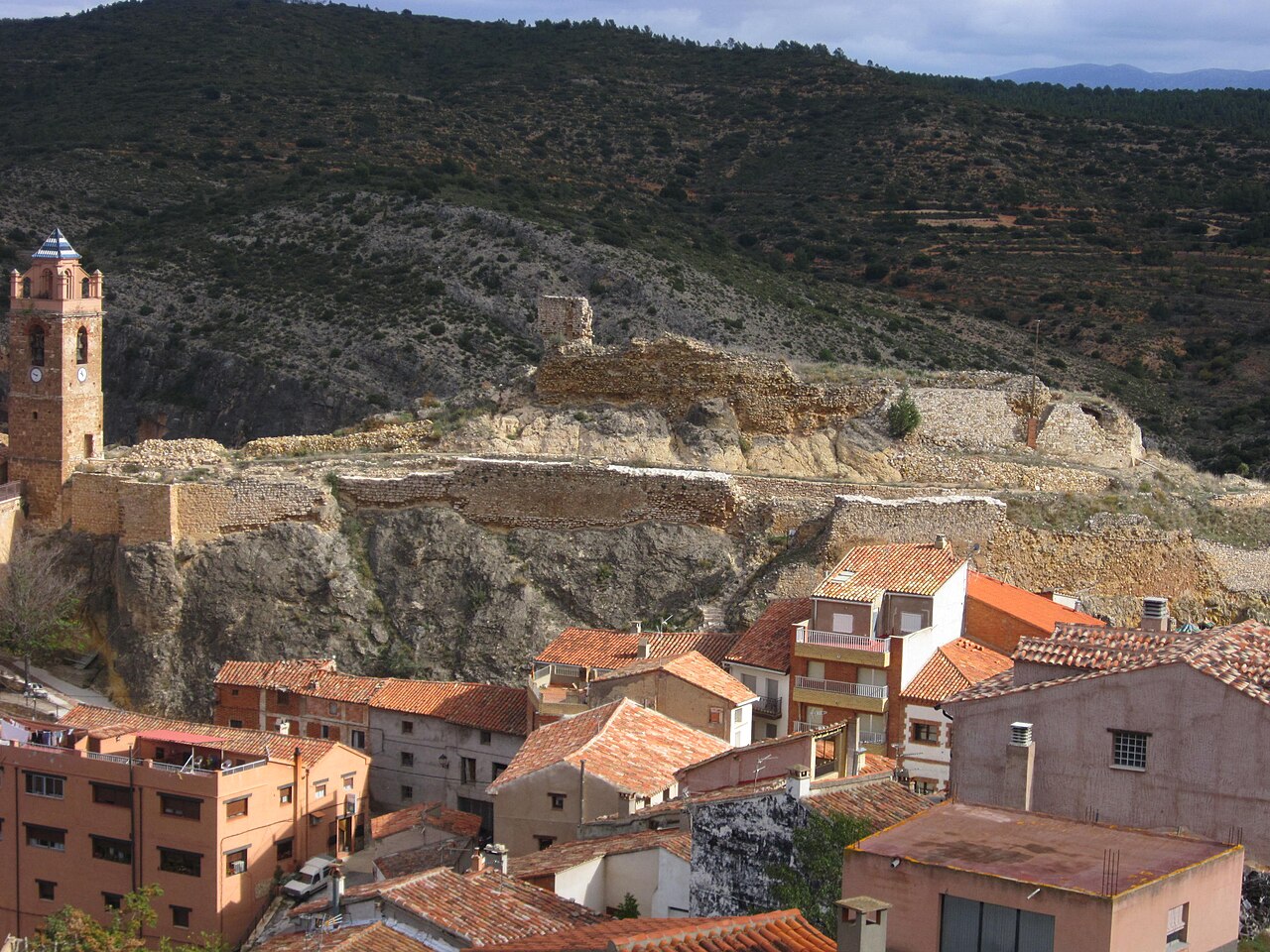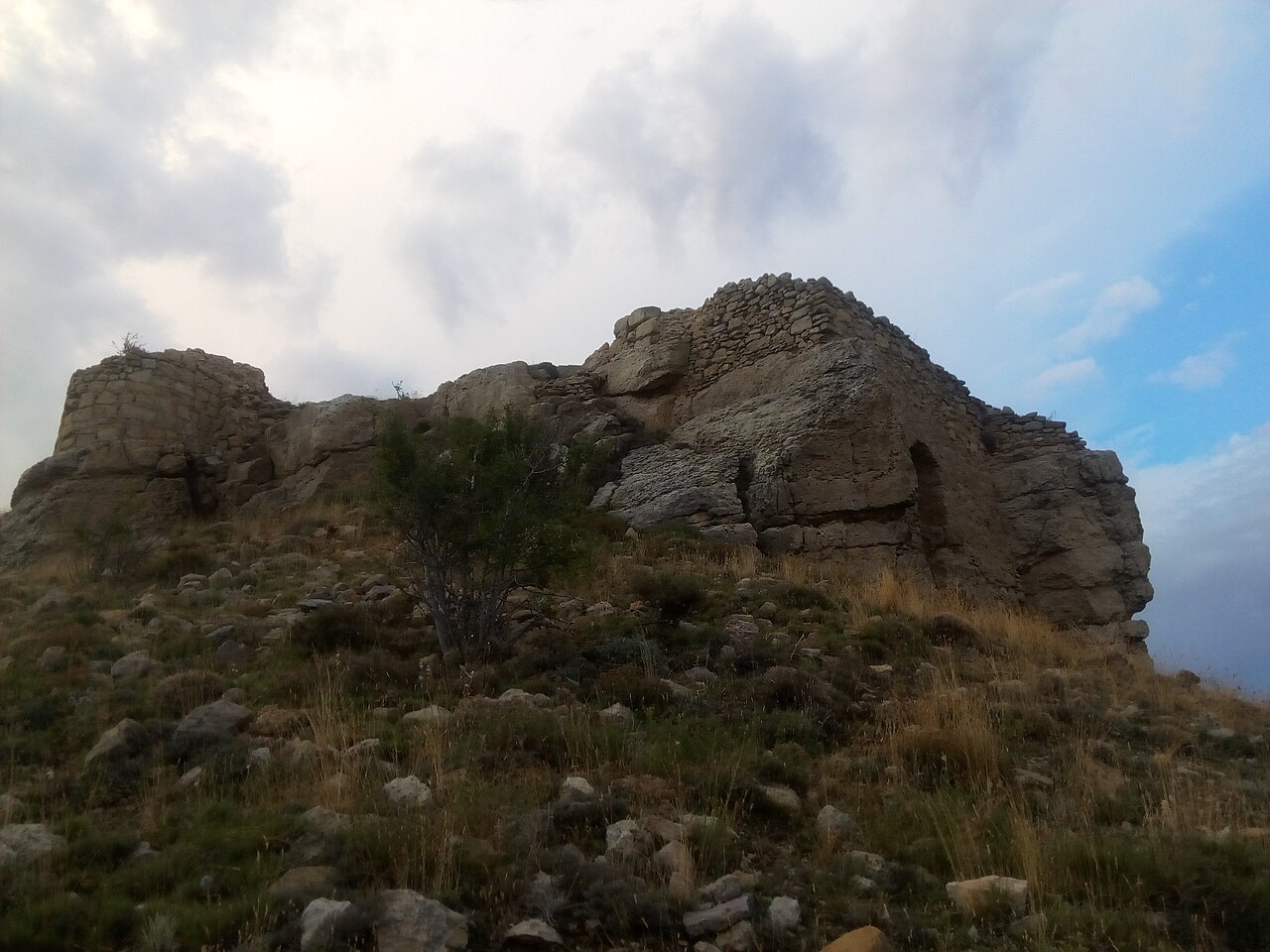
Sesga Castle, also referred to as the "castillo de los moros" or Moors' castle, is a modest fortification situated in the municipality of Ademuz within the province of Valencia, Spain. The castle takes its name from the nearby hamlet of Sesga and is perched on a small, flat-topped hill covered with pine trees and shrubs. This elevated position overlooks the Sesga ravine, which features a cliff face adjacent to the road connecting Sesga with Casas Bajas, providing a strategic vantage point over the surrounding terrain.
Location and strategic importance
Located southwest of the hamlet of Sesga, the castle occupies a natural defensive site characterized by its elevated plateau and steep cliff edges. This placement would have afforded its occupants a clear view of the approaches along the ravine, an important route in the region. The hilltop setting aligns with typical characteristics of a hill castle, emphasizing defense through natural topography combined with man-made fortifications.
Architectural features and layout
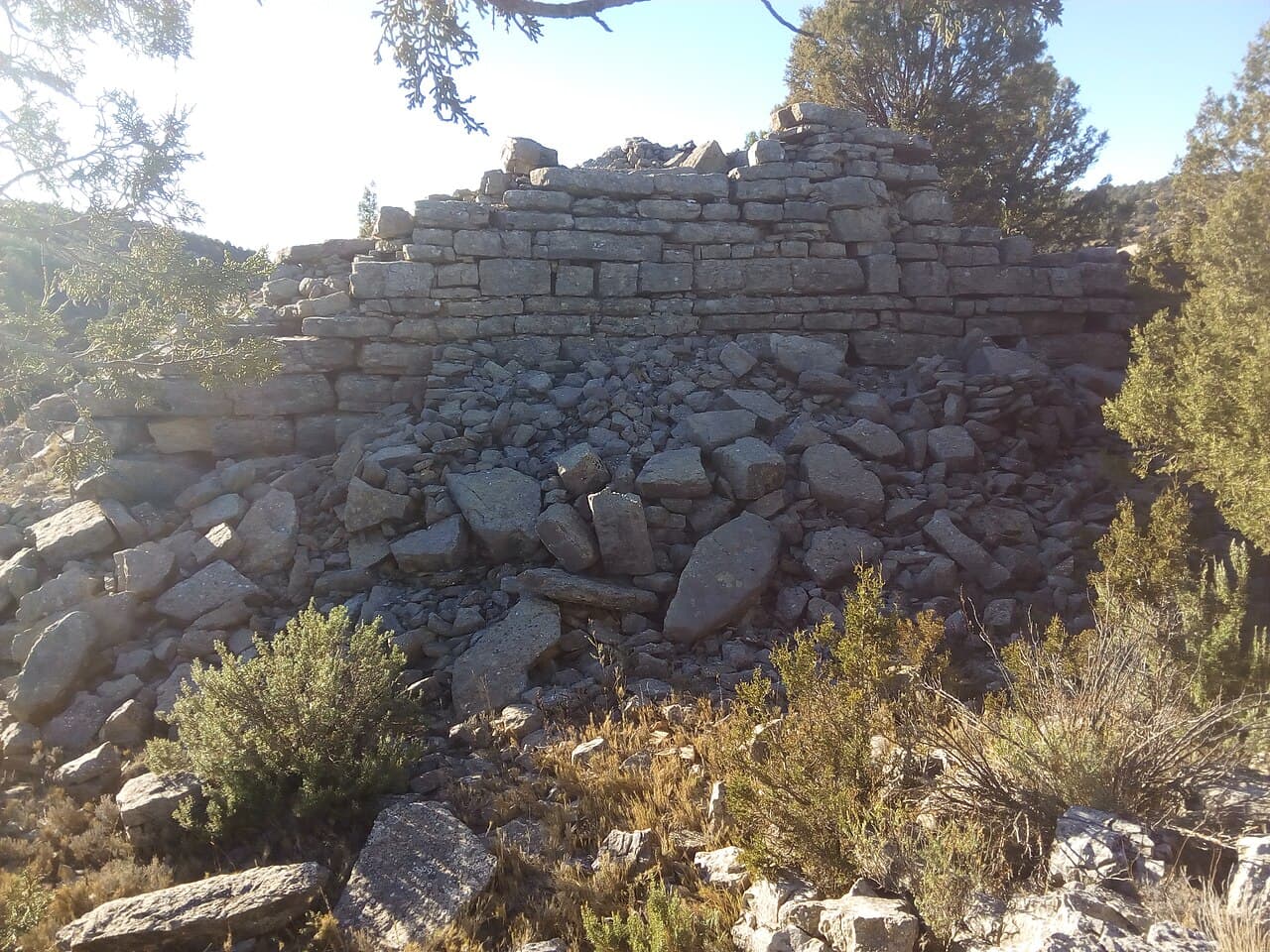
Sesga Castle is relatively small in scale, primarily consisting of the remains of what appears to be the base of a square tower located on the eastern side of the site. Surrounding this tower base are multiple levels of defensive walls, which enclose a small, artificially created platform. The compact size and structural elements suggest a fortification designed for limited garrison use or as a watch post rather than a large defensive stronghold.
Structural components
- Square tower base: The central surviving feature, likely serving as a lookout or last defensive refuge.
- Defensive walls: Multiple concentric walls provide layered protection, typical of small military outposts.
- Artificial platform: A man-made terrace enhancing the usable space on the hilltop, possibly for buildings or military activities.
Historical context and origins
While Sesga Castle has traditionally been classified as a medieval castle, archaeological evidence such as ceramic shards found on the surface suggests that the site may have earlier origins. It is considered by some scholars to be an Iberian or Celtiberian castrum, a type of fortified settlement used during the pre-Roman period in the Iberian Peninsula. If this is accurate, the castle's small dimensions and layout resemble those of other known Iberian outposts like Puntal dels Llops, which functioned as frontier watch stations or small military bases.
No formal archaeological excavations have been conducted at Sesga Castle, and the site has suffered from several illegal digging attempts. This lack of systematic study means many details about its construction phases, exact historical timeline, and cultural affiliations remain unknown.
Preservation and current condition
Today, Sesga Castle exists largely as ruins, with only foundational remains visible. The site remains an important cultural landmark within the Ademuz municipality and offers insights into the region's ancient defensive strategies. Its location amidst natural vegetation and rugged terrain adds to its historical ambiance, though the absence of extensive archaeological work limits our full understanding of its significance.
Comparative significance
Sesga Castle's possible identification as an Iberian or Celtiberian castrum places it among a network of small fortified sites that dotted the landscape in pre-Roman Spain. These sites were crucial for controlling territory, monitoring movement, and providing refuge during times of conflict. Its similarities to Puntal dels Llops highlight a regional pattern of small-scale fortifications serving as military outposts rather than large castles built in later medieval times.
Visiting information
Although the castle is not formally developed as a tourist site and lacks visitor facilities, its accessible location near the hamlet of Sesga makes it a point of interest for those exploring the historical heritage of the Ademuz area. Visitors should be prepared for rugged terrain and limited signage. Due to the site's archaeological sensitivity, visitors are encouraged to respect the remains and avoid any disturbance.
Frequently asked questions
- What is Sesga Castle? Sesga Castle is a small hilltop fortification near Ademuz, Spain, possibly dating back to the Iberian or Celtiberian period.
- When was Sesga Castle built? The exact construction date is unknown, but ceramic shards suggest origins in the pre-Roman Iberian or Celtiberian era.
- Can I visit Sesga Castle? Yes, the site is accessible to visitors, though it lacks developed tourist facilities and requires caution due to uneven terrain.
- What remains of Sesga Castle? The remains include the base of a square tower, defensive walls, and an artificial platform on a hilltop.
- Is Sesga Castle a medieval castle? While traditionally classified as a castle, evidence suggests it may be an earlier Iberian or Celtiberian fortification rather than a medieval structure.
- Why is Sesga Castle also called the Moors' castle? The name "castillo de los moros" likely reflects local tradition or folklore rather than confirmed historical occupation by Moorish forces.
- Are there archaeological excavations at Sesga Castle? No formal excavations have been conducted, and the site has suffered from illegal digging attempts.
Frequently asked questions (FAQ)
- What is the historical significance of Sesga Castle?
- Sesga Castle, located in Ademuz, Spain, dates back to the 13th century and showcases the region's rich Moorish and Christian heritage. It played a crucial role in the defense against invasions and served as a strategic watchtower. Today, it stands as a testament to medieval architecture and history.
- When was Sesga Castle built?
- Construction of Sesga Castle began in the late 1200s, during a time of significant territorial conflicts in the area. The castle's construction reflects the military needs of the period, as well as the architectural styles prevalent during the Middle Ages in Spain. Over the centuries, it has undergone various modifications but retains much of its original structure.
- Can I visit Sesga Castle?
- Yes, Sesga Castle is open to visitors who wish to explore its historical and architectural features. Guided tours are available, providing insights into the castle's history and significance. It's advisable to check the official website for any specific visiting requirements or restrictions before your trip.
- What are the opening hours for Sesga Castle?
- Sesga Castle generally opens to visitors from 10 AM to 6 PM, although hours may vary seasonally. It's best to visit during weekdays for a quieter experience, as weekends can attract more tourists. Always confirm the current hours before your visit to avoid any inconvenience.
- Is it possible to access Sesga Castle with mobility aids?
- While Sesga Castle is a historical site, access can be challenging due to uneven terrain and steep pathways. Visitors with mobility aids may find some areas difficult to navigate. It is recommended to contact the castle management in advance to inquire about accessibility options and assistance.
- What is the best time to visit Sesga Castle?
- The best time to visit Sesga Castle is during the spring and fall when the weather is mild and pleasant. These seasons also avoid the peak tourist crowds of summer, allowing for a more enjoyable experience. Additionally, the surrounding landscapes are particularly beautiful during these times, enhancing your visit.
- Are there any nearby attractions to Sesga Castle?
- Yes, the area surrounding Sesga Castle offers several attractions, including the picturesque village of Ademuz and the stunning natural landscapes of the nearby Sierra de Cuenca. You can also explore local hiking trails and traditional Spanish cuisine in the vicinity. This makes for a well-rounded trip combining history and nature.
- What are the ticket prices for Sesga Castle?
- Ticket prices for visiting Sesga Castle are generally affordable, with reduced rates for children and seniors. As prices can change, it’s advisable to check the official website or contact the castle directly for the most current information on admission fees. Group discounts may also be available.
Photo gallery

Information
Loading map...
Visitor reviews
No reviews yet. Been here? Write the first review and help other travelers!
Write the first reviewVisited this castle? Share your experience
Your review helps other travelers and adds first-hand knowledge to our encyclopedia.