Castle of Castielfabib
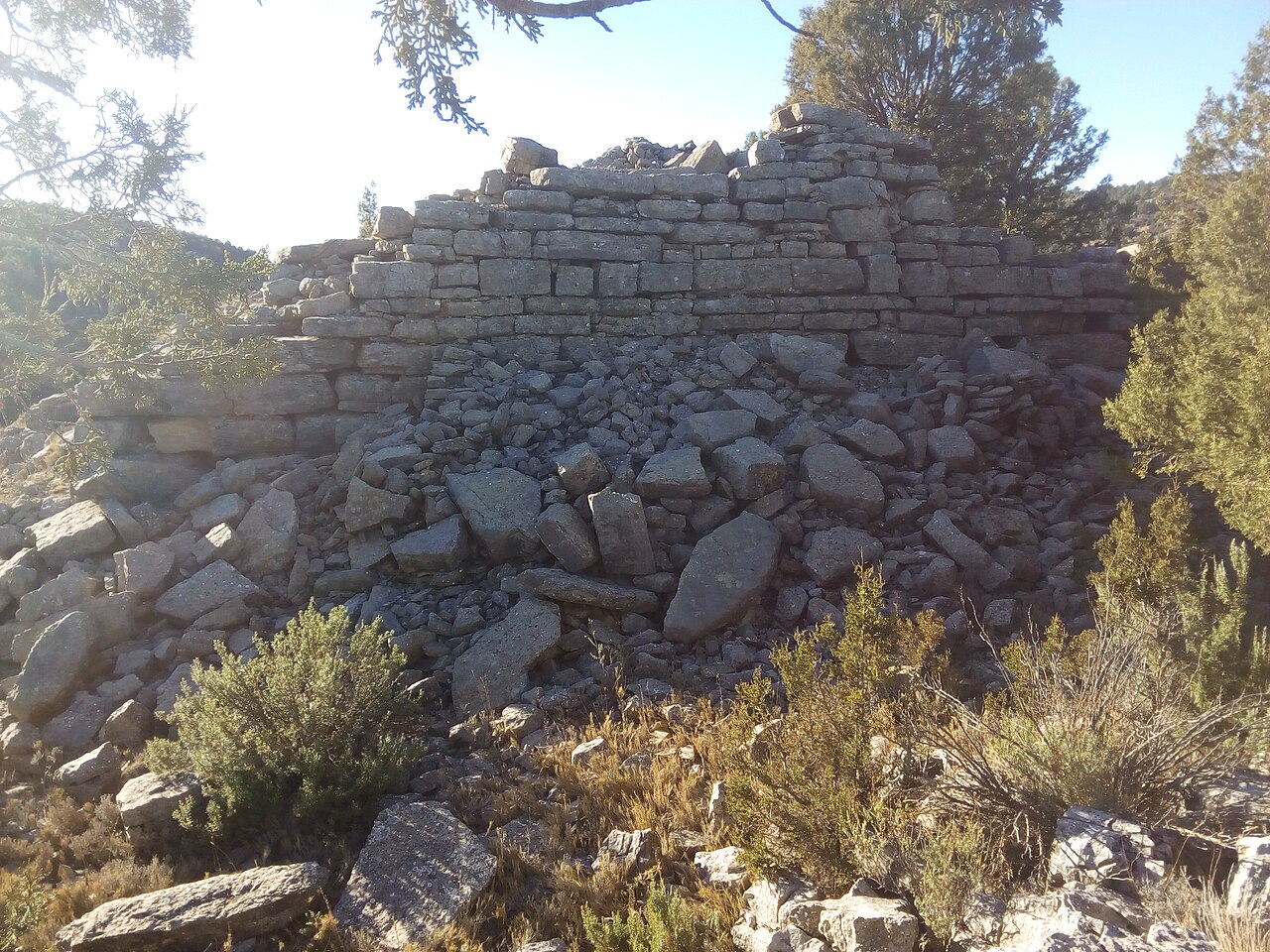
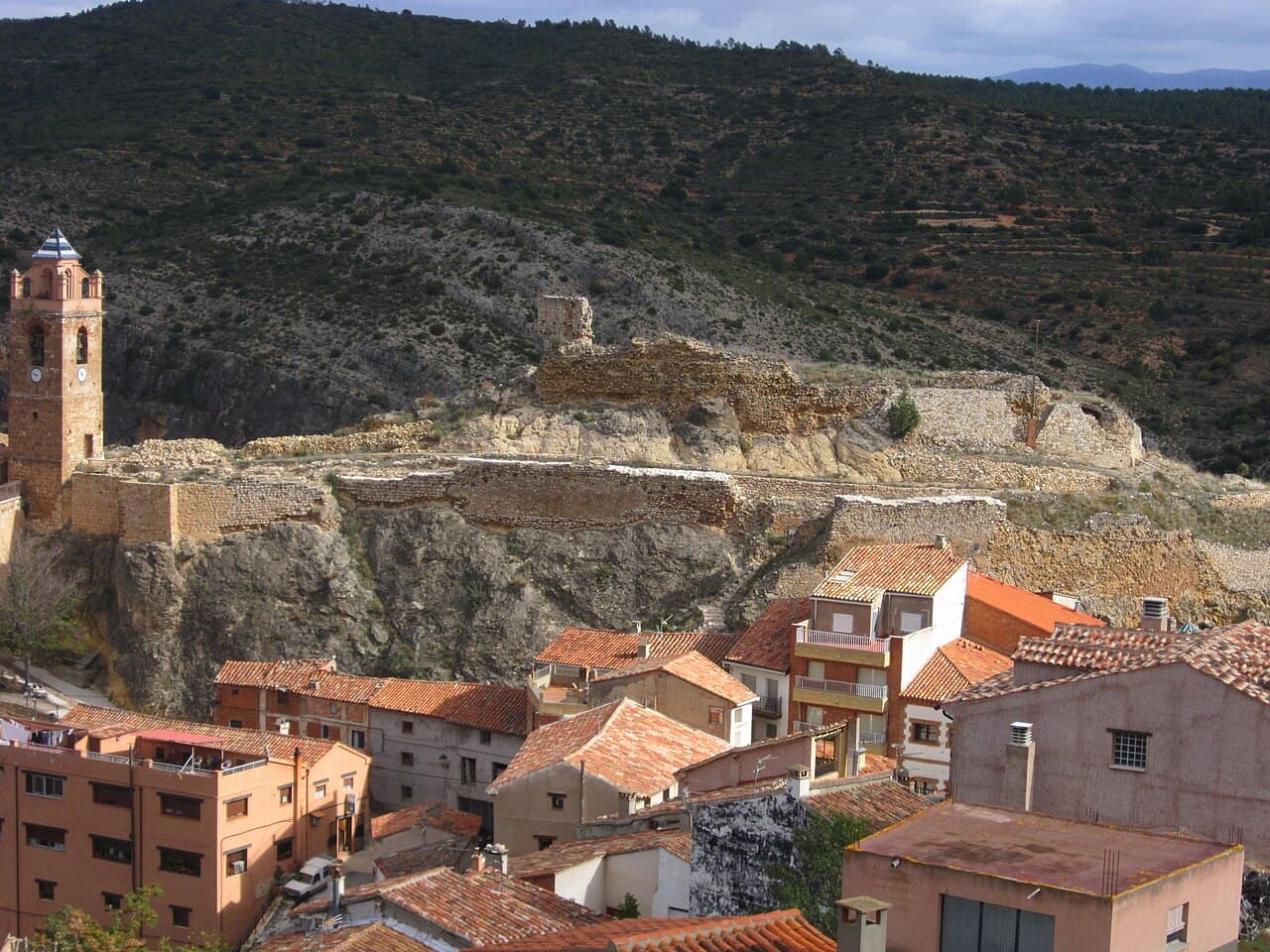
The Castle of Castielfabib is a remarkable hill castle located in the village of Castielfabib, Spain, known for its strategic position atop a rocky outcrop overlooking a broad valley. This site has been continuously significant from ancient times, with archaeological evidence confirming Iberian and Roman occupation long before the castle's medieval incarnation. The fortress as it stands today largely dates back to the Muslim period of the Iberian Peninsula, reflecting the region's complex history of conquest and reconquest.
Early history and muslim origins
Archaeological findings suggest that the site where the castle now stands was a fortified location during the 12th century or earlier, coinciding with the era of Muslim control in eastern Spain. The castle's original construction likely served both military and administrative functions within the Muslim kingdom. Its elevated position provided commanding views and control over key access routes, a typical feature of hill castles designed for defense and surveillance.
Christian conquest and medieval significance
In 1210, the castle was captured by King Peter II of Aragon after a prolonged siege, marking a pivotal moment in the Reconquista. This event transitioned the fortress into Christian hands, and soon after, it gained political prominence when the king convened the General Courts of Aragon at the castle for three days. Despite this early Christian control, the castle briefly reverted to Muslim rule before being permanently reclaimed by King James I of Aragon, who incorporated it into the Crown of Aragon's holdings.
Following the final Christian reconquest, the castle's ecclesiastical and military importance was underscored by granting the rights to collect tithes to the Order of the Temple. After the dissolution of the Templars in 1319, these rights passed to the Order of Montesa, which maintained influence in the region.
Conflicts and transformations from the 14th to 19th centuries
From the 14th century onwards, the castle and the surrounding area endured multiple conflicts. These included the wars between the kingdoms of Aragon and Castile, notably the War of the Two Peters, as well as later disturbances such as the Spanish War of Independence in the early 19th century and the Carlist Wars. Each conflict inflicted damage on the fortress, necessitating repairs and adaptations.
During the French occupation in the early 1800s, the castle was repurposed as a prison and military command center. In 1835, amid the First Carlist War, reconstruction efforts were undertaken using forced labor, reflecting the harsh social conditions of the time. However, these improvements were short-lived, as government forces later demolished much of the recent work.
Architectural features and religious adaptation
The most prominent surviving element of the castle is its keep, or tower of homage, dating back to the 12th century. This tower, positioned on the highest point of the rocky outcrop, served as a key defensive and observation post. Its robust construction exemplifies medieval military architecture.
Remarkably, the tower was later converted into the Parochial Church of Our Lady of the Angels. This adaptation incorporated a medieval core with distinctive architectural elements such as diaphragm arches—transverse arches that divide vaults into sections—and rib vaults in the side chapels, characteristic of churches built during the Reconquista period. The church also features wooden roofing structures.
In the 16th century, the church was expanded with the addition of a sacristy, a bell tower, and extra chapels on its west side. Later, in the 18th and early 19th centuries, the interior was remodeled to create a three-nave layout with a barrel vault ceiling punctuated by lunettes. Frescoes depicting the Eucharistic Mystery adorned part of the nave, reflecting the devotional art of the period.
The presbytery was elevated and crowned with a dome on a drum, echoing the design of the Communion chapel. Unfortunately, many archival documents and religious sculptures were lost during the Spanish Civil War, leaving only a small 17th-century figure of Christ as a surviving artifact.
Recent archaeological work and preservation
Modern archaeological investigations, notably those led by Juan José Barragán in 1998 under the auspices of the Generalitat Valenciana, have uncovered important Gothic mural paintings beneath later modifications. These discoveries have enriched understanding of the castle's layered history and artistic heritage.
The castle complex, including its defensive walls, enjoys legal protection as a site of significant architectural and cultural value. Visitors can appreciate the castle's imposing presence and panoramic views from La Torreta, a medieval watchtower that was once part of the village's western defenses.
Frequently asked questions (FAQ)
- How do I get to the Castle of Castielfabib?
- The castle is located in the village of Castielfabib in the Valencian Community of Spain. It is accessible by local roads and is a short walk from the village center.
- What is the historical significance of the Castle of Castielfabib?
- The castle played a key role during the Reconquista, changing hands between Muslim and Christian forces. It was also a political center when King Peter II of Aragon held the General Courts there in 1210.
- Can I visit the interior of the castle?
- Visitors can explore the castle grounds and the Parochial Church of Our Lady of the Angels, which occupies the former keep. However, some areas may be restricted due to preservation efforts.
- When is the best time to visit the castle?
- The castle is open daily from 10:00 to 18:00. Spring and autumn offer pleasant weather and fewer crowds, making these seasons ideal for visits.
- Is there an entrance fee to visit the Castle of Castielfabib?
- Entry to the castle is free of charge, allowing visitors to explore its historic features without cost.
Photo gallery

Information
Opening hours
10:00-18:00, daily
Ticket prices
Free
Current owner
Municipality
Website
Visit websiteSources & official resources
Verify the information above using these authoritative references.
Loading map...
Visitor reviews
No reviews yet. Been here? Write the first review and help other travelers!
Write the first reviewVisited this castle? Share your experience
Your review helps other travelers and adds first-hand knowledge to our encyclopedia.