Castillo de El Cuervo
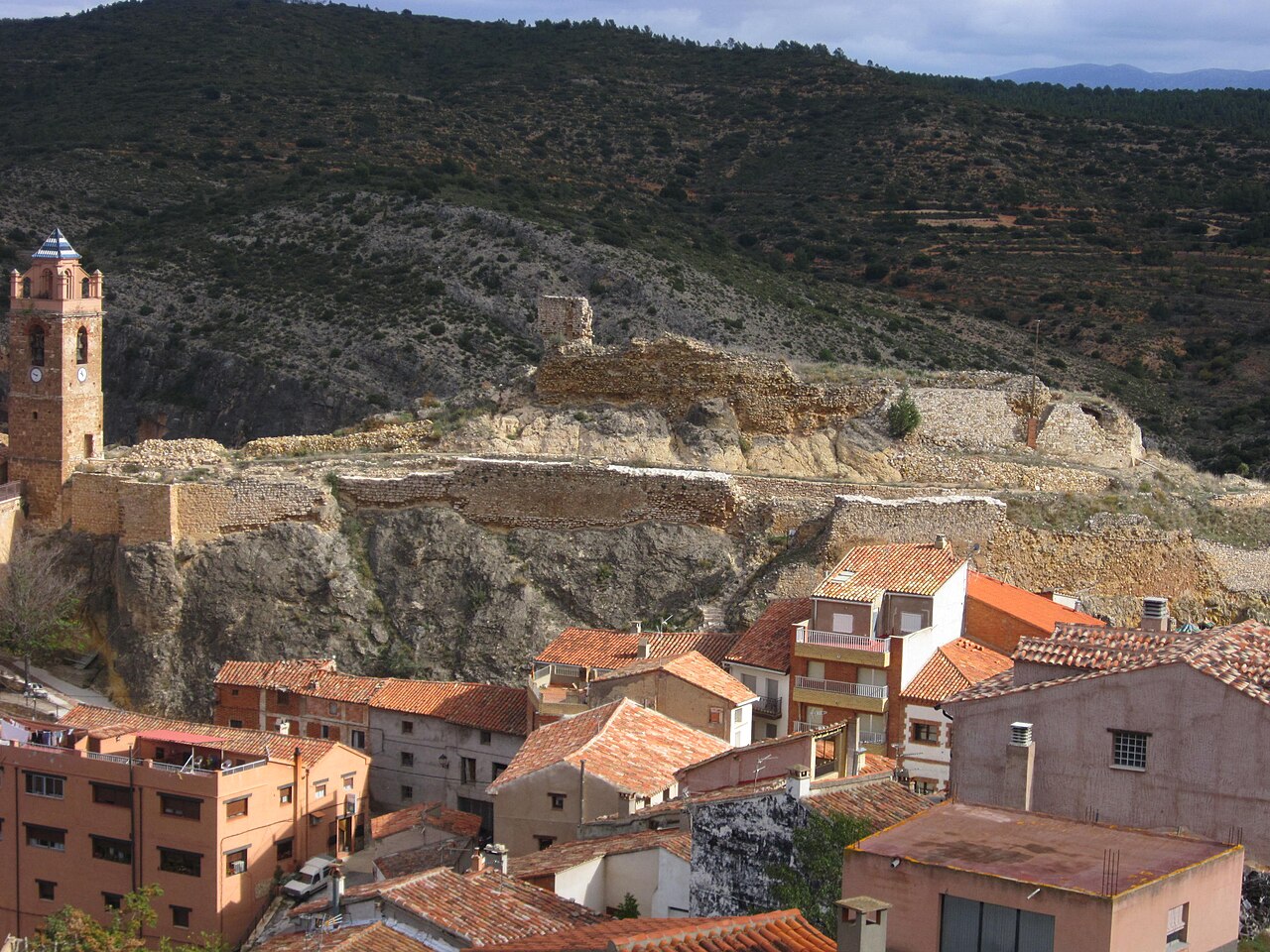
Castillo de El Cuervo is a medieval hill castle located in the municipality of El Cuervo, Spain. It was originally constructed during the Muslim period as part of a broader defensive network that linked key strategic points across the region. This network included fortresses such as Albarracín in Teruel and Alpuente in Valencia. The castle’s primary function was military, serving to control and defend the borderlands between the Christian and Muslim territories during the Middle Ages.
Historical context and significance
The castle first appears in Christian conquest records dated September 19, 1210, where it is referred to by the Latin name "castellum quod dicitur lo Corbo." This document, signed by Pedro II of Aragón, situates the castle within the context of the Christian expansion into Muslim-held lands, specifically during the capture of nearby Castielfabib. The mention of Castillo de El Cuervo in these records highlights its strategic importance in the early 13th century as the Christian kingdoms consolidated control over the region.
Throughout the medieval period, the castle was part of a defensive system that included fortifications at Jabaloyas, Tormón, Castielfabib, Ademuz, and Santa Cruz de Moya. These castles collectively controlled the border between the kingdoms of Aragón and Valencia, playing a crucial role in regional military and political dynamics.
Architectural features and layout
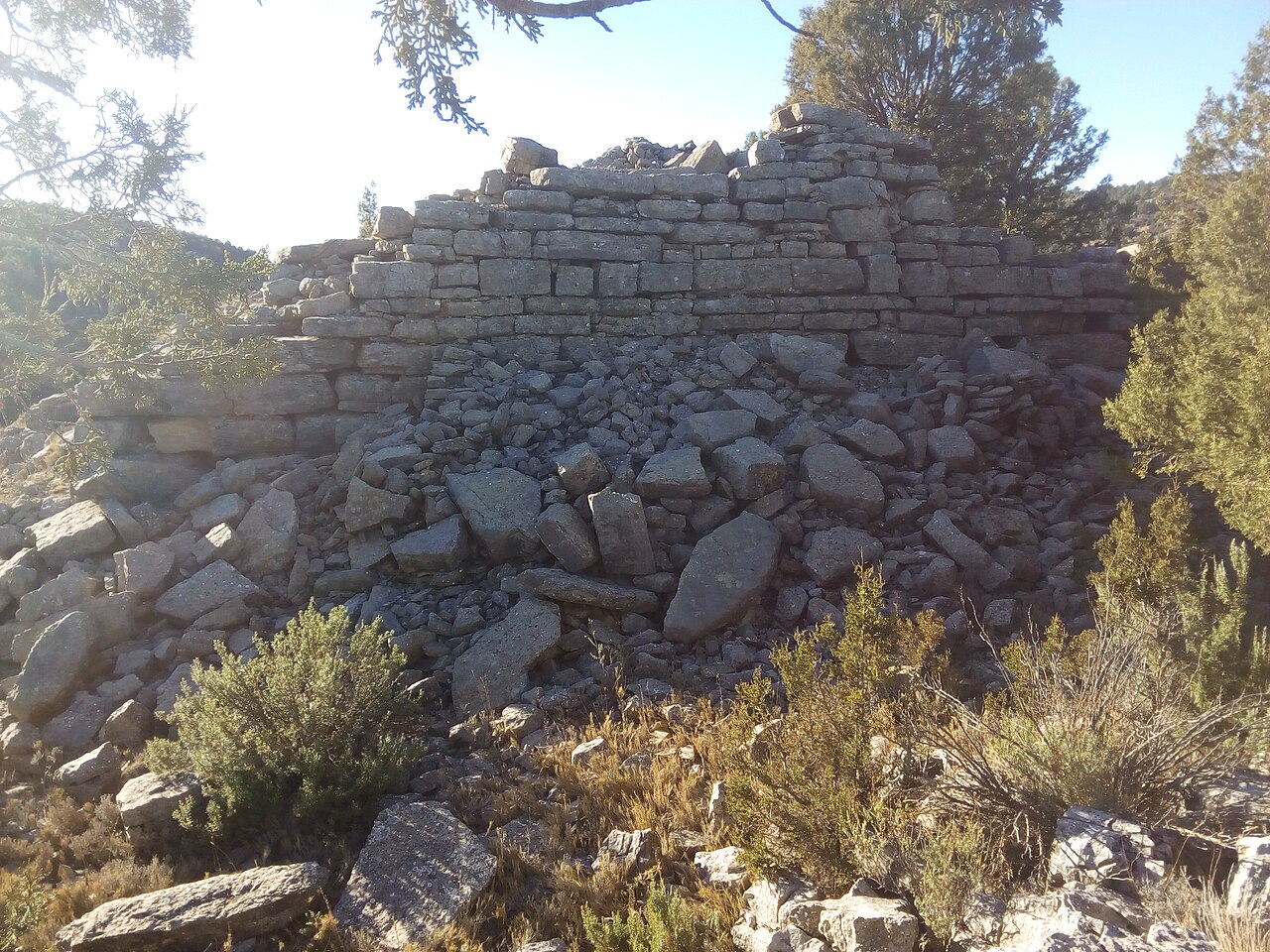
The ruins of Castillo de El Cuervo occupy a large rocky hill east of the village of El Cuervo. The castle’s layout is irregular, adapting closely to the natural contours of the terrain, a characteristic typical of rock castles designed to maximize defensive advantages offered by the landscape. Similar nearby fortifications such as Tormón, Tramacastiel, and Libros also exhibit this integration with rocky outcrops.
At the summit, a shallow triangular plateau slopes gently southward. In the northern part of this plateau, there is a significant cavity carved directly into the soft rock, locally known as the "cave of the Moors." This cavity is accessible by stone stairs hewn into the rock, indicating deliberate modification of the natural landscape, possibly for defensive, storage, or refuge purposes.
On the southern edge of the plateau lie the remains of a cistern, partially buried but still discernible. The cistern, which once had a vaulted roof now collapsed, would have been essential for collecting and storing water, ensuring the castle’s inhabitants had a reliable supply during sieges or dry periods.
The eastern base of the fortress was likely enclosed by a defensive wall forming an "alabar"—a service or support area within the castle complex. Today, this area corresponds to a deserted threshing floor surrounded by ruins of barns and livestock enclosures, which would have supported the castle’s agricultural and artisanal activities.
Strategic location and surroundings
The castle’s position on a rocky hill provides commanding views of the surrounding landscape. To the west, visitors can see the village of El Cuervo and its parish church. The castle overlooks the winding valley of the Ebrón River, which flows from north to south around the eastern side of the hill, extending toward Castielfabib. This vantage point allowed the castle’s occupants to monitor movements along the river valley and control access routes through the region.
The natural defensive advantages of the rocky hill, combined with the castle’s fortifications and water supply system, made Castillo de El Cuervo a formidable stronghold in its time. Although the castle eventually fell into ruin and is now largely a ruined site, its remains provide valuable insight into the military architecture and borderland history of medieval Spain.
Preservation and current condition
Today, Castillo de El Cuervo is in a state of ruins, with only partial remains visible. The site was not included in major 20th-century castle surveys, such as those by Andrés Valero in 1960 and Cristóbal Guitart Aparicio in 1987, likely due to the scarcity of its remains. Nevertheless, the castle remains an important cultural and historical landmark within the region, reflecting the complex military and political history of the Aragón-Valencia borderlands during the High medieval period.
Access to the site is facilitated by a well-maintained path leading up the hill, making it possible for visitors to explore the ruins and appreciate the castle’s strategic setting and architectural adaptations. The site’s natural and historical features make it a point of interest for those studying medieval fortifications and the history of Spain’s reconquest era.
Frequently asked questions (FAQ)
- When was Castillo de El Cuervo built?
- Castillo de El Cuervo was originally constructed during the Muslim period, before its first documented mention in 1210.
- What is the historical significance of Castillo de El Cuervo?
- The castle was part of a defensive network controlling the Aragón-Valencia border during the High Medieval period, playing a role in the Christian reconquest.
- Can visitors access the ruins of Castillo de El Cuervo?
- Yes, a well-maintained path leads to the ruins, allowing visitors to explore the site and enjoy views of the surrounding landscape.
- What architectural features remain at Castillo de El Cuervo?
- Visitors can see the irregular layout adapted to the rocky hill, the cave of the Moors with stone stairs, and the remains of a vaulted cistern.
- Why was Castillo de El Cuervo not included in major castle surveys?
- Due to the scarcity and poor preservation of its remains, the castle was omitted from significant 20th-century surveys by Andrés Valero and Cristóbal Guitart Aparicio.
Information
Loading map...
Visitor reviews
No reviews yet. Been here? Write the first review and help other travelers!
Write the first reviewVisited this castle? Share your experience
Your review helps other travelers and adds first-hand knowledge to our encyclopedia.