Seraglio of Baabda
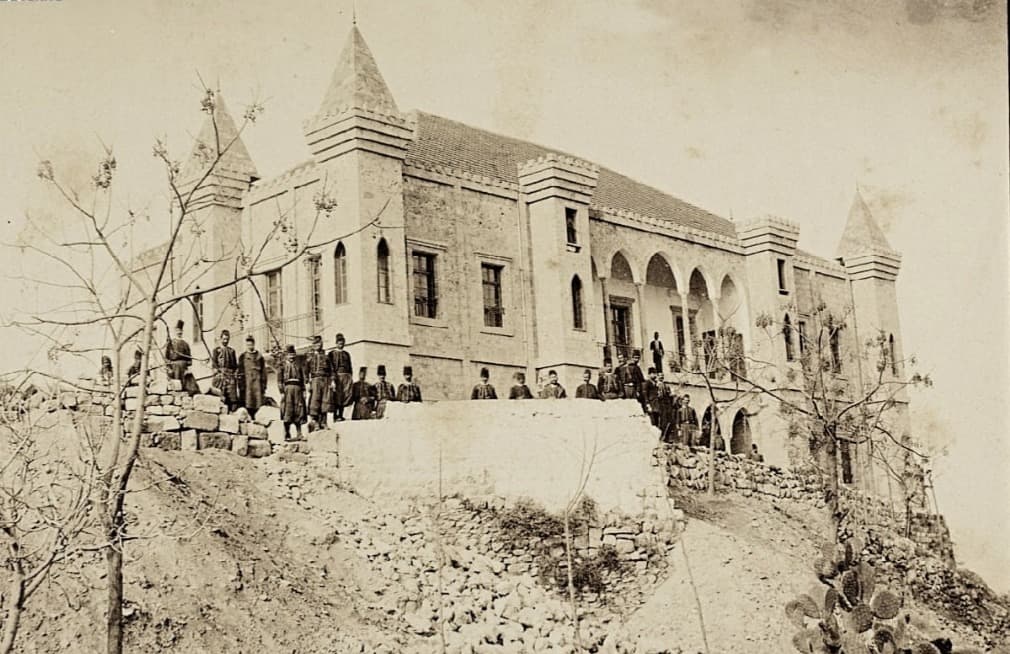
The Seraglio of Baabda, also known as the Baabda serail, stands as one of Lebanon's oldest official buildings, located in the town of Baabda. This historic structure played a significant role in the governance of the region during the late 19th and early 20th centuries, particularly between 1860 and 1916 when it served as the administrative center of the Mount Lebanon Mutasarrifate, a semi-autonomous district under the rule of the Ottoman Empire. The seraglio's strategic position atop a hill provided both a commanding view and natural defense, characteristic of a hill castle design.
Architectural features and layout
Constructed primarily from sandstone, the Seraglio of Baabda exhibits a robust castle-like appearance with its four corner towers that anchor the building's rectangular footprint. The structure covers a substantial surface area of approximately 7,852 square meters (84,520 square feet), distributed over two floors that encircle a spacious inner courtyard. This courtyard served as a central open space facilitating administrative and ceremonial functions. The towers not only contributed to the building's defensive capabilities but also symbolized authority and governance.
Historical context and significance
The Seraglio was built during a period of significant political and social changes in Lebanon under Ottoman rule. The Mount Lebanon Mutasarrifate was established following the 1860 civil conflict, aiming to provide a more stable and autonomous governance structure for the diverse religious communities in the region. The seraglio functioned as the residence and office of the Mutasarrif (governor), who was appointed by the Ottoman Sultan but operated with a degree of independence to maintain peace and order.
Throughout its history, the Seraglio of Baabda witnessed numerous administrative decisions and events that shaped the modern history of Lebanon. Its role as a political center continued until the end of Ottoman rule in 1916, after which Lebanon underwent further transformations leading to its eventual independence.
Current use and preservation status
Today, the Seraglio of Baabda houses the headquarters of the Mount Lebanon Governorate and several administrative offices, maintaining its historical function as a center of regional governance. Despite its continued use, the building is in need of extensive restoration to preserve its structural integrity and historical features. Recognizing its cultural and historical importance, the Seraglio was officially listed as a historic monument in 2008.
The preservation challenges stem from natural weathering of the sandstone, as well as the impact of modern administrative adaptations. Efforts to restore and maintain the building are crucial to safeguard this emblematic example of Ottoman-era architecture and Lebanon's administrative heritage.
Architectural style and influences
The Seraglio's design reflects a blend of traditional Ottoman architectural elements with local Lebanese influences. The use of sandstone and the castle-like form with towers are indicative of defensive architecture, while the layout around a central courtyard aligns with typical Ottoman palace designs. The building's style can be broadly categorized within the late Ottoman period architectural practices, emphasizing both functionality and symbolic authority.
Defensive and symbolic aspects
The four corner towers not only provided vantage points for surveillance but also reinforced the seraglio's image as a seat of power. The solid walls and elevated position contributed to its defensibility, a necessary feature given the turbulent political landscape of the time.
Interior and spatial organization
The interior of the Seraglio was organized to accommodate administrative offices, reception halls, and residential quarters for the governor and his staff. The two-floor arrangement allowed for separation of public and private functions, with the courtyard serving as a focal point for gatherings and official ceremonies.
Cultural and heritage importance
The Seraglio of Baabda remains a significant symbol of Lebanon's complex history during the Ottoman era. It represents the administrative evolution of the Mount Lebanon region and the efforts to maintain peace among diverse communities through a unique governance system. As a listed historic monument, it attracts interest from historians, architects, and visitors keen to understand Lebanon's past.
Preserving the Seraglio is essential for maintaining the tangible links to Lebanon's Ottoman heritage and for educating future generations about the region's political and architectural history.
Frequently asked questions (FAQ)
- What is the historical significance of the Seraglio of Baabda?
- The Seraglio of Baabda is a historic palace that has served as the official summer residence for Lebanese presidents. Its architectural style reflects the rich cultural heritage of Lebanon and has been a witness to significant political events throughout the country's history.
- When was the Seraglio of Baabda built?
- The construction of the Seraglio of Baabda began in the 19th century, specifically in 1890, and was completed in 1904. The palace has undergone several renovations and restorations to maintain its grandeur and historical integrity.
- Can I visit the Seraglio of Baabda?
- Yes, the Seraglio of Baabda is open to visitors, though access to certain areas may be restricted due to its function as a presidential residence. It is advisable to check in advance for guided tours or special visiting hours.
- What are the opening hours of the Seraglio of Baabda?
- The Seraglio typically opens to the public from 9 AM to 5 PM, but hours may vary on public holidays or during official state events. It is recommended to visit the official website or contact local tourism offices for the most current information.
- Is it possible to take photographs inside the Seraglio of Baabda?
- Photography policies can vary, so it’s best to inquire upon arrival. Generally, photography may be allowed in certain areas, while others may prohibit it to preserve the privacy and security of the site.
- What is the best time to visit the Seraglio of Baabda?
- The best time to visit the Seraglio of Baabda is during the spring and fall when the weather is mild and pleasant. These seasons also allow you to enjoy the beautiful gardens surrounding the palace.
- Are there any nearby attractions to the Seraglio of Baabda?
- Yes, nearby attractions include the Baabda Palace Gardens and the historic town of Baabda itself, which features charming streets and local shops. Additionally, the vibrant city of Beirut is just a short drive away, offering a variety of cultural experiences.
- What are the ticket prices for visiting the Seraglio of Baabda?
- Entry to the Seraglio of Baabda is generally free, but special guided tours may have a nominal fee. It is advisable to check for any updates or changes to pricing policies before your visit.
- How do I get to the Seraglio of Baabda?
- The Seraglio of Baabda is accessible by car or public transportation from Beirut. Taxis and ride-sharing services are also readily available, making it easy to reach this historic site.
Photo gallery

Photo by Unknown, late 19th-century photographs•Public domain
Information
Loading map...
Visitor reviews
No reviews yet. Been here? Write the first review and help other travelers!
Write the first reviewVisited this castle? Share your experience
Your review helps other travelers and adds first-hand knowledge to our encyclopedia.