Fortress of Niha
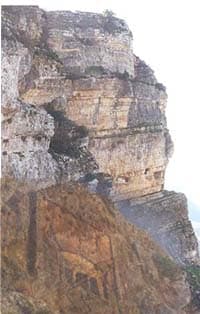
The Fortress of Niha, also known historically as the Cave of Tyron in Frankish sources and Chquif Tayroun in Arabic, is a remarkable example of a 10th-century bastioned fortress carved directly into the rock face of a cliff in Lebanon. Situated in the municipality of Niha Chouf, it commands a strategic vantage point overlooking the Bisri and 'Aray valleys and the vital road connecting Sidon to the Beqaa Valley. This location underscores its historical importance as a military stronghold controlling access through this key corridor.
Historical background and strategic significance
The fortress is first recorded in historical documents dating to 975 AD, marking it as a significant fortification during the early medieval period. It appears again in records from 1133, reflecting its continued military relevance during the time of the Crusades. Control of the fortress shifted repeatedly between the Crusader states and local Muslim powers, illustrating the contested nature of the region during this era.
Its destruction in 1261 likely resulted from the conflicts that marked the waning years of Crusader influence in the Levant. However, the fortress was rebuilt under the orders of the Mamluk leader Baibars in 1270, demonstrating its enduring strategic value for controlling local routes and defending the region.
In the late 16th century, the fortress served as a refuge for prominent local leaders such as Emir Qorqomaz Maan around 1585. There are also accounts suggesting that the fortress provided shelter to Emir Fakhr-al-Din II before his execution in 1635, although it is more likely that his father, Emir Korkomaz, used it as a stronghold around 1584. These associations connect the fortress to the powerful Maan dynasty, which played a key role in Lebanese history during the Ottoman period.
Architectural features and layout
The fortress is notable for its unique construction, as it is extensively carved into the rock of the cliff face, forming a natural cave-like structure over one hundred meters deep. This rock-cut design provided natural protection and camouflage, making it difficult to assault.
Within the fortress, there are numerous chambers and rooms excavated from the rock that served multiple purposes. These spaces were used to shelter soldiers, store supplies, and carry out domestic activities necessary for sustaining a garrison during sieges or prolonged periods of occupation.
The fortress's design includes bastioned defensive elements, which were typical of fortifications intended to withstand artillery and siege warfare during the medieval period. The bastions allowed defenders to cover approaches with overlapping fields of fire, enhancing the fortress's defensive capabilities.
Location and cultural significance
Located within the Shouf Cedar Nature Reserve, the Fortress of Niha is part of a protected cultural and natural landscape. The reserve is renowned for its ancient cedar forests, which have been historically significant to Lebanon and the broader region.
Today, the fortress is accessible to visitors interested in Lebanon's medieval military architecture and history. Its position overlooking key valleys and routes continues to offer impressive views, connecting visitors to the strategic importance it once held.
Preservation and current condition
The fortress remains in a partially preserved state, with many of its rock-cut chambers and bastioned structures still visible. While some areas have suffered from natural erosion and the passage of time, the essential layout and defensive features endure, providing valuable insights into early medieval fortification techniques in the Levant.
Ongoing conservation efforts aim to protect the site within the Shouf Cedar Nature Reserve, ensuring that this unique example of a bastioned fortress carved into a cliff remains a significant historical and cultural landmark for future generations.
Frequently asked questions (FAQ)
- How do I visit the Fortress of Niha?
- The Fortress of Niha is located within the Shouf Cedar Nature Reserve in Lebanon. Visitors can reach it by car or guided tours from nearby towns. It is advisable to check local opening hours and visitor guidelines before planning your trip.
- What is the historical significance of the Fortress of Niha?
- The fortress played a crucial role during the early medieval period, controlling key routes between Sidon and the Beqaa Valley. It was contested by Crusaders and local Muslim forces and later rebuilt by Mamluk leader Baibars in 1270.
- What architectural features make the Fortress of Niha unique?
- The fortress is carved directly into a cliff, forming a cave-like structure over 100 meters deep. It includes rock-excavated chambers for shelter and storage, and bastioned defensive elements typical of medieval fortifications.
- Is the Fortress of Niha accessible for people with limited mobility?
- Due to its cliffside location and rock-cut nature, access to the fortress involves uneven terrain and steps, which may be challenging for visitors with limited mobility. It is recommended to assess accessibility needs before visiting.
- When is the best time to visit the Fortress of Niha?
- Spring and autumn are ideal times to visit due to mild weather and pleasant conditions within the Shouf Cedar Nature Reserve. Summer can be hot, and winter may bring rain, affecting trail accessibility.

Information
Loading map...
Visitor reviews
No reviews yet. Been here? Write the first review and help other travelers!
Write the first reviewVisited this castle? Share your experience
Your review helps other travelers and adds first-hand knowledge to our encyclopedia.