Moussa Castle
Moussa Castle stands as a remarkable testament to individual creativity and cultural homage, uniquely situated on a hillside between Deir el Qamar and Beiteddine in Lebanon. Unlike traditional medieval castles constructed by dynastic rulers or military leaders centuries ago, Moussa Castle was built in the 20th century by a single visionary, Moussa Abdel Karim Al Maamari. This castle is not merely a defensive structure but a personal dream brought to life through decades of dedication and craftsmanship, blending historical inspiration with modern construction.
The visionary behind moussa castle
Moussa Abdel Karim Al Maamari, born in 1931, was captivated from an early age by the allure of medieval castles. His ambition to build a castle was sparked by a local tradition that a girl he admired could only marry a man who owned a castle. This personal motivation fueled Moussa's lifelong commitment to realizing his dream. Before constructing his own castle, Moussa honed his skills through extensive work in restoration. Beginning in 1947, he collaborated with Emir Maurice Chehab on the renovation and excavation of fortresses for Lebanon's National Museum in Beirut. Later, he contributed to restoration projects at the Beiteddine Palace under the guidance of Emir Bashir Chehabi II. These experiences enriched his understanding of traditional Lebanese and medieval architecture, deeply influencing the design and construction of his own castle.
Construction and architectural features
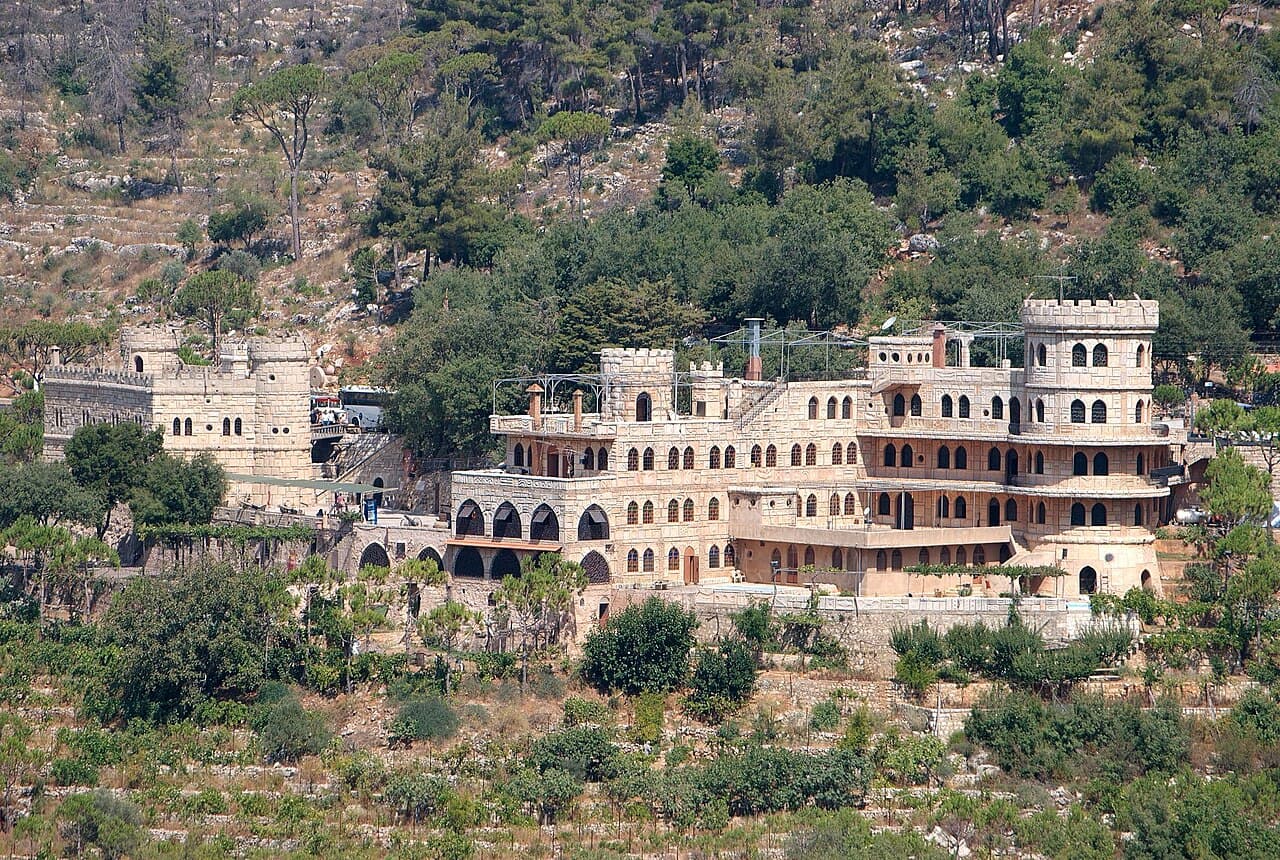
The foundation stone of Moussa Castle was laid in 1962, and the main construction was completed by 1969. The castle covers an area of approximately 3,500 square meters, perched strategically on a hill that offers commanding views of the surrounding landscape. Its design echoes medieval fortresses, featuring towers, defensible ramparts, and a moat crossed by a functioning drawbridge. Moussa personally set around 6,500 stones during the construction, demonstrating exceptional craftsmanship and attention to detail.
The castle's architecture is characterized by traditional stone masonry, with walls and towers built to evoke the strength and solidity of historical fortifications. However, the design is interpretive rather than strictly authentic, blending various medieval influences filtered through Moussa's personal vision. The castle's layout includes multiple chambers and courtyards, reflecting the functional and symbolic aspects of a fortress while serving as a canvas for Moussa's artistic expression.
Sculptural art and cultural narrative
Inside the castle walls, visitors encounter numerous clay sculptures crafted by Moussa himself. These sculptures vividly depict scenes from rural life in 19th-century Lebanon, portraying community members such as a baker, a hookah smoker, and a schoolmaster. This artistic inclusion enriches the castle's interior, offering a narrative dimension that captures the social and cultural fabric of Lebanese village life. These figures serve not only as decorative elements but also as a form of cultural preservation, reflecting Moussa's intent to immortalize local customs and occupations through his work.
Historical significance and legacy
Moussa Castle is unique among Lebanese castles in that it is a modern construction inspired by historical architecture rather than a relic of medieval times. It stands as a personal monument to Moussa's vision, skill, and passion for Lebanon's cultural heritage. His dedication earned him recognition, including knighthood in Lebanon's National Order of the Cedar and membership in the Patriarchal Order of the Holy Cross of Jerusalem. Moussa's story and the castle's creation are chronicled in his book, Le Rêve de ma vie (The Dream of My Life), which offers insight into the motivations and challenges behind this extraordinary project.
Since its completion in 1969, Moussa Castle has remained well preserved, retaining the integrity of its stonework and interior arrangements. It serves as an enduring example of how traditional architectural forms can be reinterpreted in a contemporary context, bridging past and present. Moussa passed away in early 2018, but his castle continues to attract visitors intrigued by its unique origin story, artistic features, and cultural significance.
Visitor experience and cultural heritage
Today, Moussa Castle offers visitors a rare glimpse into a 20th-century interpretation of medieval fortress architecture combined with artistic storytelling. The castle's hillside location provides panoramic views of the surrounding Lebanese landscape, enhancing the visitor experience. The careful preservation of the castle's structures and sculptures allows guests to appreciate both the architectural craftsmanship and the cultural narratives embedded within its walls.
Visitors can explore the castle's towers, courtyards, and interior chambers, gaining insight into Moussa's creative process and the historical inspirations that shaped his work. The castle's blend of fortification elements and artistic sculptures makes it a unique cultural landmark in Lebanon, reflecting the enduring appeal of medieval architecture and the power of personal vision in shaping heritage sites.
Frequently asked questions (FAQ)
- How do I get to Moussa Castle?
- Moussa Castle is located in Deir el Qamar, Lebanon. You can reach the castle by car or public transportation from nearby cities like Beirut. Parking is available near the entrance, making it convenient for visitors.
- What is the historical significance of Moussa Castle?
- Moussa Castle is a unique architectural marvel built by Moussa Abdel Karim Al-Maamari over a period of 60 years, starting in 1962. The castle reflects a blend of various architectural styles and is a testament to the rich history of Lebanon. It serves as a cultural landmark, showcasing the artistic vision of its creator.
- When was Moussa Castle built?
- The construction of Moussa Castle began in 1962 and continued until the late 1990s. This long-term project was a labor of love for its founder, who aimed to create a space that encapsulated the essence of Lebanese culture and history. The castle is still a work in progress, adding to its charm.
- Can I visit Moussa Castle year-round?
- Yes, Moussa Castle is open to visitors throughout the year. However, it is advisable to check for specific opening hours and any seasonal events that might affect accessibility. The best time to visit is during the spring and fall when the weather is pleasant.
- Why is Moussa Castle popular among tourists?
- Moussa Castle is popular for its stunning architecture, rich history, and picturesque views of the surrounding landscape. Visitors are drawn to its unique design and the story behind its creation. The castle also offers a variety of cultural experiences, making it an attractive destination for both history buffs and casual tourists.
- Is it possible to take guided tours of Moussa Castle?
- Yes, guided tours are available for those who wish to learn more about the history and architecture of Moussa Castle. Knowledgeable guides provide insight into the castle's significance and the life of its builder. These tours enhance the visitor experience, offering a deeper understanding of the site.
- What are the ticket prices for Moussa Castle?
- As of now, the ticket prices for Moussa Castle are quite affordable, with discounts available for students and groups. Tickets can be purchased at the entrance, and prices are subject to change, so it's best to check before your visit. This makes it accessible for families and tourists alike.
- What are the opening hours for Moussa Castle?
- Moussa Castle typically opens from 9 AM to 6 PM, but hours may vary based on the season. It is recommended to check the official website or contact the castle directly for the most accurate information. Planning your visit during these hours ensures you have ample time to explore the castle and its surroundings.
- Are there nearby attractions to visit along with Moussa Castle?
- Yes, Deir el Qamar is home to several nearby attractions, including the historic Beiteddine Palace and the charming local souks. After visiting Moussa Castle, you can enjoy a stroll through the picturesque village and experience its rich culture. These attractions complement your visit and provide a fuller experience of the region.
Photo gallery

Information
Website
Visit websiteSources & official resources
Verify the information above using these authoritative references.
Loading map...
Visitor reviews
No reviews yet. Been here? Write the first review and help other travelers!
Write the first reviewVisited this castle? Share your experience
Your review helps other travelers and adds first-hand knowledge to our encyclopedia.