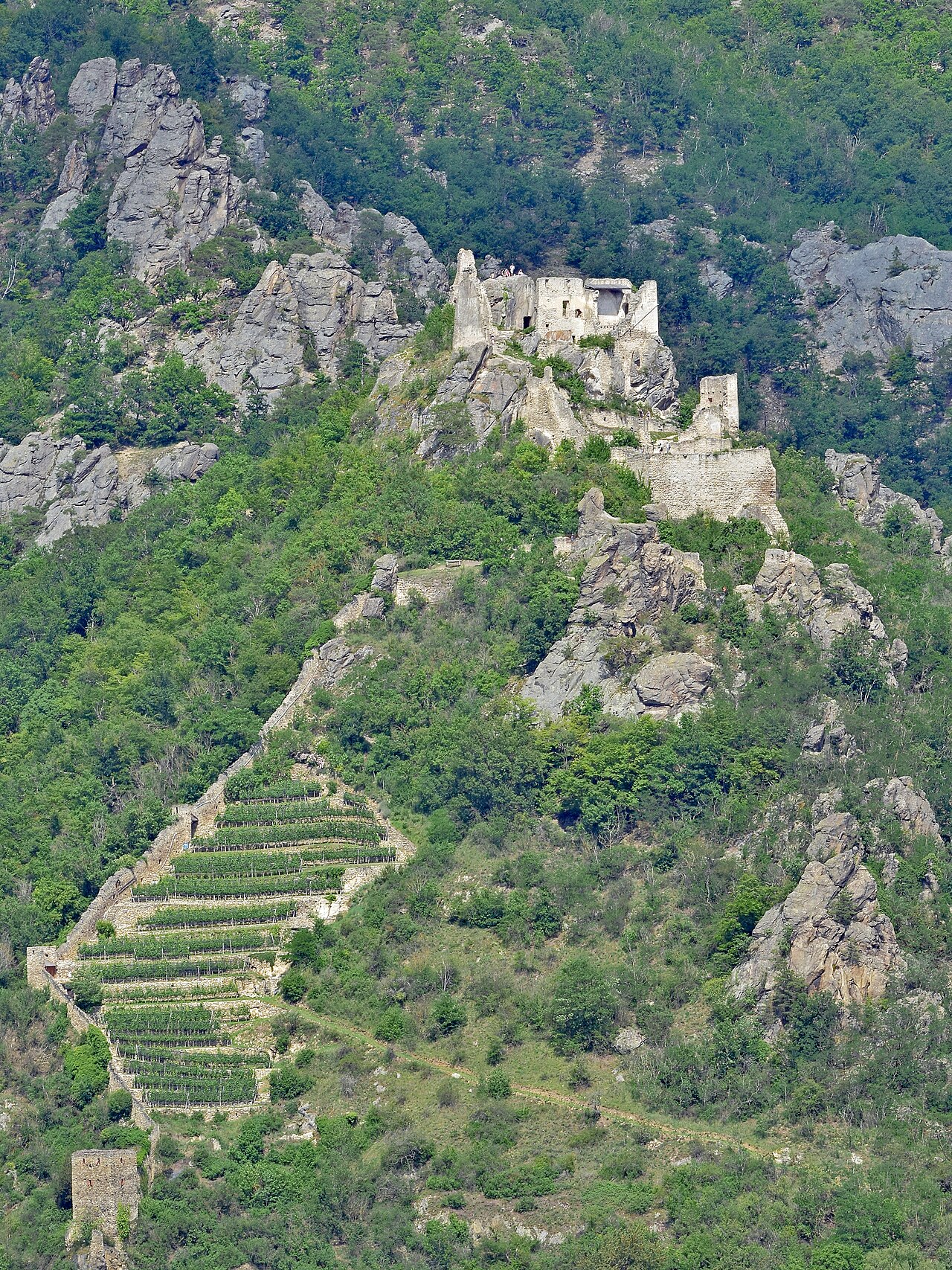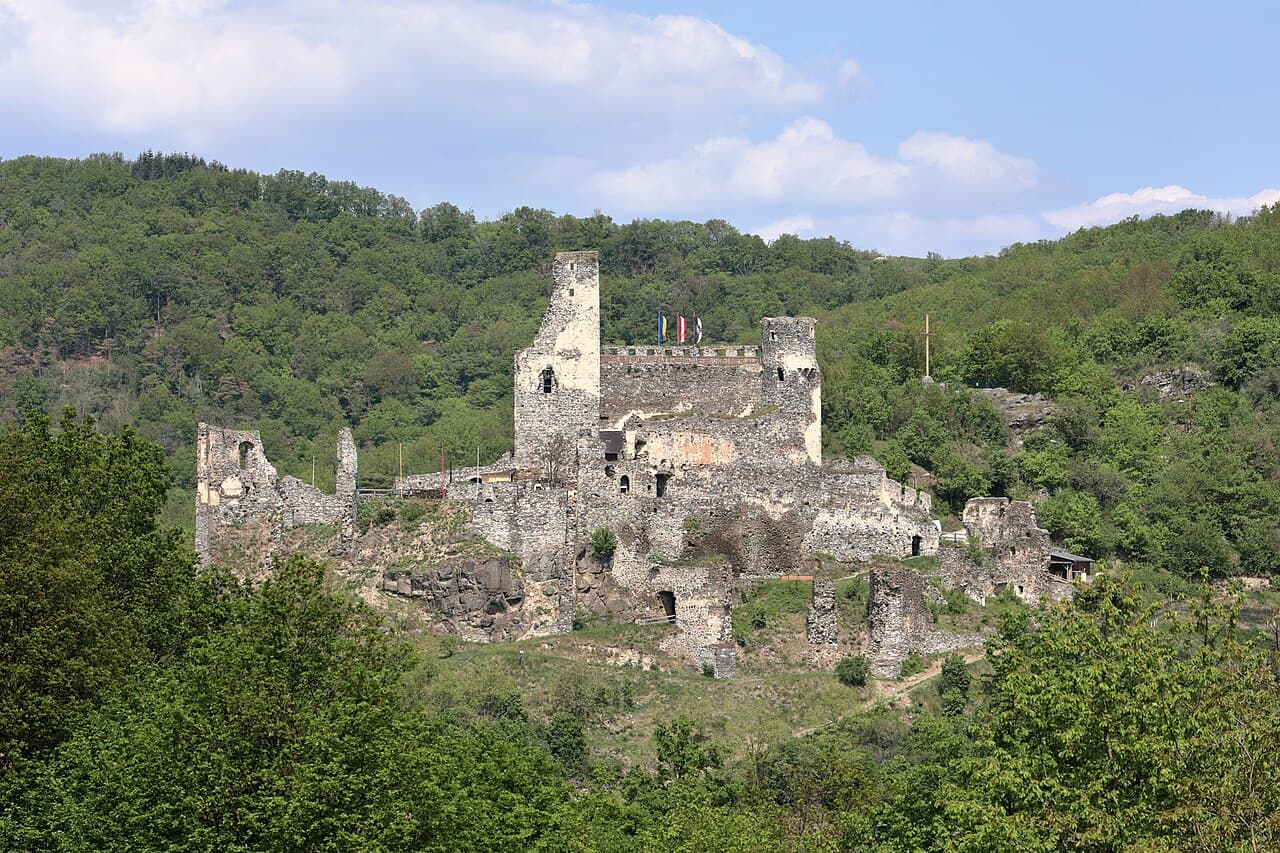
Senftenberg Castle
Senftenberg Castle is a striking example of a high medieval hill castle located in Senftenberg, Austria. First recorded in 1197, this fortress has witnessed centuries of noble lineage, warfare, and regional upheaval. Its ruins today offer a rare glimpse into medieval defensive architecture and the turbulent history of the region.
Originally constructed by the influential Lengenbach family, who were prominent nobles in the area, the castle was strategically positioned atop a hill at approximately 271 meters above sea level. This elevated location provided commanding views of the surrounding landscape, crucial for surveillance and defense. The earliest documented mention of the castle comes from a legal record dated April 26, 1197, when a noble named Rudegerus de Senftenberc appeared as a witness, indicating the castle's early significance.
Throughout its history, Senftenberg Castle changed hands multiple times. In the 13th century, it belonged to the Zebringer family, followed by the Wallseer family during the 14th and 15th centuries. The noble lines connected to the original builders adopted the names Senftenberg and Minnenbach as they established their influence in the region.
Medieval conflicts and destruction
Between 1407 and 1409, the castle suffered partial destruction during a rebellion linked to disputes over guardianship, a common medieval conflict involving inheritance and authority. The castle was subsequently rebuilt, restoring its defensive capabilities. However, by the early 16th century, around 1520, Senftenberg Castle had declined in its noble function and was reportedly used as a refuge for highwaymen, reflecting the instability of the period.
The castle also played a protective role during the 1529 siege of Vienna in the Ottoman Wars, serving as a refuge for local inhabitants fleeing the advancing Ottoman forces. Later, in the late 16th century, the fortress was repeatedly attacked during regional peasant wars, highlighting the social unrest and political turmoil of the era.
Senftenberg Castle's final destruction occurred during the Thirty Years' War. In 1645, Swedish troops under General Torstenson captured and deliberately destroyed the castle, leaving it in ruins. Since then, the site has remained largely abandoned, entering a prolonged state of decay.
Architectural features and layout
The castle's design reflects typical medieval defensive architecture with adaptations unique to its location and history. The ruins include three well-preserved gatehouses that originally controlled access to the inner wards. These gates were constructed with robust stone walls, narrow entrances, and defensive elements to repel attackers.
A notable feature is the shield wall, a fortified stone barrier designed to absorb enemy attacks. This element is relatively rare in Austrian castles, making Senftenberg an important example of this defensive strategy. The shield wall's presence underscores the castle's emphasis on frontal defense against sieges.
The main tower, or bergfried, is architecturally distinctive. Its base is rectangular, transitioning into an oval midsection, and culminating in a hexagonal upper part. This complex form likely enhanced both its structural integrity and its function as a lookout and last refuge during attacks.
In addition to the bergfried, there is another tower whose specific historical role is less documented but would have contributed to the castle's overall surveillance and defense system.
The castle's entrance was accessed via a wooden bridge spanning defensive ditches or uneven terrain. Remarkably, this bridge survived a fire that damaged other parts of the ruins, preserving an important element of the castle's original approach and defense.
Preservation and cultural significance
Today, Senftenberg Castle stands as a well-preserved ruin, maintained through local conservation efforts. A preservation group holds a long-term lease on the site and has worked to stabilize the remaining structures, protecting them from further deterioration. The ruins serve as a cultural landmark, offering insight into medieval life, architecture, and the region's complex history.
Visitors to the site can explore the remains of the gates, the imposing bergfried, and the shield wall, gaining an understanding of the castle's strategic importance. The castle's history as a noble residence, military stronghold, and refuge during times of conflict enriches its appeal as a heritage site.
Senftenberg Castle's story is intertwined with major historical events such as the Ottoman Wars, the regional peasant uprisings, and the Thirty Years' War. Its architectural features reflect evolving medieval military technology and noble residence needs, making it a valuable subject for historians and castle enthusiasts alike.
Frequently asked questions (FAQ)
- How do I get to Senftenberg Castle?
- Senftenberg Castle is located in the municipality of Senftenberg, Austria. Visitors can reach it by car or local transport from nearby towns, with signage guiding to the hilltop ruins.
- What is the best time to visit Senftenberg Castle?
- The best time to visit Senftenberg Castle is during the spring to early autumn months when weather conditions are favorable for exploring the hilltop ruins and enjoying scenic views.
- Is Senftenberg Castle accessible to visitors year-round?
- Senftenberg Castle is generally accessible year-round, but visitors should check local conditions and opening hours, especially in winter when weather may affect access.
- What are the key architectural features of Senftenberg Castle?
- Key features include the distinctive bergfried with a rectangular base and hexagonal upper section, three gatehouses, and a rare shield wall, all typical of high medieval defensive architecture.
- Can I explore the interior of the castle ruins?
- Visitors can explore the exterior and accessible parts of the ruins, including the gatehouses and bergfried base, but some areas may be restricted for safety reasons.
- Are there guided tours available at Senftenberg Castle?
- Guided tours may be available through local heritage groups or tourism offices, offering detailed historical and architectural insights about the castle.
Photo gallery

Information
Website
Visit websiteSources & official resources
Verify the information above using these authoritative references.
Loading map...
Visitor reviews
No reviews yet. Been here? Write the first review and help other travelers!
Write the first reviewVisited this castle? Share your experience
Your review helps other travelers and adds first-hand knowledge to our encyclopedia.