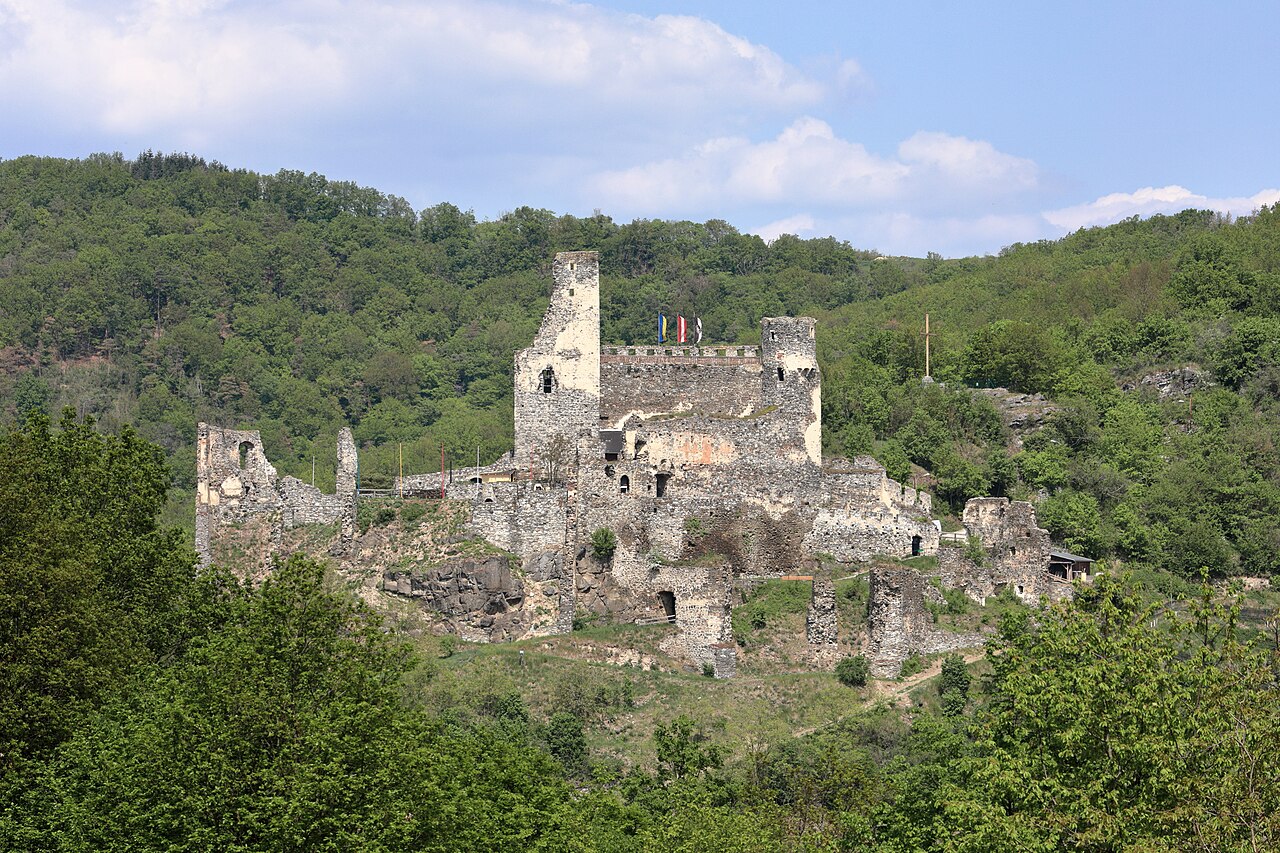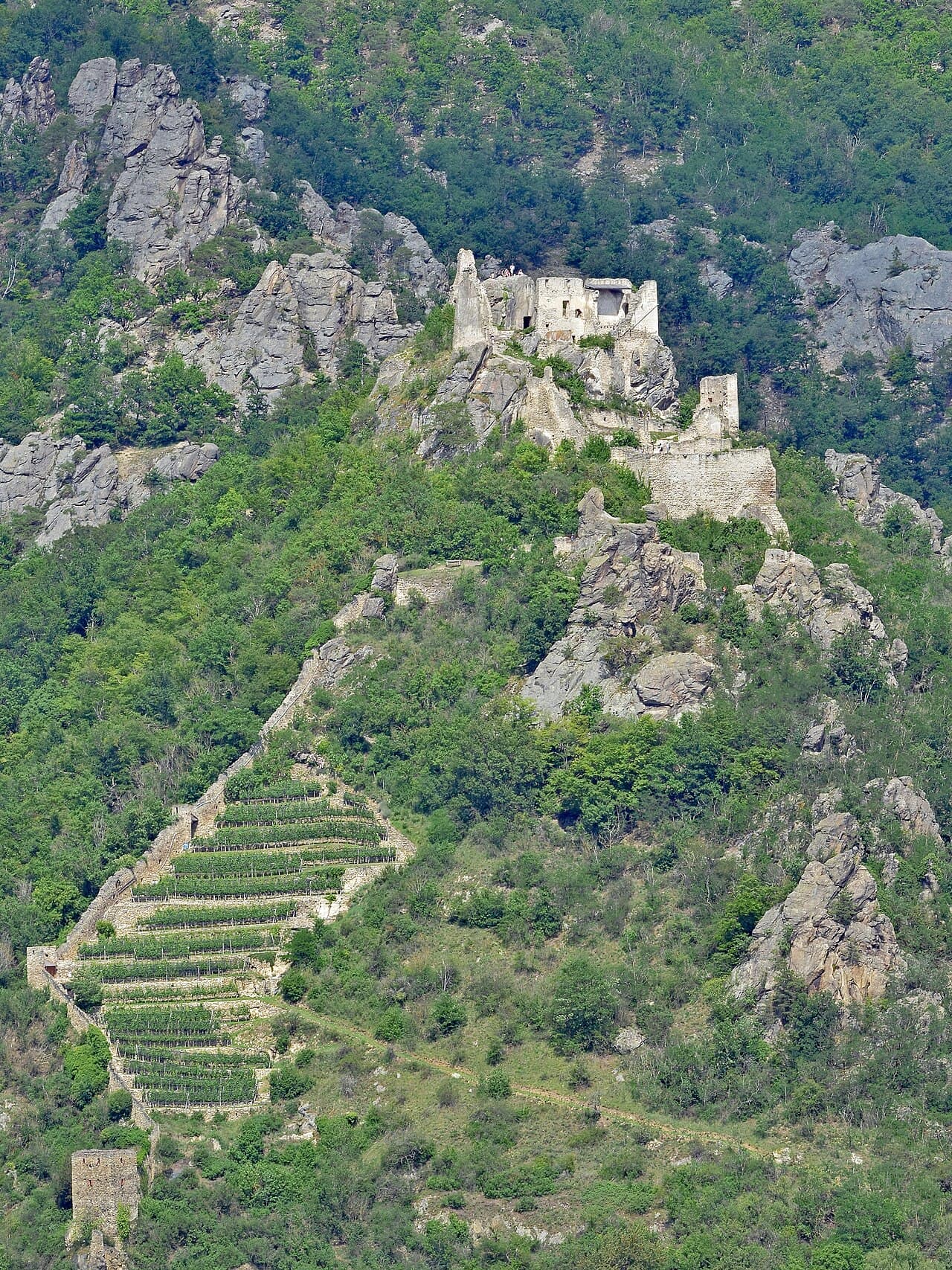
Dürnstein Castle Ruins
Dürnstein Castle ruins stand as a significant medieval landmark in the Lower Austrian Wachau region, perched on a rocky outcrop overlooking the Danube river. Constructed between 1140 and 1145 by Hadmar I Kuenring, the castle was originally a formidable rock fortress designed to control the vital Danube trade route and assert regional power. Although now in ruins, the site retains considerable historical and architectural interest, reflecting the turbulent history of medieval Austria.
Historical significance and legendary associations
The castle is famously linked to the imprisonment of King Richard the Lionheart of England during 1192-1193. After returning from the Third Crusade, Richard was captured by Duke Leopold V of Austria, who held him at Dürnstein Castle. This event is central to the enduring legend of the loyal minstrel Blondel de Nesle, who is said to have discovered the king's location by singing a song known only to them. Richard's captivity at Dürnstein ended with a substantial ransom of 150,000 silver marks, underscoring the castle's role in European medieval politics.
Architectural features and layout
Dürnstein Castle was constructed as a rock castle, utilizing the natural defensive advantages of its elevated position at 312 metres above sea level. The castle complex included a curtain wall connecting it to the adjacent town of Dürnstein, which provided additional fortification. Key features likely included a keep or donjon, defensive towers, and a gatehouse, although much of the original structure is now lost to time. The castle's strategic placement allowed control over river traffic and surveillance of the surrounding Wachau valley.
Defensive structures
The castle's walls were built to withstand sieges common in the High Medieval period. The rocky terrain was incorporated into the design, with natural cliffs serving as barriers on several sides. The connection wall to the town enhanced the defensive perimeter, enabling coordinated protection between the castle garrison and the town's inhabitants.
Destruction and current state
In 1645, during the Thirty Years' War, Dürnstein Castle was heavily damaged when Swedish forces under General Lennart Torstenson bombarded and blasted the fortress. This assault left the castle in ruins, and it was never rebuilt as a functional stronghold. Today, the site remains a ruin, classified as an archaeological site, attracting visitors interested in medieval history and panoramic views of the Danube.
Visitor experience and cultural heritage
Visitors to Dürnstein can explore the ruins, which offer a glimpse into medieval fortification architecture and the dramatic history of the region. Nearby, the Dürnstein Abbey houses a detailed model of the castle and town, providing context for the ruins. The abbey itself is a baroque architectural highlight in the town. The castle's association with Richard the Lionheart continues to draw interest, inspiring cultural events and guided tours that recount the legend and the castle's role in European history.
Access and amenities
The ruins are accessible via hiking trails from the town of Dürnstein, making it a popular destination for tourists exploring the Wachau valley. The site offers expansive views of the Danube and surrounding vineyards, enhancing the visitor experience. Interpretive signs and informational displays help contextualize the castle's historical importance.
Frequently asked questions (FAQ)
- When was Dürnstein Castle built?
- Dürnstein Castle was constructed between 1140 and 1145 by Hadmar I Kuenring as a strategic rock fortress overlooking the Danube.
- What is the historical significance of Dürnstein Castle?
- The castle is renowned for imprisoning King Richard the Lionheart from 1192 to 1193, a key event in medieval European history.
- Can visitors explore the castle ruins today?
- Yes, the ruins are open to the public and accessible by hiking trails from the town of Dürnstein, offering panoramic views and historical insights.
- What happened to the castle during the Thirty Years' War?
- In 1645, Swedish forces under General Torstenson bombarded and blasted the castle, leaving it in ruins that remain today.
- Is there any museum or exhibition related to the castle?
- Dürnstein Abbey nearby features a detailed model of the castle and town, providing visitors with historical context and architectural understanding.
Photo gallery

Information
Current owner
Municipality
Loading map...
Visitor reviews
No reviews yet. Been here? Write the first review and help other travelers!
Write the first reviewVisited this castle? Share your experience
Your review helps other travelers and adds first-hand knowledge to our encyclopedia.