Burgruine Rehberg
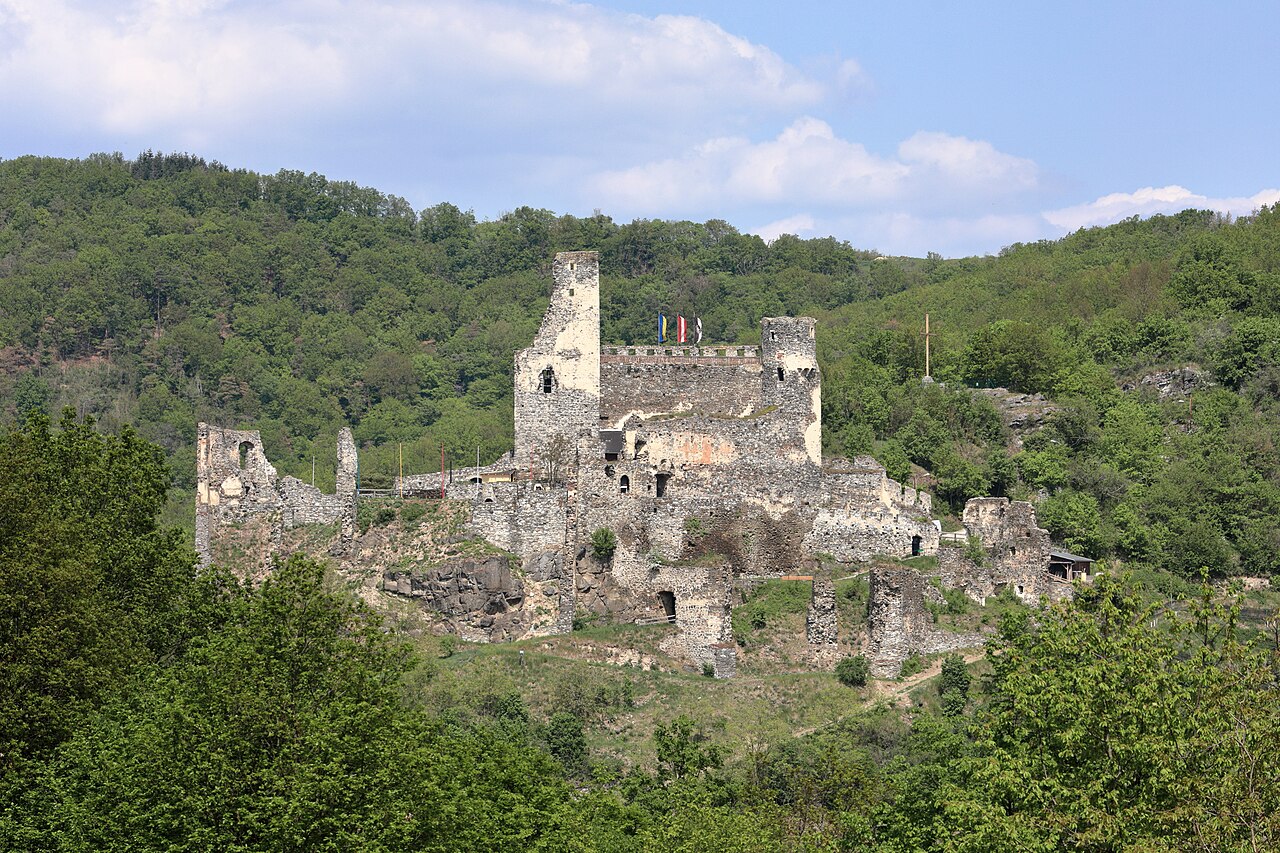
Burgruine Rehberg is a medieval hill castle ruin perched above the Krems River near the village of Rehberg within the municipality of Krems an der Donau, Austria. Its strategic location on a spur-like ridge projecting northwestward provides commanding views and natural defensive advantages, with steep rocky slopes surrounding the site on nearly all sides. The castle's origins trace back to the 12th century, making it a significant relic of Austria's High Middle Ages.
Early history and noble lineage
The earliest documented mention of Burgruine Rehberg dates to 1141, when individuals such as Otto “de Lengenpach” and his brothers, surnamed “de Rehperch” and “de Purchstalle,” were associated with the castle. These names indicate ties to local noble families who controlled the fortress during its formative years. The Lengenbach family maintained ownership until the death of Otto IV, the last of their line.
In 1235, the castle passed to the Babenberg dynasty, a powerful ruling house in Austria during the High Medieval period. This transfer marked a shift in regional power and the castle’s integration into broader political structures. The castle church, dedicated to Saint John, is first recorded in 1316 as the "chapelle ze Rechperch," underscoring the site's religious significance alongside its military function.
Habsburg era and political significance
During the early 14th century, Burgruine Rehberg gained prominence when it became part of the dowry of Agnes of Hungary, widow of King Andreas III of Hungary and daughter of Albert I of Habsburg. Agnes occasionally used the castle as a residence, reflecting its status within elite circles. After her death in 1364, Rudolf IV of Habsburg intended to donate the castle to the Vienna Cathedral chapter, but the plan was never finalized due to the castle’s status as an imperial fief, which kept it under direct imperial control.
Subsequently, the castle was managed by appointed burgraves and pledged to various noble families. From 1410 to 1451, the Grabners held the castle, followed by the Eyczing brothers and Georg Mühlwanger until 1479. Emperor Frederick III then tasked the city of Krems with redeeming the castle in exchange for civic privileges, after which provincial stewards administered the property on behalf of imperial authority.
Later ownership and architectural transformation
In 1501, Emperor Maximilian I sold Burgruine Rehberg to Hans von Sacher zu Weissenstein, marking its transition into private noble ownership. The castle changed hands several times during the 16th and early 17th centuries, notably belonging to the Protestant Thonradl family from around 1520 to 1650. Later, Ludwig Count von Kuefstein undertook significant renovations, converting the castle from a primarily defensive fortress into a noble residence, reflecting changing architectural and social needs.
From 1688 onward, the castle experienced frequent ownership changes among various noble families, including David Ungnad von Weißenwolf, the Counts of Salburg, Johann Ernst von Glanz, the von Hoheneck brothers, Johann Nepomuk Drexler, Vinzenz von Salzgeber, a Baroness von Reichel, and Count von Falkenhayn. Eventually, Count von Falkenhayn sold the property to the local municipality of Rehberg.
Decline and preservation efforts
Beginning in 1822, parts of Burgruine Rehberg were deliberately dismantled, accelerating its decline into ruin. Ownership passed to the Freiherren von Sina family in 1847 and later to the Gutmann family from 1884 until 1966. Since then, the castle has been under the stewardship of an association dedicated to the cultural renewal of Krems, focusing on preserving the site's historical and cultural legacy.
The castle church, dedicated to Saint John, has served as a filial church to the parish of Imbach since 1783, maintaining its religious role despite the castle's ruinous state.
Architectural features and site layout
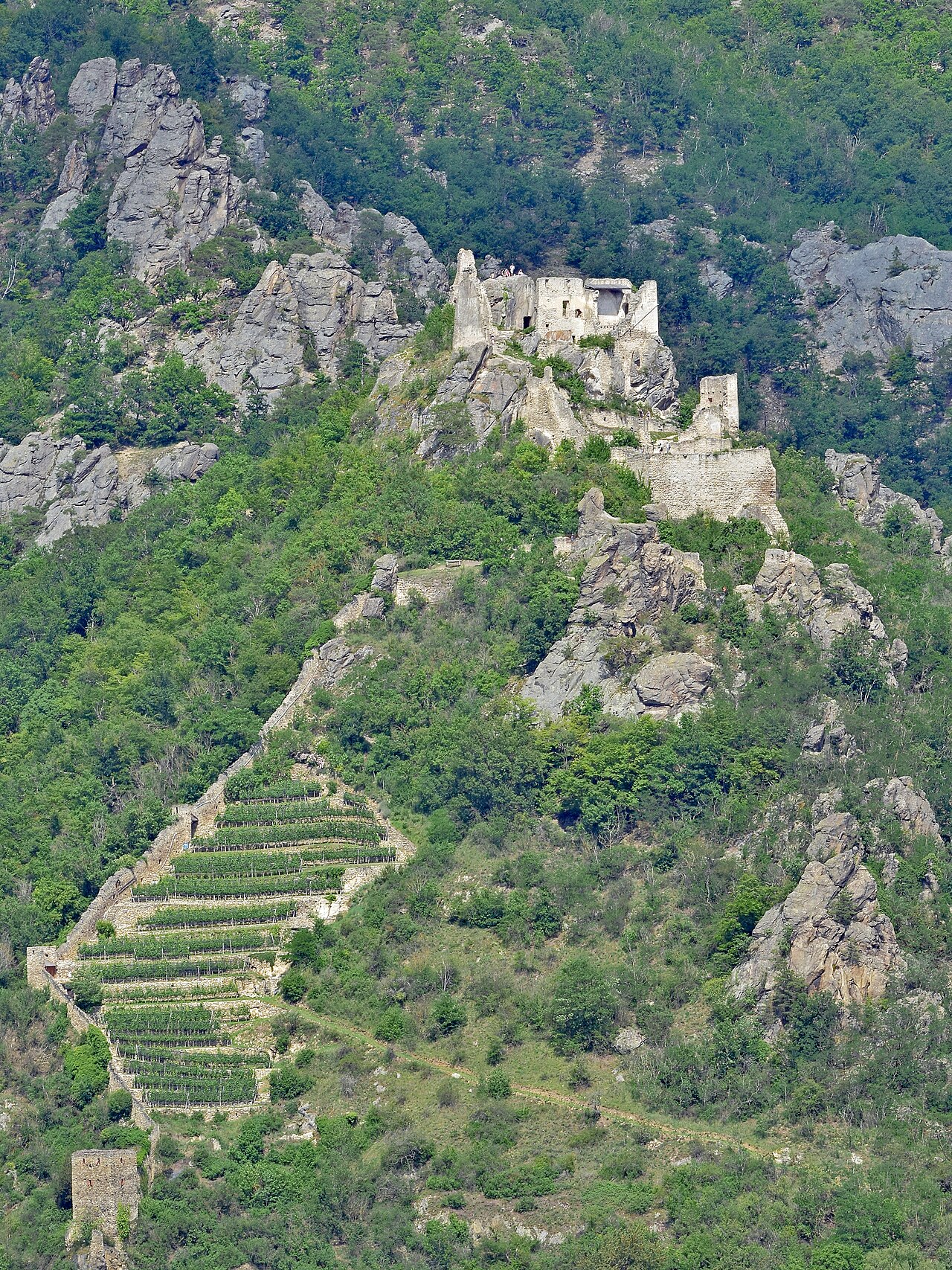
The ruins of Burgruine Rehberg are situated on a distinctive spur-like ridge with natural defenses formed by steep rocky slopes on nearly all sides. The only accessible approach is a narrow land bridge connecting the fortress to the historical area of Alt-Rehberg. This topography exemplifies medieval defensive strategy, maximizing natural terrain advantages.
On the lower southeastern terrace of the ridge stands the castle's former church dedicated to Saint John, a significant religious structure that served the local community and castle inhabitants. Although detailed architectural records are scarce, the church's survival highlights the intertwined military and ecclesiastical functions of the site.
The main castle area remains a ruin, reflecting centuries of use, neglect, and partial dismantling. While specific architectural elements such as gates, stairways, or inscriptions have not been extensively documented, the ruins' placement and remnants demonstrate adaptation to the rugged terrain and evolving defensive needs over time.
Construction materials and techniques
Although historical records do not specify the construction materials used, it is likely that the castle was built with locally sourced stone, a common practice in medieval Austrian fortifications. The integration of the castle structures with the natural rocky spur indicates skilled masonry adapted to the landscape, enhancing defensive capabilities.
Defensive structures and layout
The castle's layout utilized the natural topography to create a defensible position with steep slopes acting as natural barriers. The narrow land bridge approach would have been easily defensible, possibly fortified with walls or gates, although no detailed remains of such structures are currently documented. The presence of a dedicated church within the castle complex also suggests a well-established community and administrative center.
Cultural and historical significance
Burgruine Rehberg stands as a testament to the complex feudal and political history of Lower Austria. Its connections to noble families such as the Lengenbachs, Babenbergs, and Habsburgs reflect the shifting dynamics of medieval power. The castle's role in regional governance, religious life, and noble residence illustrates the multifaceted functions of such fortifications.
Today, the castle ruins are a cultural landmark within the Krems region, attracting visitors interested in medieval history, architecture, and the heritage of Austria. The stewardship by local associations ensures ongoing preservation efforts, allowing the site to remain an important educational and historical resource.
Visitor information
While the castle is a ruin, visitors can explore the site and appreciate its elevated position and historical context. The nearby village of Rehberg and the municipality of Krems an der Donau provide access points. Visitors should be prepared for uneven terrain and limited facilities. The castle church remains a point of interest for its historical and architectural value.
Frequently asked questions (FAQ)
- How do I get to Burgruine Rehberg?
- Burgruine Rehberg is located near the village of Rehberg in Krems an der Donau, Austria. Visitors can reach the site by car or local transport to Krems, then follow marked trails leading to the castle ruins.
- What is the historical significance of Burgruine Rehberg?
- Burgruine Rehberg is historically significant for its connections to noble families like the Lengenbachs, Babenbergs, and Habsburgs, reflecting the political history of Lower Austria from the 12th century onward.
- Can I visit the castle church at Burgruine Rehberg?
- Yes, the castle church dedicated to Saint John is still standing and serves as a filial church to the parish of Imbach. Visitors can explore the church as part of their visit to the ruins.
- Is Burgruine Rehberg accessible for people with mobility issues?
- Due to its location on a rocky ridge with steep slopes and a narrow land bridge approach, access to Burgruine Rehberg may be challenging for visitors with mobility issues. Caution is advised when exploring the site.
- When is the best time to visit Burgruine Rehberg?
- The best time to visit Burgruine Rehberg is during the warmer months from late spring to early autumn, when weather conditions are favorable for hiking and exploring the ruins safely.
Information
Current owner
Association for the cultural renewal of Krems
Loading map...
Visitor reviews
No reviews yet. Been here? Write the first review and help other travelers!
Write the first reviewVisited this castle? Share your experience
Your review helps other travelers and adds first-hand knowledge to our encyclopedia.