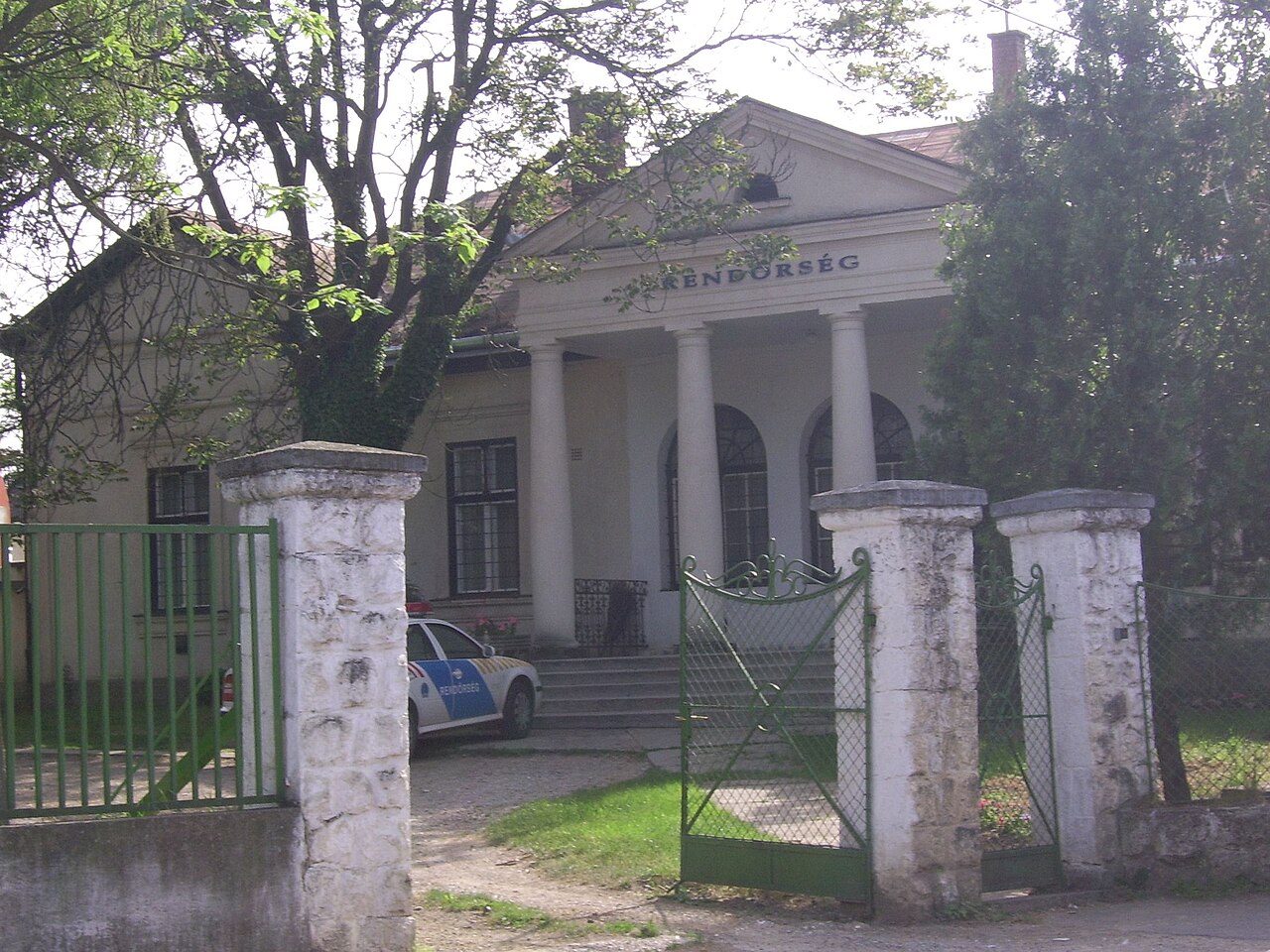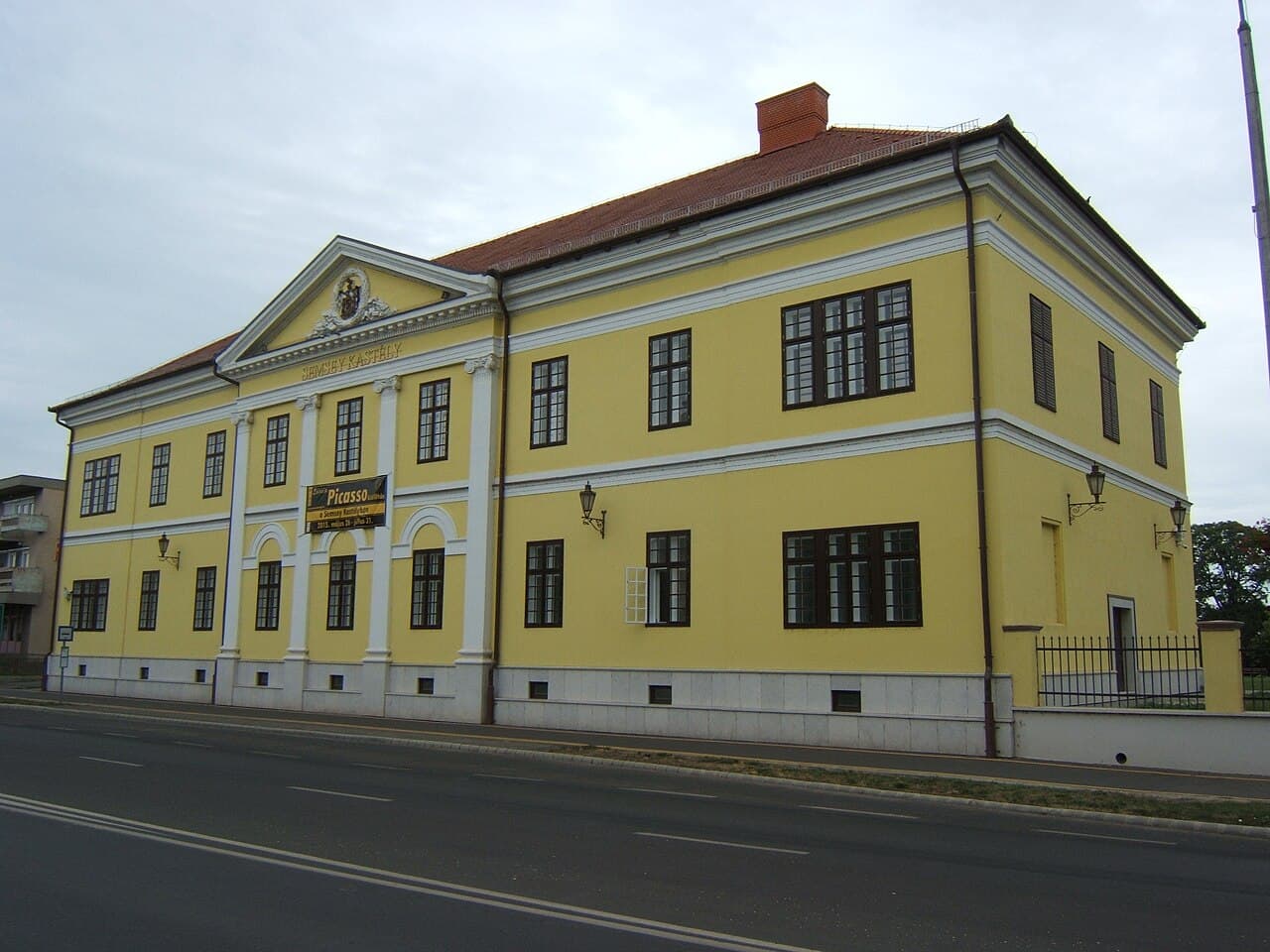
Semsey Castle — Hungary castle

Semsey Castle

Semsey Castle in Hungary
High Medieval (11th–13th c.)
Partially Preserved

Semsey Castle is a notable example of a hill castle located in Hungary, historically significant for its strategic position and medieval architectural features. Although the exact city of its location is not widely documented, the castle's placement on elevated terrain is characteristic of many fortifications designed to oversee and control surrounding lands.

Historical background and significance

The castle dates back to the medieval period, likely constructed during the High Medieval era, a time when Hungary was fortifying its borders and noble families were establishing strongholds to assert control and defend against invasions. Such castles served both military and administrative functions, acting as residences for nobility and centers of local governance.

The Semsey family, an ancient Hungarian noble lineage, is associated with the castle, which likely served as their seat. The family's prominence in Hungarian history adds to the castle's cultural significance.

Architectural features

As a hill castle, Semsey Castle was built to take advantage of natural elevation for defense. The design would typically include thick stone walls, battlements, and towers strategically placed to provide vantage points for surveillance and defense. The castle's layout likely included a central courtyard, residential quarters, a chapel, and defensive structures such as a gatehouse and possibly a moat or ditch adapted to the terrain.

The architectural style of Semsey Castle is predominantly Gothic, common in Hungarian castles of the medieval period. Gothic features often include pointed arches, ribbed vaults, and narrow windows designed for archers. The castle's construction would have utilized local stone and timber, reflecting regional building practices.

Preservation and current condition

The current physical state of Semsey Castle is generally considered partially preserved or in ruins, as many medieval castles in Hungary have suffered from centuries of conflict, neglect, and natural decay. Restoration efforts, if any, are typically aimed at stabilizing remaining structures and making the site accessible to visitors interested in Hungary's medieval heritage.

Visiting Semsey Castle

While detailed visitor information is limited due to the castle's less prominent status compared to Hungary's more famous fortresses, those interested in medieval architecture and Hungarian history may find a visit rewarding. Access might require travel through rural or hilly areas, and facilities may be minimal.

Frequently asked questions

  • What is the best time to visit Semsey Castle? The castle is best visited during late spring to early autumn when weather conditions are favorable for exploring outdoor historical sites.
  • Is Semsey Castle accessible to visitors? Access may be limited and facilities sparse; visitors should prepare for a hike and bring appropriate gear.
  • Are there guided tours available? Guided tours are not commonly offered due to the castle's remote location, but local guides may be available upon request.
  • What architectural style characterizes Semsey Castle? The castle exhibits Gothic architectural elements typical of medieval Hungarian fortifications.
  • Can I explore the castle ruins freely? Visitors can generally explore the ruins, but caution is advised due to uneven terrain and structural instability.

Frequently asked questions (FAQ)

How do I get to Semsey Castle?
Semsey Castle is easily accessible by public transportation or car. If you’re traveling by train, the nearest station is located in the town of Nyírbátor, from which you can take a short taxi ride to the castle.
What is the historical significance of Semsey Castle?
Semsey Castle dates back to the 16th century and is a fine example of Renaissance architecture in Hungary. It was built by the Semsey family, who played a significant role in the region's history, and has served various purposes over the centuries, including as a noble residence.
When was Semsey Castle last renovated?
The last significant renovation of Semsey Castle took place in the early 2000s to preserve its historical features and enhance visitor experience. Efforts have focused on restoring its architecture and making the grounds more accessible to the public.
Can I take a guided tour of Semsey Castle?
Yes, guided tours are available at Semsey Castle, providing visitors with in-depth insights into its history and architectural details. Tours typically last about an hour and are offered in multiple languages to cater to international visitors.
Why is Semsey Castle considered an architectural gem?
Semsey Castle is renowned for its stunning Renaissance design, featuring intricate details and beautifully preserved interiors. The castle’s unique blend of styles and its picturesque setting make it a prime example of Hungary's rich architectural heritage.
Is it possible to host events at Semsey Castle?
Yes, Semsey Castle is available for private events such as weddings, conferences, and cultural gatherings. The castle's enchanting atmosphere and historic backdrop provide a unique setting for memorable occasions.
What are the opening hours for Semsey Castle?
Semsey Castle is open to visitors from Tuesday to Sunday, with specific hours varying by season. During the peak tourist season, the castle typically opens at 10 AM and closes at 6 PM, so it's advisable to check the official website for the latest information.
What are the ticket prices for visiting Semsey Castle?
Ticket prices for Semsey Castle are reasonably priced, with discounts available for students and seniors. Family tickets are also offered, making it affordable for groups to explore this historical site together.
When is the best time to visit Semsey Castle?
The best time to visit Semsey Castle is during the late spring and early autumn months, when the weather is pleasant and the gardens are in full bloom. These seasons also tend to have fewer tourists, allowing for a more relaxed experience.
Are there any nearby attractions to visit alongside Semsey Castle?
Yes, nearby attractions include the picturesque town of Nyírbátor, which features other historical sites like the Nyírbátor Reformed Church and local museums. Additionally, the surrounding countryside offers beautiful landscapes ideal for hiking and outdoor activities.

Photo gallery

Semsey Castle
Click to view

Photo by Zerind•CC0

1 photo • Click any image to view in full screen

Information

Hill Castle

Loading map...

Visitor reviews

No reviews yet. Been here? Write the first review and help other travelers!

Write the first review

Visited this castle? Share your experience

Your review helps other travelers and adds first-hand knowledge to our encyclopedia.
Write a review

(5/5)

0/2000 characters

Your review will be visible after admin approval

Nearby castles

26.6 km
Degenfeld Mansion, Téglás — Hungary castle

Degenfeld Mansion, Téglás

Téglás, Hungary

Degenfeld Mansion in Téglás, Hungary, is a notable example of a historic hill castle that reflects the architectural and cultural heritage of the region. Although specific detailed records about the mansion's construction and history are limited, it is recognized for its strategic location and traditional castle features typical of Hungarian manor houses and small fortifications.Historical context and significanceThe mansion is associated with the Degenfeld family, a noble lineage with roots in Central Europe, which played a role in the local history of the region. The estate likely served as a residence and administrative center for the family, overseeing agricultural lands and local affairs. Its position on elevated terrain provided defensive advantages common to hill castles, allowing surveillance of the surrounding landscape.Architectural features and styleThe Degenfeld Mansion exhibits characteristics typical of Hungarian manor houses that were influenced by various architectural styles over centuries, including elements of Baroque and Neoclassical design. The structure likely includes a main residential building, outbuildings, and possibly a chapel or garden area. Defensive features such as thick walls and limited access points are indicative of its castle-like qualities, although it primarily functioned as a noble residence rather than a military fortress.Layout and constructionThe mansion's layout is probably organized around a central courtyard, a common feature in Hungarian noble estates, facilitating both domestic life and estate management. The use of local materials and traditional construction techniques would have contributed to its durability and aesthetic appeal.Current condition and preservationToday, the Degenfeld Mansion stands as a cultural landmark within Téglás. Its preservation status may vary, but such historic buildings often undergo conservation efforts to maintain structural integrity and historical authenticity. The mansion contributes to the understanding of regional history and architecture, attracting interest from historians, architects, and visitors.Visiting and cultural importanceWhile not as widely known as larger castles or palaces, the mansion holds local significance and may be accessible to visitors interested in Hungarian history and architecture. It serves as a representation of the noble estates that shaped the social and economic fabric of the region.Overall, Degenfeld Mansion in Téglás embodies the characteristics of a hill castle with noble residential functions, blending defensive elements with architectural styles reflective of Hungary's historical periods.

Details
42.7 km
Gődény Castle, Balkány — Hungary castle

Gődény Castle, Balkány

Balkány, Hungary

Gődény Castle, situated near the town of Balkány in eastern Hungary, is a historic hill castle with origins dating back to the medieval period. Though not as widely known as some of Hungary's grander fortifications, Gődény Castle holds significant local historical value due to its strategic location and architectural features typical of hilltop fortifications of its era. Historical background and location The castle is located on a modest elevation near Balkány, a town in the Szabolcs-Szatmár-Bereg county of Hungary. This positioning on a hill provided natural defensive advantages, which were essential during the turbulent medieval centuries when regional conflicts and invasions were frequent. The exact founding date of Gődény Castle is not precisely recorded, but architectural and archaeological evidence suggests it was established during the High to Late Medieval period, likely between the 13th and 15th centuries. Throughout its history, the castle served as a local stronghold, overseeing the surrounding lands and controlling nearby trade routes. Its presence reflects the feudal system's emphasis on fortified residences for nobility and military defense against incursions. Architectural features and design Gődény Castle exemplifies the characteristics of hill castles, which were typically built to take advantage of elevated terrain for defense. The castle's layout would have included a central keep or donjon, surrounded by defensive walls and possibly a moat or ditch to impede attackers. Although the current condition of the castle is not fully preserved, remnants of its fortification walls and foundational structures remain visible. The castle's construction likely involved local stone materials, common in Hungarian medieval castles, with thick walls designed to withstand sieges. Defensive features such as battlements, arrow slits, and gatehouses would have been integral parts of the fortress, although specific details of these elements at Gődény Castle require further archaeological study. Historical significance and role While Gődény Castle did not play a prominent role in national Hungarian history, it was an important local fortification. It served as a residence for regional nobility and a military outpost during periods of conflict, including the Ottoman incursions into Hungary. The castle's strategic position enabled control over the surrounding countryside and contributed to the defense network in eastern Hungary. Over time, as military technology evolved and political landscapes changed, the castle's defensive importance diminished. Like many medieval castles, it likely fell into disuse and partial ruin by the early modern period. Current condition and preservation Today, Gődény Castle is considered a ruin, with only parts of its original structure remaining. The site offers valuable insights into medieval Hungarian fortifications and is of interest to historians and archaeologists studying the region's feudal past. Preservation efforts are limited, and the castle remains primarily an archaeological site open to visitors interested in Hungary's medieval heritage. Visiting Gődény Castle Visitors to Gődény Castle can explore the ruins and enjoy panoramic views of the surrounding landscape from the hilltop. The site is accessible from Balkány, though facilities and visitor services are minimal. It is recommended to visit during daylight hours and to prepare for a modest hike to reach the castle remains. Nearby attractions include other historical sites in Szabolcs-Szatmár-Bereg county, offering a broader context for understanding the region's medieval history.

High Medieval (11th–13th c.)
Details
53.8 km

Castle of Ónod

Ónod, Hungary

The Castle of Ónod stands as a significant medieval fortress in Hungary, embodying centuries of military, architectural, and political history. Established in the mid-14th century by the noble Czudar family, the castle originally began as a fortified parish church around 1350. This early fortification, constructed without royal permission, was later legitimized by King Sigismund in 1413, marking the castle's official recognition and its emergence as a manorial center within the region. Throughout its history, the castle witnessed numerous ownership changes, reflecting the shifting power dynamics of Hungarian nobility. After the extinction of the Czudar male line, the estate passed through royal grants and noble successions, including a notable transfer in 1470 when King Matthias Corvinus awarded it to János Rozgonyi and his sons. In 1508, under King Vladislaus II, it was declared a queen’s castle, subsequently passing among prominent aristocratic families such as the Tótselymesi, Ákosházi, Török, and Perényi houses. Medieval origins and early fortifications The castle's initial structure was a fortified church surrounded by a strong stone wall, a common practice in medieval Hungary to protect ecclesiastical sites and noble residences. Its location on a gravelly-sandy terrace elevated five to six meters above marshlands near the Sajó River provided natural defense against flooding and enemy approach. The nearly square layout, approximately 70 by 70 meters, centered on a four-cornered design, reflects early influences from Italian military architecture, particularly the use of bastions at each corner. Adaptations for artillery and Ottoman defense The latter half of the 16th century brought significant military challenges due to the advancing Ottoman Empire. To counter artillery threats, the castle underwent substantial modifications under the direction of Italian military engineer Alessandro Vedani. These adaptations included strengthening the bastions and walls to withstand cannon fire, transforming the fortress into a resilient artillery stronghold. The castle successfully resisted two Ottoman sieges in 1561 and 1582, underscoring the effectiveness of these defensive improvements. Following the fall of the nearby fortress of Eger in 1596, the Castle of Ónod was integrated into the Habsburg Empire's defensive network, tasked with guarding the strategic Sajó valley. Officially recognized as a fortress in 1602, it saw further fortification enhancements to maintain its military utility. Conflicts and decline in the 17th century Despite its formidable defenses, the castle was assaulted by Ottoman forces in 1639, who set fire to the fortress and its palisade while liberating prisoners. Reconstruction led by Captain Miklós Keglovich included adding a wooden palisade and a cavalry fortification known as a huszárvár, enabling the castle to support a garrison of approximately 400 infantry and 500 cavalry soldiers. The late 17th century was marked by turmoil during the Kuruc uprisings, with the castle changing hands multiple times between Kuruc rebels, imperial troops, and Ottoman forces. Repeated burnings and occupations weakened the fortress, culminating in its destruction by allied Crimean Tatars and Kurucs in 1688. After this final devastation, the castle's strategic importance waned, and it was relegated to minor uses such as grain storage. Architectural features and surviving remains The castle's design features a nearly square enclosure with four bastions at each corner, characteristic of early Italian fortification principles adapted to Hungarian conditions. The original entrance on the southern wall allowed controlled access, while the surrounding wooden palisade and later cavalry fortifications enhanced defense. Present-day remains include a reconstructed southeastern bastion and adjacent walls, restored to illustrate the castle's original defensive character. Foundations and lower wall sections survive across the site, some reaching several meters in height, offering valuable insight into medieval and early modern construction techniques. The transition from a medieval fortress to an artillery bastion is evident in the masonry and layout, reflecting the castle's evolving military role in the region. Historical significance and cultural heritage The Castle of Ónod holds historical importance beyond its military function. It was linked to the 1707 Ónod Diet, a pivotal political assembly where the Habsburg dynasty was dethroned, although the meeting took place outside the castle due to flooding. The site reflects Hungary's complex history of noble power struggles, Ottoman conflicts, and Habsburg imperial defense strategies. Archaeological excavations beginning in 1985 have focused on halting decay and restoring key structures. The southeastern bastion's reconstruction and conversion into an exhibition area allow visitors to engage with the castle's rich past. Restoration efforts under the National Castle Program initiated in 2017/2018 aim to preserve this heritage site for future generations. Today, the Castle of Ónod stands as a testament to medieval fortification architecture, the adaptation to artillery warfare, and the turbulent history of the Sajó valley region. Its preserved and restored elements provide a valuable resource for scholars and tourists alike, showcasing the blend of Hungarian and Italian military architectural influences and the resilience of a fortress shaped by centuries of conflict.

High Medieval (11th–13th c.)
Details