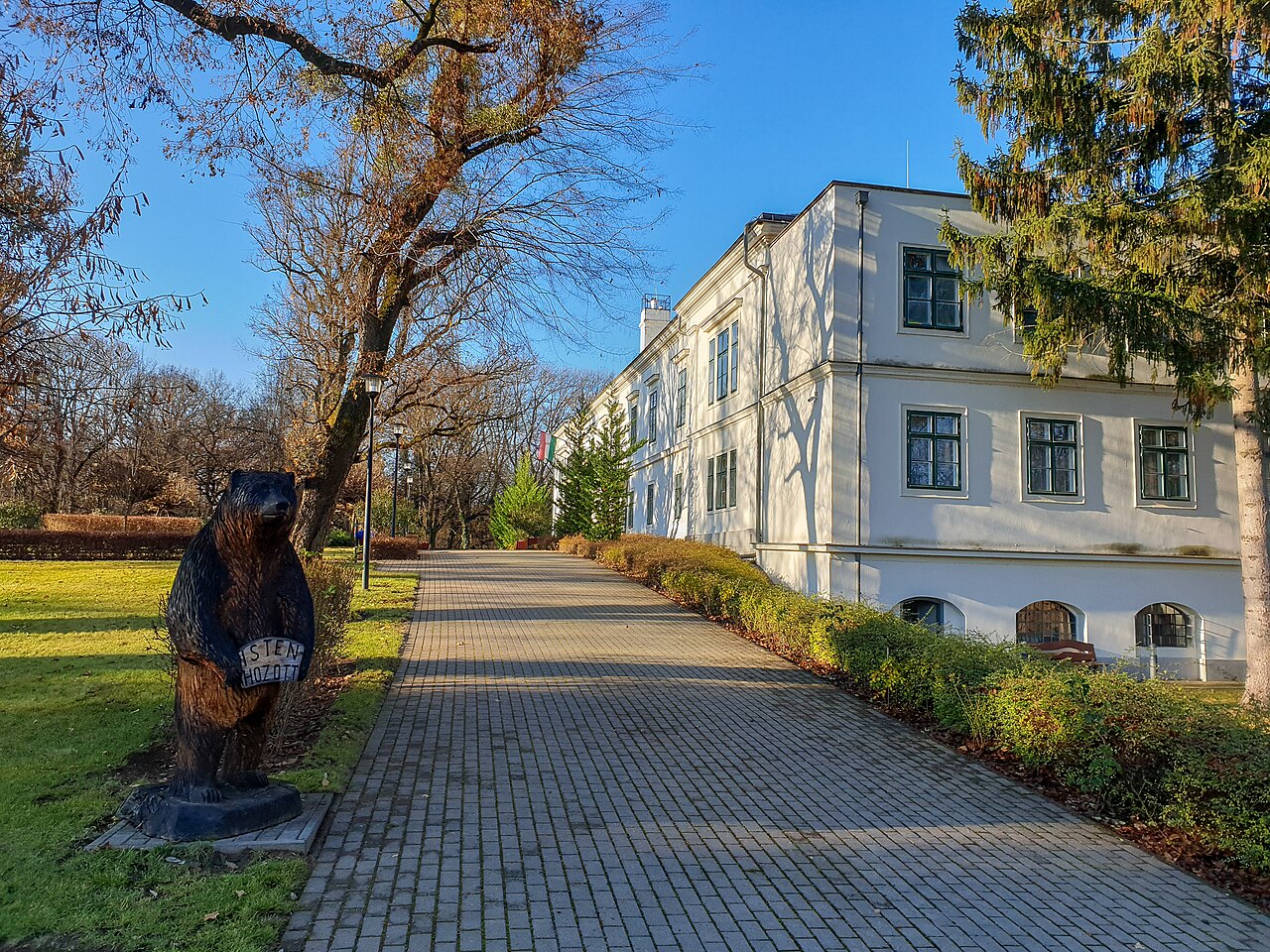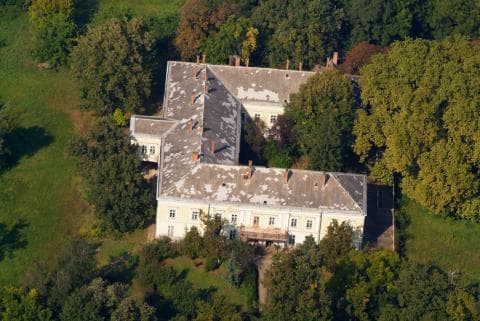
Degenfeld Mansion in Téglás, Hungary, is a notable example of a historic hill castle that reflects the architectural and cultural heritage of the region. Although specific detailed records about the mansion's construction and history are limited, it is recognized for its strategic location and traditional castle features typical of Hungarian manor houses and small fortifications.
Historical context and significance
The mansion is associated with the Degenfeld family, a noble lineage with roots in Central Europe, which played a role in the local history of the region. The estate likely served as a residence and administrative center for the family, overseeing agricultural lands and local affairs. Its position on elevated terrain provided defensive advantages common to hill castles, allowing surveillance of the surrounding landscape.
Architectural features and style
The Degenfeld Mansion exhibits characteristics typical of Hungarian manor houses that were influenced by various architectural styles over centuries, including elements of Baroque and Neoclassical design. The structure likely includes a main residential building, outbuildings, and possibly a chapel or garden area. Defensive features such as thick walls and limited access points are indicative of its castle-like qualities, although it primarily functioned as a noble residence rather than a military fortress.
Layout and construction
The mansion's layout is probably organized around a central courtyard, a common feature in Hungarian noble estates, facilitating both domestic life and estate management. The use of local materials and traditional construction techniques would have contributed to its durability and aesthetic appeal.
Current condition and preservation
Today, the Degenfeld Mansion stands as a cultural landmark within Téglás. Its preservation status may vary, but such historic buildings often undergo conservation efforts to maintain structural integrity and historical authenticity. The mansion contributes to the understanding of regional history and architecture, attracting interest from historians, architects, and visitors.
Visiting and cultural importance
While not as widely known as larger castles or palaces, the mansion holds local significance and may be accessible to visitors interested in Hungarian history and architecture. It serves as a representation of the noble estates that shaped the social and economic fabric of the region.
Overall, Degenfeld Mansion in Téglás embodies the characteristics of a hill castle with noble residential functions, blending defensive elements with architectural styles reflective of Hungary's historical periods.
Frequently asked questions (FAQ)
- What is the historical significance of Degenfeld Mansion in Téglás?
- Degenfeld Mansion is linked to the noble Degenfeld family and served as a residence and estate center, reflecting the social history of the region.
- Can visitors tour Degenfeld Mansion in Téglás?
- Visiting options may be limited, but the mansion holds local cultural importance and may be accessible for tours or events.
- What architectural styles influence Degenfeld Mansion?
- The mansion features elements of Baroque and Neoclassical styles common in Hungarian noble residences, combined with traditional castle features.
- Where is Degenfeld Mansion located?
- It is located in Téglás, within Hajdú-Bihar County, Hungary, positioned on elevated terrain typical of hill castles.
Photo gallery

Information
Loading map...
Visitor reviews
No reviews yet. Been here? Write the first review and help other travelers!
Write the first reviewVisited this castle? Share your experience
Your review helps other travelers and adds first-hand knowledge to our encyclopedia.