Castle of Ónod
The Castle of Ónod stands as a significant medieval fortress in Hungary, embodying centuries of military, architectural, and political history. Established in the mid-14th century by the noble Czudar family, the castle originally began as a fortified parish church around 1350. This early fortification, constructed without royal permission, was later legitimized by King Sigismund in 1413, marking the castle's official recognition and its emergence as a manorial center within the region.
Throughout its history, the castle witnessed numerous ownership changes, reflecting the shifting power dynamics of Hungarian nobility. After the extinction of the Czudar male line, the estate passed through royal grants and noble successions, including a notable transfer in 1470 when King Matthias Corvinus awarded it to János Rozgonyi and his sons. In 1508, under King Vladislaus II, it was declared a queen’s castle, subsequently passing among prominent aristocratic families such as the Tótselymesi, Ákosházi, Török, and Perényi houses.
Medieval origins and early fortifications
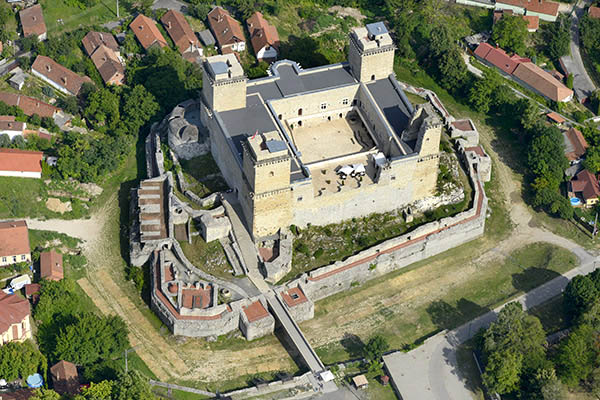
The castle's initial structure was a fortified church surrounded by a strong stone wall, a common practice in medieval Hungary to protect ecclesiastical sites and noble residences. Its location on a gravelly-sandy terrace elevated five to six meters above marshlands near the Sajó River provided natural defense against flooding and enemy approach. The nearly square layout, approximately 70 by 70 meters, centered on a four-cornered design, reflects early influences from Italian military architecture, particularly the use of bastions at each corner.
Adaptations for artillery and Ottoman defense
The latter half of the 16th century brought significant military challenges due to the advancing Ottoman Empire. To counter artillery threats, the castle underwent substantial modifications under the direction of Italian military engineer Alessandro Vedani. These adaptations included strengthening the bastions and walls to withstand cannon fire, transforming the fortress into a resilient artillery stronghold. The castle successfully resisted two Ottoman sieges in 1561 and 1582, underscoring the effectiveness of these defensive improvements.
Following the fall of the nearby fortress of Eger in 1596, the Castle of Ónod was integrated into the Habsburg Empire's defensive network, tasked with guarding the strategic Sajó valley. Officially recognized as a fortress in 1602, it saw further fortification enhancements to maintain its military utility.
Conflicts and decline in the 17th century
Despite its formidable defenses, the castle was assaulted by Ottoman forces in 1639, who set fire to the fortress and its palisade while liberating prisoners. Reconstruction led by Captain Miklós Keglovich included adding a wooden palisade and a cavalry fortification known as a huszárvár, enabling the castle to support a garrison of approximately 400 infantry and 500 cavalry soldiers.
The late 17th century was marked by turmoil during the Kuruc uprisings, with the castle changing hands multiple times between Kuruc rebels, imperial troops, and Ottoman forces. Repeated burnings and occupations weakened the fortress, culminating in its destruction by allied Crimean Tatars and Kurucs in 1688. After this final devastation, the castle's strategic importance waned, and it was relegated to minor uses such as grain storage.
Architectural features and surviving remains
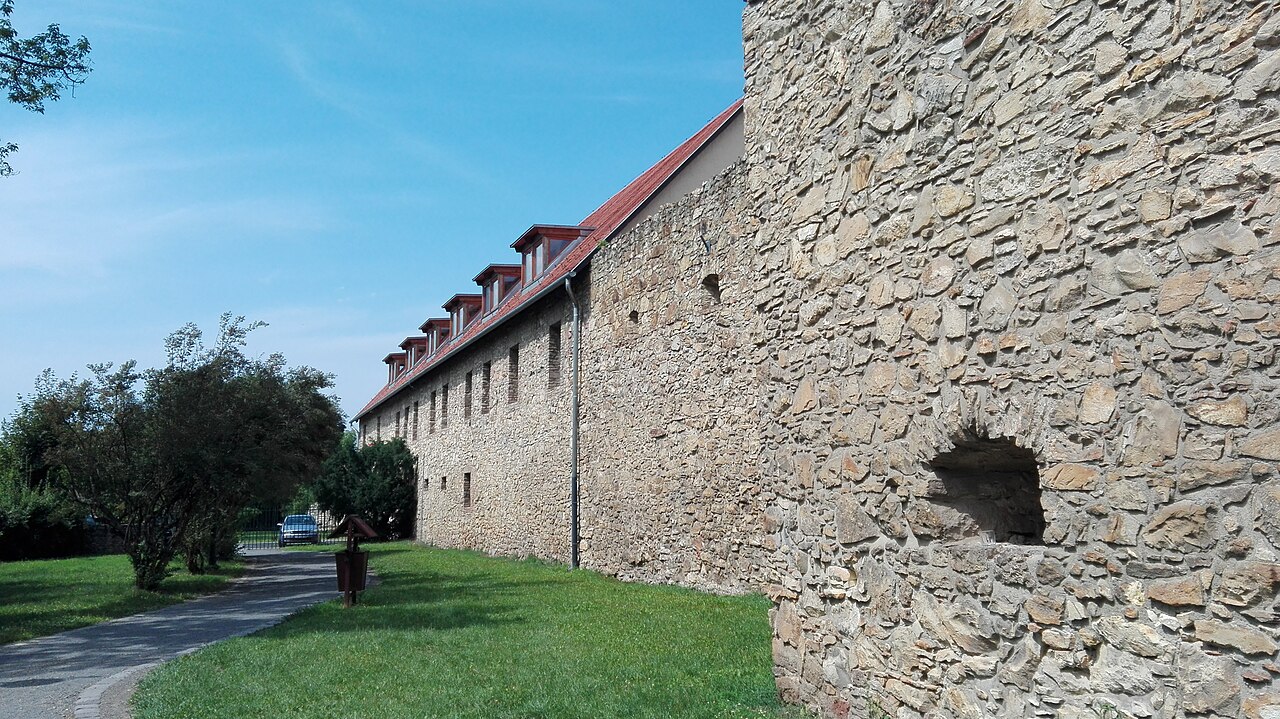
The castle's design features a nearly square enclosure with four bastions at each corner, characteristic of early Italian fortification principles adapted to Hungarian conditions. The original entrance on the southern wall allowed controlled access, while the surrounding wooden palisade and later cavalry fortifications enhanced defense. Present-day remains include a reconstructed southeastern bastion and adjacent walls, restored to illustrate the castle's original defensive character.
Foundations and lower wall sections survive across the site, some reaching several meters in height, offering valuable insight into medieval and early modern construction techniques. The transition from a medieval fortress to an artillery bastion is evident in the masonry and layout, reflecting the castle's evolving military role in the region.
Historical significance and cultural heritage
The Castle of Ónod holds historical importance beyond its military function. It was linked to the 1707 Ónod Diet, a pivotal political assembly where the Habsburg dynasty was dethroned, although the meeting took place outside the castle due to flooding. The site reflects Hungary's complex history of noble power struggles, Ottoman conflicts, and Habsburg imperial defense strategies.
Archaeological excavations beginning in 1985 have focused on halting decay and restoring key structures. The southeastern bastion's reconstruction and conversion into an exhibition area allow visitors to engage with the castle's rich past. Restoration efforts under the National Castle Program initiated in 2017/2018 aim to preserve this heritage site for future generations.
Today, the Castle of Ónod stands as a testament to medieval fortification architecture, the adaptation to artillery warfare, and the turbulent history of the Sajó valley region. Its preserved and restored elements provide a valuable resource for scholars and tourists alike, showcasing the blend of Hungarian and Italian military architectural influences and the resilience of a fortress shaped by centuries of conflict.
Frequently asked questions (FAQ)
- When was the Castle of Ónod originally built?
- The Castle of Ónod was established in the mid-14th century, around 1350, by the Hungarian noble Czudar family who fortified the local parish church.
- What architectural style characterizes the Castle of Ónod?
- The castle features a mixed architectural style, combining medieval Hungarian fortification elements with Italian military engineering influences, particularly in its bastions.
- How did the castle adapt to the threat of Ottoman artillery?
- In the late 16th century, the castle was reinforced following designs by Italian military engineer Alessandro Vedani, strengthening bastions and walls to resist artillery attacks.
- Can visitors see any restored parts of the castle today?
- Yes, the southeastern bastion and adjacent walls have been reconstructed and converted into an exhibition area, showcasing the castle's original defensive features.
- What was the castle's role during the Ottoman wars?
- The Castle of Ónod served as a key defensive fortress guarding the Sajó valley, successfully repelling Ottoman sieges in 1561 and 1582 and later integrating into the Habsburg defensive network.
Information
Website
Visit websiteSources & official resources
Verify the information above using these authoritative references.
Loading map...
Visitor reviews
No reviews yet. Been here? Write the first review and help other travelers!
Write the first reviewVisited this castle? Share your experience
Your review helps other travelers and adds first-hand knowledge to our encyclopedia.