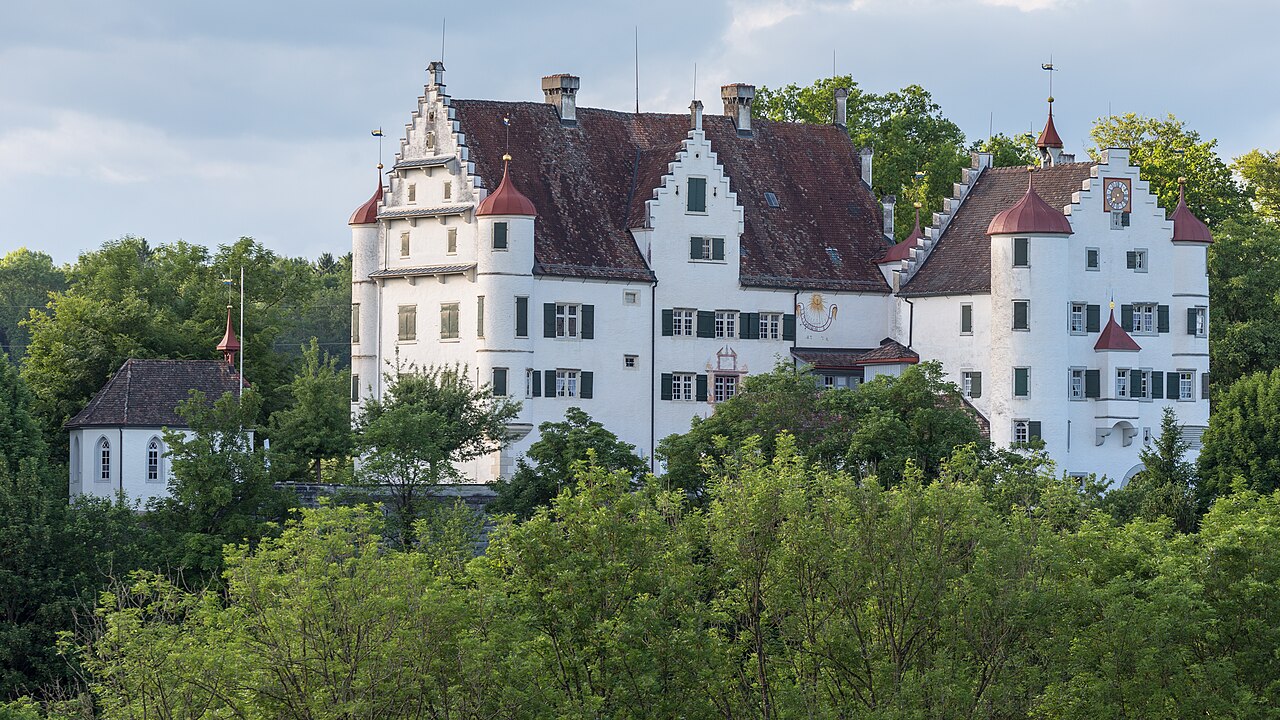
Seeburg Castle
Seeburg Castle, located in the municipality of Kreuzlingen in the Canton of Thurgau, Switzerland, is a remarkable example of a historic hill castle with a complex architectural and cultural history spanning several centuries. Recognized as a Swiss heritage site of national significance, the castle today functions as a restaurant and event venue, offering visitors a unique blend of historical ambiance and modern hospitality.
The site of Seeburg Castle has origins dating back to at least 740 AD, making it a location of longstanding strategic and residential importance. The initial construction of the current castle structure began around the 11th century, circa 1036. This early medieval fortress was significantly expanded by Wichmann von Seeburg, who later became the Archbishop of Magdeburg (1115-1192). His contributions included substantial fortifications and enhancements that reflected the military and residential needs of the period.
Medieval expansions and architectural evolution
During the 14th and 15th centuries, the castle underwent further renovations under the rule of the Counts of Mansfeld. These modifications included the addition of flanking towers and a gatehouse, which enhanced the defensive capabilities and grandeur of the castle. These medieval features are characteristic of the high medieval period, emphasizing both protection and status.
Following a period of decline, Seeburg Castle fell into disrepair until the late 19th century. In 1880, the property was sold by the Counts of Ingenheim to the Wendenburg family. This transition marked the beginning of a new chapter focused on restoration and stylistic revival.
19th and 20th-century restorations and stylistic transformations
In 1923, the castle underwent a comprehensive restoration commissioned by Erich Wendenburg. The architect Paul Schultze-Naumburg was tasked with redesigning the building in the neo-Gothic style, a popular architectural movement that sought to revive medieval Gothic elements with romanticized aesthetics. This restoration introduced ornate details, pointed arches, and decorative battlements that enhanced the castle's historic character while adapting it for contemporary use.
Seeburg Castle's history is also intertwined with the nearby Kreuzlingen Augustinian monastery. The earliest structure on the site was a small manor known as Neuhorn, built in 1598 by Jakob Atzenholz-Zollikofer from Konstanz. This manor served as a summer residence for the abbots of the monastery until it was destroyed by fire in 1633. It was rebuilt in 1664 under Abbot Augustin I. Gimmi, featuring a simple cubic form with a gabled roof enclosed by a square wall, reflecting its monastic utility.
Educational and civic uses in the 19th and 20th centuries
From 1833, the building housed the Thurgau teacher training seminary, with Johann Jacob Wehrli as its first director. After the dissolution of the Kreuzlingen monastery in 1848, ownership transferred to the canton of Thurgau. The seminary relocated in 1850, and the property was sold in 1852.
A significant redesign took place in 1870 when architect Ernst Jung from Winterthur transformed the building into a historicist castle, a 19th-century style that revived elements from earlier architectural periods. This remodeling was executed by Gottfried Ferdinand Amman. The surrounding park was landscaped between 1894 and 1895 under the direction of August Amman, enhancing the castle's setting with a carefully designed natural environment.
20th-century preservation and modern use
Ownership remained with the Amman family until 1958, when a narrow public vote led to acquisition by the city of Kreuzlingen. In the early 1980s, extensive renovation efforts were led by architect Ernst Oberhänsli and supervised by cantonal monument conservator Jürg Ganz. These works aimed to preserve the castle's architectural integrity and adapt it for contemporary functions.
Until the 1960s, Seeburg Castle stood directly on the shore of Lake Constance. However, a land reclamation project moved the shoreline further away, altering the castle's relationship with the lakefront and its landscape context.
Since 1993, the castle has been operated as a restaurant, and since 2016, all rooms have been dedicated to culinary and event purposes. This adaptive reuse has allowed Seeburg Castle to maintain its cultural relevance and public accessibility while preserving its historical and architectural significance.
Architectural features and site characteristics
The current form of Seeburg Castle reflects a layered architectural history. The earliest surviving elements date to the 17th century, characterized by a simple cubic structure with a gabled roof enclosed by a square wall, typical of monastic summer residences. The late 19th-century historicist remodeling introduced neo-Gothic elements, including decorative battlements, pointed arches, and stylistic details that evoke medieval fortifications.
The castle is set within a landscaped park designed in the late 19th century, which complements the building's historicist aesthetic and provides a serene natural setting. The park and castle grounds have been preserved as part of the site's cultural heritage.
Seeburg Castle's transformation over centuries—from a medieval fortress to a monastic manor, an educational institution, and finally a public cultural venue—illustrates the dynamic history of Swiss castles adapting to changing social, religious, and political contexts.
Frequently asked questions (FAQ)
- What is the historical significance of Seeburg Castle?
- Seeburg Castle has a rich history dating back to the 11th century, with expansions in the medieval period and significant 19th and 20th-century restorations. It reflects the architectural evolution from a medieval fortress to a neo-Gothic historicist castle.
- Can I visit Seeburg Castle today?
- Yes, Seeburg Castle is open to the public as a restaurant and event venue. Visitors can enjoy its historic ambiance while dining or attending cultural events. Checking the restaurant's seasonal hours is recommended before visiting.
- How has the castle's architecture changed over time?
- The castle evolved from an 11th-century fortress expanded in the medieval period to a 19th-century historicist and neo-Gothic style building, with restorations preserving its layered history.
- Is Seeburg Castle accessible for events and private functions?
- Yes, since 2016, all rooms in Seeburg Castle have been used for culinary and event purposes, making it a popular venue for private functions and cultural gatherings.
- Where is Seeburg Castle located?
- Seeburg Castle is located in Kreuzlingen, in the Canton of Thurgau, Switzerland, near the shores of Lake Constance.
Information
Opening hours
Restaurant hours, varies seasonally
Ticket prices
Varies, typically free or minimal charge for events
Current owner
City of Kreuzlingen
Website
Visit websiteSources & official resources
Verify the information above using these authoritative references.
Loading map...
Visitor reviews
No reviews yet. Been here? Write the first review and help other travelers!
Write the first reviewVisited this castle? Share your experience
Your review helps other travelers and adds first-hand knowledge to our encyclopedia.