Altenklingen Castle — Switzerland castle

Altenklingen Castle

Altenklingen Castle in Wigoltingen: a late Renaissance hill castle
Wigoltingen, Switzerland
Renaissance (15th–17th c.)

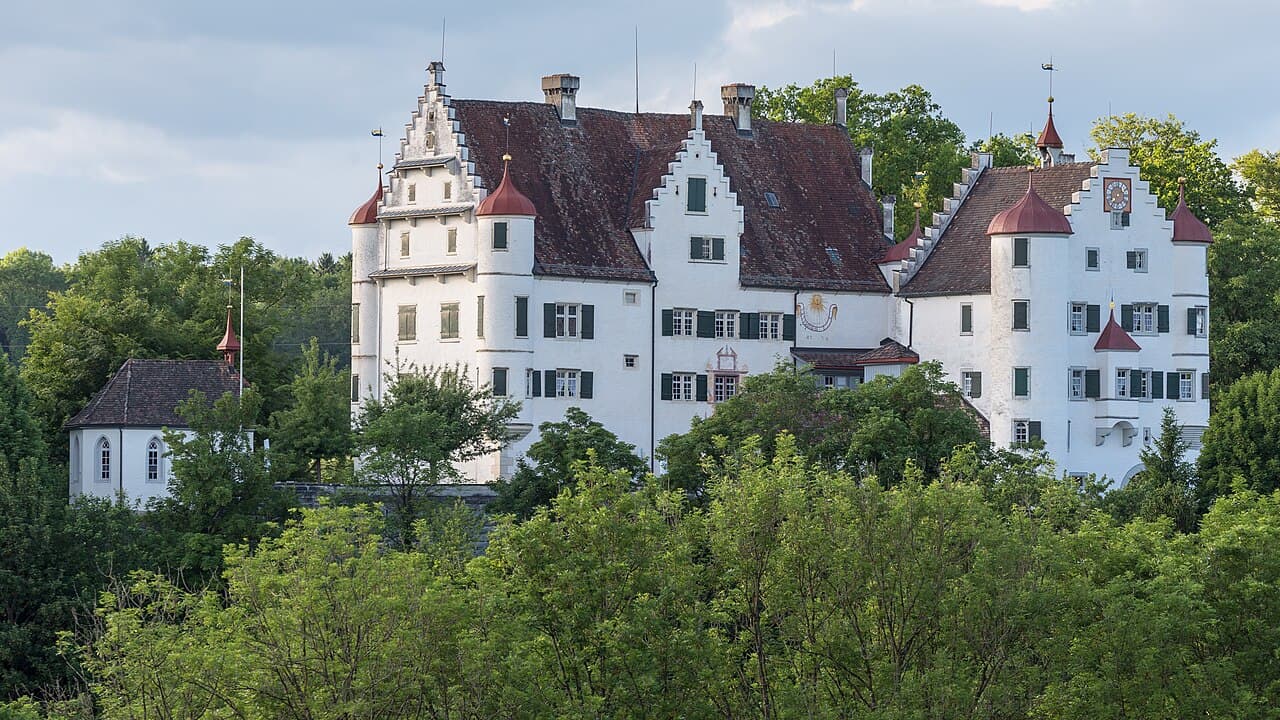
Altenklingen Castle stands as a notable example of a late Renaissance hill castle located in the municipality of Wigoltingen, in the Swiss Canton of Thurgau. Its history spans over eight centuries, beginning with a fortification established around the year 1200. This early fort was originally under the ownership of the Barons of Klingen, a noble family who held the site until 1395.

The medieval origins and early history

The initial structure on the site was a medieval fortification typical of the early 13th century, designed primarily for defense and control over the surrounding lands. The Barons of Klingen maintained possession for nearly two centuries, but the castle's fate changed dramatically after the last member of the Klingen family was killed in battle. Following this event, the property passed through various hands, reflecting the turbulent political and military shifts of the region during the late medieval period.

Transformation in the Renaissance period

In the 16th century, significant changes were made to the castle. Leonard Zollikofer (1529-1587), a prominent figure of the time, acquired the property and decided to demolish the original medieval fortress. He commissioned Mathäus Höbel, an architect from Kempten im Allgäu, to design and construct a new castle that would embody the architectural ideals of the Renaissance. This new structure was completed in the late 16th century and reflects the stylistic and functional shifts characteristic of the Renaissance era, focusing more on residential comfort and aesthetic appeal while retaining defensive features.

Architectural features of the Renaissance castle

The castle exhibits hallmark features of Renaissance architecture, including symmetrical layouts, proportionate windows, and ornamental detailing that contrasts with the more austere medieval fortress it replaced. The design incorporates strong defensive elements typical of hill castles, such as thick walls and elevated positions, but also integrates elegant residential quarters and representative halls suited for noble living.

Ownership and preservation

Since 1595, Altenklingen Castle has remained under the ownership of the Zollikofer family, who have preserved its historical and architectural integrity. The castle is privately owned and not generally open to the public, which has contributed to its well-preserved state. It is recognized as a Swiss heritage site of national significance, underscoring its cultural importance and architectural value within Switzerland.

Location and strategic importance

Situated on a hill, Altenklingen Castle benefits from a commanding view of the surrounding landscape, a typical strategic choice for fortifications of its kind. The elevated position provided both defensive advantages and control over nearby routes and territories, which was crucial during the medieval and Renaissance periods.

The castle in the context of Swiss heritage

As a heritage site, Altenklingen Castle exemplifies the transition from medieval fortifications to Renaissance residences in Switzerland. Its preservation offers insights into architectural evolution, noble life, and regional history in the Canton of Thurgau. The castle's continuous private ownership has helped maintain its original character and prevented extensive modern alterations.

Visiting Altenklingen Castle

While the castle is privately owned and not typically accessible to the public, its exterior and surrounding landscape can be appreciated from nearby vantage points in Wigoltingen. Visitors interested in Swiss castles and Renaissance architecture can observe the castle's silhouette and setting, which contribute to the region's historical ambiance.

Frequently asked questions (FAQ)

How do I get to Altenklingen Castle?
Altenklingen Castle is located in Wigoltingen, Switzerland, and can be accessed by car or public transportation. The nearest train station is in Kreuzlingen, followed by a short bus ride or a pleasant walk to the castle grounds.
What is the historical significance of Altenklingen Castle?
Altenklingen Castle dates back to the 12th century and served as a strategic fortification in the region. It is an important example of medieval architecture and offers a glimpse into the history of noble families in Switzerland.
When was Altenklingen Castle built?
Altenklingen Castle was constructed around the year 1200. It has undergone various renovations and restorations over the centuries, preserving its historical charm while adapting to modern needs.
Can I visit Altenklingen Castle year-round?
Yes, Altenklingen Castle is open to visitors throughout the year, though specific areas may be restricted during winter months. It is advisable to check the castle's official website for any seasonal opening hours or special events.
Why is Altenklingen Castle known for its architecture?
The castle features a unique blend of Romanesque and Gothic architectural styles, making it a fascinating site for history and architecture enthusiasts. Its well-preserved towers and walls provide insight into medieval construction techniques.
Is it possible to book guided tours at Altenklingen Castle?
Yes, guided tours are available, providing an in-depth exploration of the castle's history and architecture. It is recommended to book in advance, especially during peak tourist seasons, to ensure availability.
What are the opening hours of Altenklingen Castle?
Altenklingen Castle typically opens from 10 AM to 5 PM during the tourist season, with extended hours on weekends. It is best to check the castle's official site for the most current information regarding opening times.
What is the ticket price for visiting Altenklingen Castle?
The ticket price for adults is generally around 10 CHF, while children and students may receive discounted rates. Group discounts are also available, making it an affordable option for families and school trips.
What are some nearby attractions to visit after Altenklingen Castle?
After visiting Altenklingen Castle, you can explore the beautiful surrounding landscapes, including Lake Constance and local hiking trails. The nearby town of Kreuzlingen offers additional cultural attractions, such as museums and parks.

Photo gallery

Altenklingen Castle
Click to view

Photo by JoachimKohler-HB•CC BY-SA 4.0

1 photo • Click any image to view in full screen

Information

Hill Castle

Loading map...

Visitor reviews

No reviews yet. Been here? Write the first review and help other travelers!

Write the first review

Visited this castle? Share your experience

Your review helps other travelers and adds first-hand knowledge to our encyclopedia.
Write a review

(5/5)

0/2000 characters

Your review will be visible after admin approval

Nearby castles

2.4 km
Bachtobel Castle — Switzerland castle

Bachtobel Castle

Weinfelden, Switzerland

Bachtobel Castle is a historic hill castle located in the municipality of Weinfelden in the Canton of Thurgau, Switzerland. Recognized as a Swiss heritage site of national significance, this castle represents an important cultural landmark within the region.The castle's origins trace back to the medieval period, although specific construction dates remain uncertain. Its strategic position on elevated terrain classifies it as a hill castle, a common defensive design in Swiss castle architecture, allowing for commanding views of the surrounding landscape and enhanced protection against invaders.Architectural features and layoutBachtobel Castle exhibits typical features of medieval hill castles, including fortified walls and a compact layout adapted to the natural topography. The castle's defensive structures likely included curtain walls and possibly a gatehouse, although detailed architectural surveys are limited.The castle's construction materials and style reflect regional building traditions of the High to Late Medieval period, with stone masonry predominating. The lack of extensive Renaissance or Baroque modifications suggests that Bachtobel Castle has retained much of its original medieval character.Historical context and significanceSituated in the Canton of Thurgau, Bachtobel Castle played a role in the territorial defense and administration during the medieval era. The castle would have served as a residence for local nobility or officials overseeing the surrounding lands.Throughout its history, the castle witnessed the shifting political landscape of the region, including the influence of the Old Swiss Confederacy and various noble families. Its designation as a heritage site underscores its importance in Swiss cultural history.Preservation and current statusToday, Bachtobel Castle is preserved as a cultural monument, although detailed information about its current condition is limited. It remains a point of interest for visitors and scholars interested in Swiss medieval fortifications.Efforts to maintain and protect the castle align with Swiss heritage conservation policies, ensuring that this historical structure continues to be recognized for its architectural and historical value.Visiting Bachtobel CastleWhile specific visitor information is scarce, the castle's location in Weinfelden makes it accessible for those exploring the Canton of Thurgau. Visitors interested in medieval architecture and Swiss history may find Bachtobel Castle a worthwhile destination.Nearby attractions in Weinfelden and the surrounding region offer opportunities to explore Swiss culture, nature, and heritage sites.

High Medieval (11th–13th c.)
Details
3.7 km

Schloss Weinfelden

Weinfelden, Switzerland

Schloss Weinfelden is a historic hill castle located on the southern slope of Ottenberg hill overlooking the town of Weinfelden in Switzerland. Its origins trace back to at least 1180 when it was known as Castrum Winvelde, marking it as a fortified site of strategic importance during the High Medieval period. Although the exact identity of the original builders remains unclear, the castle's early history is intertwined with notable regional powers, including the Kyburg and Bussnang families. Early history and medieval ownership The castle's documented history begins with the transfer of one-third ownership by Hartmann von Kyburg to Bishop Berthold von Bussnang of Konstanz around 1180. This arrangement created a complex shared control that influenced the castle's governance in subsequent centuries. During the 14th century, the castle came under the influence of the Habsburg dynasty when Friedrich von Bussnang held it as a fief. He arranged for the castle to serve as a residence for his widow, Kunigunde, while he resided elsewhere. This period saw significant expansions by the Bussnang family, shaping the castle's medieval form with fortified walls and residential quarters. Changes in ownership and renovations Following the destruction of the Bussnang family's primary castles, Hans von Bussnang sold Schloss Weinfelden in 1435 to Berthold Vogt of Konstanz. Vogt invested in local infrastructure, notably constructing a bridge over the nearby Thur River, and played an active role in regional governance. Despite these efforts, regional conflicts led to his financial difficulties. In the late 15th and 16th centuries, the castle changed hands multiple times. The Muntprat family acquired it in 1498 and granted municipal rights to the town of Weinfelden. They also undertook renovations in 1541 that modernized the castle's facilities. Subsequent owners included Hans Dietrich von Gemmingen (1551), Jakob Fugger (1555), Arbogast von Schellenberg (1572), and the Gemmingen brothers (1577). Each proprietor contributed to the castle's evolving architectural and social status during the Renaissance and early modern periods. Zürich ownership and decline In 1614, the city of Zürich purchased Schloss Weinfelden and its lordship, reinstating the castle as the seat of a local bailiff responsible for administration and law enforcement. This period marked the castle's role as a center of regional governance rather than a purely military fortress. The system of serfdom linked to the estate ended in 1798, after which the local community acquired the surrounding forests, reflecting broader social changes in Switzerland. Throughout the 19th and 20th centuries, Schloss Weinfelden gradually fell into disrepair as its administrative functions diminished and maintenance declined. 20th century restoration and modern status A major restoration began in 1972 when Munich banker August von Finck senior acquired the property. His purchase sparked debate due to Swiss restrictions on foreign ownership, but it also initiated a careful restoration to return the castle to its early 18th-century appearance. Notably, the castle's tower roof was rebuilt with a pointed helmet-style top, replicating its look circa 1700. This restoration was conducted in collaboration with cantonal monument preservation authorities to ensure historical accuracy. The main residential building was made habitable again, with further interior renovations completed in 1997. These efforts preserved the castle's historical character while adapting it for modern use. The castle remains part of the von Finck family estate following the death of August von Finck junior in 2021. Architectural features and site layout Schloss Weinfelden is characterized by a central main building and a prominent tower, which together reflect its development through the medieval and early modern periods. The castle's hilltop position provided strategic views and control over the surrounding landscape, crucial for defense and administration. The restored tower is a defining feature, especially after the 1970s renovation that reinstated its original pointed roof. The castle's construction materials and decorative details have not been extensively documented, but the restoration's fidelity to traditional methods suggests the use of period-appropriate stone masonry and timber framing. Historically, the castle grounds included ancillary infrastructure such as a bridge over the Thur River, built by Berthold Vogt. Today, the site preserves the core elements of the castle itself, with its buildings harmoniously integrated into the hillside terrain, maintaining its commanding presence over Weinfelden. Cultural significance and heritage As a site with origins in the High Medieval period and continuous occupation through the Renaissance and early modern eras, Schloss Weinfelden embodies the layered history of Swiss regional power dynamics. Its architectural evolution mirrors shifts from feudal lordship to administrative governance under Zürich's authority. The castle's restoration and preservation underscore its importance as a cultural heritage monument, reflecting Swiss dedication to maintaining historical sites. It stands as a testament to the region's medieval past and the ongoing narrative of architectural conservation.

High Medieval (11th–13th c.)
Details
8 km
Arenenberg Castle with Chapel and Park — Switzerland castle

Arenenberg Castle with Chapel and Park

Salenstein, Switzerland

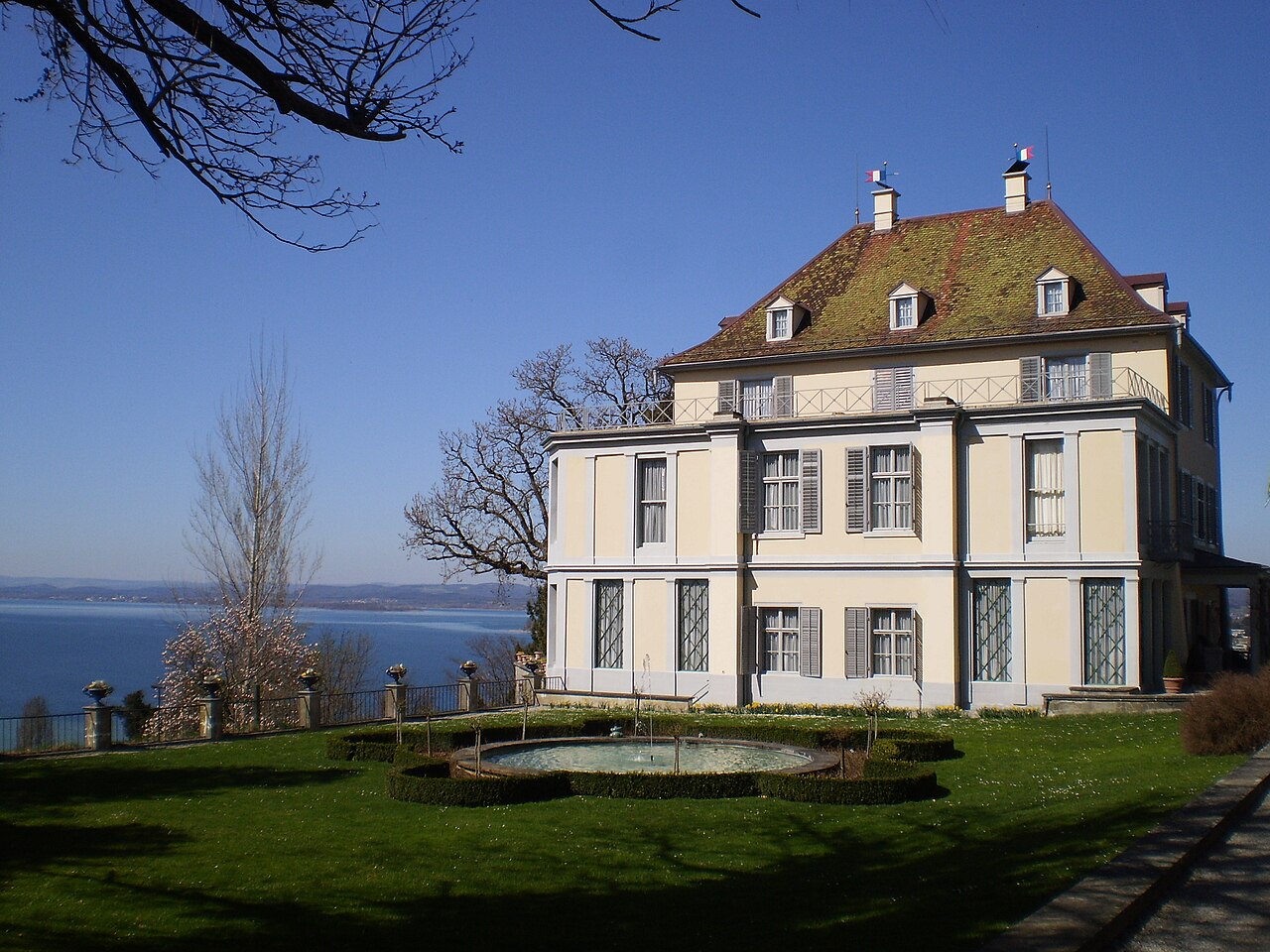
Arenenberg Castle, located in the municipality of Salenstein on the shores of Lake Constance in the Swiss canton of Thurgau, is a notable Renaissance estate distinguished by its historical and cultural significance. This hill castle is renowned primarily as the final residence of Hortense de Beauharnais, the stepdaughter of Emperor Napoleon Bonaparte, and today it serves as the home of the Napoleonmuseum. Historical background and significance The estate's origins date back to the 16th century, situating it firmly within the Renaissance period. Originally constructed as a fortified residence, Arenenberg Castle evolved over the centuries into a refined chateau surrounded by a landscaped park and a chapel. Its association with the Bonaparte family began in the early 19th century when Hortense de Beauharnais acquired the property in 1817. Hortense, the daughter of Empress Josephine and stepdaughter of Napoleon Bonaparte, used Arenenberg as her primary residence until her death in 1837. Following Hortense's tenure, the castle remained in the possession of her descendants, including Napoleon III, who used the estate as a summer residence and contributed to its development. The castle’s history reflects the complex political and familial ties of the Napoleonic era, making it a site of considerable historical interest. Architectural features and layout Arenenberg Castle is characterized by its Renaissance architectural style, evident in its symmetrical layout and elegant proportions. The main building is a modest-sized chateau with a rectangular plan, featuring multiple stories and a pitched roof. The castle is situated on a gentle hill overlooking Lake Constance, offering strategic views and a commanding presence on the landscape. The estate includes a chapel and an extensive park that enhance its aesthetic and cultural value. The park, designed in the English landscape garden style, contains mature trees, winding paths, and ornamental features that complement the castle’s architecture. The chapel, integrated into the estate, serves as a place of worship and adds to the spiritual dimension of the site. Defensive elements and modifications While originally constructed as a fortified residence, Arenenberg Castle’s defensive features are subtle, reflecting its transition from a military stronghold to a noble residence. The castle lacks extensive fortifications such as thick curtain walls or large towers common in medieval castles. Instead, its hilltop location provided a natural defensive advantage. Over time, renovations and expansions have prioritized comfort and aesthetics over military utility, aligning with Renaissance ideals of harmony and proportion. The Napoleonmuseum and cultural heritage The castle today houses the Napoleonmuseum, which preserves and presents artifacts related to the Bonaparte family and the Napoleonic era. The museum’s collection includes personal belongings of Hortense de Beauharnais and Napoleon III, as well as documents, paintings, and furniture that illustrate the lifestyle and history of the period. This museum plays a crucial role in educating visitors about the historical significance of Arenenberg and its connection to European history. The castle is recognized as a Swiss heritage site of national significance, underscoring its importance in the cultural landscape of Switzerland. Visiting Arenenberg Castle Visitors to Arenenberg can explore the castle’s interiors, including the museum exhibits, the chapel, and the surrounding park. The location on Lake Constance provides scenic views and opportunities for leisurely walks. The estate is accessible from the nearby town of Salenstein, which offers additional amenities and transport connections. The castle’s combination of architectural elegance, historical depth, and natural beauty makes it a significant destination for those interested in Renaissance architecture, Napoleonic history, and Swiss cultural heritage.

Renaissance (15th–17th c.)
Details