Şebinkarahisar Castle
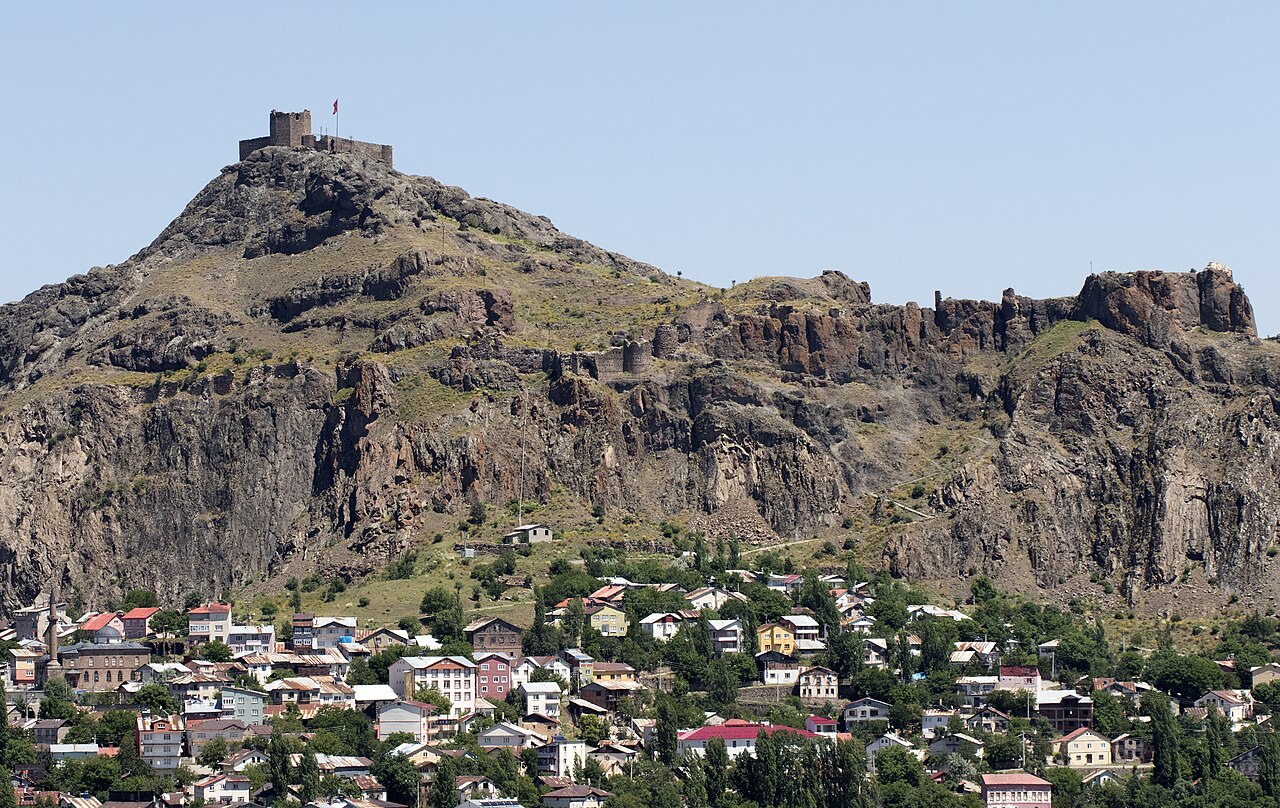
Şebinkarahisar Castle, also known locally as Şebinkarahisar Kalesi, is a historic fortress perched atop a mountain of black rock overlooking the town of Şebinkarahisar in the Giresun province of Turkey. This castle's origins trace back to antiquity, with a complex history involving multiple empires and architectural phases that reflect the region's strategic importance across centuries.
Ancient origins and early history
The exact founding date of Şebinkarahisar Castle remains uncertain, but historical records reveal its significance since at least the 1st century AD. The Byzantine historian Procopius documented that during the Third Mithridatic War, the Roman general Pompey captured and destroyed a fortress at this location, then known as Koloneia. The fortress's strategic location near valuable alum mines made it a key military and economic site. It is believed that the Romans rebuilt the fortress to secure control over the region and its resources.
Byzantine reconstruction and medieval transformations
In the 6th century, the fortress and the town underwent significant reconstruction under the orders of the Byzantine emperor Justinian I. This period saw the strengthening of the castle's defenses and the establishment of vital infrastructure such as cisterns and a water tunnel to support prolonged sieges. By the 11th century, the castle was known as Mavrokastron, meaning "Black Fortress" in Greek, reflecting the dark volcanic rock on which it stands.
The castle remained under Byzantine control until shortly after the pivotal Battle of Manzikert in 1071. Following this, it was likely seized by the Saltukids from Erzurum, marking the beginning of Turkish influence. The Seljuk Turks later took possession and undertook repairs, ensuring the castle's continued military relevance. A brief Byzantine reconquest occurred around 1106, but Turkish control was soon reestablished.
Ottoman era and later history
During the 14th century, the castle's name was translated into Turkish as Karahisar, maintaining the meaning of "Black Fortress." The fortress changed hands several times in the region's turbulent history until Sultan Mehmed II captured it in 1461 from the Ak Koyunlu, also known as the White Sheep Turkomans, incorporating it firmly into the Ottoman Empire. The town itself adopted the name Şebinkarahisar only in the 19th century, reflecting the evolving administrative and cultural landscape.
Architectural features and layout
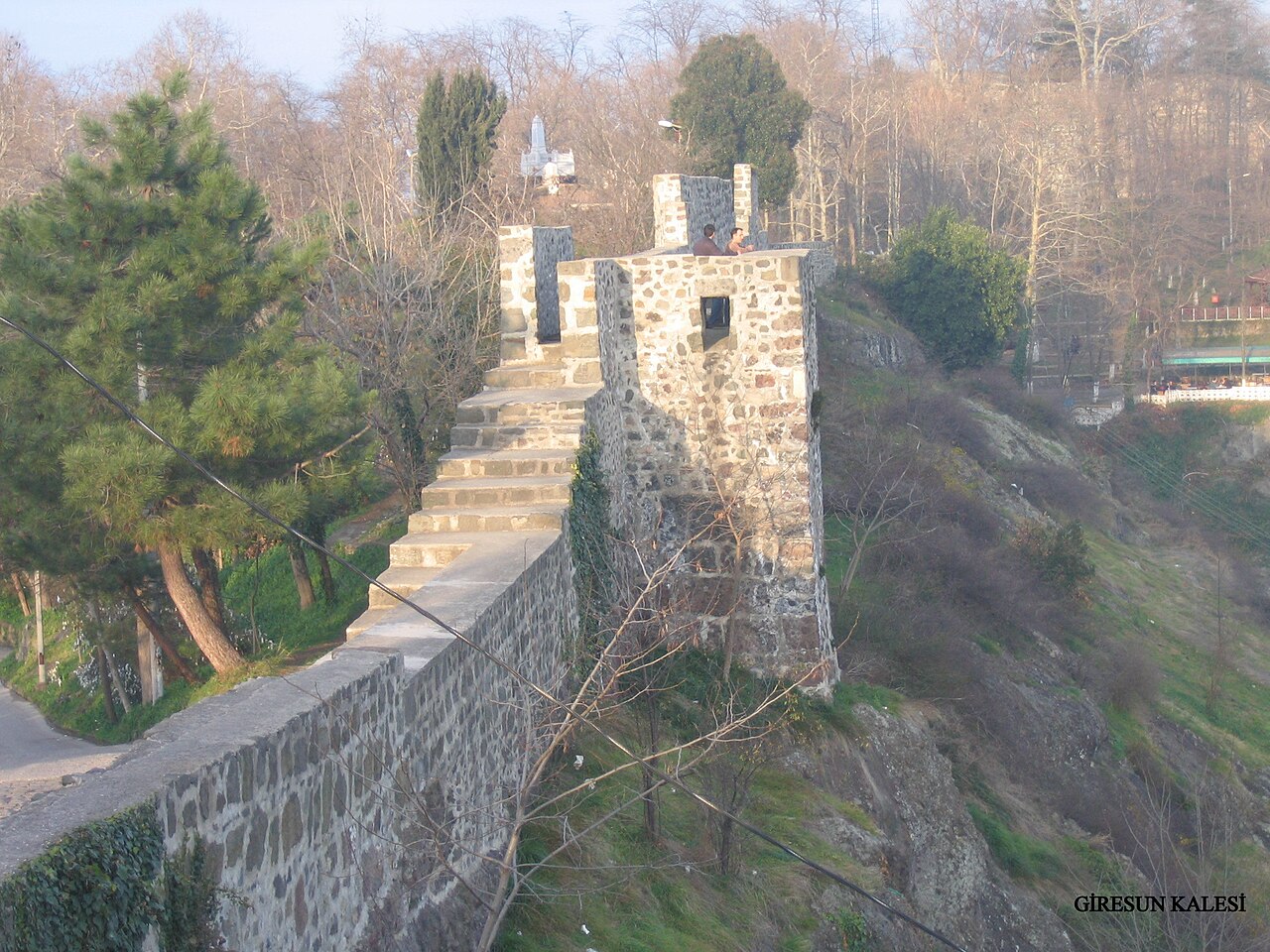
Şebinkarahisar Castle is notable for its adaptation to the natural terrain, built on a steep mountain composed of black volcanic rock. The outer castle walls trace the irregular outline of the rock, providing a formidable defensive perimeter. The main entrance is located here, guarded by robust walls and towers.
Inside the outer walls, several cisterns and a water tunnel are found, essential for sustaining the garrison during sieges. The inner castle sits atop the summit with an irregular ground plan, featuring multiple wall towers that enhance its defensive capabilities. A prominent feature is the octagonal keep, which architectural studies attribute primarily to the Ottoman period, indicating continued use and modification well into the early modern era.
Visiting şebinkarahisar castle today
Today, Şebinkarahisar Castle is in a partially preserved condition, with extensive ruins that invite exploration. The site is freely accessible to visitors, offering a unique opportunity to walk through centuries of layered history. From the castle's vantage points, visitors enjoy sweeping views of the surrounding landscape and the town below, making it a favored destination for history enthusiasts and hikers alike.
The castle's combination of Byzantine foundations, Seljuk repairs, and Ottoman architectural elements provides a tangible narrative of the region's complex past. Its strategic location and enduring presence underscore its historical role as a military bastion and administrative center through multiple empires.
Frequently asked questions (FAQ)
- How do I get to Şebinkarahisar Castle?
- Şebinkarahisar Castle is located on Konuk Cd. in the town of Şebinkarahisar, Giresun province, Turkey. It is accessible by local roads and can be reached by car or taxi from nearby cities.
- What is the historical significance of Şebinkarahisar Castle?
- Şebinkarahisar Castle has a rich history dating back to Roman times, with significant Byzantine, Seljuk, and Ottoman influences. It served as a strategic military fortress controlling important trade routes and local resources such as alum mines.
- Can visitors explore the interior of Şebinkarahisar Castle?
- Yes, the castle is freely accessible and visitors can explore its ruins, including the outer walls, inner castle, towers, cisterns, and the Ottoman-era octagonal keep.
- When was Şebinkarahisar Castle built?
- The castle's origins date back to at least the 1st century AD, with major reconstruction under Byzantine emperor Justinian I in the 6th century.
- Is Şebinkarahisar Castle suitable for families and children?
- The castle ruins involve uneven terrain and steep areas, so families with children should exercise caution. It is suitable for visitors who are comfortable with moderate hiking and exploring historic ruins.
Information
Address
Konuk Cd., Şebinkarahisar, Giresun, Turkey
Loading map...
Visitor reviews
No reviews yet. Been here? Write the first review and help other travelers!
Write the first reviewVisited this castle? Share your experience
Your review helps other travelers and adds first-hand knowledge to our encyclopedia.