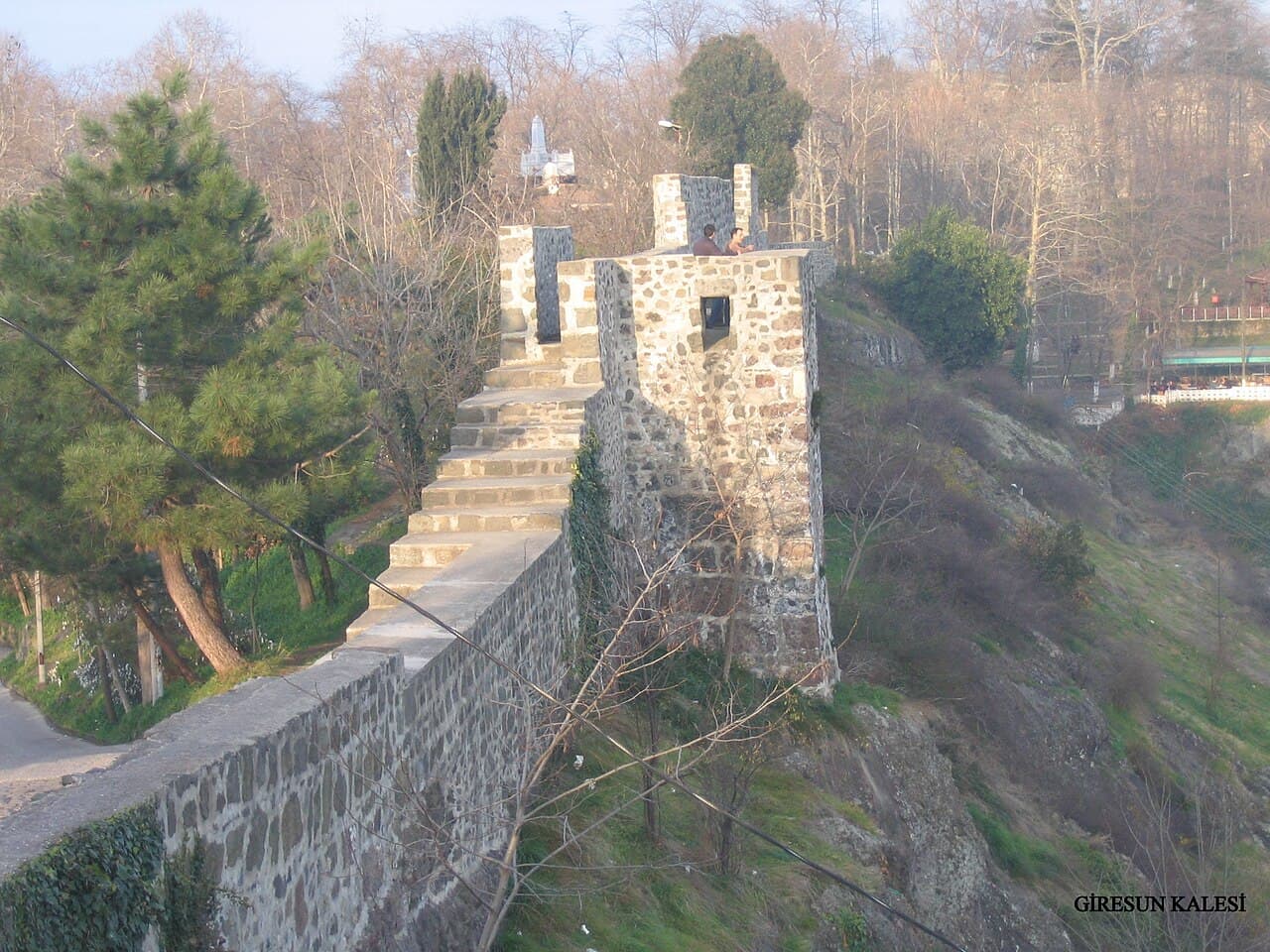
Giresun Castle
Giresun Castle, locally known as Giresun Kalesi, is a historic fortress located in the city of Giresun, in the northeastern Black Sea region of Turkey. This hill castle is perched on a volcanic spur rising approximately 130 meters above sea level, offering commanding views over the city and the Black Sea coast. The castle's strategic position has made it a significant defensive site since antiquity.
The origins of Giresun Castle trace back to the 2nd century BC, when the site was part of the ancient city of Kerasous. Although the exact founder of the castle is unknown, the area was inhabited and fortified during the Greco-Roman period. The surviving remains of the castle primarily reflect Byzantine construction phases, built upon earlier Greco-Roman foundations. The fortress was an important stronghold in the region during the Late Medieval period.
Historical background and strategic importance
The city of Kerasous was well known in antiquity and became part of the Empire of Trebizond following the Fourth Crusade in 1204. In 1302, the castle was likely strengthened or rebuilt by Emperor Alexios II Megas Komnenos after he repelled a Turkoman invasion that had devastated the city. This reconstruction reinforced the castle's defensive capabilities and underscored its military importance in protecting the Black Sea coast from incursions.
During the 14th century, the fortress briefly fell into the hands of Turkic forces, reflecting the turbulent political and military struggles in the region. The castle remained a contested site until the fall of the Empire of Trebizond in 1461, when it was absorbed into the expanding Ottoman Empire. Local traditions suggest that the fortress resisted Ottoman control for several months or possibly years under blockade before finally succumbing.
Architectural features and layout
The castle is situated on a narrow ridge running from southwest to northeast, forming a peninsula-like projection into the sea. The highest point hosts an enclosed area that likely functioned as the keep, the central fortified stronghold of the castle. Extending from this keep, a lengthy city wall once stretched from shore to shore, enclosing the settlement and providing a formidable barrier against attackers.
Unfortunately, much of the original fortifications near the shoreline, including gates and walls, were demolished in the 1950s to make way for modern infrastructure such as roads and a port. Despite this, the remaining ramparts and the elevated position still convey the castle's defensive character.
Defensive structures
The surviving walls are constructed of stone and follow the natural contours of the volcanic ridge. The castle's design maximized the natural topography for defense, with steep slopes on several sides making direct assault difficult. The keep, positioned at the highest point, would have served as a last refuge during sieges.
Current condition and accessibility
Today, Giresun Castle is classified as partially preserved. While architectural details are limited due to the loss of many structures, the site remains accessible to the public. It has been incorporated into a municipal park where visitors and locals enjoy picnics and panoramic views of the city and the Black Sea.
Cultural significance and modern use
The castle is an important cultural landmark for the city of Giresun. It symbolizes the region's layered history, from its ancient Greek origins through Byzantine and Ottoman periods. The site attracts tourists interested in history, architecture, and scenic vistas.
Efforts to preserve and maintain the castle focus on safeguarding its remaining walls and promoting awareness of its historical value. The panoramic views from the castle provide a unique perspective on the city's development and its relationship with the Black Sea.
Frequently asked questions (FAQ)
- What is the historical significance of Giresun Castle?
- Giresun Castle, dating back to the Roman era, has served as a strategic military site throughout various periods, including the Byzantine and Ottoman empires. It is a symbol of Giresun's rich history and played a crucial role in the region's defense against invasions.
- What are the opening hours for Giresun Castle?
- Giresun Castle is open to visitors daily, typically from 9 AM to 7 PM during the summer months and from 9 AM to 5 PM in the winter. However, it is advisable to check for any seasonal changes in hours before your visit.
- Can I access Giresun Castle by public transportation?
- Yes, Giresun Castle is accessible by public transportation. Local buses and taxis provide convenient options for reaching the castle from various points in Giresun.
- When is the best time to visit Giresun Castle?
- The best time to visit Giresun Castle is during the spring (April to June) and fall (September to October) when the weather is mild and pleasant. These seasons also allow you to enjoy stunning views of the surrounding landscape.
- Is it possible to explore the castle's architecture?
- Absolutely! Visitors can walk around the castle grounds and explore its ancient walls and towers, which showcase a blend of Byzantine and Ottoman architectural styles. Guided tours are available for those interested in learning more about its history and structure.
- What are the ticket prices for Giresun Castle?
- Entry to Giresun Castle is relatively affordable, with ticket prices typically ranging from 10 to 20 Turkish Lira. Discounts may be available for students and seniors, so it's worth inquiring at the ticket booth.
- Are there any nearby attractions to visit alongside Giresun Castle?
- Yes, nearby attractions include the Giresun Museum, showcasing local artifacts and history, and the picturesque Giresun Island, accessible by boat. Both sites offer a deeper insight into the region's cultural and historical heritage.
Photo gallery

Information
Address
Kalebayırı Sk., Giresun, Turkey
Loading map...
Visitor reviews
No reviews yet. Been here? Write the first review and help other travelers!
Write the first reviewVisited this castle? Share your experience
Your review helps other travelers and adds first-hand knowledge to our encyclopedia.


