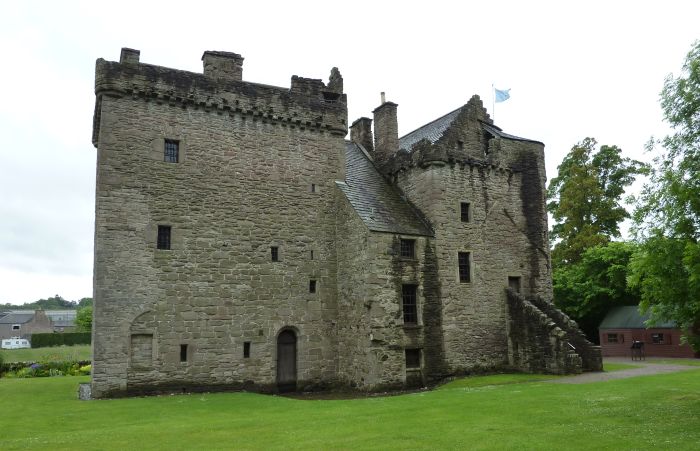
Scone Palace
Scone Palace stands as a monumental symbol of Scottish heritage, located near the village of Scone, close to Perth in Scotland. This historic hill castle occupies a site steeped in profound cultural and political significance, serving as the traditional coronation place for Scottish kings since at least the 9th century. The palace’s location is intrinsically linked with the Stone of Scone, also known as the Stone of Destiny, a revered artifact upon which many monarchs were crowned, including Kenneth MacAlpin in the early medieval period, Robert the Bruce in 1306, and Charles II in 1651. This enduring royal connection underscores the palace’s importance in Scotland’s monarchical history and national identity.
The site’s legacy extends beyond coronations, as it hosted the first known Scottish Parliament under King Constantine II around the year 906, marking a foundational moment in the governance of early Scotland. Initially, the location featured an early Christian church, which evolved into Scone Abbey, an Augustinian priory established in 1114. The abbey stood as a religious and cultural center for centuries until its destruction in 1559 during the Scottish Reformation, when a mob incited by the reformer John Knox demolished the abbey buildings. This event marked a pivotal transformation in the site’s role and ownership.
Medieval origins and religious significance
The establishment of Scone Abbey in the early 12th century was a significant development, positioning the site as a major religious institution in medieval Scotland. The abbey was built on the foundations of earlier Christian worship, reflecting the spread of Christianity and its integration into Scottish royal culture. As a religious center, the abbey played a central role in the spiritual life of the region and was closely tied to the monarchy, reinforcing the sacred nature of the coronation ceremonies held on Moot Hill nearby.
The abbey’s destruction in 1559 was a dramatic episode in the Scottish Reformation, reflecting the widespread religious upheaval and iconoclasm of the period. The loss of the abbey buildings led to a shift in the site’s function from a religious to a secular stronghold, paving the way for the construction of the palace that stands today.
Transition to a noble residence
Following the abbey’s ruin, the estate underwent several changes in ownership. In 1580, the lands were granted to Lord Ruthven, but were confiscated by King James VI in 1600. Subsequently, the estate was granted to Sir David Murray, who was created Lord Scone. The Murray family has since maintained the palace as their ancestral home for over four centuries, establishing a deep familial connection to the site.
The original palace was constructed in the late 16th century, incorporating elements of the medieval Gothic style that echoed the site's ecclesiastical past. This early palace laid the groundwork for later expansions and renovations that would define the current appearance of Scone Palace.
19th-century remodeling and architectural features
Between 1802 and 1807, Scone Palace underwent extensive remodeling and expansion under the direction of the architect William Atkinson. Commissioned by David William Murray, the 3rd Earl of Mansfield, the project aimed to modernize the palace while preserving its historical character. Atkinson’s design embraced the Gothic Revival architectural style, which was popular in Scotland during the 19th century, characterized by battlemented (castellated) roofs, pointed arches, and decorative stonework that evoked medieval Gothic aesthetics.
The palace is predominantly constructed of red sandstone, a material commonly used in Scottish architecture, which adds to its distinctive appearance. The remodeling retained and enhanced the medieval Gothic elements, creating a harmonious blend of historical reverence and 19th-century stylistic trends.
Interior collections and artistic heritage
The interior of Scone Palace houses an impressive collection of furniture, artwork, and artifacts that reflect the aristocratic heritage of the Murray family. The gallery and state rooms showcase finely crafted Rococo chairs by Pierre Bara and original pieces by renowned designers such as Robert Adam and Thomas Chippendale. The art collection includes significant Scottish and British portraiture by artists including Reynolds, Allan Ramsay, Philip de László, and a notable work by Sir David Wilkie titled "The Village Politicians."
Among the palace’s treasured artifacts is a writing desk by Jean-Henri Riesener, a gift from Marie-Antoinette to the 2nd Earl of Mansfield, highlighting the international connections of the family. The Lennox Room contains royal relics such as bed-hangings crafted by Mary Queen of Scots, further emphasizing the palace’s deep historical ties to Scotland’s monarchy.
Historic grounds and landscape features
The palace grounds encompass several sites of historical and cultural importance. Moot Hill, also known as Boot Hill, is the traditional Scottish inauguration site where monarchs were crowned. Today, it holds a replica of the Stone of Scone, symbolically linking the landscape to the ancient coronation ceremonies.
Nearby stands a 17th-century chapel featuring remarkable monuments by the Flemish sculptor Maximilian Colt. These monuments commemorate the first Lord Scone and the heart of the first wife of the 2nd Earl of Mansfield, adding layers of personal and artistic history to the site.
The surrounding woodlands are notable for their age and botanical significance. The estate was the first location in Britain to cultivate Douglas firs, introduced by the botanist David Douglas. Some of these fir trees are estimated to be over 250 years old, underscoring the estate’s long-standing commitment to landscape and horticultural innovation.
The star-shaped maze and family symbolism
One of the most distinctive features of the grounds is the expansive star-shaped maze, covering approximately 1,600 square meters. This maze is formed by copper and green beech trees planted to replicate the Ancient Murray of Tullibardine tartan, designed in the pattern of a five-pointed star. This design reflects the Mansfield family’s emblematic identity and contributes a unique botanical and cultural landmark to the palace grounds.
Cultural significance and modern-day status
Scone Palace today remains a well-preserved historic hill castle that continues to attract visitors interested in Scotland’s royal history, architecture, and landscape design. It serves as a testament to the country’s medieval origins, religious transformations, and aristocratic heritage.
The palace is open to the public, offering tours of its richly decorated interiors, extensive art collections, and beautifully maintained grounds. Its combination of Gothic Revival architecture, historical artifacts, and landscaped gardens makes it a significant cultural and tourist destination in Scotland.
Throughout its history, Scone Palace has embodied the evolving narrative of Scottish identity, from early medieval kingship to modern aristocratic residence, preserving the legacy of the Stone of Destiny and the traditions of Scottish monarchy for future generations.
Frequently asked questions (FAQ)
- How do I get to Scone Palace from Perth?
- Scone Palace is located just a few miles from Perth. Visitors can reach the palace by car in about 10 minutes or take local buses that connect Perth with Scone village.
- What is the historical significance of the Stone of Scone?
- The Stone of Scone, or Stone of Destiny, is a symbol of Scottish monarchy used in the coronation of Scottish kings for centuries, including Kenneth MacAlpin and Robert the Bruce.
- When was Scone Palace built?
- The current palace was built in the late 16th century, with major remodeling and expansions carried out between 1802 and 1807 by architect William Atkinson.
- Can I visit the interior of Scone Palace?
- Yes, the palace interior is open to the public, featuring historic rooms, art collections, and royal artifacts that illustrate its rich aristocratic heritage.
- What are the opening hours and ticket prices for Scone Palace?
- Scone Palace is open daily from 10:00 to 16:00. Tickets cost £10 for adults and £7 for children, with discounts available for families and groups.
- Is Scone Palace accessible for visitors with mobility issues?
- The palace and grounds have some accessibility accommodations, but due to the historic nature of the buildings and terrain, some areas may be challenging for visitors with mobility issues.
Information
Opening hours
10:00-16:00, daily
Ticket prices
£10 adult, £7 child
Architect
William Atkinson
Current owner
Murray family
Website
Visit websiteSources & official resources
Verify the information above using these authoritative references.
Loading map...
Visitor reviews
No reviews yet. Been here? Write the first review and help other travelers!
Write the first reviewVisited this castle? Share your experience
Your review helps other travelers and adds first-hand knowledge to our encyclopedia.