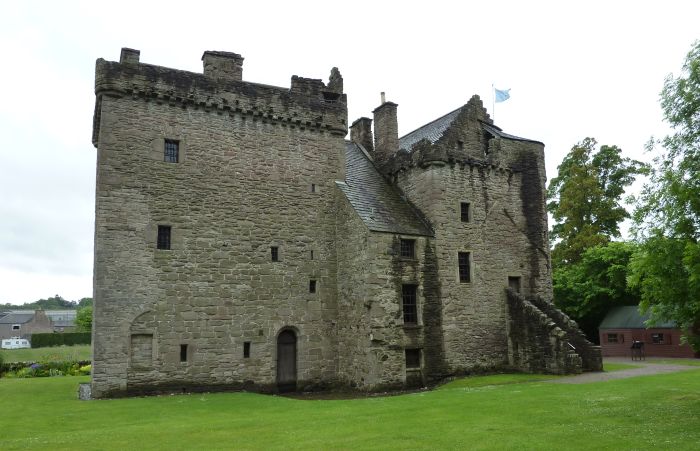
Balhousie Castle
Balhousie Castle stands as a significant historical and architectural landmark in the city of Perth, Scotland. Originally constructed in 1631, the castle's origins likely extend back to an earlier structure dating approximately three centuries prior. It served as the ancestral seat of the Earls of Kinnoull, a prominent noble family, and was strategically positioned on a terrace overlooking the North Inch park, providing both scenic views and defensive advantages.
The castle was initially enclosed within substantial walled enclosures that incorporated various subsidiary buildings, including stables and orchards, reflecting the typical layout of a noble estate designed for both residence and self-sufficiency. This arrangement underscored the castle's role not only as a fortified domicile but also as a center of local governance and agricultural management.
Historical development and architectural transformation
Balhousie Castle experienced significant changes over its lifespan. By the early 19th century, it had fallen into neglect and disrepair. Between 1862 and 1864, the castle underwent a comprehensive restoration and enlargement under the direction of the architect David Smart. This reconstruction was more accurately a near-total rebuilding, executed in the Scottish Baronial style, which was part of a broader 19th-century revival movement that sought to celebrate and reinterpret medieval Scottish architectural motifs.
The Scottish Baronial style is characterized by features such as turrets, battlements, crow-stepped gables, and ornamental stonework, all of which were incorporated into the redesigned Balhousie Castle. Despite these extensive modifications, fragments of the original 17th-century rubble walls on the castle's east side were preserved, providing a tangible link to its earlier incarnation.
Architectural features and layout
The castle's layout reflects its evolution from a fortified noble residence to a 19th-century revivalist monument. The surviving rubble walls suggest the original defensive intentions, while the later additions emphasize aesthetic grandeur and romantic historicism. The castle features prominent entrance gates and turrets that contribute to its distinctive silhouette, evoking the martial heritage of Scottish castles.
The site’s location on a terrace overlooking the North Inch provided strategic oversight of the surrounding landscape, a common feature for hill castles, enhancing its defensive capabilities and status symbol. The walled courtyard and ancillary buildings would have supported the daily operations of the estate, including agricultural activities and the housing of retainers and servants.
Balhousie castle and the black watch regiment
In the 20th century, Balhousie Castle took on a new role as the Regimental Headquarters and Museum of The Black Watch, one of Scotland’s most famous infantry regiments, established in 1739. The castle was acquired by the Regimental Trustees in January 2009, marking a new chapter in its history. The trustees launched the Black Watch Heritage Appeal in September 2009, successfully raising over £3.2 million to develop the castle as a permanent home for the regiment’s museum and archives.
The museum within Balhousie Castle offers a comprehensive display of the regiment’s history, from its formation through to modern deployments. Among its notable exhibits is the painting No Surrender by Frank Feller (1848–1908), which depicts the aftermath of the Battle of Magersfontein during the Second Boer War in 1899. This artwork and other artifacts provide visitors with an immersive experience into the military heritage and valor of The Black Watch.
Cultural significance and preservation
Balhousie Castle holds the designation of a Category B listed building, recognizing its architectural and historic importance within the region. Although the original 17th-century structure survives only in part, the castle’s 19th-century Scottish Baronial reconstruction is an important example of Victorian-era historicist architecture in Scotland.
The castle’s preservation as a museum and regimental headquarters ensures the ongoing maintenance of its fabric and promotes public engagement with Scotland’s military and aristocratic history. The blending of medieval remnants with Victorian revivalist elements creates a unique architectural narrative that reflects the evolving identity of Scottish castles through centuries.
Visitor experience and educational value
Visitors to Balhousie Castle can explore the rich history of The Black Watch regiment through well-curated exhibits and archival materials. The castle’s setting overlooking the North Inch park provides a picturesque backdrop that enhances the visitor experience. Educational programs and special exhibitions further enrich the understanding of Scotland’s military traditions and the architectural heritage embodied in the castle.
Balhousie Castle remains a vital cultural institution in Perth, linking the city’s medieval past with its contemporary role as a centre for heritage and remembrance.
Frequently asked questions (FAQ)
- What is the historical significance of Balhousie Castle?
- Balhousie Castle has a rich history dating back to the 15th century and is recognized as one of Scotland's most important historical landmarks. It was originally built as a fortress and has served various roles throughout the centuries, including a residence for noble families and a military headquarters during various conflicts.
- When was Balhousie Castle built?
- Construction of Balhousie Castle began in the late 1400s, with significant expansions and renovations occurring in subsequent centuries. The castle's architecture reflects various styles that evolved over time, showcasing its historical journey.
- Can I visit Balhousie Castle?
- Yes, Balhousie Castle is open to the public for tours and special events. Visitors can explore the castle’s impressive architecture, learn about its history, and enjoy the beautiful surrounding gardens.
- What are the opening hours for Balhousie Castle?
- Balhousie Castle is typically open to visitors from 10 AM to 5 PM, Tuesday through Sunday. However, it's advisable to check the official website or contact the castle directly for any changes in schedule or seasonal hours.
- Is it possible to access Balhousie Castle with a wheelchair?
- Yes, Balhousie Castle strives to be accessible for all visitors. There are provisions in place to assist those with mobility challenges, including wheelchair access to certain areas of the castle and grounds.
- What are the ticket prices for Balhousie Castle?
- Ticket prices for Balhousie Castle vary depending on the visitor's age and the type of tour chosen. Discounts may be available for children, seniors, and groups, so it's best to check the official website for the most current pricing information.
- When is the best time to visit Balhousie Castle?
- The best time to visit Balhousie Castle is during the spring and summer months, from April to September, when the weather is milder and the gardens are in full bloom. However, visiting during the autumn can also offer stunning foliage and a quieter experience.
- Are there any nearby attractions to Balhousie Castle?
- Yes, visitors to Balhousie Castle can explore several nearby attractions, including the historic Perth Museum and Art Gallery, the picturesque Branklyn Garden, and Scone Palace, the crowning place of Scottish kings. Each of these sites offers a unique insight into the region's rich heritage.
Information
Website
Visit websiteSources & official resources
Verify the information above using these authoritative references.
Loading map...
Visitor reviews
No reviews yet. Been here? Write the first review and help other travelers!
Write the first reviewVisited this castle? Share your experience
Your review helps other travelers and adds first-hand knowledge to our encyclopedia.