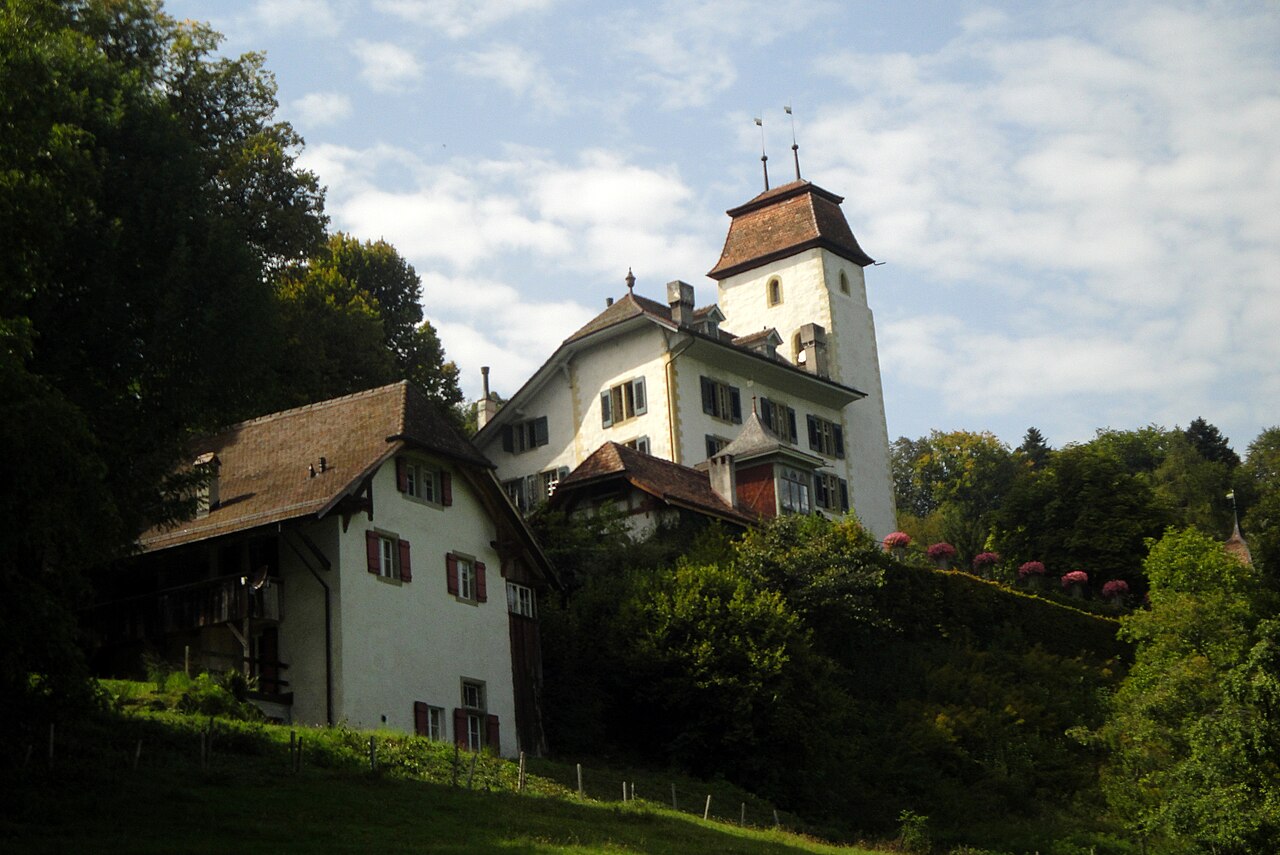
Schwarzenburg Castle
Schwarzenburg Castle stands as a remarkable example of a Renaissance manor house designed primarily for administrative purposes rather than military defense. Constructed between 1573 and 1576, it replaced the older Grasburg Castle, which had become too costly to maintain. Located in the municipality of Schwarzenburg, Switzerland, this castle was built to serve as the seat of government for the Grasburg district, a condominium jointly administered by the Cantons of Bern and Fribourg. The alternating appointment of the governor from these cantons underscored the cooperative governance system of the region during the late 16th century.
Historical context and political significance
The castle’s construction coincided with a period of relative peace and administrative consolidation in the Swiss territories. Unlike earlier medieval castles built for defense against invaders, Schwarzenburg Castle was conceived as a symbol of governmental authority and administrative efficiency. Its role as the governor’s residence and district administration center was crucial during a time when the dual canton condominium arrangement required a neutral and impressive seat of power.
Following the French invasion of Switzerland in 1798, the political landscape changed dramatically. Schwarzenburg Castle and its district became permanently part of the Canton of Bern, ending the condominium arrangement. From 1803 onwards, the castle also served as the official residence of the Bernese prefect, who oversaw regional governance. This administrative function continued uninterrupted until the district's dissolution in 2010 as part of a major cantonal reorganization.
Architectural features and layout
Schwarzenburg Castle’s architecture reflects its primary function as an administrative center and manor house rather than a fortress. The main building is a substantial three-story rectangular structure constructed of masonry, topped with a distinctive half-hipped roof. This roofing style, combining sloped and vertical elements, balances practical weather protection with an elegant silhouette.
An octagonal staircase tower with a pointed roof connects the building’s floors internally, serving both functional and aesthetic purposes. This tower is a prominent architectural feature, adding vertical emphasis and grandeur to the castle’s profile.
The castle encloses a courtyard that links the main building to a gatehouse and an attached granary. The gatehouse and the walls around the courtyard were designed to impress visitors and assert governmental authority rather than to defend against armed attack. Two corner turrets rise on opposite sides of the courtyard, resembling defensive towers but primarily serving a decorative role.
Interior design and decorative elements
Inside, many rooms retain their original coffered ceilings dating back to around 1575. These ceilings exemplify the craftsmanship and artistic style of the late Renaissance, featuring intricate woodwork and geometric patterns. The preservation of these interiors offers valuable insight into the decorative tastes and construction techniques of the period.
In the 18th century, the castle’s main entrance was relocated to the north side. This new entrance was elaborately decorated in the Louis XVI style, a neoclassical aesthetic popular in the late 1700s. The entrance features a fountain topped with an obelisk, enhancing the castle’s dignified and stately appearance.
Later modifications and preservation
The attached granary underwent significant rebuilding in the mid-18th century and again in 1983, reflecting the ongoing adaptation of the castle’s functional spaces to changing needs. Despite these modifications, the castle’s exterior facades and internal layout have been carefully preserved to maintain its historical character.
Today, Schwarzenburg Castle is owned by the Stiftung Schloss Schwarzenburg foundation, which acquired it following the cantonal district reorganization in 2010. The castle no longer serves as an administrative center but has been repurposed as a cultural venue. It hosts art exhibitions and is available for private celebrations and meetings, allowing visitors to experience its historical ambiance and architectural beauty firsthand.
Architectural style and significance
Schwarzenburg Castle exemplifies the Renaissance architectural style in Switzerland, characterized by symmetry, proportion, and restrained decorative elements. Its design emphasizes functionality as a government building while incorporating stylistic features that convey prestige and authority. The castle’s half-hipped roof, octagonal staircase tower, and decorative turrets are distinctive elements that contribute to its unique architectural identity.
Unlike medieval fortresses, Schwarzenburg Castle’s walls and towers were constructed more for aesthetic impact than for military defense, reflecting the changing role of castles in the early modern period. This shift from fortress to administrative manor highlights broader social and political transformations in Switzerland during the Renaissance.
Visiting and cultural importance
Visitors to Schwarzenburg Castle can explore its well-preserved Renaissance interiors, including the original coffered ceilings and the elegant Louis XVI entrance. The castle’s use as an exhibition space allows it to serve as a cultural hub in the region, promoting local art and heritage.
The castle’s location in the scenic municipality of Schwarzenburg adds to its appeal, offering visitors a chance to experience Swiss history in a picturesque setting. Its preservation and adaptive reuse demonstrate a successful balance between maintaining historical integrity and meeting contemporary cultural needs.
Frequently asked questions (FAQ)
- How do I visit Schwarzenburg Castle?
- Schwarzenburg Castle is open to the public during special events, art exhibitions, and by prior arrangement for private functions. Check the Stiftung Schloss Schwarzenburg website for current visiting hours and event schedules.
- What is the historical significance of Schwarzenburg Castle?
- Built between 1573 and 1576, Schwarzenburg Castle served as the administrative center for the Grasburg district, reflecting the cooperative governance between the Cantons of Bern and Fribourg during the Renaissance period.
- Can I rent Schwarzenburg Castle for private events?
- Yes, the castle is available for private celebrations, meetings, and cultural events. Booking arrangements can be made through the Stiftung Schloss Schwarzenburg foundation.
- What architectural style is Schwarzenburg Castle built in?
- Schwarzenburg Castle is built in the Renaissance style, featuring a three-story rectangular structure with a half-hipped roof and an octagonal staircase tower.
- Are there any original interior features to see?
- Many rooms in the castle retain their original coffered ceilings from around 1575, showcasing exquisite Renaissance craftsmanship.
Information
Opening hours
Varies by event
Ticket prices
Varies by event
Current owner
Stiftung Schloss Schwarzenburg
Website
Visit websiteSources & official resources
Verify the information above using these authoritative references.
Loading map...
Visitor reviews
No reviews yet. Been here? Write the first review and help other travelers!
Write the first reviewVisited this castle? Share your experience
Your review helps other travelers and adds first-hand knowledge to our encyclopedia.