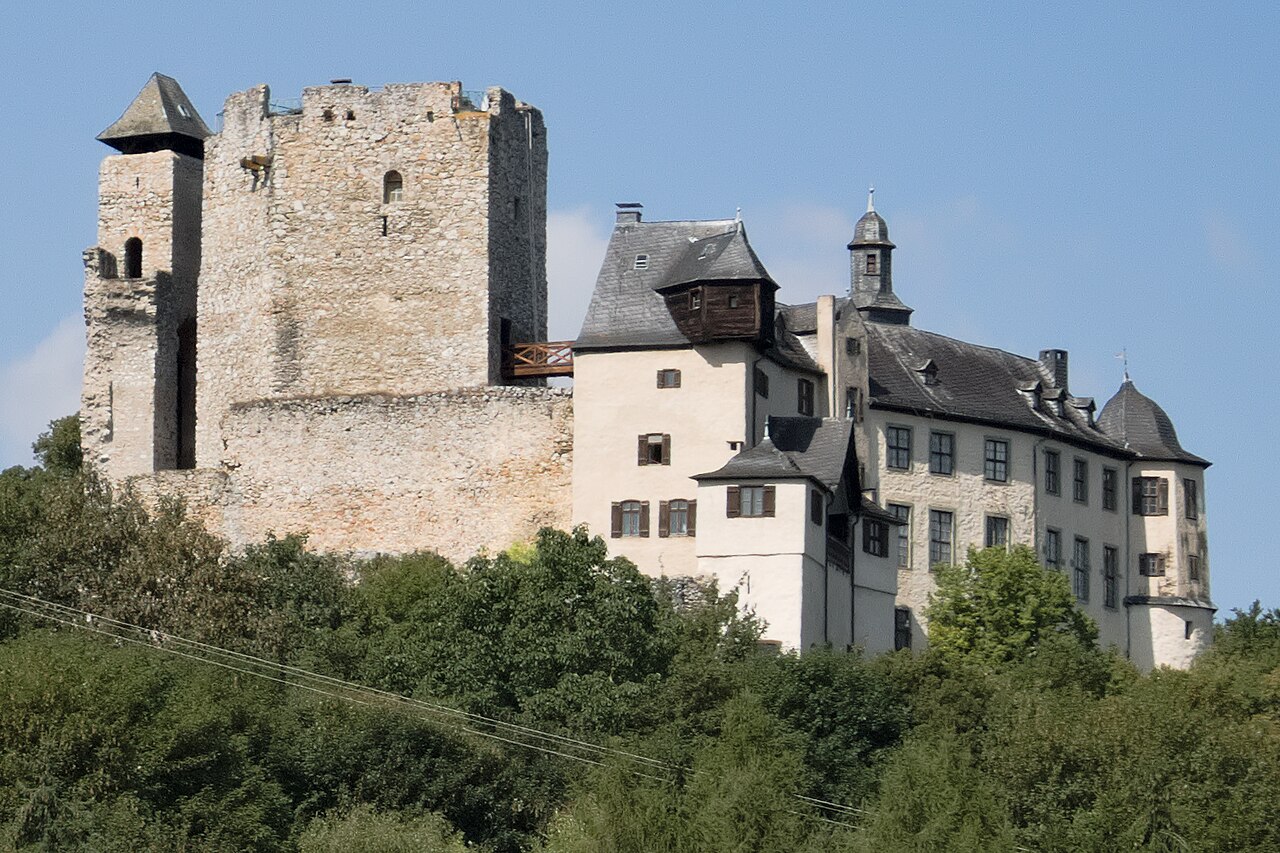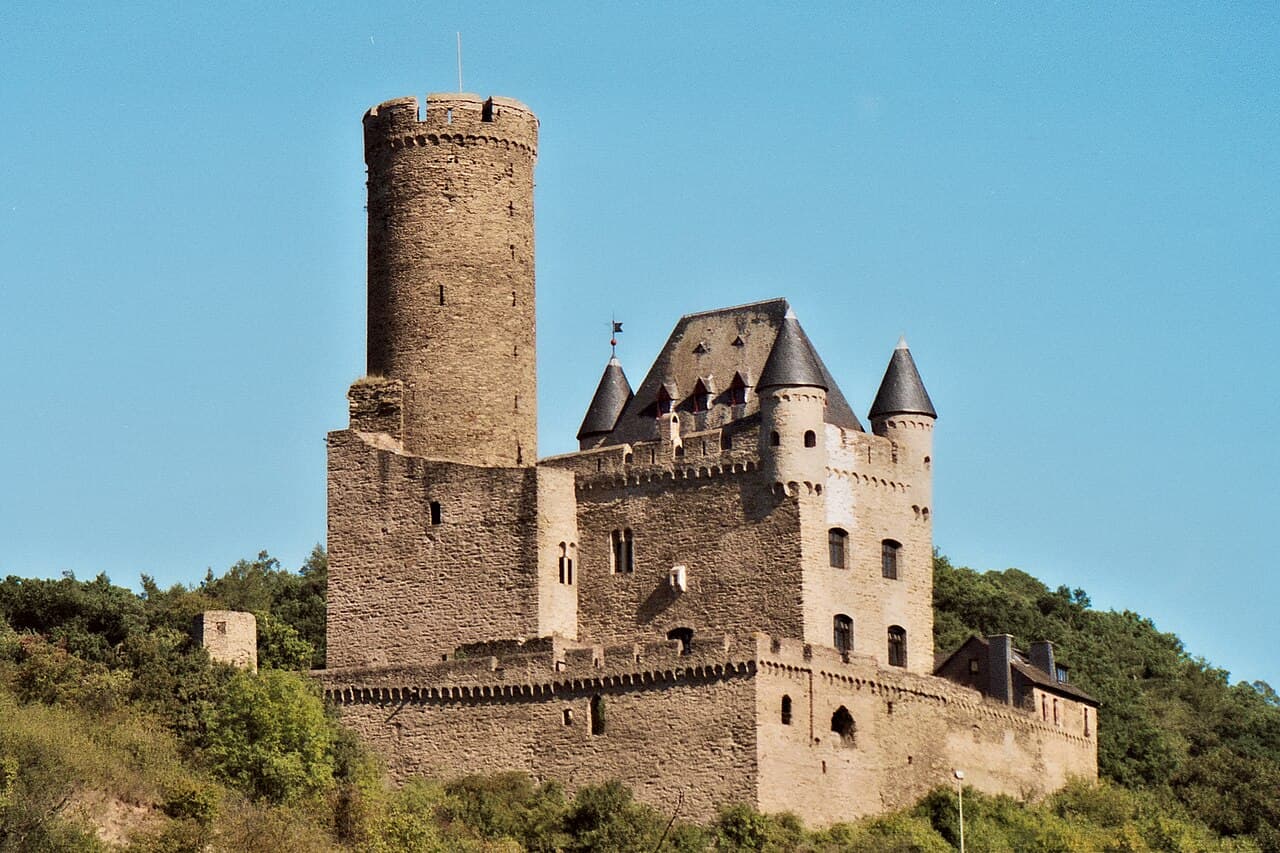
Schwalbach Castle
Schwalbach Castle is a notable example of a late medieval hill castle located in the small town of Burgschwalbach in Germany. Constructed between 1354 and 1371, the castle was originally commissioned by Count Eberhard V of Katzenelnbogen, a prominent noble during the period. Its strategic position atop a hill provided a commanding view of the surrounding landscape, typical of defensive castles of the era designed to control important routes and territories.
Historical background and ownership
The castle's early history is closely tied to the Katzenelnbogen dynasty, an influential family in the Rhineland region. In 1373, Gilbrecht of Schönborn is recorded as the castle's burgmann, a title given to the appointed castle administrator or knight responsible for its defense and management. This indicates the castle's role not only as a noble residence but also as a military stronghold.
During the 16th century, the ownership of Schwalbach Castle shifted to the County of Nassau, reflecting the complex territorial changes common in the Holy Roman Empire. The Nassau family was one of the prominent noble houses in the region, and their acquisition of the castle marked a new chapter in its history.
Architectural features and layout
Schwalbach Castle exemplifies the defensive architecture typical of the late medieval period. Its location on a hill contributes to its classification as a hill castle, providing natural defensive advantages. The castle's construction period, spanning from the mid-14th century to the late 14th century, suggests a design that incorporates elements of both robust military fortification and residential comfort.
The castle's structural elements likely include thick curtain walls, towers for surveillance and defense, and a gatehouse controlling access. Though specific details on the internal layout are limited, typical castles from this era feature a keep or donjon serving as the last line of defense and living quarters for the lord. Courtyards and ancillary buildings would support daily life and garrison needs.
Restoration and current condition
Unlike many medieval castles that fell into ruin, Schwalbach Castle has been maintained and adapted over the centuries. Since the 19th century, the castle has housed a restaurant, indicating a degree of preservation and adaptive reuse. This use has likely contributed to the castle's upkeep and accessibility to the public.
The castle today is considered well preserved, retaining much of its historical character while serving modern functions. Visitors can experience the blend of medieval architecture with contemporary hospitality, making it a unique cultural and historical site.
Significance and visitor information
Schwalbach Castle stands as a testament to the medieval history of the Rhineland and the shifting political landscape of the Holy Roman Empire. Its continuous use and preservation make it an important heritage site in the region.
Visitors to the castle can enjoy exploring its historic architecture, scenic hilltop views, and the on-site restaurant that offers a chance to dine within a historic setting. The castle's location in Burgschwalbach also provides access to other regional attractions and natural landscapes.
Frequently asked questions
- When was Schwalbach Castle built? Schwalbach Castle was built between 1354 and 1371 by Count Eberhard V of Katzenelnbogen.
- What type of castle is Schwalbach Castle? It is a hill castle, strategically positioned on elevated terrain for defense.
- Is Schwalbach Castle open to the public? Yes, the castle is accessible to visitors and features a restaurant operating since the 19th century.
- What architectural style does Schwalbach Castle represent? It reflects late medieval defensive architecture typical of the 14th century.
- Who owned Schwalbach Castle historically? Originally owned by the Katzenelnbogen family, it passed to the County of Nassau in the 16th century.
- Can visitors dine at Schwalbach Castle? Yes, the castle houses a restaurant that has been in operation since the 19th century, offering a unique dining experience.
- What is the condition of Schwalbach Castle today? The castle is well preserved and maintained for public visitation and hospitality use.
Frequently asked questions (FAQ)
- When was Schwalbach Castle built?
- Schwalbach Castle was built between 1354 and 1371 by Count Eberhard V of Katzenelnbogen.
- What type of castle is Schwalbach Castle?
- It is a hill castle, strategically positioned on elevated terrain for defense.
- Is Schwalbach Castle open to the public?
- Yes, the castle is accessible to visitors and features a restaurant operating since the 19th century.
- What architectural style does Schwalbach Castle represent?
- It reflects late medieval defensive architecture typical of the 14th century.
- Who owned Schwalbach Castle historically?
- Originally owned by the Katzenelnbogen family, it passed to the County of Nassau in the 16th century.
- Can visitors dine at Schwalbach Castle?
- Yes, the castle houses a restaurant that has been in operation since the 19th century, offering a unique dining experience.
- What is the condition of Schwalbach Castle today?
- The castle is well preserved and maintained for public visitation and hospitality use.

Information
Loading map...
Visitor reviews
No reviews yet. Been here? Write the first review and help other travelers!
Write the first reviewVisited this castle? Share your experience
Your review helps other travelers and adds first-hand knowledge to our encyclopedia.