Burg Kirberg
Burg Kirberg stands as a significant medieval hill castle ruin located in the municipality of Hünfelden, within the German state of Hesse. Nestled atop a prominent sandstone rock formation called Schalsteinfelsen, the castle occupies a strategic natural elevation that has shaped its architectural and historical identity. Originally, the site hosted a church dating back to approximately 790 AD, highlighting its longstanding religious and cultural importance prior to the castle's construction.
The castle itself was constructed around 1355 through the collaborative efforts of two influential noble houses: Counts Gerhard VII of Diez and Johann I of Nassau-Weilburg. This joint project emerged following a dispute in 1353 over control of the nearby village of Kirberg. The resolution included the erection of a defensive stronghold, replacing the earlier ecclesiastical building and establishing a fortified presence on the sandstone outcrop. Concurrent with the castle's construction, a church and a protective ring wall were also built, coinciding with Kirberg's official acquisition of town rights.
Architectural features and layout
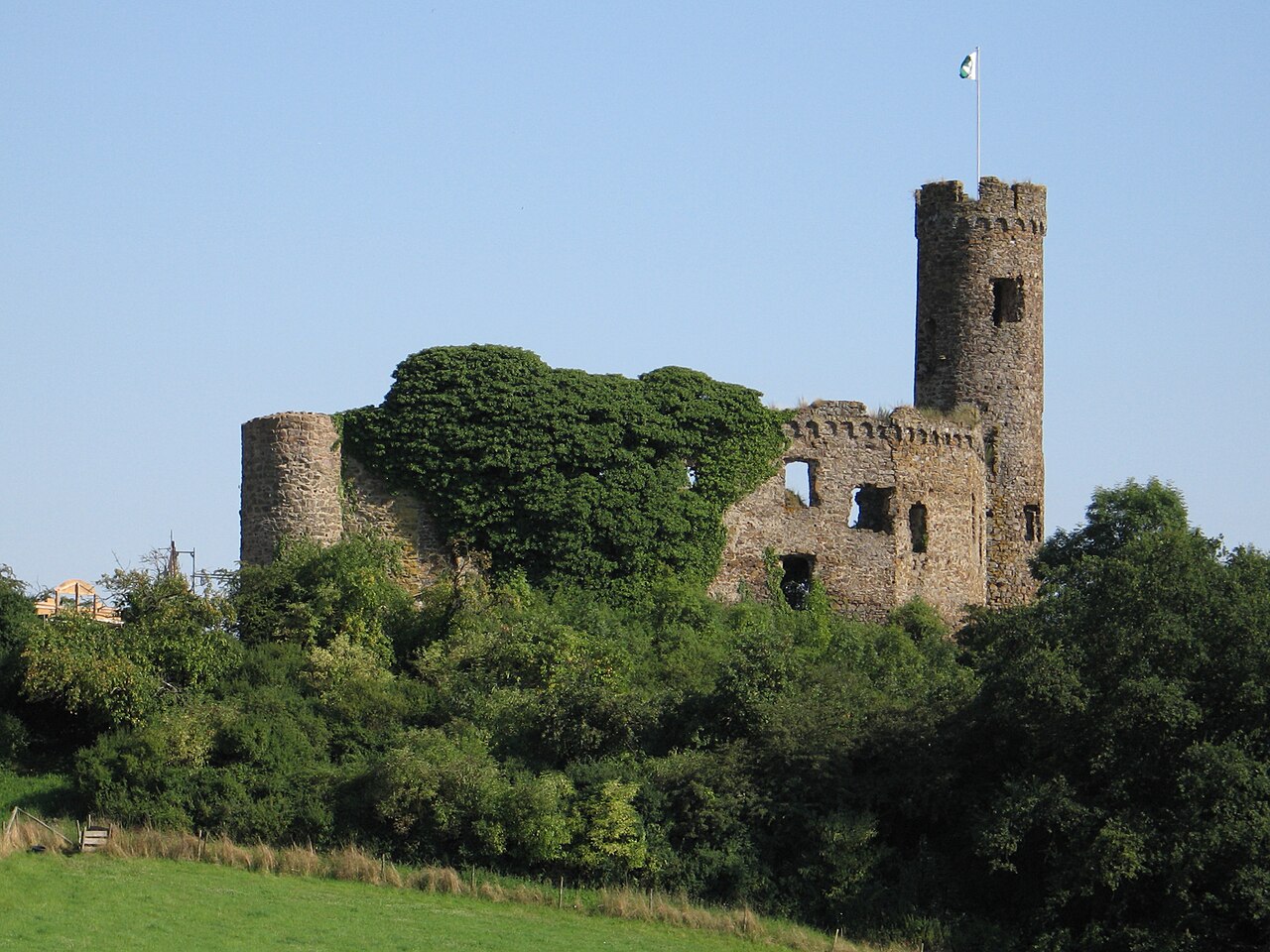
The castle's design capitalized on the natural sandstone rock foundation, which provided a formidable base for its defensive structures. The complex included a ring wall encircling the main buildings, enhancing its protection against potential attackers. The surviving ruins today consist mainly of one remaining tower and sections of the original walls, which delineate the castle's former perimeter. These remnants reveal the medieval use of locally sourced sandstone as the primary construction material, a choice that both integrated the castle into its natural environment and provided durability.
Within the castle precincts were two houses designated for the Burgmannen, officials tasked with administrative and protective responsibilities. Though these dwellings no longer stand above ground, their foundations remain visible, offering valuable insights into the castle's internal organization and the social hierarchy within the stronghold.
Historical significance and usage
Despite its imposing location and defensive potential, Burg Kirberg appears to have had limited military engagement or residential use throughout its active period. By the year 1500, records indicate the castle was already in a state of deterioration. It continued to serve primarily as accommodation for visiting lords until the late 16th century. The presence of at least one guard on site until 1670 suggests some ongoing administrative or symbolic function, even as its military relevance waned.
In 1673, the sandstone rock foundation was transformed with the addition of a pleasure garden, signaling a shift away from martial purposes toward leisure and aesthetic appreciation. However, by around 1700, much of the castle had fallen into ruin or had been dismantled to provide building materials for local construction projects. Formal permission to demolish the remaining walls was granted in 1790, and throughout the 18th and 19th centuries, stones from Burg Kirberg were repeatedly quarried to support road building and other infrastructure in the area.
Preservation and cultural legacy
Today, Burg Kirberg exists primarily as a ruin, with its remaining tower and walls serving as tangible reminders of its medieval past. The site is an important cultural landmark within the local community, occasionally hosting festivals and events that celebrate its historical significance. The castle's ruins provide valuable archaeological and architectural insights into 14th-century castle construction techniques and noble life in the region.
The foundations of the Burgmannen's houses remain visible, preserving the memory of the castle's administrative functions and social structure. The use of the castle grounds for community events helps maintain a living connection to the site, ensuring that Burg Kirberg continues to be recognized as a heritage asset despite its ruinous state.
Geographical and regional context
Situated in the Hünfelden municipality in the state of Hesse, Burg Kirberg occupies a strategic position within the German landscape. The sandstone outcrop on which it stands offers commanding views of the surrounding area, a typical feature of hill castles designed for defense and surveillance. This location underscores the castle's historical role in regional power dynamics and territorial control during the High to Late Medieval period.
While the castle no longer serves military or residential functions, its ruins contribute to the cultural tourism appeal of the region. Visitors can explore the remains and appreciate the site's historical layers, from its early religious origins to its medieval fortification and eventual decline.
Frequently asked questions (FAQ)
- What is the historical significance of Burg Kirberg?
- Burg Kirberg was built in the mid-14th century as a joint defensive stronghold by Counts Gerhard VII of Diez and Johann I of Nassau-Weilburg. It played a role in regional power disputes and reflects medieval castle construction on a sandstone outcrop.
- Can visitors access the ruins of Burg Kirberg?
- Yes, visitors can explore the ruins of Burg Kirberg, which include a surviving tower and remaining walls. The site is occasionally used for community festivals and cultural events, offering a glimpse into its medieval past.
- When was Burg Kirberg constructed?
- Burg Kirberg was constructed around 1355 following a dispute between noble houses, replacing an earlier church on the site and coinciding with Kirberg receiving town rights.
- What architectural features remain at Burg Kirberg?
- The ruins include one surviving tower, sections of the original sandstone ring wall, and foundation remnants of two houses belonging to Burgmannen, castle officials responsible for administration and protection.
- Why did Burg Kirberg fall into ruin?
- By 1500, the castle was already deteriorating, and over the following centuries, it was dismantled for building materials. Formal demolition permission was granted in 1790, and stones were quarried for local infrastructure projects.
Information
Loading map...
Visitor reviews
No reviews yet. Been here? Write the first review and help other travelers!
Write the first reviewVisited this castle? Share your experience
Your review helps other travelers and adds first-hand knowledge to our encyclopedia.