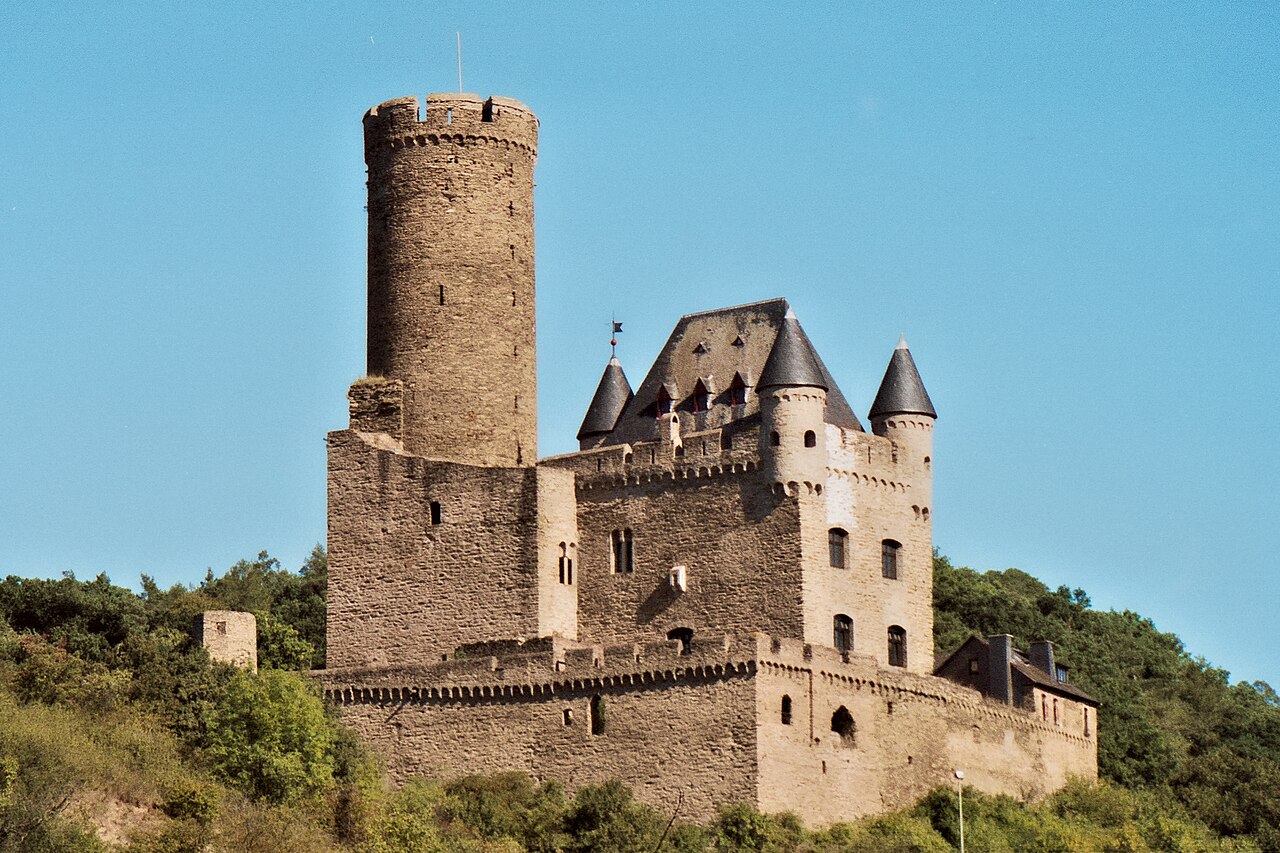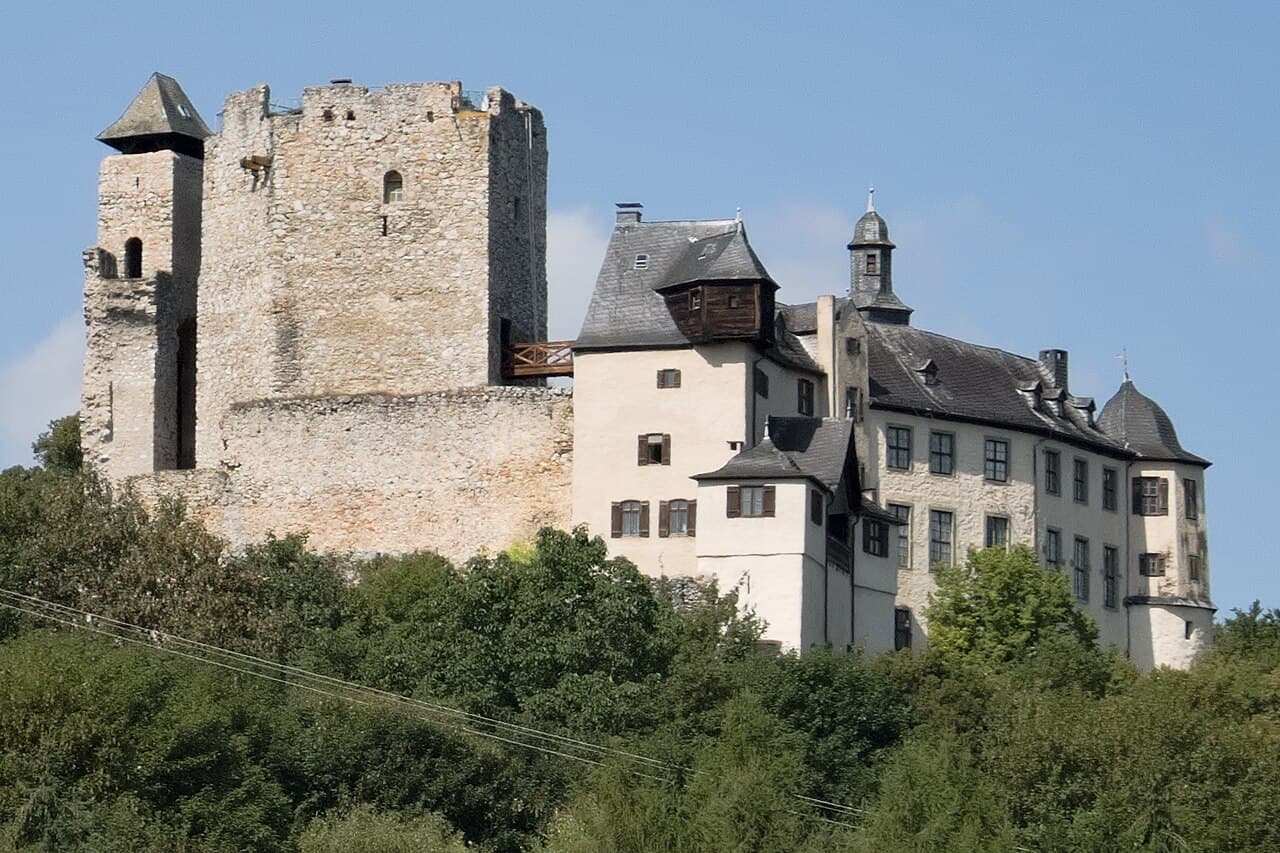
Hohlenfels Castle
Hohlenfels Castle is a historic hill castle located in Mudershausen, Germany, with origins tracing back to the 14th century. It was constructed by Count Johan of Nassau-Weilburg-Saarbrücken during the mid-1300s, a period marked by the development of fortified noble residences amid regional conflicts and feudal power struggles. The castle's strategic position atop a hill provided natural defensive advantages, typical of medieval military architecture designed to oversee and control the surrounding territory.
Medieval origins and architectural features
The original structure of Hohlenfels Castle reflected the late medieval architectural style, characterized by robust stone walls, defensive towers, and a fortified gatehouse. These elements were essential for withstanding sieges and attacks common during the era. The castle's layout likely included a central courtyard surrounded by residential and service buildings, enclosed within curtain walls and protected by battlements. The hilltop location not only enhanced defense but also symbolized the authority and prestige of its noble owner.
Construction and design details
The castle was built primarily from local stone materials, contributing to its durability. Its design incorporated typical late medieval military architecture features such as arrow slits, thick walls, and possibly a keep or donjon serving as the last line of defense. The gatehouse would have been fortified with a portcullis and murder holes to repel attackers. While specific architectural plans from the original construction are scarce, surviving elements and historical records suggest a well-planned fortification adapted to the terrain.
Impact of the thirty years' war
Hohlenfels Castle suffered significant damage during the Thirty Years' War (1618-1648), a devastating conflict that affected much of Central Europe. The castle was partially destroyed, reflecting the widespread destruction of noble residences and military fortifications during this period. The war's toll on the castle disrupted its function as a defensive stronghold and noble residence, leaving it in a state of disrepair for several decades.
Baroque restoration and later history
Between 1712 and 1716, the castle underwent a substantial restoration and transformation into a Baroque residence. This renovation reflected changing architectural tastes and the reduced military importance of castles in the early 18th century. The restoration likely involved modifying defensive structures to create more comfortable living spaces, adding Baroque stylistic elements such as decorative facades, larger windows, and ornate interiors. This period marked a shift from the castle's original martial purpose to a status symbol and noble residence emphasizing comfort and aesthetics.
Architectural changes during restoration
The Baroque restoration would have softened the castle's medieval fortress appearance, incorporating features like symmetrical layouts, stucco decorations, and formal gardens if the site allowed. Interior spaces were probably redesigned to include grand halls, salons, and private chambers suitable for aristocratic life. These changes aligned with broader trends in European castle conversions during the Baroque era, where fortresses were adapted into palatial homes.
Current condition and cultural significance
Today, Hohlenfels Castle stands as a partially preserved monument reflecting its layered history from medieval fortress to Baroque residence. Its ruins and restored sections offer insights into the architectural evolution influenced by historical events such as the Thirty Years' War and changing noble lifestyles. The castle contributes to the cultural heritage of the Rhineland-Palatinate region and attracts visitors interested in medieval and Baroque architecture, as well as German history.
Visitor information and accessibility
The castle's location in Mudershausen makes it accessible to tourists exploring the scenic landscapes and historic sites of western Germany. While some areas may be in ruins, others have been stabilized or restored, providing a tangible connection to the past. Visitors can appreciate the castle's commanding views, architectural details, and its role in regional history. Interpretive signage and guided tours may be available to enhance the educational experience.
Frequently asked questions (FAQ)
- When was Hohlenfels Castle built and by whom?
- Hohlenfels Castle was built in the mid-14th century by Count Johan of Nassau-Weilburg-Saarbrücken, reflecting late medieval castle construction.
- What architectural style characterizes Hohlenfels Castle?
- Originally constructed in the late medieval period, the castle features typical defensive elements such as thick stone walls and fortified towers, later modified during its Baroque restoration.
- How did the Thirty Years' War affect Hohlenfels Castle?
- The castle was partially destroyed during the Thirty Years' War, leading to significant damage that necessitated later restoration in the early 18th century.
- What changes were made during the Baroque restoration of Hohlenfels Castle?
- Between 1712 and 1716, the castle was transformed into a Baroque residence, with modifications to its defensive structures to create more comfortable living spaces and ornamental design elements.
- Is Hohlenfels Castle open to visitors today?
- Hohlenfels Castle is partially preserved and accessible to visitors interested in its historical and architectural significance, although specific visiting hours and facilities may vary.
Photo gallery

Information
Loading map...
Visitor reviews
No reviews yet. Been here? Write the first review and help other travelers!
Write the first reviewVisited this castle? Share your experience
Your review helps other travelers and adds first-hand knowledge to our encyclopedia.