Katzenelnbogen Castle
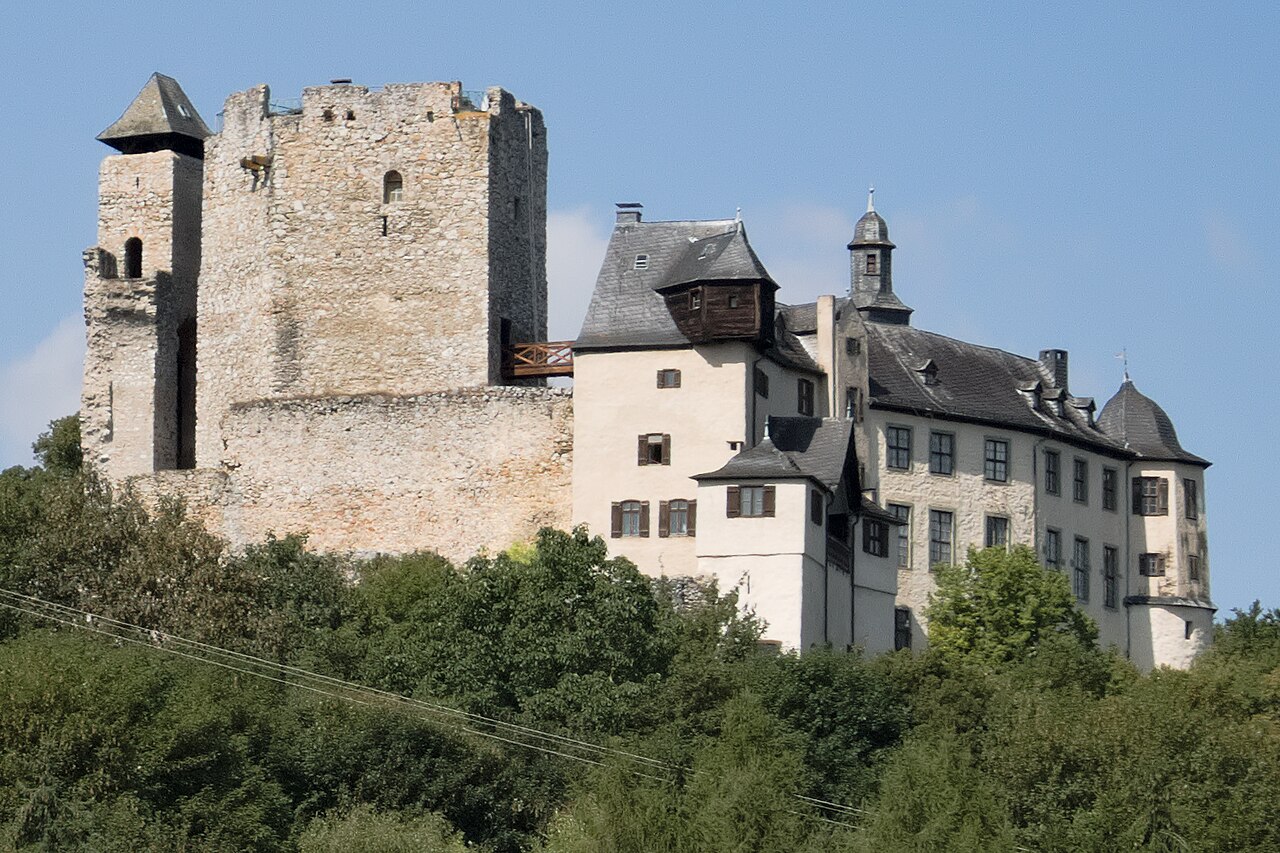
Katzenelnbogen Castle stands as a significant example of a high medieval hill castle constructed around 1095 on a prominent promontory overlooking the river Lahn in what is now Katzenelnbogen, Germany. This strategic location allowed the castle to control vital river traffic and trade routes during the Middle Ages, contributing to the rise in power and wealth of its ruling family, the lords of Katzenelnbogen.
The origins and medieval significance of Katzenelnbogen Castle
The castle was initially established in the late 11th century, a period marked by the consolidation of territorial lordships throughout the Holy Roman Empire. The lords of Katzenelnbogen quickly became important regional magnates, leveraging their position to acquire lucrative customs rights along the Rhine River. These rights were a major source of income and influence, allowing them to exert control over commerce and navigation in this economically vital area.
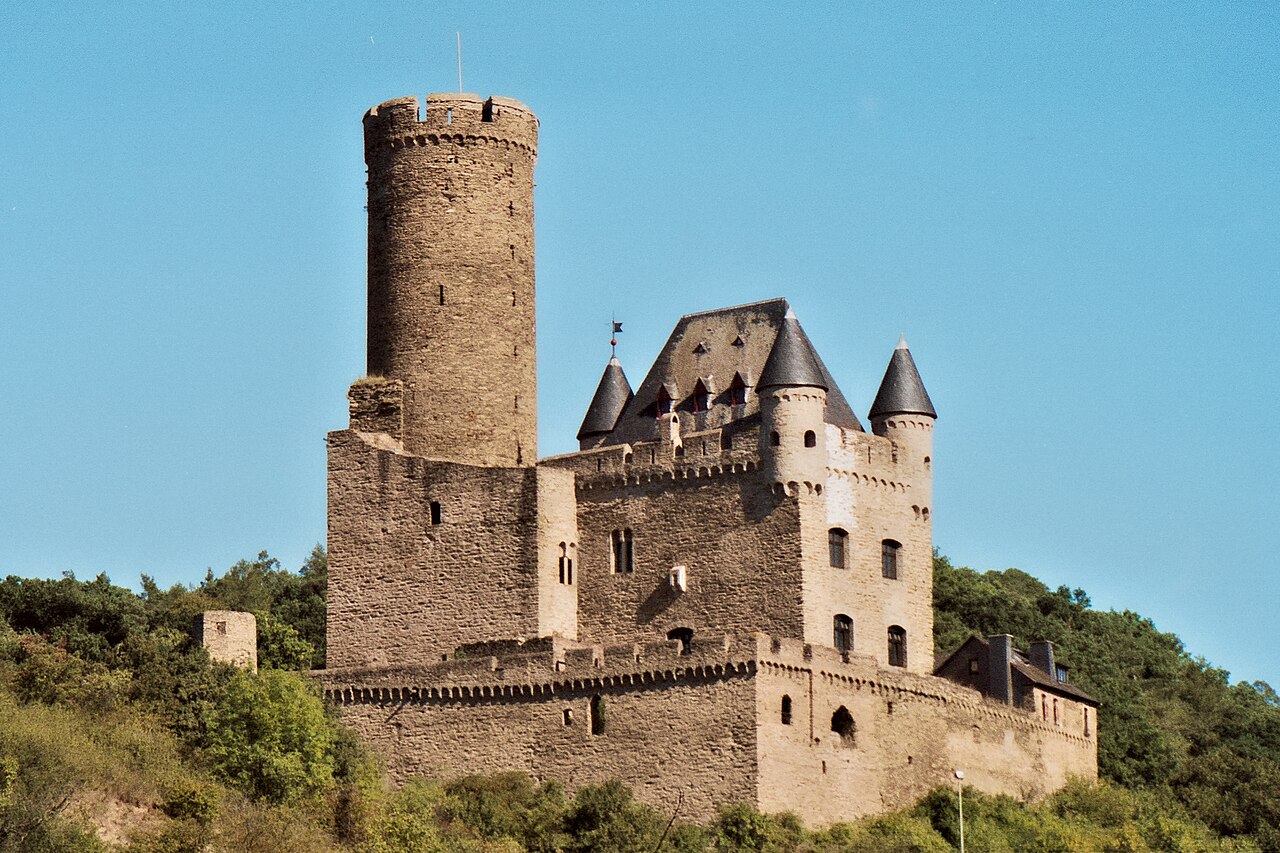
The castle itself was designed primarily for defense and administration, featuring typical high medieval fortification elements such as thick stone walls, a commanding keep, and a fortified gatehouse. Its elevated position provided excellent visibility of the surrounding landscape and the river below, enabling early detection of potential threats.
Architectural features and restorations
Katzenelnbogen Castle underwent significant changes following a destructive fire in 1540. The damage necessitated extensive restoration work, which was carried out in stages, notably in 1584 and again in 1613. These renovations introduced elements reflecting the architectural tastes of the Renaissance period, although the castle retained much of its medieval character.
The restoration efforts focused on repairing the main structures and updating the living quarters to suit contemporary standards of comfort and style. The castle's defensive features were also maintained, preserving its role as a stronghold despite the changing nature of warfare in the early modern era.
Structural components
The castle complex includes a keep, curtain walls, and several towers that formed part of the defensive perimeter. The walls are constructed from local stone, exhibiting the robust masonry techniques typical of the period. The gatehouse served as a critical point of entry and defense, often equipped with a portcullis and murder holes.
Inside the castle, the great hall would have been the center of social and administrative life, hosting feasts, meetings, and judicial proceedings. Residential chambers were adapted over time to provide more comfort, especially during the Renaissance renovations.
The historical role and legacy of Katzenelnbogen Castle
Throughout the centuries, Katzenelnbogen Castle was not only a military fortress but also a symbol of the power and prestige of its owners. The lords of Katzenelnbogen played a notable role in regional politics and economics, particularly through their control of customs duties on the Rhine, which was one of Europe's most important waterways.
While the castle's military importance declined with the advent of modern warfare and political changes, it remained a landmark of cultural heritage. Its preservation and restoration have allowed it to survive as a testament to medieval fortification architecture and the history of the Rhineland region.
Present condition and visitor information
Today, Katzenelnbogen Castle is classified as partially preserved, with significant portions of its medieval and Renaissance structures still standing. The site offers visitors insight into the architectural evolution from the high medieval period through the Renaissance.
Visitors can explore the castle ruins, including the defensive walls and towers, and learn about its historical context through interpretive displays. The castle's location above the Lahn river provides scenic views and a tangible connection to its strategic past.
Frequently asked questions (FAQ)
- When was Katzenelnbogen Castle originally built?
- Katzenelnbogen Castle was originally constructed around 1095 during the high medieval period, establishing its role as a strategic fortress.
- What architectural styles are present at Katzenelnbogen Castle?
- The castle features a mix of high medieval defensive architecture combined with Renaissance elements introduced during restorations in the late 16th and early 17th centuries.
- Can visitors explore the castle today?
- Yes, Katzenelnbogen Castle is partially preserved and open to visitors who can explore the surviving walls, towers, and enjoy views of the Lahn river.
- What was the historical importance of the castle's location?
- Its position on a promontory over the Lahn river allowed control over river traffic and customs duties, making it economically and militarily significant in the region.
- What happened to the castle in 1540?
- The castle suffered significant damage due to a fire in 1540, which led to major restoration work completed in 1584 and 1613.
Information
Loading map...
Visitor reviews
No reviews yet. Been here? Write the first review and help other travelers!
Write the first reviewVisited this castle? Share your experience
Your review helps other travelers and adds first-hand knowledge to our encyclopedia.