Schöneck Castle
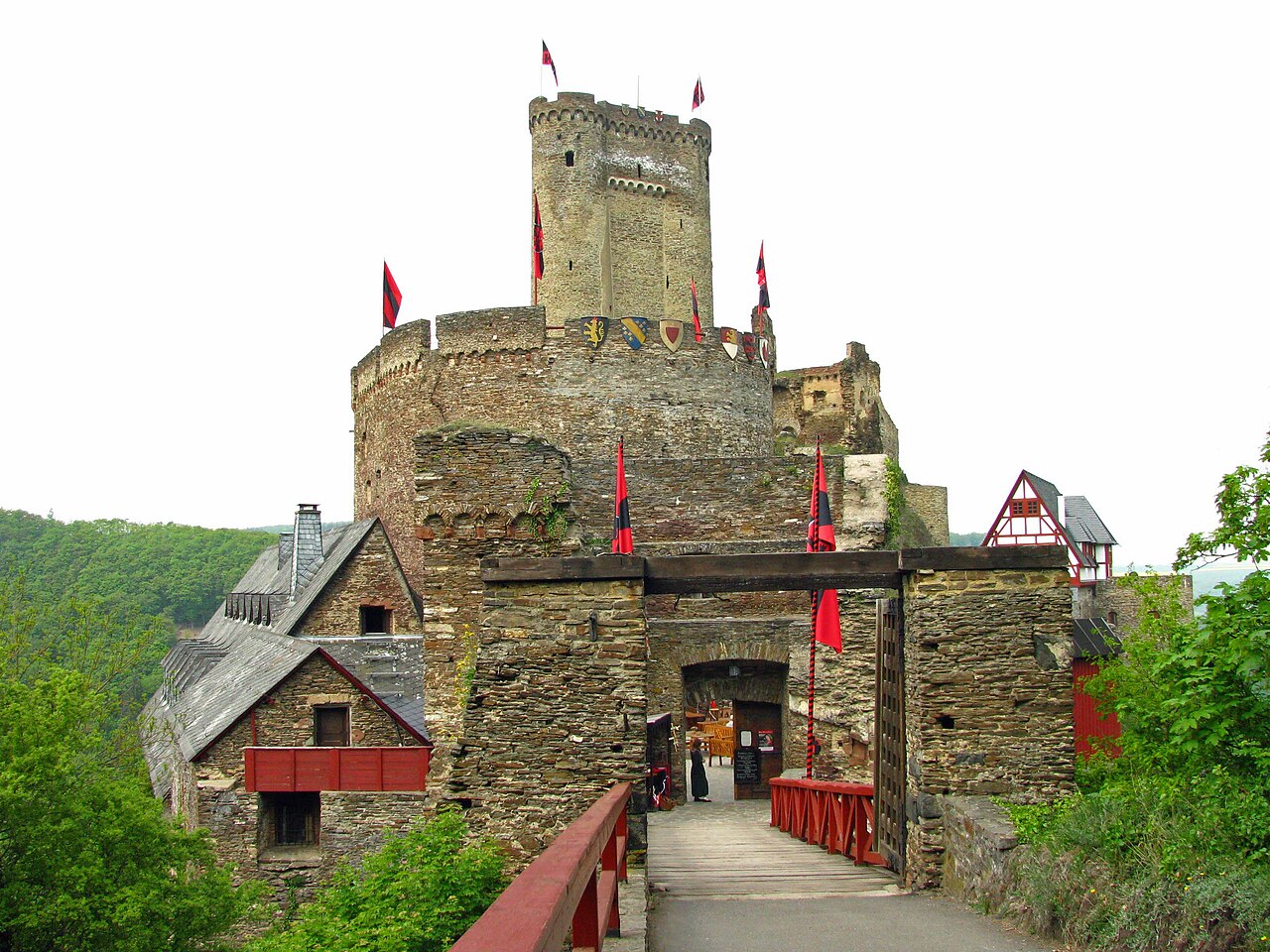
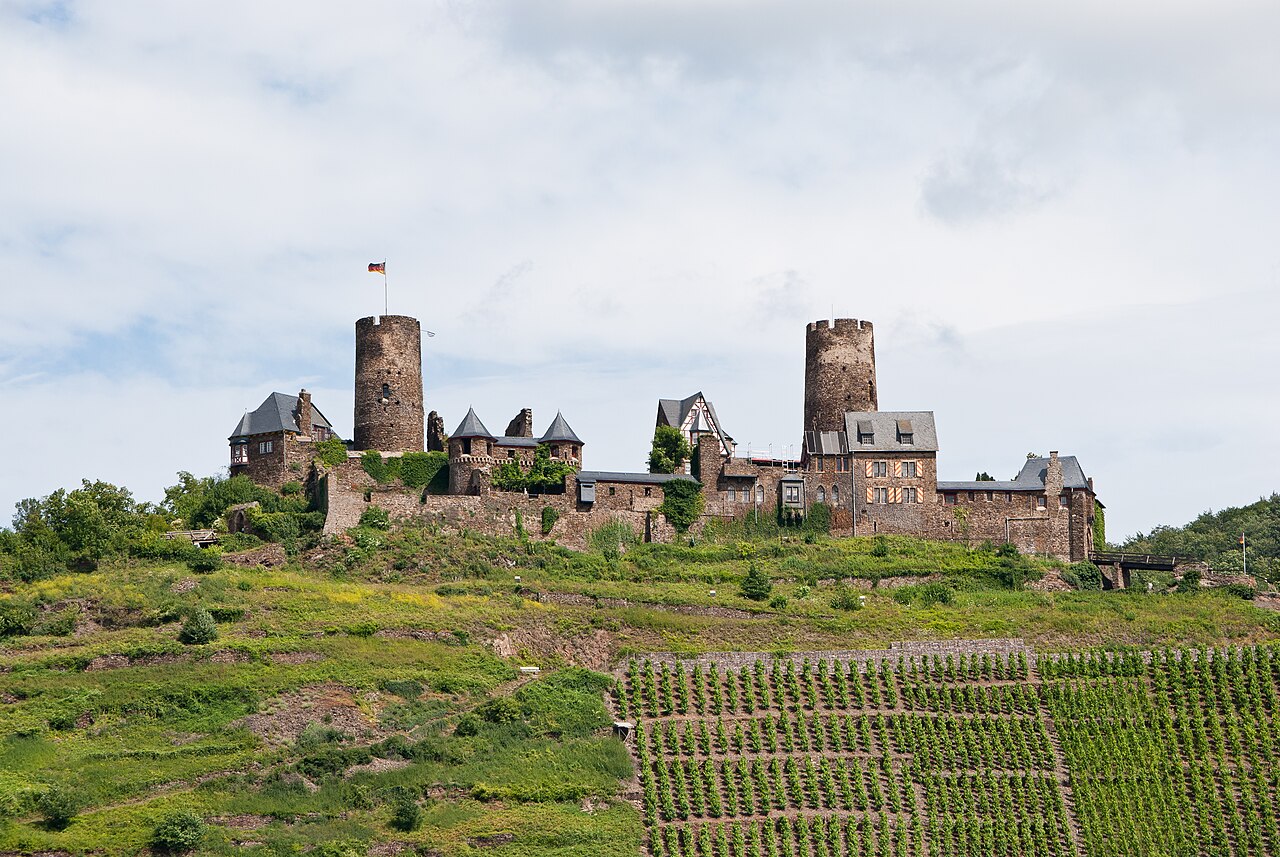
Schöneck Castle is a remarkable example of a high medieval hill castle situated on a rock outcrop overlooking the Ehrbach Gorge in the borough of Boppard, in the scenic Hunsrück mountains of Germany. Constructed around 1200 by the imperial ministerialis Conrad of Boppard, the castle originally served as an imperial fortress. The castle's founding marked the beginning of the noble family known as the lords of Schöneck, who inhabited the castle until their lineage ended in 1508. This family was notable for its multiple branches sharing occupancy in the castle, a characteristic feature of a Ganerbenburg, or joint inheritance castle.
Medieval origins and strategic importance
Schöneck Castle's location on a rocky promontory provided a naturally defensible position, enhanced by man-made fortifications such as a neck ditch on the uphill side and robust supporting walls. The castle's division into an upper and lower bailey reflects typical medieval defensive architecture aimed at layered protection. The castle's role extended beyond military defense; it was the administrative center for the district known as the Gallscheider Gericht, overseeing local judicial and territorial matters.
Role in regional conflicts
During the Eltz Feud (1331–1336), Schöneck Castle was part of a coalition of rebellious knights opposing the powerful Archbishop of Trier and Elector Baldwin of Luxembourg. This conflict underscores the castle's strategic and political significance in the medieval power struggles of the Rhineland region. In 1354, the castle became an enfeoffment of the Electorate of Trier, integrating it into one of the most influential ecclesiastical territories of the Holy Roman Empire.
Ownership changes and architectural evolution
In 1488, Schöneck was occupied by troops of the Count Palatine during the Beilstein War, a brief but notable conflict reflecting the turbulent political landscape of the late medieval period. The castle returned to the Electorate of Trier shortly thereafter. From 1508 onwards, the castle changed hands multiple times but remained a fief under Trier's authority. Between 1560 and 1646, it was held by a side line of the lords of Eltz, a prominent noble family in the region.
Baroque transformation
Significant architectural changes occurred in the mid-17th century when Baroque wings were added, transforming the medieval fortress into a more comfortable residence known as Schloss Schöneck. This period of enlargement was overseen by the von Sötern family, under the direction of Archbishop Phillip Christopher of Sötern, who orchestrated the castle's integration into a fee tail foundation for estate management. The Baroque additions reflect the broader European trend of adapting medieval castles into stately homes with enhanced living quarters and aesthetic appeal.
Architectural features and current state
Today, Schloss Schöneck primarily comprises 19th and 20th-century buildings, with surviving medieval elements including the cellars, towers, parts of the enceinte (defensive walls), and the division into upper and lower baileys. The remains of the neck ditch on the uphill side are a visible reminder of the castle's defensive past. These features highlight the castle's evolution from a medieval fortress to a Baroque residence and finally to its modern form.
Location and landscape context
Situated at an elevation of approximately 265 meters, the castle commands views over the surrounding mixed forests and the Hunsrück hills. The nearby highest elevation reaches 365 meters just over a kilometer to the north, emphasizing the castle's strategic positioning within a rugged landscape. The moderate population density and natural environment have contributed to the preservation of the site and its surroundings.
Cultural significance and ownership
In 1912, the castle was purchased by the artist Wilhelm Steinhausen, marking a new chapter in its history as a cultural and artistic site. Since 1922, it has been owned by a family foundation, which has maintained the property. Schloss Schöneck stands today not only as a monument to medieval and Baroque architecture but also as a testament to the layered history of the Rhineland region, attracting visitors interested in history, architecture, and natural beauty.
Visitor experience
While the castle is primarily a private property, its historical and architectural significance makes it a point of interest for scholars and enthusiasts of medieval fortifications and Baroque residences. The combination of surviving medieval defensive structures and later architectural adaptations offers a comprehensive glimpse into the evolution of castle architecture over several centuries.
Frequently asked questions (FAQ)
- When was Schöneck Castle originally built?
- Schöneck Castle was originally constructed around 1200 by Conrad of Boppard as an imperial castle.
- What architectural styles are present at Schöneck Castle?
- The castle features medieval defensive architecture with later Baroque additions from the mid-17th century.
- Who owned Schöneck Castle after the original lords died out?
- After the original lords of Schöneck died out in 1508, the castle changed hands several times but remained a fief of the Electorate of Trier.
- What is a Ganerbenburg and how does it relate to Schöneck Castle?
- A Ganerbenburg is a castle jointly inhabited by multiple family lines. Schöneck Castle was such a castle, housing several branches of the lords of Schöneck together.
- Is Schöneck Castle open to the public?
- Schöneck Castle is privately owned by a family foundation and is not generally open to the public, but its exterior and surroundings can be viewed from nearby areas.
Information
Sources & official resources
Verify the information above using these authoritative references.
Loading map...
Visitor reviews
No reviews yet. Been here? Write the first review and help other travelers!
Write the first reviewVisited this castle? Share your experience
Your review helps other travelers and adds first-hand knowledge to our encyclopedia.