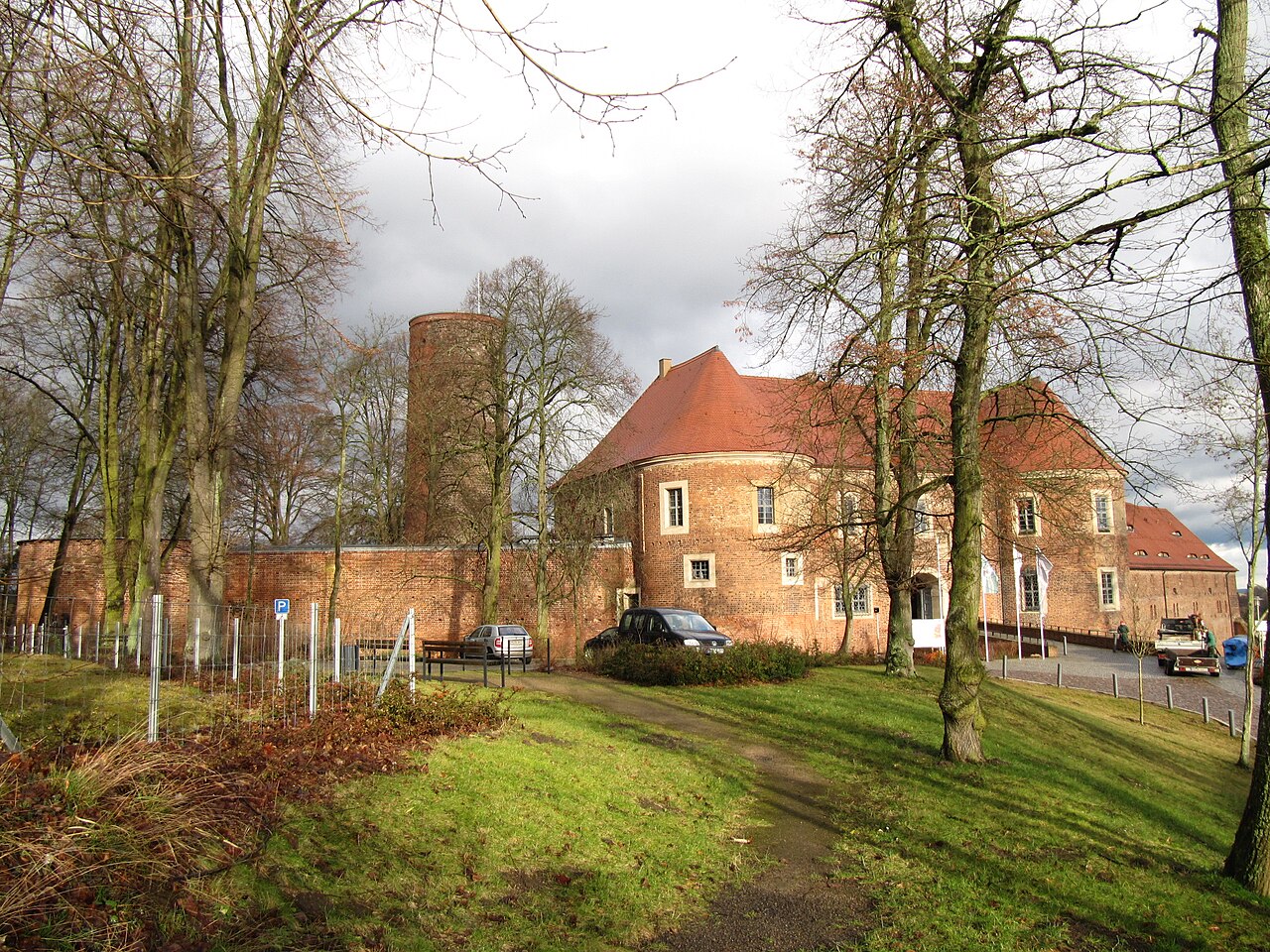
Schlosskirche
Schlosskirche, also known as All Saints' Church, in Lutherstadt Wittenberg, Germany, is a landmark of profound religious and historical significance. Constructed between 1490 and 1511 under the commission of Frederick III the Wise, Elector of Saxony, it stands as a prime example of Late Gothic architecture. The church is renowned worldwide as the reputed site where Martin Luther posted his Ninety-five Theses in 1517, an event that sparked the Protestant Reformation.
The origins of the church date back to around 1340, when a chapel dedicated to All Saints was first established by Ascanian Duke Rudolf I of Saxe-Wittenberg within the new ducal residence. This early chapel formed the spiritual heart of the Ascanian fortress complex. However, the current structure was conceived and built during the late 15th and early 16th centuries, reflecting the ambitions of Frederick III to create a grand electoral castle church. Designed by the architect Conrad Pflüger, the church was consecrated in 1503 and integrated into the Residenzschloss (electoral palace).
Architectural features and design
The Late Gothic style of Schlosskirche is characterized by its soaring vaults, pointed arches, and intricately detailed stonework. The church's layout reflects the typical hall church design, with a spacious nave flanked by aisles of equal height, creating a unified interior volume filled with light. The exterior features buttresses and large windows with tracery, emphasizing verticality and lightness.
One of the church's most historically significant architectural elements is its main portal. This large wooden door served as a public notice board for the university and city officials, making it the symbolic site of Luther's posting of the Ninety-five Theses. Although the original wooden doors were destroyed in a fire during the Seven Years' War, replicas now stand in their place, preserving the visual connection to this pivotal moment.
Historical significance and events
The posting of the Ninety-five Theses on 31 October 1517 is widely regarded as the catalyst for the Protestant Reformation. While historians debate whether Luther physically nailed the theses to the door, the event marked a decisive challenge to the Catholic Church's practice of selling indulgences. On the same day, Luther sent a letter outlining his objections to Archbishop Albert of Mainz, initiating a theological debate that would reshape European Christianity.
Frederick the Wise, a key protector of Luther, was buried in the church upon his death in 1525. That same year, the church embraced the Lutheran rite, reflecting the rapid religious transformation underway. The church also became the final resting place of Martin Luther himself in 1546, and of his close collaborator Philipp Melanchthon in 1560. Luther's tomb lies near the pulpit, approximately 2.4 meters below the nave floor, symbolizing his enduring spiritual presence.
Destruction and restoration
During the Seven Years' War in 1760, the church suffered devastating damage when the Prussian Army occupied Wittenberg and the fortress was shelled by Imperial forces. A fire caused by the bombardment destroyed much of the church, leaving only half of the foundation intact and obliterating the original wooden portals and many priceless artworks.
Subsequent restorations rebuilt the church, though many original artistic treasures were lost forever. From 1883 onwards, the church was restored and preserved as a memorial to Luther and the Reformation. In preparation for the 500th anniversary of the Ninety-five Theses, the building underwent extensive renovation to maintain its structural and historical integrity.
Artistic treasures and interior
The church houses numerous significant artworks, including life-sized alabaster statues of Frederick III the Wise and his brother Elector John of Saxony. These sculptures, along with several bronze statues by Peter Vischer the Younger and Hans Vischer, highlight the importance of the Saxon electors in the church's history.
Lucas Cranach the Elder and his son Lucas Cranach the Younger, renowned painters of the German Renaissance, contributed many paintings to the church's interior. Their works add rich visual narratives that complement the church's religious and historical significance.
Current use and visitor information
Today, Schlosskirche remains an active place of worship while also serving as a cultural and historical site. It houses the town's historical archives and the Riemer Museum, which presents the history of the Reformation and the church itself. Additionally, a youth hostel operates within the complex, supporting visitors and pilgrims.
The church is open to visitors who wish to explore its architectural beauty, historical tombs, and art collections. Its connection to the Protestant Reformation makes it a significant destination for those interested in religious history and European heritage.
Frequently asked questions (FAQ)
- What is Schlosskirche and why is it significant?
- Schlosskirche, located in Lutherstadt Wittenberg, Germany, is a pivotal site in the history of the Reformation. It is famously known as the church where Martin Luther nailed his 95 Theses in 1517, marking the beginning of Protestantism. The church is not only an architectural marvel but also a UNESCO World Heritage Site, attracting visitors interested in history and religion.
- When was Schlosskirche built?
- Schlosskirche was originally constructed between 1496 and 1525, showcasing a blend of Gothic and Renaissance architectural styles. The church's impressive tower, which stands at 86 meters, was completed in 1547, and the building has undergone various restorations since its inception, preserving its historical significance for modern visitors.
- What are the opening hours for Schlosskirche?
- Schlosskirche is generally open to visitors from 10 AM to 5 PM, Monday through Saturday, and from 1 PM to 5 PM on Sundays. However, it's advisable to check the official website or contact the visitor center for any changes in hours, especially during holidays or special events.
- Can I purchase tickets in advance for Schlosskirche?
- Yes, visitors can purchase tickets in advance through the official Schlosskirche website or at the entrance. Ticket prices are typically set at a reasonable rate, and advance purchase can help you avoid long lines, especially during peak tourist seasons.
- Is Schlosskirche accessible for visitors with disabilities?
- Yes, Schlosskirche is committed to being accessible for all visitors. The church provides ramps and designated areas to ensure that individuals with mobility challenges can navigate comfortably throughout the site.
- What is the best time to visit Schlosskirche?
- The best time to visit Schlosskirche is during the spring and early autumn months when the weather is pleasant, and the surrounding gardens are in full bloom. Additionally, visiting during weekdays can help you avoid larger crowds, allowing for a more personal experience.
- Are there any nearby attractions to see while visiting Schlosskirche?
- Yes, while visiting Schlosskirche, you can explore several nearby attractions, including the Lutherhaus, which was once Martin Luther's home and now serves as a museum. The town of Wittenberg also features other historical sites, such as the Melanchthonhaus and the picturesque Market Square, making it a rich area for exploration.
Loading map...
Visitor reviews
No reviews yet. Been here? Write the first review and help other travelers!
Write the first reviewVisited this castle? Share your experience
Your review helps other travelers and adds first-hand knowledge to our encyclopedia.