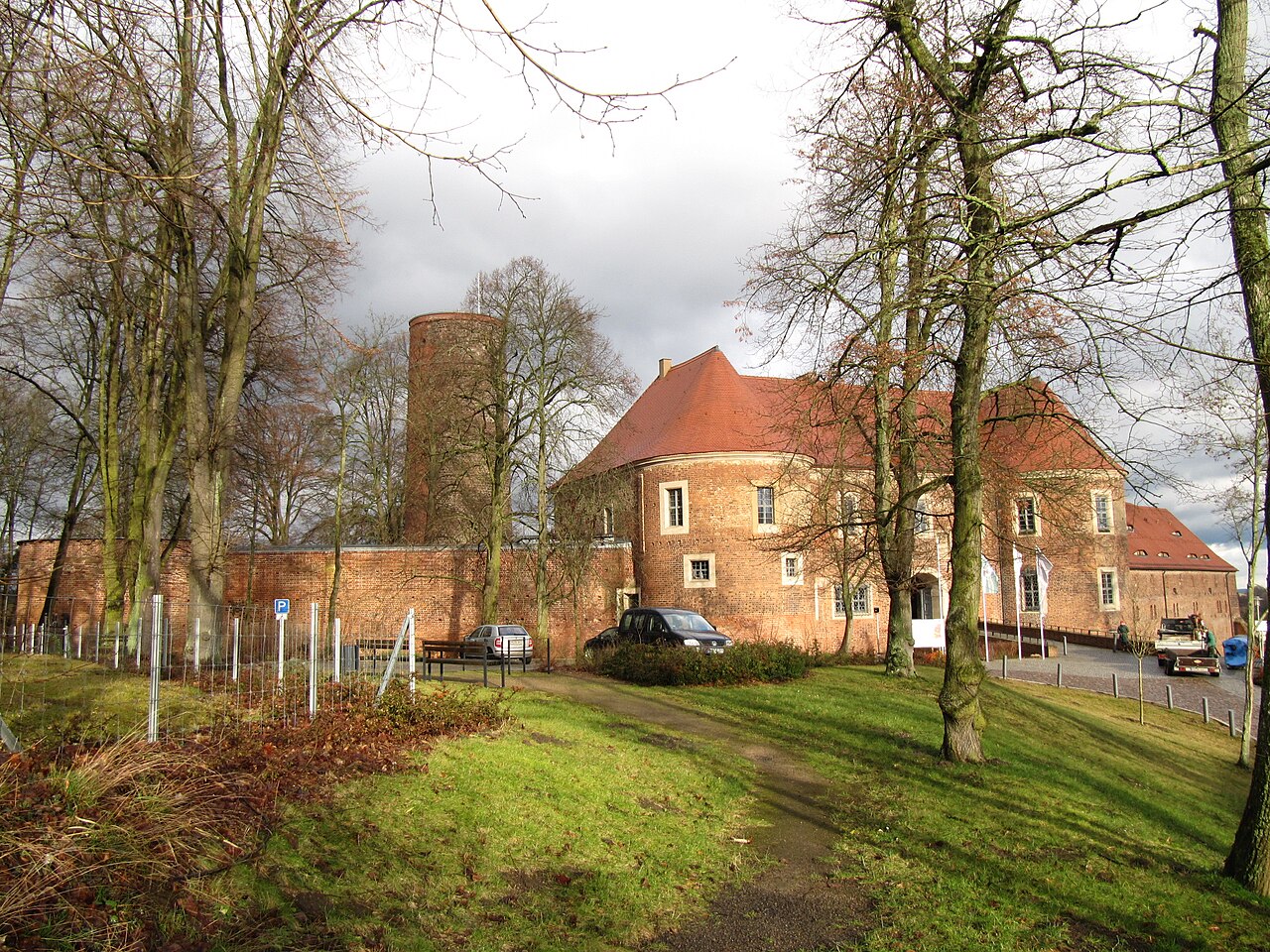
Burg Hundeluft
Burg Hundeluft stands as a remarkable example of a medieval water castle located in the municipality of Coswig (Anhalt) in modern-day Germany. Its strategic placement was crucial for controlling an old trade route and a river crossing over the nearby Rossel river, reflecting the military and economic priorities of the medieval German nobility. The castle's origins date back to the late 13th century, with the earliest documented mention in 1280, situating it firmly in the high medieval period.
Historical significance and turbulent ownership
The castle first appears in historical records during a conflict involving Archbishop Günter of Magdeburg and Margrave Johann II of Brandenburg. In 1280, these forces, allied with Otto of Brandenburg, captured Burg Hundeluft, underscoring its strategic military importance in regional power struggles. By 1307, the site had evolved into a small village with a knight’s estate owned by the Diseke family, highlighting the castle’s role as both a defensive fortress and a noble residence.
In the early 15th century, the castle became embroiled in the lawlessness characteristic of the era. In 1405, it was pledged to Johann von Quitzow, a notorious robber knight, as compensation for his military support to Prince Albrecht of Zerbst during the siege of Dessau. Due to the prince's inability to pay, Quitzow used Burg Hundeluft as a base for raids along the volatile border between Brandenburg and Saxony. This period marked the castle’s use as a stronghold for border conflicts and unrest.
Prince Albrecht reclaimed the castle on February 8, 1414, after a brief siege lasting just over a day. The garrison, commanded by the Walwitz brothers, who were Quitzow’s appointees, abandoned the fortress under pressure. Following this, Burg Hundeluft remained under the control of Prince Albrecht and his successors for some time.
The castle and its surrounding village endured significant destruction during the Thirty Years’ War in the 17th century, a conflict that devastated much of Germany. In 1735, the last heir of the Zerbst family sold the property to the Prince of Anhalt-Zerbst. After this transaction, the castle ceased to function as a noble residence or military stronghold.
During the late 18th century, the castle's buildings were systematically dismantled, with stones and materials repurposed for local construction projects. In the early 19th century, the grounds were landscaped into a park, reflecting changing attitudes towards historic sites and their preservation. However, this park eventually fell into neglect and became overgrown during the 20th century. Today, Burg Hundeluft is recognized as both an archaeological monument and a protected cultural heritage site, preserving its legacy for future generations.
Architectural features and castle layout
Burg Hundeluft was designed as a water castle, utilizing the natural swampy and watery terrain to enhance its defenses. Positioned approximately 92 meters above sea level, the castle rose about 1.5 meters above the marshy ground, which provided an additional natural barrier against attackers. The core fortress had a roughly pentagonal shape covering around 800 square meters, with the original entrance located on the northwest side, indicating a carefully controlled access point.
The castle's fortifications included a sophisticated system of inner and outer moats filled with water, creating layered defensive barriers that were difficult to breach. The shield wall, a thick and robust defensive wall, was a key feature designed to absorb and deflect attacks. Attached to this shield wall were three buildings serving residential and practical functions, suggesting an integrated living and working environment within the castle's protective perimeter.
One notable architectural element was a round tower in the northwest section, with an external diameter of five meters. Interestingly, this tower was not fully connected to the outer defensive wall, implying it may have served a specialized role, possibly as a lookout or a separate defensive position.
The castle also housed a chapel, which would have catered to the spiritual needs of its inhabitants, though no physical remains of this structure survive today. Beyond the main defensive walls, the outer bailey included a long timber-framed building known as the “Alte Burg,” which is itself protected as a historic monument, reflecting its architectural and historical significance.
Water supply was secured through two wells located in the southern part of the site, an essential feature for sustaining the castle's occupants during sieges or extended habitation. The entire castle complex covered approximately 12,000 square meters, making it a substantial fortified estate in the region.
Preservation and current status
Today, only fragments of Burg Hundeluft remain visible, including scattered stones and a fieldstone wall reaching up to two meters in height. Despite the loss of much of its original structure, these remnants convey the castle’s former scale and complexity. The site continues to hold cultural importance and is used for community events, maintaining a living connection to its historical past.
As an archaeological site and protected monument, Burg Hundeluft offers valuable insights into medieval castle construction, defensive strategies, and regional history. Efforts to preserve and study the site contribute significantly to understanding the dynamics of border conflicts, noble residences, and military architecture in medieval Germany.
The castle in the context of medieval German fortifications
Burg Hundeluft exemplifies the strategic use of natural landscapes in medieval fortification design, particularly the integration of water defenses in a water castle format. This approach was common in regions with marshy terrain, providing natural obstacles that supplemented man-made defenses such as moats, walls, and towers.
The castle’s history of ownership changes, sieges, and use by robber knights reflects the turbulent political landscape of the late medieval period in Germany. Its role in border conflicts between Brandenburg and Saxony highlights the importance of such fortifications in controlling trade routes and regional power during a time of frequent warfare and shifting alliances.
Architecturally, Burg Hundeluft’s combination of a pentagonal layout, layered moats, shield walls, and specialized towers illustrates the evolution of castle design aimed at maximizing defense and residential functionality. The presence of a chapel and residential buildings within the defensive walls also demonstrates the dual military and domestic purposes of such castles.
Cultural heritage and tourism potential
While the castle no longer stands in its original grandeur, Burg Hundeluft remains a significant cultural heritage site. Its preservation as an archaeological monument allows visitors and scholars to explore the remnants of medieval military architecture and gain an understanding of the region’s historical narrative.
The site’s use for events fosters community engagement and helps keep the history of the castle alive in public memory. Future archaeological work and conservation efforts may reveal further insights into the castle’s structure and history, enhancing its value as a tourist and educational destination.
Frequently asked questions (FAQ)
- When was Burg Hundeluft first mentioned in historical records?
- Burg Hundeluft was first mentioned in historical records in 1280 during a conflict involving Archbishop Günter of Magdeburg and Margrave Johann II of Brandenburg.
- What type of castle is Burg Hundeluft?
- Burg Hundeluft is a water castle, built to utilize natural swamp and water defenses, typical of medieval fortifications in marshy areas.
- Can visitors see the original structures of Burg Hundeluft?
- Only fragments of the original castle remain visible today, including scattered stones and a fieldstone wall up to two meters high, as the buildings were dismantled in the 18th century.
- What role did Burg Hundeluft play during the Thirty Years' War?
- The castle and surrounding village were destroyed during the Thirty Years' War, reflecting the widespread devastation in Germany during the 17th century.
- Is Burg Hundeluft accessible for events or tourism today?
- Yes, the site is used for community events and is recognized as a protected archaeological monument, maintaining its cultural significance.
Information
Loading map...
Visitor reviews
No reviews yet. Been here? Write the first review and help other travelers!
Write the first reviewVisited this castle? Share your experience
Your review helps other travelers and adds first-hand knowledge to our encyclopedia.