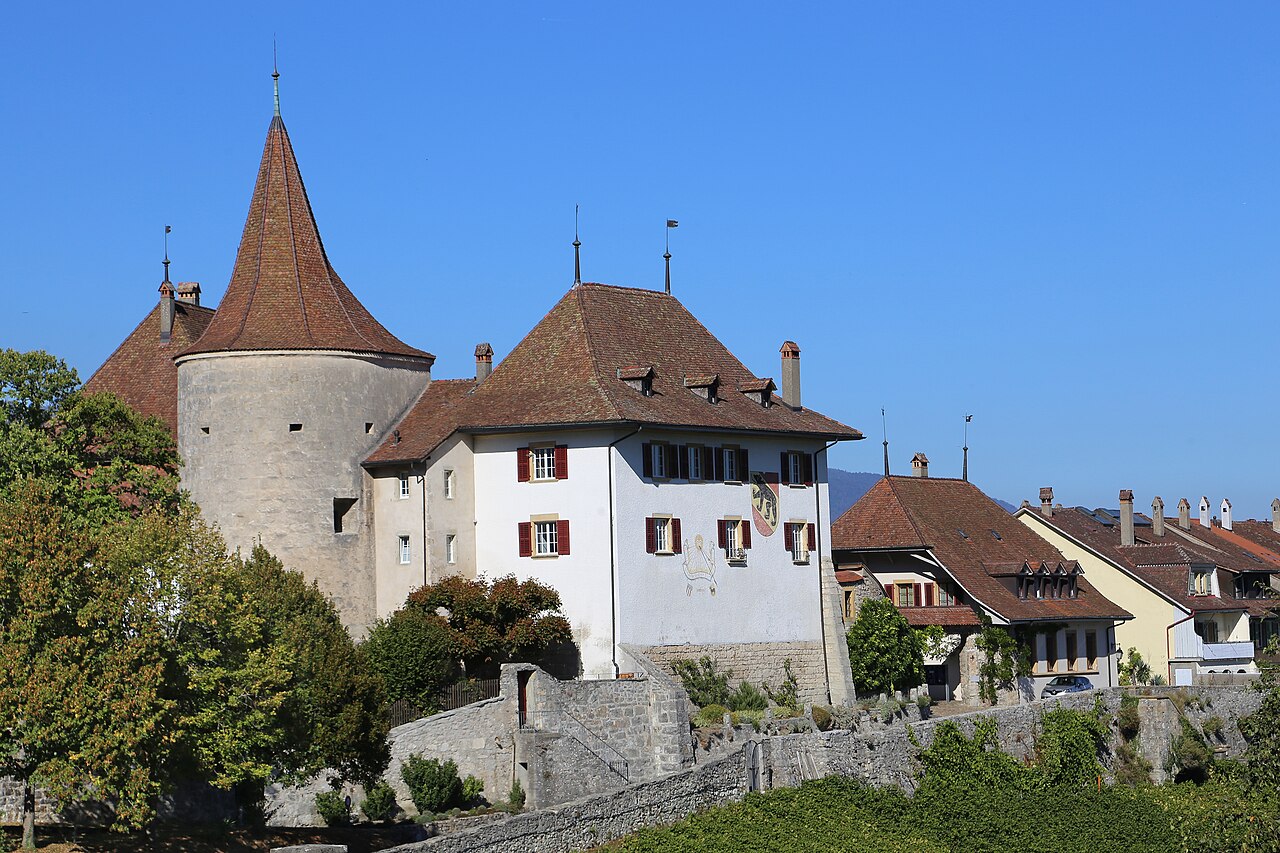
Schlossberg Castle
Schlossberg Castle is a significant high medieval fortress located on the slopes of the Jura Mountains overlooking the town of La Neuveville in Switzerland. Its construction began in 1283 under the direction of Prince-Bishop Henry von Isny of Basel and was completed in 1288 during the tenure of his successor, Peter Reich von Reichenstein. The castle was strategically built to assert and defend the territorial claims of the Prince-Bishopric of Basel against competing noble houses, particularly the Counts of Neuchâtel.
Historical context and foundation
The origins of Schlossberg Castle are closely tied to the shifting political landscape of the region around Lake Biel. In 999, the Abbot of Moutier-Grandval Abbey granted extensive lands, including the future site of La Neuveville, to the Prince-Bishop of Basel. This area, then known as Nugerol, became a contested border zone between the Prince-Bishops and the Counts of Neuchâtel. The castle was erected to reinforce the Prince-Bishops' claims and to serve as a military stronghold on the western frontier of their domain.
The castle's role in regional power struggles
Following its completion, Schlossberg Castle played a key role in the ongoing disputes over territorial control. Around 1310, Prince-Bishop Gérard de Vuippens founded the town of La Neuveville near the castle to strengthen the Prince-Bishopric's presence and push the border eastward beyond the Ruz de Vaux stream. The castle's castellans were appointed as both military commanders and civil governors of the town, integrating the fortress into the administrative structure of the region.
In 1342, a treaty between the Prince-Bishops and the Counts of Neuchâtel formally established the boundary between their territories, which diminished Schlossberg's military importance. However, the castle regained strategic relevance during the 1367 conflict between Prince-Bishop Johann von Vienne and the city of Bern. When Bernese forces advanced, the Prince-Bishop took refuge in Schlossberg Castle. The citizens of La Neuveville supported the Prince-Bishop, successfully repelling the Bernese siege. This loyalty was rewarded with expanded town privileges in 1368.
Architectural features and layout
Schlossberg Castle exemplifies high medieval military architecture typical of the late 13th century. Positioned on a hillside, the castle's design takes advantage of the natural terrain for defense. It originally featured stone curtain walls, towers for surveillance and defense, and a gatehouse controlling access. The castle complex included living quarters for the castellan and garrison, storage facilities, and a courtyard that served as a hub for daily activities and mustering troops.
Over time, the castle's military functions declined, and from the early 16th century, the castellan gradually moved residence to the nearby town, reflecting the reduced need for a permanent military presence at Schlossberg. This transition contributed to the castle's gradual deterioration.
Decline and restoration efforts
By the mid-16th century, Schlossberg Castle had lost much of its strategic and administrative significance. The castellan's complete relocation to La Neuveville in 1556 marked the beginning of the castle's slow decline into disrepair. The castle remained under the control of the Prince-Bishopric until the political upheavals of the late 18th century.
Following the 1798 French invasion and the establishment of the Helvetic Republic, Schlossberg Castle was sold by the French government to a private owner in 1799. The castle suffered neglect until the late 19th and early 20th centuries when restoration efforts began. In 1884, Charles-Louis Schnider-Gibollet undertook significant repairs, followed by another major restoration between 1930 and 1932 led by Louis-Philippe Imer.
In 1933, Louis-Philippe Imer transferred ownership of the castle to the community of La Neuveville and the Canton of Bern. Today, a foundation established by the community maintains Schlossberg Castle, preserving its historical fabric and renting portions of the structure for events and cultural activities.
Schlossberg castle's cultural and heritage significance
Schlossberg Castle remains an important cultural landmark in the region, representing the medieval power struggles and territorial dynamics of the Prince-Bishopric of Basel. Its position overlooking La Neuveville and Lake Biel offers insight into the strategic considerations of medieval fortifications in Switzerland. The castle's preservation and continued use contribute to the understanding of regional history and architectural heritage.
Visitors to Schlossberg Castle can explore its well-preserved structures, including the fortified walls, towers, and the courtyard, gaining a tangible connection to the medieval past. The castle's story reflects the broader historical themes of feudal rivalry, urban development, and the transformation of military architecture over centuries.
Frequently asked questions (FAQ)
- What is the historical significance of Schlossberg Castle?
- Schlossberg Castle, located in La Neuveville, Switzerland, dates back to the 13th century and served as a vital defensive structure. It played a crucial role in the region's history, reflecting the medieval architecture and military strategies of its time.
- When was Schlossberg Castle built?
- The construction of Schlossberg Castle began in the early 13th century, specifically around 1230. Over the years, it has undergone various renovations, preserving its historical charm while adapting to modern needs.
- What are the opening hours of Schlossberg Castle?
- Schlossberg Castle is open to visitors from 10 AM to 5 PM daily during the tourist season, which typically runs from April to October. It's advisable to check the castle's official website for any seasonal changes or special holiday hours.
- Can I visit Schlossberg Castle with a wheelchair?
- While Schlossberg Castle offers a unique historical experience, its medieval architecture can pose challenges for wheelchair accessibility. Some areas may be difficult to navigate, so it's recommended to contact the castle administration in advance for specific accessibility information.
- What are the ticket prices for visiting Schlossberg Castle?
- Tickets for Schlossberg Castle are priced at CHF 10 for adults, while children under 12 can enter for free. Discounts are available for seniors and students, making it an affordable destination for families and individuals.
- When is the best time to visit Schlossberg Castle?
- The best time to visit Schlossberg Castle is during the spring and early fall when the weather is mild and the surrounding landscapes are particularly scenic. Additionally, visiting on weekdays can help you avoid larger crowds, allowing for a more enjoyable experience.
- Is it possible to take guided tours of Schlossberg Castle?
- Yes, guided tours of Schlossberg Castle are available and highly recommended for an in-depth understanding of its history and architecture. These tours typically last about an hour and provide fascinating insights from knowledgeable guides.
- What nearby attractions can I explore after visiting Schlossberg Castle?
- After visiting Schlossberg Castle, you can explore the charming old town of La Neuveville, which features picturesque streets and local shops. Additionally, the beautiful shores of Lake Biel are just a short walk away, offering stunning views and opportunities for outdoor activities.
Information
Loading map...
Visitor reviews
No reviews yet. Been here? Write the first review and help other travelers!
Write the first reviewVisited this castle? Share your experience
Your review helps other travelers and adds first-hand knowledge to our encyclopedia.