Schloss Wolfurt
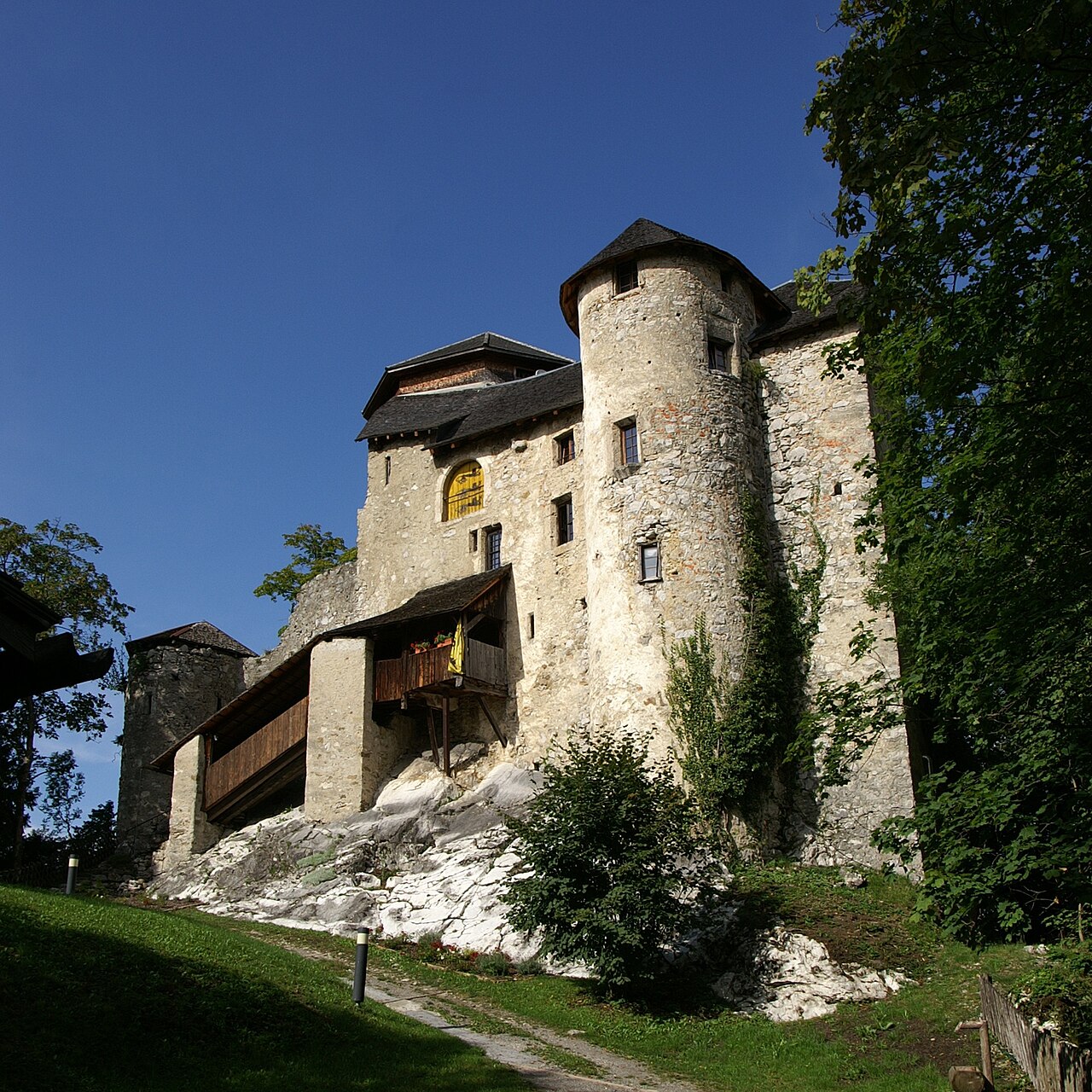
Schloss Wolfurt stands as a remarkable example of a medieval castle located near the municipality of Wolfurt in Austria. Its origins date back to the early 13th century, with documented references appearing in 1217 and 1226. The castle was initially constructed to secure the region and serve as a seat of power for the local nobility, specifically the Lords of Wolfurt, who governed the surrounding lands. Over the centuries, Schloss Wolfurt has witnessed numerous historical transformations, both in ownership and architectural style, reflecting the complex socio-political and cultural shifts of the region.
Medieval origins and early history
The castle’s foundation as a hill castle was strategic, positioned to oversee and protect the fertile lands near Wolfurt. The fortified structure was typical of medieval defensive architecture, designed to withstand sieges and assert control over the territory. By 1402, the castle’s ownership became partially ecclesiastical when Mehrerau Abbey acquired half of the property, using it as a summer residence for its abbots. This religious connection deepened the castle’s significance beyond mere military function, intertwining it with the spiritual governance of the region.
In 1451, the castle came under the direct rule of the Austrian authorities. Subsequently, it was granted as a feudal holding to prominent aristocratic families from the nearby city of Bregenz, including the Kaisermann and later the Leber von Wolfurt families. These noble families contributed to the castle’s maintenance and adaptation to evolving needs.
Reformation and religious significance
The 16th century brought significant religious upheaval across Europe, and Schloss Wolfurt was no exception. In 1530, Kilian Germann, the abbot of the St. Gallen monastery, purchased the castle, seeking refuge from the unrest in the city. His successor, Diethelm Blarer von Wartensee, who served as abbot from 1530 to 1564, continued to use Schloss Wolfurt as a residence, maintaining its status as a religious retreat. This period underscores the castle’s dual role as both a defensive fortress and a sanctuary for ecclesiastical leaders during turbulent times.
Architectural evolution through the centuries
Baroque remodeling in the early 18th century
Circa 1707, Schloss Wolfurt underwent significant interior remodeling that introduced Baroque style elements. This renovation brought elaborate decorative motifs, emphasizing grandeur and artistic expression typical of the Baroque period. The interiors were enhanced with ornamental stuccoes, intricate woodwork, and richly decorated halls, transforming the castle’s atmosphere from purely defensive to a more refined noble residence.
19th-century neo-romanesque renovations
After 1856, the castle changed ownership to a merchant from Bregenz who initiated renovations in the Neo-Romanesque style. This architectural revival movement sought to echo medieval Romanesque features such as rounded arches, robust masonry, and symmetrical forms. The Neo-Romanesque updates added a layer of historicism to the castle’s appearance, blending the medieval fortress character with 19th-century romantic sensibilities.
20th-century gothic reconstruction
A devastating fire in 1939 caused extensive damage to Schloss Wolfurt. The rebuilding, completed by 1940, was led by the Swiss-Austrian architect Johann Anton Tscharner, known for his expertise in historic restorations. Tscharner’s design embraced Gothic architectural forms, incorporating pointed arches, lancet windows, and other medieval Gothic motifs. This reconstruction phase reinforced the castle’s medieval character while integrating 20th-century restoration techniques.
Historical roles and ownership transitions
Throughout its history, Schloss Wolfurt has served various functions beyond its defensive origins. Notably, from 1945 to 1953, it was the temporary residence of the head of the French military government overseeing the Vorarlberg region after World War II. This role highlights the castle’s continued strategic and administrative importance in modern times.
Ownership of the castle remained private for much of the 20th century, with the Schindler family holding it from 1936 until early 2017. The acquisition by the local municipal council of Wolfurt in 2017 marked a new chapter, transitioning Schloss Wolfurt into public ownership and ensuring its preservation as a cultural heritage site.
Architectural features and preservation
Schloss Wolfurt’s architecture is a composite of styles reflecting its layered history. The original medieval fortress elements include thick defensive walls, battlements, and a commanding hilltop position. The Baroque interior renovations introduced elegance and artistic detail, while the Neo-Romanesque additions emphasized solidity and historical romanticism. The Gothic reconstruction after the 1939 fire restored medieval stylistic elements with modern craftsmanship.
The castle’s preservation status is well preserved, with ongoing efforts to maintain its structural integrity and historical authenticity. Its combination of medieval fortification and subsequent stylistic overlays makes Schloss Wolfurt a significant architectural monument in the Austrian region.
Visiting schloss wolfurt and cultural significance
Today, Schloss Wolfurt is recognized as an important cultural landmark in Austria, attracting visitors interested in medieval architecture, religious history, and historic restoration. Its layered architectural styles provide a tangible narrative of the region’s history, from medieval times through the Baroque and Gothic revivals to the modern era.
Visitors can explore the castle’s exterior fortifications, admire the stylistic details of its various renovations, and appreciate its role in the historical governance and religious life of Vorarlberg. The castle’s location near Wolfurt offers scenic views and a connection to the broader cultural landscape of the region.
Frequently asked questions (FAQ)
- When was Schloss Wolfurt originally built?
- Schloss Wolfurt dates back to at least the early 13th century, with the first written records from 1217 and 1226.
- What architectural styles are visible at Schloss Wolfurt?
- The castle features a mixture of styles including medieval fortress elements, Baroque interior remodeling, Neo-Romanesque renovations, and 20th-century Gothic reconstruction.
- Can visitors tour Schloss Wolfurt?
- Yes, Schloss Wolfurt is open to the public, offering visitors the chance to explore its historic architecture and learn about its layered history.
- Who were the original owners of Schloss Wolfurt?
- The original owners were the Lords of Wolfurt, a noble family who controlled the surrounding lands in the medieval period.
- What role did Schloss Wolfurt play during the Reformation?
- During the Reformation, the castle served as a refuge and residence for abbots from the St. Gallen monastery, highlighting its religious significance.
Information
Sources & official resources
Verify the information above using these authoritative references.
Loading map...
Visitor reviews
No reviews yet. Been here? Write the first review and help other travelers!
Write the first reviewVisited this castle? Share your experience
Your review helps other travelers and adds first-hand knowledge to our encyclopedia.