Neu-Ems Castle
Neu-Ems Castle, also known as Schloss Glopper, stands as a remarkable example of a late medieval hill castle in the town of Hohenems, Austria. Perched on a crest above the Rhine valley in the mountain village of Emsreute, the castle was originally constructed in 1343 by Ritter Ulrich I von Ems with the approval of Emperor Louis IV the Bavarian. It was built as a fortified residence to provide a safe and comfortable home for the expanding Lords of Ems during turbulent times. The location was strategically chosen near the older Alt-Ems Castle on a prominent hilltop, offering commanding views and defensive advantages.
Historical background and significance
The castle's foundation in the mid-14th century reflects the feudal power and influence of the Ems family in the region. The first documented mention of Neu-Ems Castle dates from 1401, shortly before it became embroiled in the Appenzell Wars of 1407. During this conflict, the castle endured a lengthy siege and was ultimately destroyed after its supplies were depleted. This event underscores the castle's military importance and the volatility of the period.
Reconstruction efforts began soon after the destruction, led by Hans Ulrich I von Ems. By approximately 1430, the castle was restored to its former stature, incorporating defensive and residential improvements. The addition of a chapel on the ground floor in 1603 highlights the castle's continued use as a noble residence and its adaptation to the spiritual needs of its inhabitants. Although the chapel itself has not survived, its winged altar, crafted around 1515–1520 by an artisan from Antwerp, is preserved in the Tyrolean State Museum in Innsbruck.
Following the extinction of the Hohenems family line in 1759, Neu-Ems Castle reverted to the Austrian imperial authorities under feudal law. In the 19th century, ownership changed hands twice: first to Josef Peter in 1834, and then to Maximilian, Count of Waldburg-Zeil-Hohenems in 1843. Since then, the castle has remained privately owned by the Waldburg-Zeil family, who use it seasonally during the summer months.
Architectural features and layout
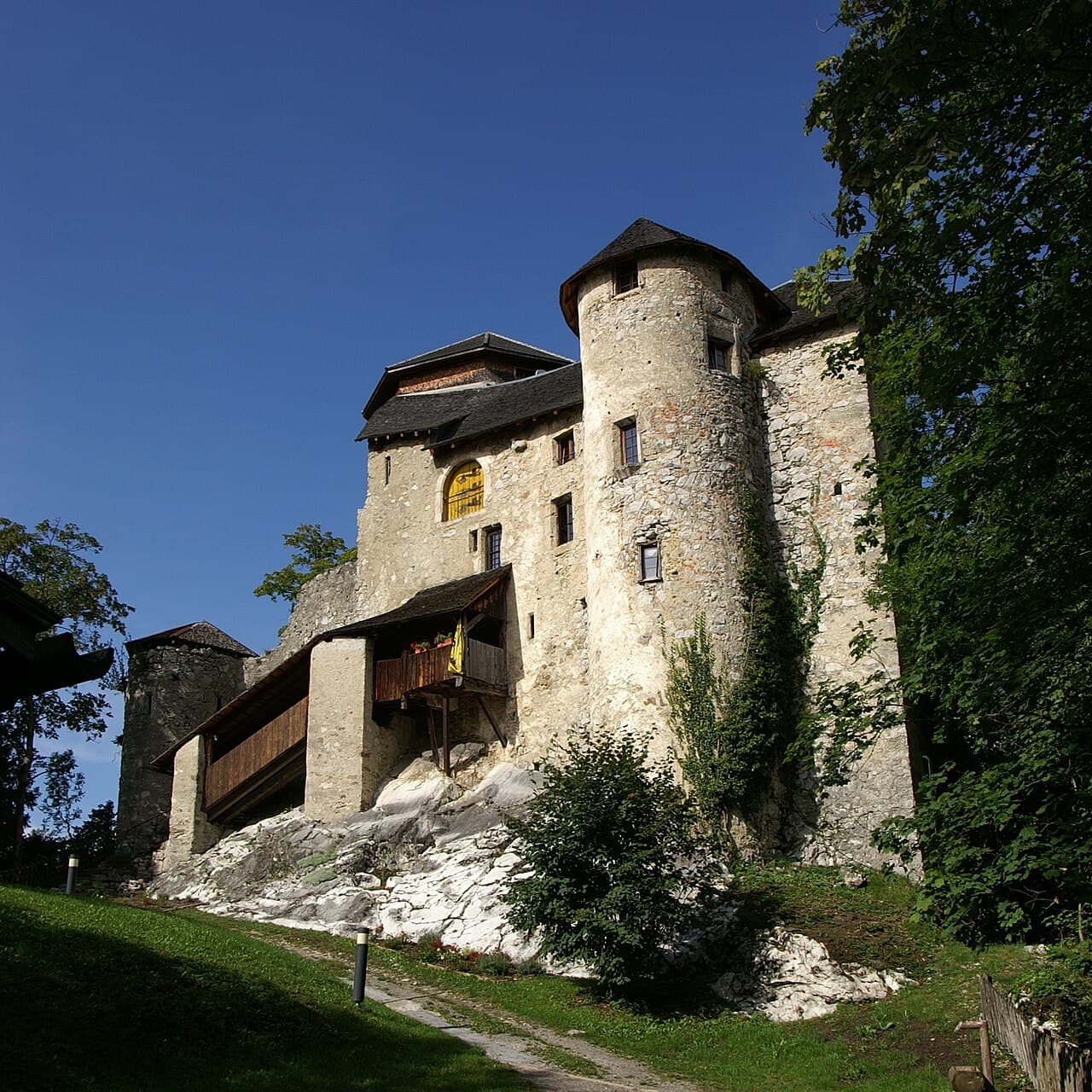
Neu-Ems Castle is a compact fortress that exemplifies the design principles of medieval hill castles in Central Europe. The castle is built primarily from stone, reflecting the robust construction techniques of the late medieval period. Its position on a hilltop provides natural defense and panoramic views of the surrounding Rhine valley.
Defensive structures
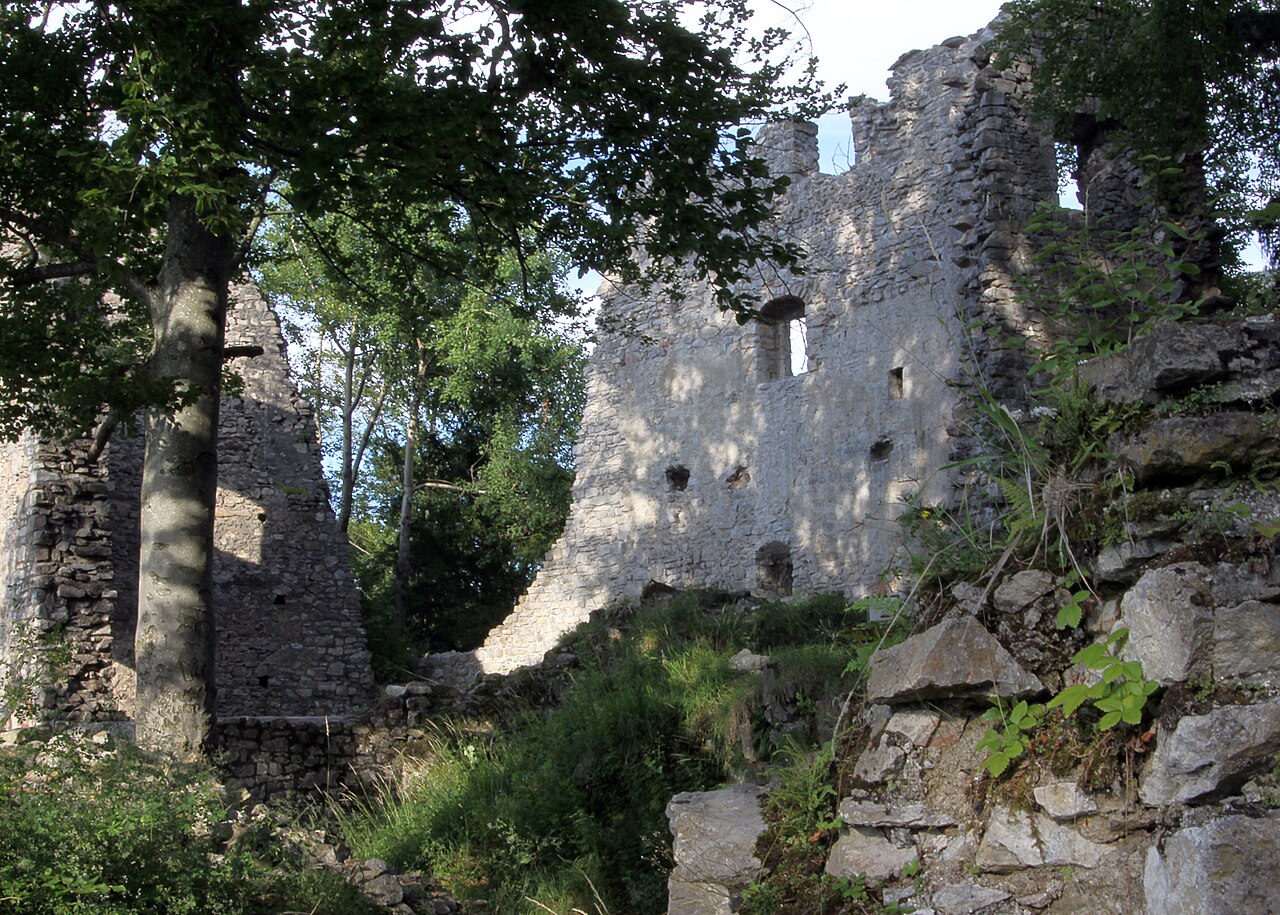
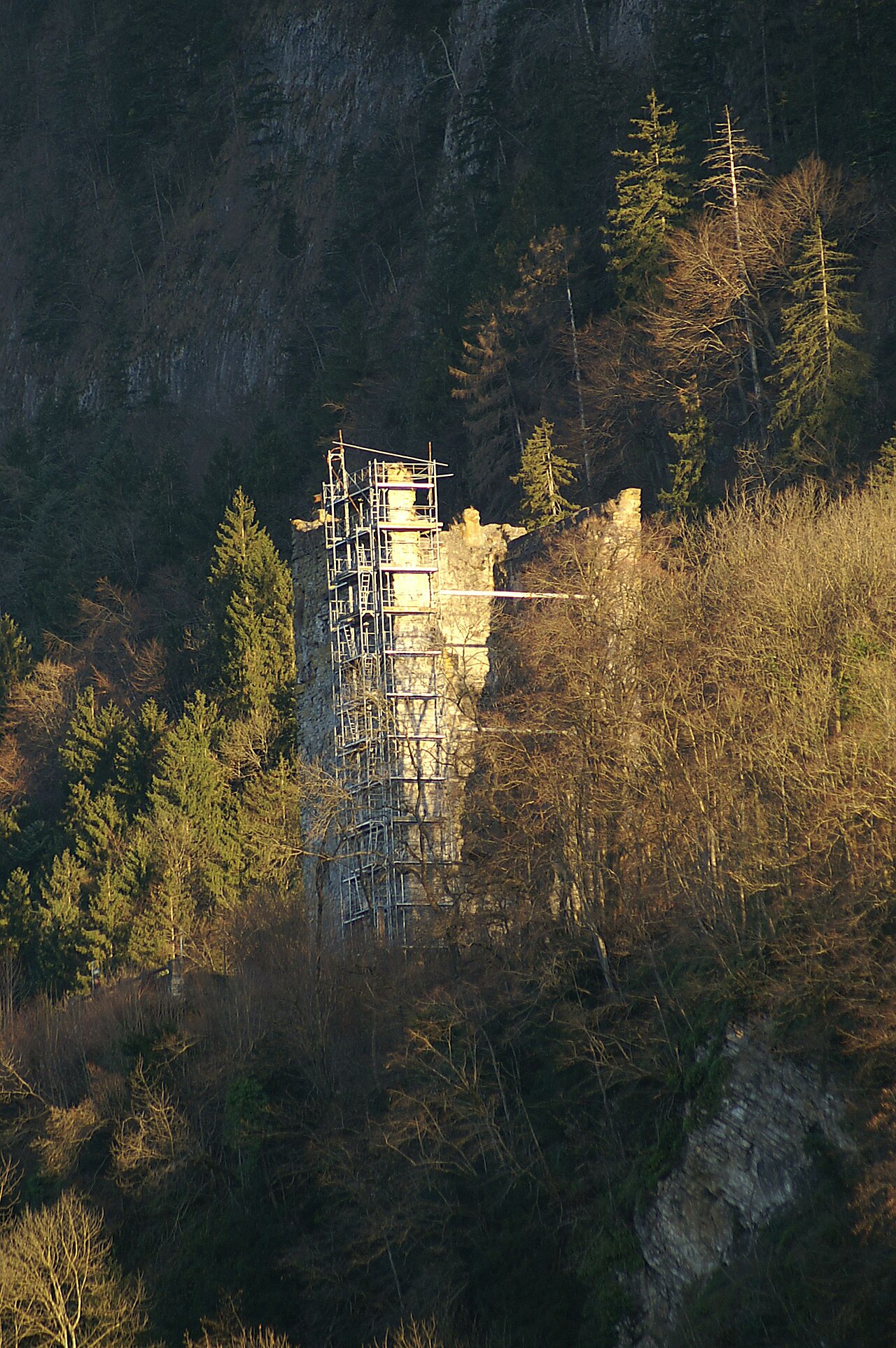
The castle's defensive system includes a prominent octagonal tower, which served as the main residential and lookout structure. This tower resembles a bergfried, a tall, freestanding defensive tower typical of the region's medieval castles. Surrounding the tower is a circular curtain wall that encloses an inner courtyard, providing a secure space for daily activities and protection during attacks.
An outer bailey or lower courtyard lies adjacent to the main complex, offering additional space for support functions such as stables, workshops, or storage. The castle also included a water cistern to ensure a reliable water supply during sieges, a critical feature for sustaining the inhabitants.
Residential and religious elements
The palas, or main residential building, is attached to the octagonal tower and served as the living quarters for the noble family. This arrangement reflects the dual purpose of the castle as both a fortress and a comfortable home.
The chapel, built in 1603 on the ground floor, was an important addition that catered to the spiritual life of the castle's residents. Only two lancet windows with pointed arches remain on the northern wall as remnants of this sacred space. The chapel's altar, a fine example of early 16th-century craftsmanship from Antwerp, is now housed in the Tyrolean State Museum, preserving a key element of the castle's cultural heritage.
Preservation and current status
Today, Neu-Ems Castle is well preserved as a historical monument. While some parts, such as the chapel, have largely disappeared, the core structures including the octagonal tower, curtain walls, and palas remain intact. The castle's compact design and robust construction have allowed it to survive centuries of conflict and changing ownership.
Since the mid-19th century, the castle has been privately owned by the Waldburg-Zeil family, who maintain it as a seasonal residence. Its location and architectural integrity make it a significant example of medieval fortification and noble domestic architecture in the region.
Cultural and historical importance
Neu-Ems Castle stands as a testament to the feudal history of the Rhine valley and the strategic importance of hilltop fortifications in medieval Austria. Its connection to the Lords of Ems and its role in regional conflicts such as the Appenzell Wars highlight its military and political significance.
The preservation of the castle and its artifacts, including the Antwerp altar, contributes to the understanding of artistic and religious practices in the early modern period. The castle is also a valuable cultural landmark, attracting visitors interested in medieval architecture, history, and the heritage of the Hohenems region.
Visiting information and accessibility
As a privately owned property, Neu-Ems Castle is not regularly open to the public. However, the castle's exterior and surrounding landscape can be appreciated from nearby vantage points. Visitors interested in the history and architecture of the castle can explore the town of Hohenems, which offers museums and cultural sites related to the region's noble families and medieval heritage.
For those seeking to learn more about the castle's chapel altar, the Tyrolean State Museum in Innsbruck provides access to this important artifact. The museum's collection offers insights into the artistic craftsmanship of the early 16th century and the religious history connected to Neu-Ems Castle.
Frequently asked questions (FAQ)
- How do I visit Neu-Ems Castle?
- Neu-Ems Castle is privately owned and not regularly open to the public. Visitors can view the castle's exterior from nearby vantage points in Hohenems and explore local museums for related history.
- What is the historical significance of Neu-Ems Castle?
- Neu-Ems Castle was built in 1343 by Ritter Ulrich I von Ems and played a key role during the Appenzell Wars. It reflects medieval noble life and regional military history in Austria.
- When was Neu-Ems Castle built and by whom?
- The castle was constructed in 1343 by Ritter Ulrich I von Ems with approval from Emperor Louis IV the Bavarian as a fortified family residence.
- What architectural features define Neu-Ems Castle?
- Key features include an octagonal bergfried tower, a circular curtain wall, an inner courtyard, and a palas. The castle also had a chapel added in 1603, now mostly lost except for two lancet windows.
- Is Neu-Ems Castle accessible for visitors with mobility issues?
- Due to its hilltop location and historic structure, Neu-Ems Castle has limited accessibility for visitors with mobility challenges. Viewing from surrounding areas is recommended.
Photo gallery

Information
Sources & official resources
Verify the information above using these authoritative references.
Loading map...
Visitor reviews
No reviews yet. Been here? Write the first review and help other travelers!
Write the first reviewVisited this castle? Share your experience
Your review helps other travelers and adds first-hand knowledge to our encyclopedia.