Schloss Velen
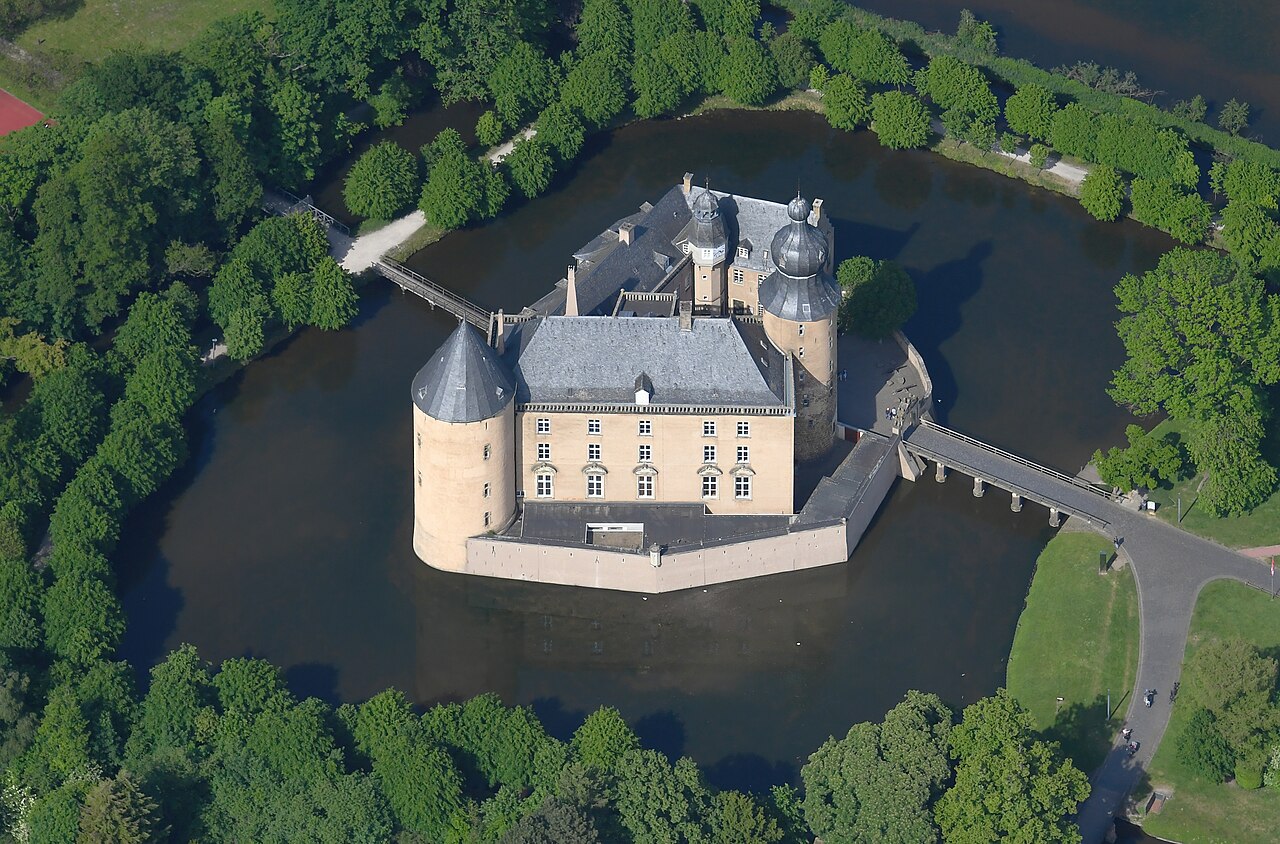
Schloss Velen is a notable example of a moated castle with origins tracing back to the early 13th century, located in Velen, Germany. The estate was first documented in 1240 as the manor house of the Lords of Velen. However, it was not until 1426 that the property was officially recognized as a castle, marked by the construction of its central wing. This period situates Schloss Velen firmly within the late medieval era, reflecting the architectural and defensive priorities of the time.
Architectural evolution and master builders
Over the centuries, Schloss Velen underwent significant architectural transformations, shaped by some of the most prominent regional architects and artists. The castle's development reflects a harmonious blend of styles and functions, evolving from a fortified manor to a more elaborate residence integrated with its natural surroundings.
Ambrosius von oelde and early expansions
Ambrosius von Oelde, a master builder, contributed to the castle's design, likely during the 17th or early 18th century. His work helped define the castle's structural character, particularly in relation to its courtyard front and south wing. His contributions are part of the layered architectural narrative that Schloss Velen embodies.
Johann conrad schlaun’s baroque influence
Johann Conrad Schlaun, a renowned Baroque architect, is credited with enhancing Schloss Velen's aesthetic and functional aspects. Schlaun's influence is evident in the castle's elegant proportions and detailed ornamentation, characteristic of the Baroque style. His work helped transform the castle into a refined noble residence, incorporating artistic elements that complemented its defensive origins.
Ignaz franz von landsberg-velen and artistic enrichment
Ignaz Franz von Landsberg-Velen played a pivotal role in the castle's artistic and architectural development. His involvement likely included interior design and decorative schemes that enriched the castle's ambiance. Alongside him, the painter August Reinking contributed to the castle’s interior with artistic works, while the Düsseldorf garden artist Maximilian Friedrich designed the surrounding castle park, integrating landscape architecture with the built environment.
Destruction and reconstruction
In 1931, Schloss Velen suffered a significant fire that largely destroyed the artistic and architectural elements developed over the centuries. The subsequent reconstruction efforts aimed to restore the castle while accommodating some internal modifications. This rebuilding preserved the castle's essential form and allowed it to continue serving various functions.
20th century uses and current function
During and after World War II, Schloss Velen was repurposed for multiple public uses, reflecting the changing social and political landscape of Germany. From 1988 to 2018, it operated as a sports hotel, adapting its historic spaces to modern hospitality needs. Currently, Schloss Velen functions as a well-equipped seminar and conference centre, combining historical ambiance with contemporary facilities.
Architectural features and cultural significance
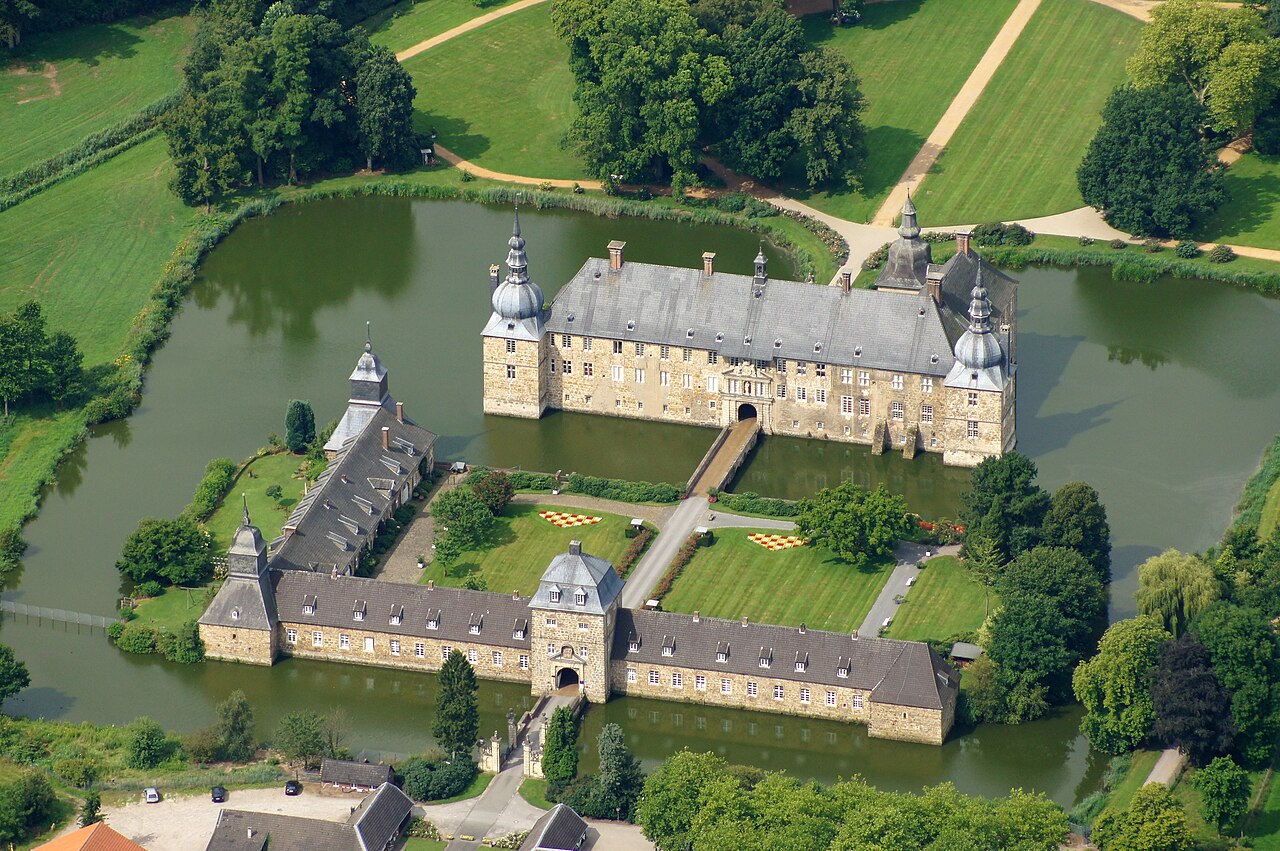
Schloss Velen is characterized by its moat, which historically provided defense and now enhances its picturesque setting. The castle's layout includes a prominent courtyard, south wing, and landscaped castle park, reflecting centuries of architectural evolution and landscape design. Despite the fire and subsequent changes, Schloss Velen remains a valuable cultural monument, illustrating the transition from medieval fortification to noble residence and modern adaptive reuse.
Castle park and gardens
The castle park, designed by Maximilian Friedrich, is an integral part of Schloss Velen’s heritage. It represents the tradition of integrating natural landscapes with architectural ensembles, typical of noble estates in the region. The park’s design complements the castle’s historic character and provides a serene environment for visitors and events.
Preservation status
Today, Schloss Velen is considered restored, with much of its historic fabric maintained or sympathetically reconstructed after the 1931 fire. Its adaptation to public and commercial uses has ensured ongoing preservation and accessibility, allowing the public to engage with this historic site.
Frequently asked questions (FAQ)
- How do I visit Schloss Velen?
- Schloss Velen is open to visitors by appointment only, as it currently operates primarily as a seminar and conference centre. It is recommended to contact the management in advance to arrange a visit or attend public events held on the premises.
- What is the historical significance of Schloss Velen?
- Schloss Velen reflects the architectural and social evolution from a medieval manor house to a baroque noble residence. Its association with prominent architects and artists highlights its cultural importance in the region.
- When was Schloss Velen built?
- The first mention of the manor house dates back to 1240, with the castle designation established in 1426. The main construction phase of the current structure dates from the 15th century.
- Can I explore the castle park at Schloss Velen?
- Yes, the castle park designed by Maximilian Friedrich is part of the estate and can be enjoyed during visits. It offers a scenic landscape that complements the historic castle architecture.
- Is Schloss Velen accessible for events?
- Schloss Velen currently functions as a seminar and conference centre and can be booked for various events. Its historic ambiance and facilities make it suitable for cultural, corporate, and private gatherings.
Information
Opening hours
By appointment only
Ticket prices
Varies depending on event
Current owner
Private owner
Loading map...
Visitor reviews
No reviews yet. Been here? Write the first review and help other travelers!
Write the first reviewVisited this castle? Share your experience
Your review helps other travelers and adds first-hand knowledge to our encyclopedia.