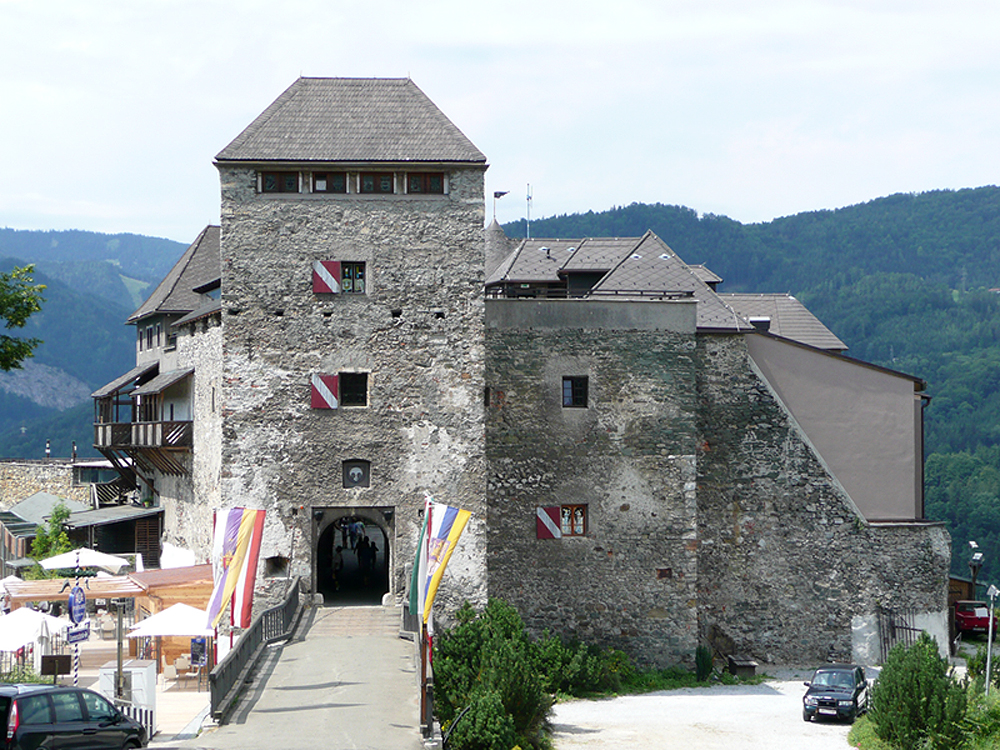
Schloss Oberkindberg
Schloss Oberkindberg is a notable Baroque castle located in the municipality of Kindberg in Austria, with origins dating back to the medieval period. The site was initially home to a fortress named "Chindeberc," first recorded in 1180, during the era of regional nobles within the Holy Roman Empire. This early stronghold served as a strategic fortification in the area, positioned on a hill at an elevation of 663 meters, commanding views over the surrounding valley and hills.
Medieval origins and destruction
The original fortress, constructed in the early medieval period, was a typical hill castle designed for defense and control of the local territory. It stood for nearly a century until it was destroyed by a significant earthquake in 1266. This natural disaster led to the loss of the medieval structure, and for some time, the site remained without a permanent fortress. No archaeological remains from the original medieval castle have been found, indicating that the destruction was thorough and that subsequent rebuilding favored new architectural styles and functions.
Baroque reconstruction and architectural features
In the late 17th century, around 1680, the site was redeveloped with the construction of the present-day castle in the Baroque architectural style. This transformation marked a shift from purely defensive medieval fortifications to a residence or administrative center reflecting the Baroque era's emphasis on grandeur and ornamentation. While detailed descriptions of the castle's layout and decorative elements are sparse, the building embodies typical Baroque features such as symmetrical design, elegant facades, and possibly stucco work and frescoes common to Austrian Baroque castles.
Between 1773 and 1774, Schloss Oberkindberg underwent renovations that updated and possibly expanded its structure to meet contemporary tastes and functional needs. These changes likely preserved the Baroque character while adapting the castle for continued use, reflecting evolving architectural trends of the late 18th century.
Location and setting
The castle is situated in a quiet, rural valley surrounded by hills and mixed forests, with nearby elevations reaching up to 961 meters. This elevated position provided natural defense advantages and scenic views, typical for a hill castle. The low population density around the castle enhances its secluded atmosphere, making it a significant landmark within the regional landscape of Styria, Austria.
Historical ownership and significance
Since 1994, Schloss Oberkindberg has been privately owned by Eugen Waldstein-Wartenberg, a descendant of Albrecht Wenzel Eusebius Waldstein, also known as Generalissimus Wallenstein. Wallenstein was a prominent military leader of the imperial army during the Thirty Years’ War in the 17th century. This connection links the castle to important figures in Austrian imperial history, adding a layer of cultural and historical significance to the property.
Architectural and cultural importance
Although the castle does not retain medieval structures, its Baroque architecture represents a crucial phase in Austrian castle development, illustrating the transition from fortresses to stately homes. The castle’s enduring presence through centuries of change highlights the adaptability of such buildings to new social and political realities. Its preservation allows insight into the architectural styles and noble lifestyles of the Baroque period in Austria.
Current condition and accessibility
Schloss Oberkindberg remains well preserved as a Baroque residence, maintaining its historical integrity. It stands as a testament to the layered history of the site, from medieval origins to post-medieval reconstruction. The castle is privately owned, and public access details are limited, but its architectural and historical value make it a subject of interest for scholars and enthusiasts of Austrian heritage.
Frequently asked questions (FAQ)
- How do I get to Schloss Oberkindberg?
- Schloss Oberkindberg is easily accessible by car and public transport. If you are driving, it's located just a short distance from the main roads in Kindberg. There are also local bus services that connect nearby towns to the castle.
- What is the historical significance of Schloss Oberkindberg?
- Schloss Oberkindberg dates back to the 12th century and has played a crucial role in the region's history. Originally a fortress, it has undergone various modifications over the centuries, reflecting the architectural styles of different eras. Today, it stands as a testament to the rich history of the area and offers visitors insight into Austria's medieval past.
- When was Schloss Oberkindberg last renovated?
- The last major renovation of Schloss Oberkindberg took place in the early 2000s, restoring its historic features while enhancing visitor facilities. This careful restoration ensures that visitors can appreciate both the castle's historical integrity and its modern amenities. The castle regularly updates its exhibitions to include new findings and historical interpretations.
- Can I take guided tours of Schloss Oberkindberg?
- Yes, guided tours are available at Schloss Oberkindberg and are highly recommended for a deeper understanding of its history and architecture. Tours typically last about an hour and cover significant areas of the castle, including the main hall and gardens. Check the castle's official website for tour schedules and availability.
- Why is Schloss Oberkindberg considered an architectural gem?
- Schloss Oberkindberg showcases a blend of Gothic and Renaissance architectural styles, making it a unique sight in the region. Its intricate stonework, beautiful frescoes, and well-preserved interiors reflect the craftsmanship of its time. The castle's design not only served defensive purposes but also demonstrated the wealth and power of its former occupants.
- Is it possible to host events at Schloss Oberkindberg?
- Yes, Schloss Oberkindberg offers facilities for various events, including weddings, corporate meetings, and private gatherings. The castle's stunning backdrop and historical ambiance make it a popular choice for special occasions. Interested parties are encouraged to contact the castle administration for details on bookings and event planning.
- What are the opening hours for Schloss Oberkindberg?
- Schloss Oberkindberg is open to visitors from Tuesday to Sunday, with varying hours depending on the season. Typically, the castle opens at 10 AM and closes at 5 PM, but it's advisable to check the official website for any seasonal changes or special events that may affect hours. Guided tours usually run at set times throughout the day.
- What are the ticket prices for visiting Schloss Oberkindberg?
- Ticket prices for Schloss Oberkindberg are reasonably priced, with discounts available for students, seniors, and families. Adult tickets generally cost around €10, while children under 12 may enter for free. It's best to check the castle's website for the most current pricing and any special offers.
- When is the best time to visit Schloss Oberkindberg?
- The best time to visit Schloss Oberkindberg is during the spring and early autumn when the weather is mild, and the gardens are in full bloom. These seasons also offer fewer crowds, allowing for a more enjoyable experience. Additionally, special events and exhibitions often take place during these months, enhancing your visit.
- Are there any nearby attractions to Schloss Oberkindberg?
- Yes, there are several attractions near Schloss Oberkindberg, including the beautiful hiking trails in the surrounding hills and the charming town of Kindberg. Visitors can explore local shops, cafes, and historical sites that reflect the culture of the region. A visit to nearby nature reserves provides an excellent opportunity for outdoor activities and scenic views.
Information
Website
Visit websiteSources & official resources
Verify the information above using these authoritative references.
Loading map...
Visitor reviews
No reviews yet. Been here? Write the first review and help other travelers!
Write the first reviewVisited this castle? Share your experience
Your review helps other travelers and adds first-hand knowledge to our encyclopedia.