Oberkapfenberg Castle
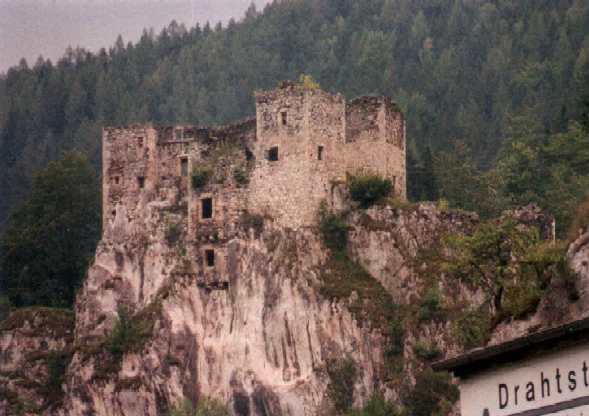
Oberkapfenberg Castle stands as a remarkable example of medieval fortification and Renaissance military architecture in Austria. Located on a strategic hilltop above the town of Kapfenberg, this hill castle has a rich history dating back to the 12th century. First mentioned in 1173 as "Burg Chaffenberch," the castle evolved from a lookout stronghold into a significant residence and administrative center for the influential Counts of Stubenberg. Its enduring presence and architectural transformations reflect the shifting political and military landscapes of the region over several centuries.
The castle's initial construction phase likely began in the 12th century, with the current main structures erected around 1264 during the High Medieval period. The Counts of Stubenberg, who were ministeriales serving the ruling powers in Styria, expanded the fortress to serve as their residence and the seat of the regional High Court for much of the Mürz Valley. This administrative role elevated Oberkapfenberg's importance within the region, making it a focal point of local governance and justice.
Historical significance and early history
Oberkapfenberg's strategic location at 592 meters above sea level provided commanding views of the surrounding valley, making it an ideal site for defense and surveillance. Its early history is marked by involvement in regional power struggles, including the occupation by forces loyal to Duke Albert I of Habsburg following a conspiracy involving Friedrich von Stubenberg in the late 13th century. The castle later came under the control of Hungarian King Matthias Corvinus until 1491, illustrating its geopolitical significance during turbulent times.
During the 16th century, the threat of Ottoman incursions prompted renewed military importance for the castle. It functioned as a lookout post to warn the surrounding areas of approaching dangers, underscoring its defensive value beyond local conflicts.
Renaissance transformation and architectural evolution
Responding to changing military technologies and the need for enhanced defenses, Oberkapfenberg underwent a major transformation around 1550. Commissioned by Wolf von Stubenberg, the castle was redesigned by the Italian architect Antonio Balin de Comose into a Renaissance fortress. This conversion introduced new fortification elements characteristic of Renaissance military architecture, such as angled bastions and reinforced walls designed to withstand artillery attacks.
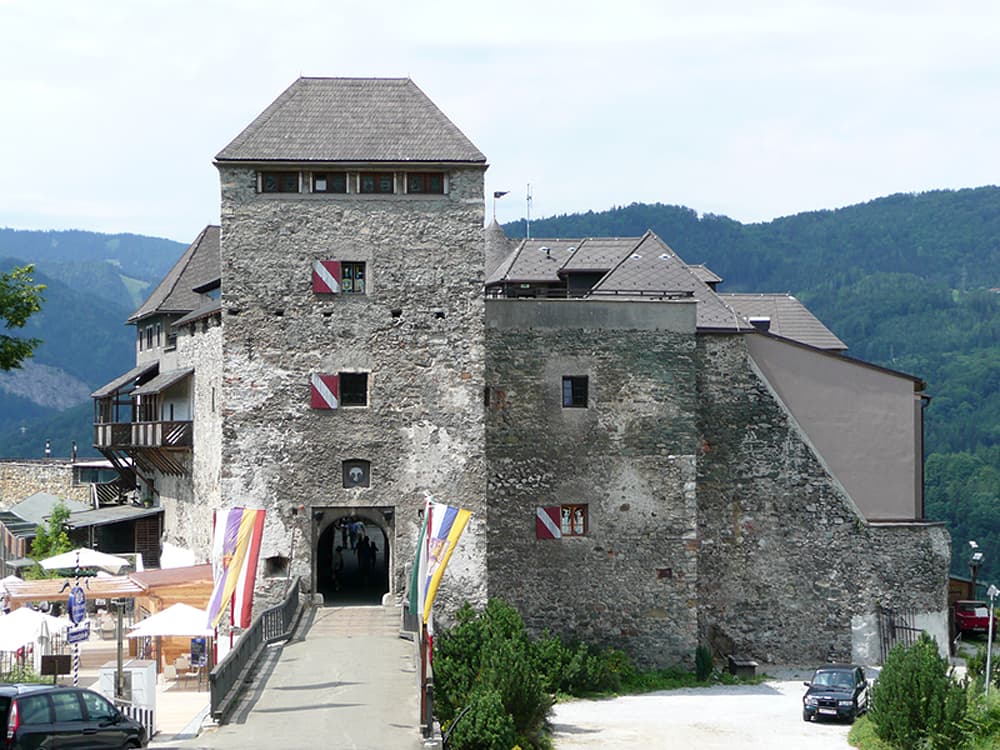
The castle's layout consists of multiple building phases, with a central courtyard (Burghof) surrounded by stone structures that include residential quarters, defensive walls, and service buildings. Notable architectural features include a zwinger—a narrow defensive passage between two walls equipped with stairs leading to lower levels—providing an additional layer of protection against attackers.
The main gate complex is particularly sophisticated, featuring vaulted passages with overhead corridors, offset gates arranged in a staggered manner to impede enemy progress, and a chamber for the gatekeeper. These defensive arrangements reflect advanced medieval and Renaissance design principles aimed at maximizing security and control over access.
Medieval remnants and structural details
Despite Renaissance modifications, parts of the original 12th-century construction remain visible, especially beneath the Loreto Chapel and within the upper residential house. These remnants attest to the castle’s medieval origins and provide valuable insights into early fortification techniques. Historical records also mention a stone spiral staircase, which served as a vertical connection within the fortress, although it is no longer extant.
Previously, a drawbridge provided controlled access to the inner grounds, but it has not survived. The castle’s stone walls, towers, and defensive features illustrate a complex layering of architectural styles and functions accumulated over centuries.
Decline, abandonment, and restoration efforts
In the 18th century, the Stubenberg family, having been elevated to counts, relocated to a palace in Vienna in 1739, leaving Oberkapfenberg Castle abandoned. Its decline was accelerated by Emperor Joseph II’s order to remove the roofs, exposing the structure to the elements and hastening its decay. Over the following centuries, the castle fell into ruin.
Mid-20th century restoration efforts began under Count Franz von Stubenberg, who aimed to renovate the castle into a hotel. Financial difficulties, however, led to the collapse of this project by 1985, resulting in further neglect. In 1992, the municipality of Kapfenberg acquired the castle and established an association dedicated to its restoration and preservation.
By 1994, parts of the castle reopened for hospitality and cultural events, marking a new chapter in its history. Today, Oberkapfenberg Castle functions as a cultural and culinary destination of regional importance, hosting one of Austria’s largest medieval festivals, the Ritterfest, annually in June.
Archaeological discoveries and cultural heritage
Recent archaeological excavations triggered by a 2011 landslide near an area known as "Stubenberg’s Kitchen" have uncovered a wealth of artifacts, including pottery shards, animal bone fragments, and children’s toys. These findings offer a rare glimpse into the daily life and material culture of the castle’s inhabitants throughout its history.
The castle also houses displays of historic weaponry, torture devices, and themed exhibitions featuring crusaders and alchemists, enriching its narrative and engaging visitors with its multifaceted past. These cultural presentations underscore Oberkapfenberg’s importance as a site of historical education and tourism.
Visitor experience and present-day significance
Today, Oberkapfenberg Castle is not only a preserved historical monument but also a vibrant cultural hub. Its restoration has integrated modern hospitality facilities, including a castle hotel and restaurant, allowing visitors to immerse themselves in a medieval atmosphere with contemporary comforts.
The castle’s commanding hilltop position offers panoramic views of the Mürz Valley and surrounding Styrian landscape, enhancing its appeal as a tourist destination. Annual events such as the Ritterfest draw large crowds, celebrating medieval traditions through reenactments, crafts, and performances.
Visitors can explore the castle’s architectural features, from its medieval foundations to Renaissance fortifications, gaining insight into the evolution of castle design and regional history. The combination of historical authenticity, archaeological richness, and cultural programming makes Oberkapfenberg Castle a significant heritage site in Austria.
Frequently asked questions (FAQ)
- What is the historical significance of Oberkapfenberg Castle?
- Oberkapfenberg Castle, dating back to the 12th century, played a crucial role in the defense and administration of the region. It has witnessed numerous historical events and has been a symbol of power and influence in the area throughout the centuries.
- When is the best time to visit Oberkapfenberg Castle?
- The best time to visit Oberkapfenberg Castle is during the spring and early autumn months when the weather is mild and pleasant. These seasons also offer beautiful scenery, making your visit more enjoyable.
- Can I access Oberkapfenberg Castle with public transportation?
- Yes, Oberkapfenberg Castle is accessible by public transportation. Visitors can take a train or bus to Kapfenberg and then enjoy a short walk or a local taxi ride to reach the castle.
- What are the opening hours of Oberkapfenberg Castle?
- Oberkapfenberg Castle is typically open to visitors from 10 AM to 6 PM, but hours may vary seasonally or for special events. It is advisable to check the official website or contact the castle directly for the most current information before your visit.
- Is it possible to take guided tours of Oberkapfenberg Castle?
- Yes, guided tours are available at Oberkapfenberg Castle, providing visitors with in-depth knowledge about its history and architecture. These tours are a great way to enhance your experience and learn more about the castle's significance.
- What are the ticket prices for visiting Oberkapfenberg Castle?
- Ticket prices for Oberkapfenberg Castle are generally affordable, with discounts available for children, students, and seniors. Special family packages may also be offered, making it accessible for all visitors.
- Are there any nearby attractions to explore after visiting Oberkapfenberg Castle?
- After exploring Oberkapfenberg Castle, visitors can enjoy nearby attractions such as the historic town center of Kapfenberg and the scenic hiking trails in the surrounding area. The natural beauty of the region offers plenty of opportunities for outdoor activities.
- How do I prepare for my visit to Oberkapfenberg Castle?
- When preparing for your visit to Oberkapfenberg Castle, it’s a good idea to wear comfortable walking shoes, as the castle is situated on a hill and may involve some climbing. Additionally, consider bringing a camera to capture the stunning views and architecture.
Photo gallery

Photo by Andreas Garger•Public domain
Information
Sources & official resources
Verify the information above using these authoritative references.
Loading map...
Visitor reviews
No reviews yet. Been here? Write the first review and help other travelers!
Write the first reviewVisited this castle? Share your experience
Your review helps other travelers and adds first-hand knowledge to our encyclopedia.