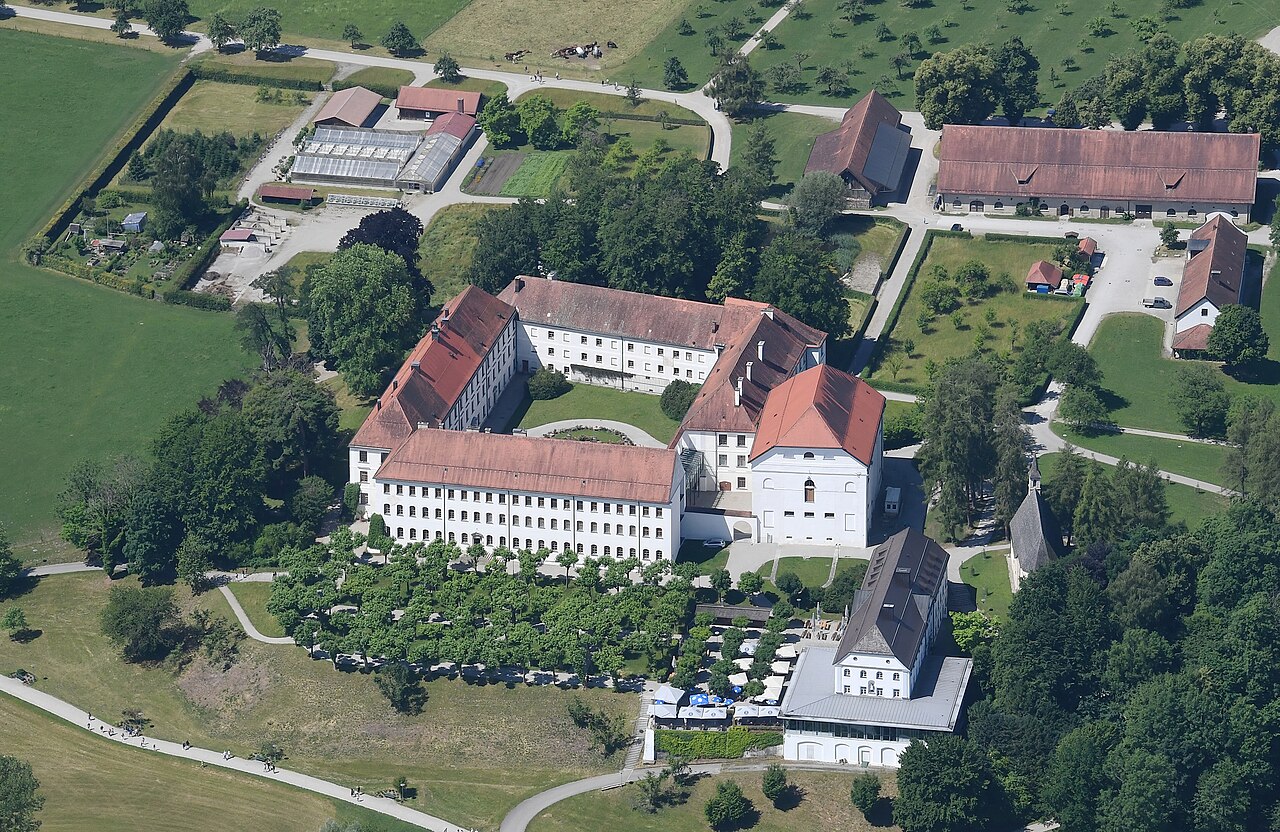
Schloss Oberbrunn
Schloss Oberbrunn stands as a significant hill castle located in the municipality of Pittenhart, Germany. Its origins trace back to the early medieval period, with the earliest documented mention in the year 924 under the name “Brunn” in the Salzburg Urkundenbuch, indicating the site's longstanding importance within the medieval European cultural sphere. This early reference suggests that the location was recognized as a settlement or landmark, setting the stage for its later development into a noble estate.
The foundation and early ownership
The castle as it is known today was primarily established between 1530 and 1535 by Hans I. Sunthaimer, following his acquisition of manorial rights for Oberbrunn in 1531. This period marked the transition of the site into a structured noble estate, reflecting the manorial system prevalent in early modern Germany. The Sunthaimer family’s establishment of the castle laid the groundwork for its architectural and social significance in the region.
Ownership of Schloss Oberbrunn changed hands multiple times over the centuries, reflecting broader shifts in aristocratic power and landholding patterns. In 1570, Hanns Egidius Sonderndorffer purchased the property, and it later passed to the Armannsperger family in 1607. The Armannspergers maintained possession for nearly 150 years until 1753, a period during which the estate likely saw various modifications and adaptations in line with changing tastes and needs.
18th and 19th-century transformations
Following the Armannspergers, the castle briefly belonged to Joseph Ignaz Krez before being acquired by Franz Seraph Basselet de La Rosée in 1760. The 18th century was a significant era for Schloss Oberbrunn, as much of the visible architectural fabric, including the distinctive mansard roof known as a Schopfwalmdach, dates from this time. This roof style, characterized by its hipped shape with a flattened upper slope, crowns the castle’s tall main structure and contributes to its unique silhouette.
In 1851, the estate entered the possession of the von Belli di Pino family. The latter half of the 19th century saw notable changes to the surrounding land, including the sale and clearing of large forested areas in 1891. These actions reflect evolving land use practices, possibly tied to agricultural expansion or early industrial development pressures in the region.
20th-century uses and adaptations
The early 20th century brought a series of prominent owners and alternative uses for Schloss Oberbrunn. Notably, the painter Carl Friedrich Steinheil owned the property before it was acquired by Theodor von Cramer-Klett in 1905. Under von Cramer-Klett’s ownership, the castle served as a girls’ educational institution until 1919, marking a shift from private residence to an institutional role within the community.
Subsequent owners included Paul Naber in 1922 and Konsul Merkle in 1936. During the Second World War, the castle’s upper floor was adapted as a shelter for evacuees, demonstrating its use in civilian protection during wartime emergencies.
In 1954, the castle was acquired by the Arbeiterwohlfahrt, a social welfare organization. They undertook significant interior remodeling to accommodate institutional needs while preserving the castle’s historic exterior. Between 1967 and 1968, a new guest accommodation wing was added, expanding the castle’s capacity for visitors or residents and enhancing its function as a social facility.
Since 1985, Schloss Oberbrunn has been dedicated to meditation and educational purposes by various spiritual groups, continuing its tradition as a site of cultural and community activity.
Architectural features and archaeological significance
Main structure and roofing
The extant castle is dominated by its tall main building, notable for the mansard roof or Schopfwalmdach, which dates primarily from the first half of the 18th century. This roofing style is a distinctive architectural feature, providing both aesthetic appeal and practical benefits such as increased attic space. The building’s core, however, is older, indicating a gradual development over centuries.
Chapel and annex
Attached to the main building is a chapel constructed contemporaneously with much of the 18th-century fabric. The chapel and castle exterior exhibit architectural unity, reflecting consistent stylistic choices from that period. The mid-20th-century renovations preserved this external appearance despite extensive interior modifications. The addition of the annex in 1967-1968 provided guest accommodations, thoughtfully designed to complement the original structure.
Subterranean remains
Archaeological investigations beneath the standing structure have revealed late medieval and early modern subterranean remains. These underground features attest to earlier phases of construction predating the visible building, offering valuable insights into the castle’s long-term occupation and evolution. The site’s designation as an archaeological site underscores the importance of these findings for understanding regional history.
Historical and cultural importance
Schloss Oberbrunn’s layered history from its medieval origins to its modern uses illustrates the complex social, architectural, and cultural transformations that have shaped the region. Its preservation as a protected monument ensures that both the visible architecture and the hidden archaeological layers remain accessible for study and public appreciation. The castle’s adaptation to various roles—including noble residence, educational institution, wartime shelter, and spiritual retreat—reflects its enduring relevance and flexibility across centuries.
The castle’s location in Bavaria, within Germany’s rich tapestry of historic sites, places it among notable examples of hill castles that combine defensive features with residential and later institutional functions. Its architectural evolution from medieval core to 18th-century mansard roof and chapel exemplifies regional building traditions and stylistic developments.
Frequently asked questions (FAQ)
- How do I get to Schloss Oberbrunn?
- Schloss Oberbrunn is located in Pittenhart, Germany, and is easily accessible by car or public transport. If you are driving, there is parking available near the castle. For public transport, check local bus schedules that connect to Pittenhart.
- What is the historical significance of Schloss Oberbrunn?
- Schloss Oberbrunn has a rich history dating back to the Middle Ages, serving as a noble residence and a strategic fortification. The castle has witnessed numerous historical events that shaped the region, making it a vital part of local heritage. Visitors can explore its history through guided tours and exhibitions.
- When was Schloss Oberbrunn built?
- The construction of Schloss Oberbrunn began in the 14th century, showcasing a blend of medieval and Renaissance architectural styles. Over the centuries, it has undergone various renovations, reflecting the changes in architectural trends and the needs of its inhabitants. Today, it stands as a testament to the region's historical evolution.
- Can I take guided tours of the castle?
- Yes, guided tours of Schloss Oberbrunn are available, providing visitors with in-depth knowledge of its history and architecture. These tours are led by knowledgeable guides who can answer questions and share fascinating stories. It's recommended to book in advance, especially during peak tourist seasons.
- Why is Schloss Oberbrunn considered an architectural gem?
- Schloss Oberbrunn is regarded as an architectural gem due to its unique combination of medieval fortifications and Renaissance elegance. The castle features stunning facades, intricate details, and beautifully preserved interiors that offer insight into the craftsmanship of its time. Its design and historical context make it a must-see for architecture enthusiasts.
- Is it possible to host events at Schloss Oberbrunn?
- Yes, Schloss Oberbrunn offers facilities for hosting various events, including weddings, corporate meetings, and private gatherings. The picturesque setting and historical ambiance provide a unique backdrop for any occasion. Interested parties should contact the castle management for more details and booking information.
- What are the opening hours of Schloss Oberbrunn?
- Schloss Oberbrunn is open to visitors from Tuesday to Sunday, with specific hours that may vary seasonally. It's advisable to check the castle's official website or contact them directly for the most current opening hours before planning your visit. Special holiday hours may also apply.
- What are the ticket prices for visiting Schloss Oberbrunn?
- Ticket prices for Schloss Oberbrunn vary depending on age and the type of tour selected. Generally, reduced rates are available for children, students, and seniors. Check the official website for detailed pricing information and any available discounts or packages.
- When is the best time to visit Schloss Oberbrunn?
- The best time to visit Schloss Oberbrunn is during the spring and early autumn months when the weather is pleasant and the gardens are in bloom. These seasons also tend to have fewer crowds, allowing for a more enjoyable experience. However, the castle is open year-round, and each season offers a unique charm.
- Are there any nearby attractions to visit along with Schloss Oberbrunn?
- Yes, there are several nearby attractions to explore, including beautiful hiking trails and other historical sites in the Pittenhart area. The surrounding landscape is perfect for outdoor activities, and nearby towns offer additional cultural experiences. Be sure to plan a day to fully enjoy the region's rich offerings.
Information
Website
Visit websiteSources & official resources
Verify the information above using these authoritative references.
Loading map...
Visitor reviews
No reviews yet. Been here? Write the first review and help other travelers!
Write the first reviewVisited this castle? Share your experience
Your review helps other travelers and adds first-hand knowledge to our encyclopedia.