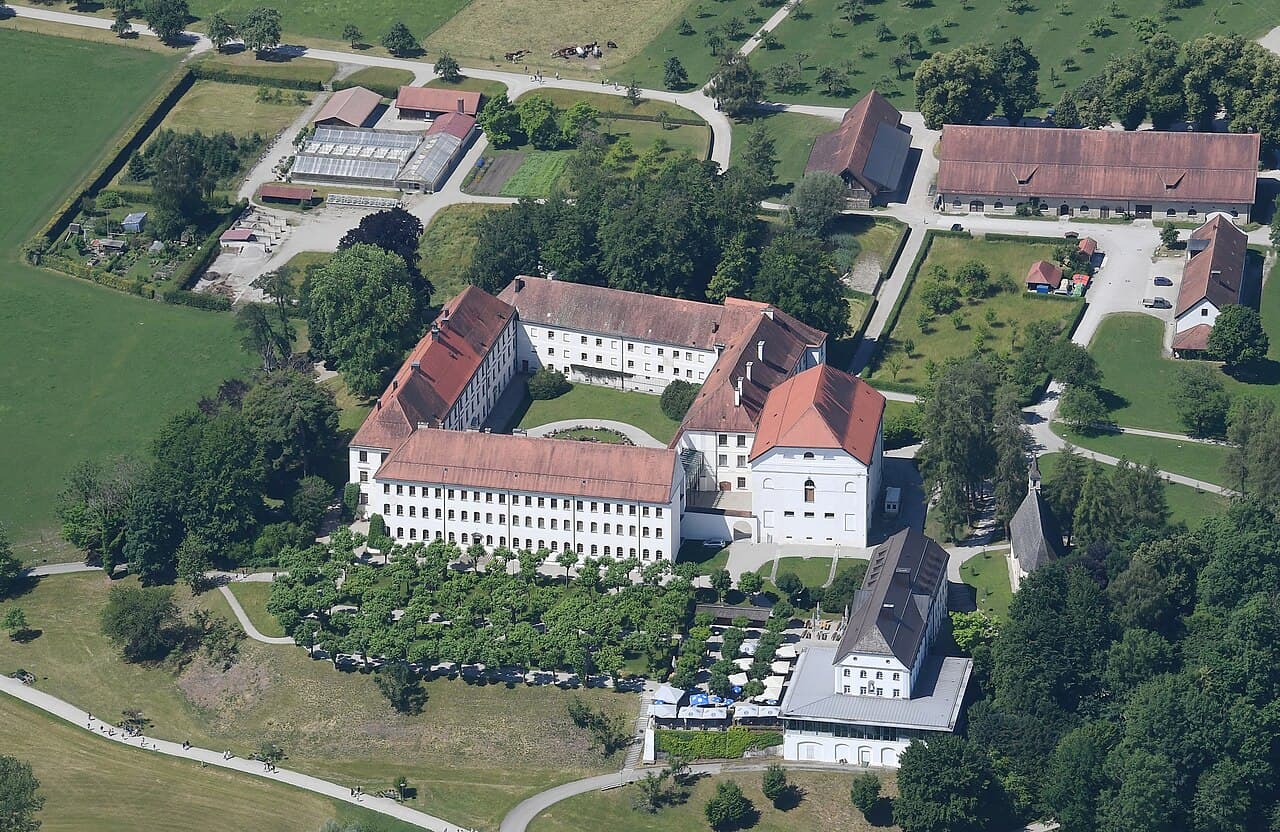
Kloster Herrenchiemsee
Kloster Herrenchiemsee is a historic monastic complex located on Herrenchiemsee, one of the islands in the Chiemsee lake in Bavaria, Germany. Founded in the 7th century, it stands as one of the earliest monastic establishments in the region, representing a significant example of early medieval religious architecture and cultural history. The monastery was originally built as a hill castle to serve both spiritual and defensive purposes, characteristic of monastic sites of that era.
The founding and early history of Kloster Herrenchiemsee
The monastery was established in the early medieval period, around the 7th century, during the Christianization of Bavaria. It was founded by Benedictine monks who sought a secluded location conducive to religious contemplation and community living. The choice of Herrenchiemsee island provided natural protection and isolation, with the surrounding waters acting as a natural moat, enhancing the site's defensibility.
Throughout the early centuries, Kloster Herrenchiemsee played a vital role in spreading Christianity and served as a religious, cultural, and educational center in the region. The monastery was part of a network of Benedictine houses that helped consolidate Christian influence across Bavaria and beyond.
Architectural features and layout
The original hill castle design of Kloster Herrenchiemsee incorporated typical early medieval monastic architectural elements. The complex included a church, cloisters, dormitories, refectories, and workshops. Defensive features such as fortified walls and possibly a watchtower were integrated to protect the monastery from external threats.
Over the centuries, the monastery underwent various phases of construction and expansion. Early structures were primarily built using local stone and timber, reflecting the building techniques of the time. The layout was designed to facilitate monastic life, with a central courtyard surrounded by the main functional buildings.
Historical significance and later developments
Kloster Herrenchiemsee’s importance extended beyond its religious function. It was a center for manuscript production and preservation of knowledge during the Middle Ages. The monastery’s scriptorium contributed to the cultural heritage of Bavaria by copying and illuminating religious texts.
During the later medieval period, the monastery experienced changes in ownership and influence, adapting to shifting political and religious landscapes. Although it retained its monastic character, parts of the complex were modified or rebuilt in subsequent architectural styles, but the core early medieval elements remained prominent.
Current condition and visitor information
Today, Kloster Herrenchiemsee is recognized as a partially preserved historic site, with some original structures surviving alongside later additions. The site is accessible to visitors interested in medieval history, monastic architecture, and Bavarian heritage.
Visitors can explore the remains of the monastery, including the church and cloister areas, and learn about the site's role in the religious and cultural history of the region. The island setting offers scenic views of the Chiemsee lake and surrounding landscape, enhancing the visitor experience.
Access and tours
The monastery is reachable by boat from the mainland towns around Chiemsee. Guided tours provide detailed insights into the history and architecture of Kloster Herrenchiemsee, making it an educational destination for history enthusiasts.
Architectural legacy and cultural impact
Kloster Herrenchiemsee’s early medieval architecture influenced subsequent monastic constructions in Bavaria. Its preservation allows scholars to study early Christian monastic life and architectural practices. The monastery also contributes to the cultural identity of the region, symbolizing the longstanding religious traditions of Bavaria.
Frequently asked questions (FAQ)
- How do I get to Kloster Herrenchiemsee?
- You can reach Kloster Herrenchiemsee by taking a ferry from Prien am Chiemsee, which is well-connected by train and road. The ferry ride offers beautiful views of the lake and takes approximately 15 minutes. Once on the island, the castle is a short walk from the ferry dock.
- What is the historical significance of Kloster Herrenchiemsee?
- Kloster Herrenchiemsee was built in the 19th century by King Ludwig II of Bavaria as a tribute to the Palace of Versailles and his vision of an idealized monarchy. The castle reflects Ludwig's fascination with French culture and his desire for grandeur. Today, it stands as a symbol of Bavaria's rich history and royal heritage.
- When was Kloster Herrenchiemsee constructed?
- Construction of Kloster Herrenchiemsee began in 1878 and continued until Ludwig II's death in 1886. Although the castle was never fully completed, it showcases the king's ambitious architectural plans and his passion for art and beauty. The ongoing restoration efforts keep the castle's legacy alive for future generations.
- Can I visit Kloster Herrenchiemsee year-round?
- Yes, Kloster Herrenchiemsee is open to visitors year-round, although opening hours may vary by season. It is advisable to check the official website for the latest information on visiting times and any seasonal events. The castle's charm can be appreciated in both summer and winter months.
- Why is Kloster Herrenchiemsee considered an architectural marvel?
- Kloster Herrenchiemsee is renowned for its stunning architecture, which combines elements of Baroque and Neoclassical styles, creating a unique aesthetic appeal. The lavish interiors are adorned with exquisite decorations, including intricate frescoes and opulent furnishings. The castle's design reflects King Ludwig II's artistic vision and his admiration for French architectural grandeur.
- Is it possible to explore the gardens at Kloster Herrenchiemsee?
- Yes, the gardens at Kloster Herrenchiemsee are open to visitors and offer a picturesque setting for a leisurely stroll. The beautifully landscaped grounds feature fountains, sculptures, and well-maintained pathways that enhance the royal atmosphere of the castle. Exploring the gardens is a delightful way to appreciate the natural beauty surrounding the castle.
- What are the ticket prices for visiting Kloster Herrenchiemsee?
- Ticket prices for Kloster Herrenchiemsee vary depending on age and the type of tour selected. As of 2023, adults typically pay around €12, while reduced rates are available for students and children. It is recommended to purchase tickets in advance, especially during peak tourist seasons.
- What are the opening hours for Kloster Herrenchiemsee?
- Kloster Herrenchiemsee generally opens daily, with varying hours based on the season. During the high season (spring to early autumn), the castle usually opens from 9 AM to 6 PM, while winter hours may be shorter. Always check the official website for the most current information on opening hours before your visit.
- Are there any nearby attractions to Kloster Herrenchiemsee?
- Yes, there are several nearby attractions worth visiting, including the beautiful Chiemsee lake itself, where you can enjoy water sports or relax by the shore. The charming village of Prien am Chiemsee is also nearby and offers quaint shops and restaurants. Additionally, the Herreninsel and Fraueninsel islands provide further opportunities for exploration and sightseeing.
Photo gallery

Information
Loading map...
Visitor reviews
No reviews yet. Been here? Write the first review and help other travelers!
Write the first reviewVisited this castle? Share your experience
Your review helps other travelers and adds first-hand knowledge to our encyclopedia.


