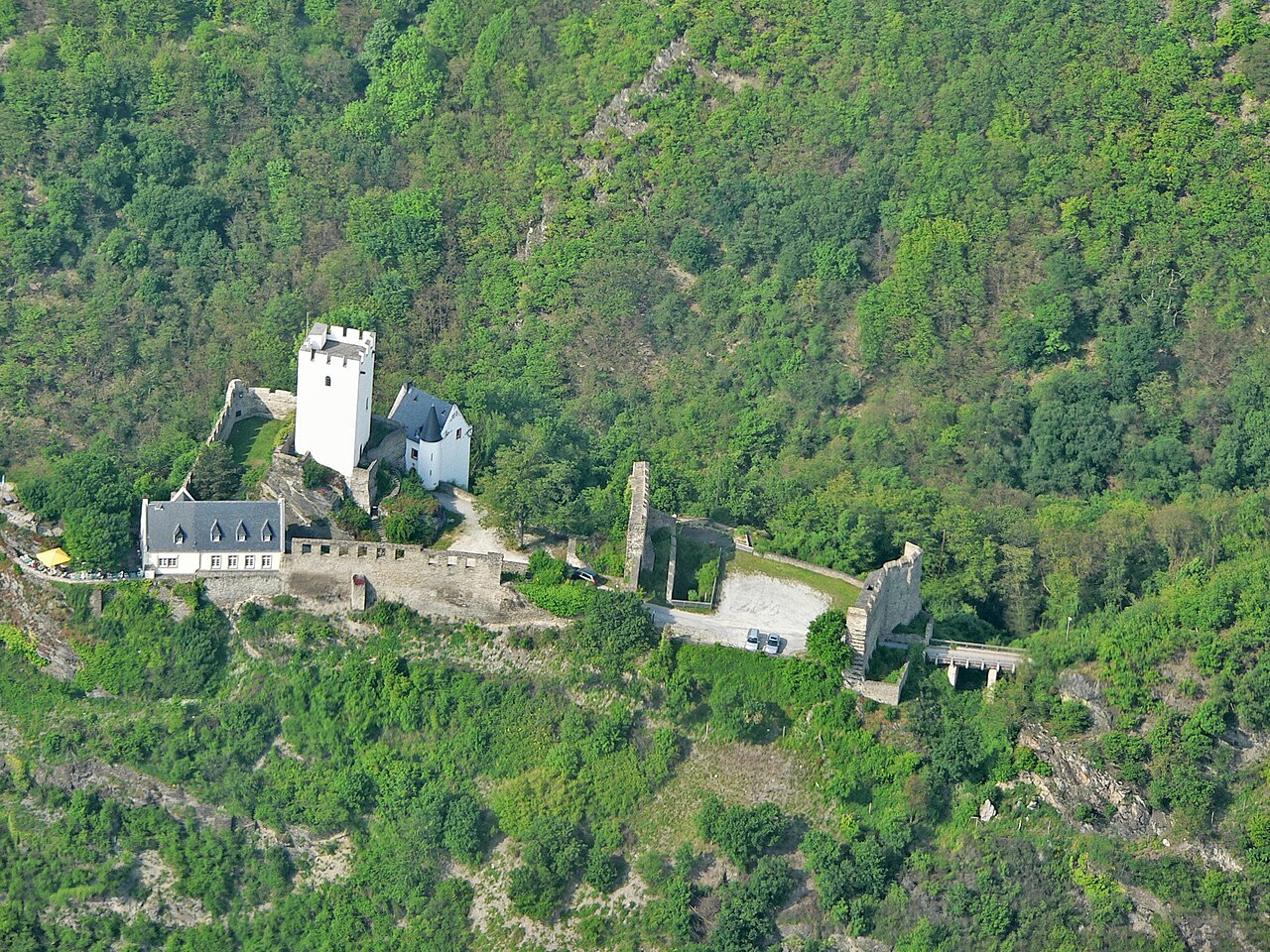
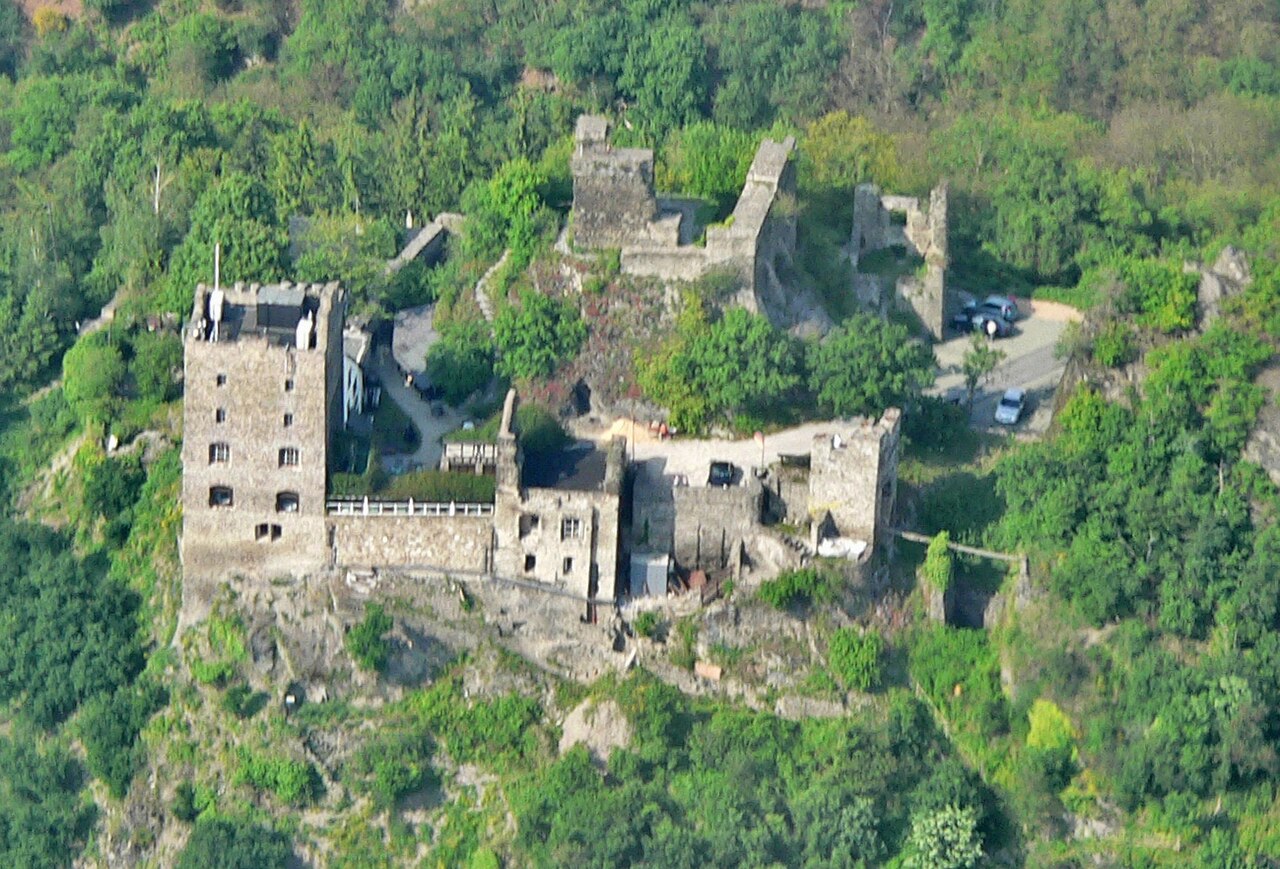
Schloss Liebeneck stands as a remarkable example of a late 16th-century hill castle nestled in the municipality of Osterspai, Germany. Originally constructed around 1590 by the noble family von Liebenstein, this castle reflects the transition from medieval fortifications to more comfortable noble residences that combined defensive features with agricultural and residential functions. Known initially as Grauborn, the site replaced the family’s previous seat, Burg Liebenstein, offering a strategically advantageous location with modern conveniences of its time.
Historical background and noble lineage
The castle's origins are deeply intertwined with the fortunes of the von Liebenstein family, who established Schloss Liebeneck as a hunting lodge and fortified residence. This dual purpose underlines the castle’s role not only as a defensive stronghold but also as a symbol of aristocratic leisure and status. The von Liebenstein lineage maintained control of the estate until 1637, when their family line became extinct. Subsequently, ownership passed to the Freiherren von Waldenburg, also known as the Schenckern family, marking a new chapter in the castle’s stewardship.
In 1793, the castle was granted to Freiherr Georg Ernst Ludwig von Preuschen von und zu Liebenstein as a reward for his involvement in the Nassau inheritance agreement, reestablishing noble ties to the property. This period coincided with significant political upheavals, including the dissolution of the Holy Roman Empire and the incorporation of the territory into the Duchy of Nassau in 1806. Despite these changes, the von Preuschen family retained ownership, converting Schloss Liebeneck into a fideicommiss to ensure the estate remained within the family. From then on, the castle primarily served as a summer residence.
Architectural evolution and 19th-century reconstruction
The original castle was a fortified house approximately 43 meters long and 22.5 meters wide, characterized by a two to three-story main building with a distinctive four-story round tower on the northeast corner overlooking the Rhine River. Attached to the north side was a chapel, emphasizing the religious dimension of the noble household, while the south side housed a kitchen and auxiliary annexes supporting daily life. The west side featured a courtyard bordered by a garden with mature yew trees, which remain a defining feature of the grounds.
Southwest of the castle was a tenant farm with a main building dating from 1849, reflecting the estate’s ongoing agricultural functions. A footpath once linked the castle to a pavilion on the Rhine waterfront at the Camper Spitze promontory, though this pavilion was lost to vandalism in 1872.
Between 1873 and 1875, Schloss Liebeneck underwent a significant reconstruction under the direction of architect Joseph Balthasar Fuchs. The renovation transformed the castle into a Neo-Renaissance style residence, demolishing the original residential quarters and reducing the footprint to approximately 28 by 19.5 meters. The new structure featured a more prominent, two-story brick building with a rubble stone foundation. The basement is accessible at ground level on the Rhine-facing side. Architectural elements from the original design were preserved or echoed, including the imposing four-story round tower and risalits on the east and north façades. The west façade is distinguished by two stepped gables, adding to the castle’s Neo-Renaissance character.
A notable feature of the renovation is the grand double portal on the northern risalit, adorned with the combined coats of arms of the Preuschen and von Schwartzenau families, symbolizing the alliance between these noble houses. Plans to add a north wing for family member Klemens August Ludwig von Preuschen were never realized, leaving the castle’s 19th-century form largely intact.
Post-war history and preservation efforts
Following World War I, Schloss Liebeneck suffered damage during the French occupation, with vandalism necessitating restoration work in subsequent years. The mid-20th century saw further changes, including the demolition of the old bakehouse and interior modifications such as an east-facing terrace added in the 1960s. In 1960, a hotelier acquired hereditary building rights, and in 1972, the Schnierle family purchased the castle, converting it into a private family residence. Since then, public access has been limited mainly to exterior views.
In recognition of its cultural and historical importance, Schloss Liebeneck was incorporated into the Upper Middle Rhine Valley UNESCO World Heritage Site in 2002. This designation highlights the castle’s significance within the broader context of the Rhine’s rich architectural and historical landscape.
Castle grounds and architectural features
The castle’s grounds include a park and a family cemetery established around 1850 for the von Preuschen family, underscoring the estate’s role as a noble residence with deep familial ties. The estate also contains the enclosed Grauborn spring, a natural water source adding to the site’s environmental and historical value.
The current structure’s architectural highlights include the four-story round tower that commands the site, risalits that add depth and articulation to the façades, and the distinctive stepped gables that enhance the building’s silhouette. The use of brick and rubble stone foundation reflects typical construction methods of late 19th-century Neo-Renaissance revival architecture in the region.
Original layout and defensive elements
The original castle’s layout as a fortified house was designed for both defense and residential comfort. The tower provided a vantage point for surveillance and protection, while the chapel and residential wings reflected the lifestyle of the noble occupants. The surrounding garden and courtyard created a private, secure environment within the hilltop location.
Agricultural and ancillary structures
The tenant farm southwest of the castle and the agricultural outbuildings integrated into the estate illustrate how Schloss Liebeneck functioned as a self-sustaining noble residence. The late-classical style of the farm buildings from 1849 contrasts with the castle’s Neo-Renaissance style but complements the estate’s overall historical narrative.
Visiting information and public access
Today, Schloss Liebeneck remains a private residence with limited public access. Visitors can appreciate the castle’s exterior and its picturesque setting overlooking the Rhine River. The castle’s inclusion within the Upper Middle Rhine Valley UNESCO World Heritage Site makes it part of a protected cultural landscape that attracts history enthusiasts and tourists interested in Germany’s rich medieval and Renaissance heritage.
While interior tours are generally not available, the castle’s architecture and grounds can be viewed from nearby public paths and vantage points. The surrounding region offers numerous attractions related to the Rhine’s castles and historic towns, making Schloss Liebeneck a notable landmark within this celebrated area.
Frequently asked questions (FAQ)
- What is the historical significance of Schloss Liebeneck?
- Schloss Liebeneck is a notable example of medieval architecture in Germany, reflecting the region's rich history. Built in the early 14th century, it served as a strategic fortification and residence for nobility, showcasing the evolution of castle design over the centuries.
- When was Schloss Liebeneck built?
- Schloss Liebeneck was constructed in the early 1300s, with its architecture representing the Gothic style prevalent during that period. Over the years, it has undergone several renovations, preserving its historical essence while adapting to modern needs.
- Can I visit Schloss Liebeneck?
- Yes, Schloss Liebeneck is open to visitors throughout the year. Guided tours are available, allowing guests to explore its fascinating history and stunning architecture.
- What are the opening hours of Schloss Liebeneck?
- The castle is typically open to visitors from 10 AM to 6 PM daily, with extended hours during peak tourist seasons. It is advisable to check the official website or contact the visitor center for any seasonal changes or special events.
- Is Schloss Liebeneck accessible for visitors with disabilities?
- Yes, Schloss Liebeneck is committed to making the site accessible to all visitors. There are designated pathways and facilities to ensure a comfortable experience for guests with mobility challenges.
- What is the best time to visit Schloss Liebeneck?
- The best time to visit Schloss Liebeneck is during the spring and early autumn months when the weather is mild and the surrounding gardens are in full bloom. Additionally, these seasons tend to attract fewer crowds, allowing for a more enjoyable experience.
- Are there any nearby attractions to Schloss Liebeneck?
- Yes, there are several attractions near Schloss Liebeneck, including picturesque hiking trails and charming villages that offer a glimpse into traditional German culture. The nearby town also features local shops, cafes, and additional historical sites worth exploring.
- What are the ticket prices for visiting Schloss Liebeneck?
- Ticket prices for Schloss Liebeneck are generally affordable, with discounts available for children and groups. It is best to check the official website for the latest pricing information and any special promotions.
Information
Website
Visit websiteSources & official resources
Verify the information above using these authoritative references.
Loading map...
Visitor reviews
No reviews yet. Been here? Write the first review and help other travelers!
Write the first reviewVisited this castle? Share your experience
Your review helps other travelers and adds first-hand knowledge to our encyclopedia.