Schloss Jägerhof
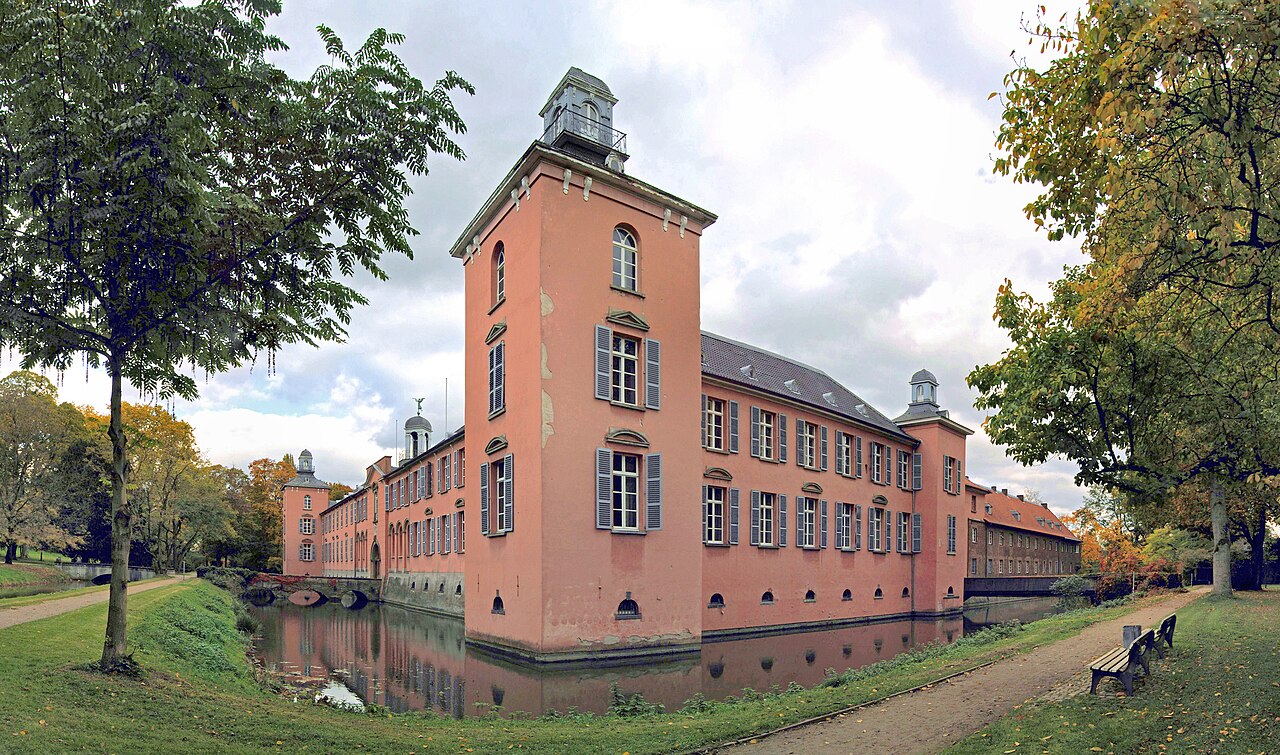
Schloss Jägerhof is a notable post-Renaissance palace located in Düsseldorf, Germany. Constructed between 1748 and 1772 under the commission of Elector Carl Theodor, the palace reflects the architectural vision of Johann Joseph Couven, a prominent architect from Aachen. The building originally served as a hunting lodge and summer residence for the Elector, embodying the elegance and refinement of the 18th century aristocratic lifestyle.
Architectural design and construction
The design of Schloss Jägerhof is characteristic of the post-Renaissance period, blending elements of late Baroque and early Classicism. The palace features a symmetrical layout with a central main building flanked by two wings, creating an intimate courtyard. The façades are adorned with restrained decorative elements typical of the era, emphasizing harmony and proportion rather than excessive ornamentation.
Architect Johann Joseph Couven’s work on the palace includes carefully crafted window frames, pilasters, and a gently sloping roofline that complements the urban setting of Düsseldorf. The use of high-quality materials and attention to detail in the stonework and interior finishes highlight the craftsmanship of the period.
Historical events and restoration
In 1796, during the upheavals of the French Revolutionary Wars, Schloss Jägerhof was sacked by revolutionary forces, leaving it severely damaged and uninhabitable. The palace remained in a state of disrepair until 1811, when it was restored in preparation for the visit of Napoleon Bonaparte to Düsseldorf. This restoration was carried out according to plans by Adolf von Vagedes, a notable architect and urban planner, who adapted the palace to the tastes and requirements of the early 19th century.
The restoration not only repaired the war damages but also updated the interiors and structural elements, allowing the building to regain its former stature as a significant cultural landmark in the city.
Schloss Jägerhof as a cultural museum
Today, Schloss Jägerhof serves as a cultural-historical museum dedicated to the life and work of the Classical German writer Johann Wolfgang von Goethe (1749-1832). Opened to the public in 1956, the museum houses around 800 original artefacts related to Goethe’s literary achievements and personal history.
The museum’s collection includes manuscripts, letters, first editions, and personal items that provide insight into Goethe’s influence on German literature and culture. The palace’s historic rooms have been adapted to display these artefacts in a manner that respects the building’s architectural heritage while offering an engaging visitor experience.
Exhibitions and visitor experience
Visitors to Schloss Jägerhof can explore a variety of exhibitions that highlight different aspects of Goethe’s life, including his literary works, scientific studies, and correspondence with contemporaries. The museum also hosts temporary exhibitions and cultural events that contribute to the ongoing appreciation of Goethe’s legacy.
The palace’s location in the heart of Düsseldorf makes it accessible for tourists and locals alike, offering a unique combination of architectural beauty and literary history. The surrounding area features other historic sites and cultural institutions, enhancing the overall visitor experience.
Architectural significance and preservation
Schloss Jägerhof is an important example of post-Renaissance architecture in the Rhineland region. Its preservation and adaptive reuse as a museum demonstrate the value placed on maintaining cultural heritage while promoting education and tourism.
The building’s condition is well preserved, thanks to ongoing conservation efforts that protect its structural integrity and aesthetic qualities. The careful balance between maintaining historical authenticity and accommodating modern museum functions is a key aspect of its continued relevance.
Architectural features
- Symmetrical layout with a central building and two wings forming a courtyard
- Late Baroque and early Classical decorative elements emphasizing proportion and harmony
- High-quality stonework and detailed window and door frames
- Gently sloping roofline complementing the urban environment
- Interior spaces adapted for museum use while preserving historical character
Visiting information
Schloss Jägerhof is open to the public, offering guided tours and educational programs. Visitors can learn about both the architectural history of the palace and the literary heritage of Goethe. The museum’s central location in Düsseldorf makes it an accessible destination for cultural tourism.
Frequently asked questions (FAQ)
- How do I get to Schloss Jägerhof?
- Schloss Jägerhof is located in Düsseldorf, Germany, and is easily accessible via public transportation. You can take the U-Bahn or bus to the nearest station, which is just a short walk from the castle.
- What is the historical significance of Schloss Jägerhof?
- Schloss Jägerhof was built in the late 18th century as a hunting lodge for the Electors of Palatinate. It reflects the architectural style of the period and has served various purposes, including a museum, which showcases its rich history.
- When was Schloss Jägerhof built?
- The construction of Schloss Jägerhof began in 1763 and was completed in 1770. It was designed by the architect Johann Peter Cremer and is a fine example of Rococo architecture.
- Can I take a guided tour of Schloss Jägerhof?
- Yes, guided tours are available at Schloss Jägerhof, providing an in-depth look at its history and architecture. It is advisable to check the schedule and book in advance, especially during peak tourist seasons.
- Why is the architecture of Schloss Jägerhof notable?
- The architecture of Schloss Jägerhof is notable for its elegant Rococo style, characterized by intricate detailing and harmonious proportions. The castle's design and its picturesque setting make it a significant landmark in Düsseldorf.
- Is it possible to visit Schloss Jägerhof year-round?
- Yes, Schloss Jägerhof is open to visitors year-round, but it's recommended to check the specific opening hours as they may vary by season. Always verify the schedule before planning your visit to ensure access.
- What are the ticket prices for Schloss Jägerhof?
- Ticket prices for Schloss Jägerhof are generally affordable, with discounts available for students and seniors. Check the official website for the most current pricing and any special offers that may be available.
- When is the best time to visit Schloss Jägerhof?
- The best time to visit Schloss Jägerhof is during the spring and early autumn when the weather is pleasant, allowing for a more enjoyable experience. Additionally, these seasons often feature fewer crowds compared to summer.
- Are there any nearby attractions to Schloss Jägerhof?
- Yes, there are several nearby attractions, including the Hofgarten park and the Kunstsammlung Nordrhein-Westfalen art museum. These sites complement a visit to Schloss Jägerhof and offer additional cultural experiences.
Information
Loading map...
Visitor reviews
No reviews yet. Been here? Write the first review and help other travelers!
Write the first reviewVisited this castle? Share your experience
Your review helps other travelers and adds first-hand knowledge to our encyclopedia.