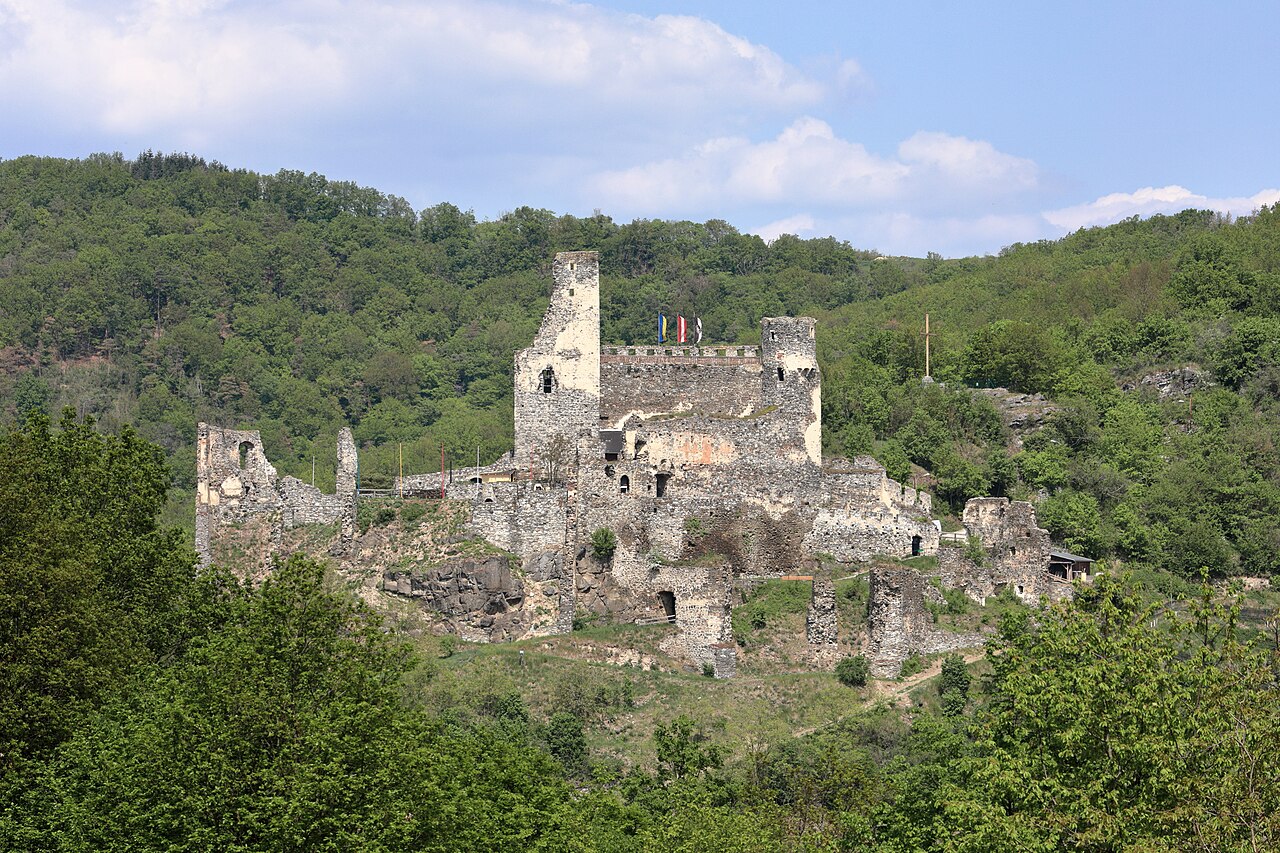
Schloss Gobelsburg
Schloss Gobelsburg stands as a remarkable example of a hill castle in the Austrian region of Lower Austria, specifically in the municipality of Langenlois. Established originally in 1074 by Azzo von Gobatsburg, an early member of the noble Kuenringer family, the castle's origins are deeply rooted in medieval fortification traditions. Its initial purpose was that of a fortified stronghold, strategically located to oversee and control the surrounding lands and vineyards. This early establishment marks the first documented mention of the estate in legal and family records, highlighting its longstanding historical significance.
Throughout the 12th century, Schloss Gobelsburg's history became closely linked with the religious Zwettl Abbey, founded in 1138 by Hadmar I. von Kuenring, Azzo's grandson. The abbey was granted vineyards in Gobelsburg, underscoring the intertwined nature of noble and ecclesiastical interests in the region. For over two centuries, the castle remained under the ownership of the Kuenringer lineage, serving both defensive and residential functions before passing to various noble families after 1314.
Architectural evolution from medieval fortress to renaissance residence
In the 16th century, Schloss Gobelsburg underwent a significant transformation reflecting broader shifts in castle architecture and function across Europe. The original military fortress was converted into a four-winged Renaissance residential complex. This style emphasized symmetry, proportion, and the incorporation of classical elements, marking a departure from purely defensive designs. The castle's layout was adapted to provide comfortable living quarters, administrative spaces, and aesthetic appeal, embodying the Renaissance ideal of blending utility with beauty.
Baroque remodeling and hunting lodge features
The castle experienced another major phase of renovation beginning in 1725 under the direction of Otto Achaz Ehrenreich Graf Hohenfeld. Architect Joseph Munggenast was commissioned to remodel Schloss Gobelsburg in the Baroque style, a movement characterized by dramatic forms, rich decoration, and grandeur. This remodeling included elaborate stucco work, ornate ceiling paintings, and tiled stoves decorated with hunting motifs, reflecting the castle's use as a hunting lodge during this period. These artistic details provide valuable insight into the lifestyle and cultural practices of the early 18th-century aristocracy.
Historical transitions and ecclesiastical ownership
Financial difficulties led to a pivotal change in ownership when Heinrich von Hohenfeld, son of Otto Achaz Ehrenreich, sold the heavily indebted estate to Zwettl Abbey in 1740. By 1746, Schloss Gobelsburg had become an administrative center for the abbey, cementing its role within the ecclesiastical management of the region. This transition marked a shift from noble residence to monastic property, linking the castle's fate to the religious and economic activities of the abbey.
20th-century challenges and restoration efforts
Following the upheavals of World War I, Schloss Gobelsburg was repurposed as a vocational training home. However, the castle gradually fell into disrepair, a state worsened during World War II when French prisoners of war were housed within its walls. Their presence resulted in significant damage to the interior, including the destruction of floors and original furnishings, reflecting a period of neglect and hardship.
Restoration efforts commenced in 1958 under the guidance of Father Bertrand Baumann and concluded by 1966. These renovations aimed to preserve the castle's historical character and structural integrity, addressing the war-inflicted damage and years of neglect. After restoration, Schloss Gobelsburg briefly served as a satellite facility for the Austrian Museum of Folk Art, showcasing a collection of majolica ceramics, which highlighted its cultural significance beyond architecture.
Current use and cultural significance
Since 1996, the castle and its vineyards have been leased by the abbey for use as a winery, maintaining a continuous link between the estate and the region's viticultural tradition. Parts of the building have been converted into residential apartments, ensuring ongoing habitation and preservation. Schloss Gobelsburg is recognized as a protected historic monument under heritage conservation laws, situated amidst historic vineyards that were historically part of its estate.
Architectural features and artistic elements
The castle's four-winged layout reflects its architectural evolution from a medieval fortress to a Renaissance residence enhanced with Baroque artistry. The core Renaissance structure remains evident, while most visible exterior and interior details date to the early 18th-century Baroque renovations. The castle chapel contains notable artworks by the painter Kremser Schmidt, adding to the cultural value of the site.
Decorative elements such as stucco reliefs, ceiling paintings, and tiled stoves adorned with hunting motifs underscore the building's historical use as a hunting lodge. Despite wartime damage, these artistic features have been preserved or restored, contributing to the castle's unique character and appeal.
Schloss Gobelsburg stands as a testament to the layered history of Austrian castles, embodying medieval origins, Renaissance transformation, Baroque refinement, and monastic stewardship. Its enduring connection to viticulture and cultural heritage makes it a significant landmark in the Wachau region and a valuable site for visitors interested in history, architecture, and wine culture.
Frequently asked questions (FAQ)
- How do I visit Schloss Gobelsburg and what are the opening hours?
- Schloss Gobelsburg is privately leased and primarily functions as a winery and residential property, so public access is limited. Visitors interested in tours or tastings should contact the winery directly to arrange visits. Opening hours vary seasonally and by event.
- What is the historical significance of Schloss Gobelsburg?
- Schloss Gobelsburg is significant for its origins dating back to 1074 and its evolution from a medieval fortress to a Renaissance residence with Baroque enhancements. Its connection to the Kuenringer family and Zwettl Abbey highlights its role in regional noble and ecclesiastical history.
- Can I explore the architectural styles present at Schloss Gobelsburg?
- Yes, Schloss Gobelsburg showcases a blend of architectural styles, including medieval fortifications, Renaissance four-winged residential design, and early 18th-century Baroque renovations by Joseph Munggenast. The castle chapel features artwork by Kremser Schmidt.
- Is Schloss Gobelsburg accessible for visitors with mobility challenges?
- Due to the castle's historic structure and partial residential use, accessibility may be limited. Visitors with mobility challenges should inquire in advance to ensure accommodations can be made during visits or events.
- When is the best time to visit Schloss Gobelsburg?
- The best time to visit Schloss Gobelsburg is during the spring and autumn months when the vineyards are particularly scenic and wine-related activities are in full swing. Seasonal events at the winery may also offer unique experiences.
Information
Sources & official resources
Verify the information above using these authoritative references.
Loading map...
Visitor reviews
No reviews yet. Been here? Write the first review and help other travelers!
Write the first reviewVisited this castle? Share your experience
Your review helps other travelers and adds first-hand knowledge to our encyclopedia.