Schloss Bärnegg
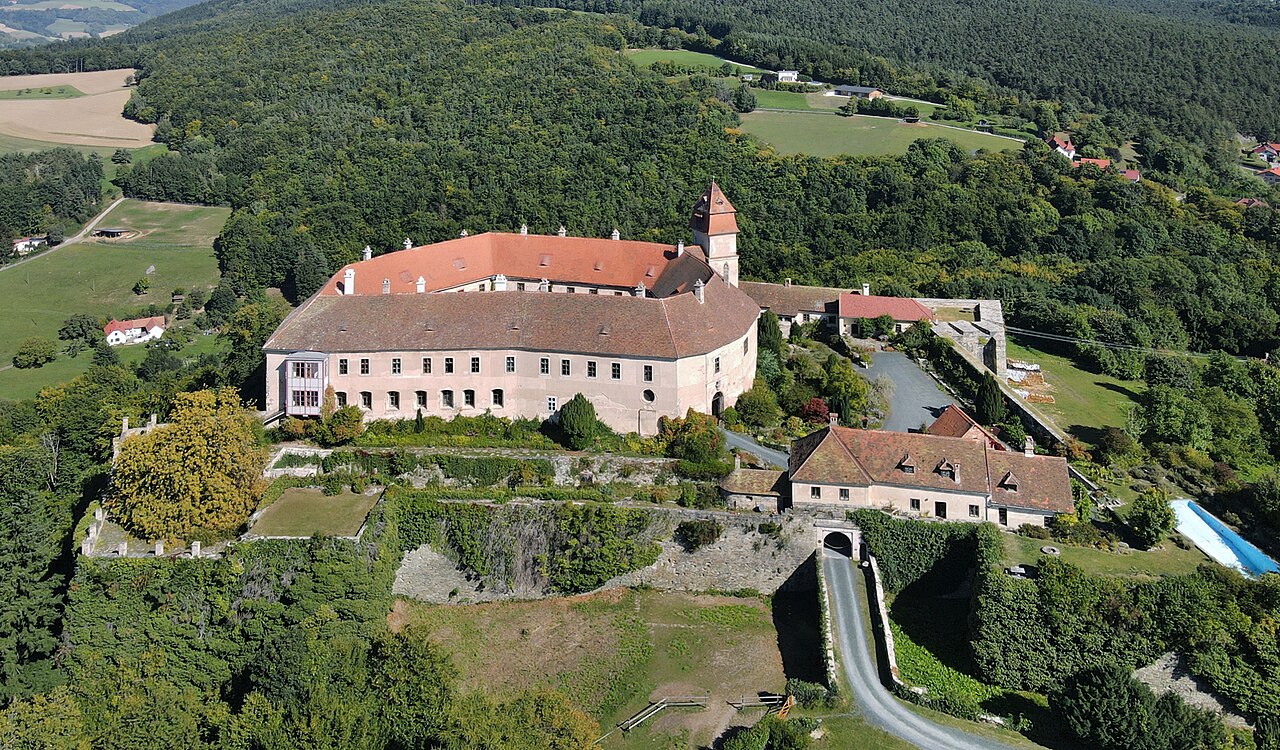
Schloss Bärnegg stands as a notable example of a late medieval hill castle located in the municipality of Schäffern, Austria. Constructed originally in the 14th century, this castle occupies a commanding hilltop at approximately 604 meters above sea level, a strategic position typical for defensive structures of its era. The castle's elevated site provided extensive visibility over the surrounding landscape, which transitions from rolling hills to flatter agricultural land, underscoring its role in regional defense and control.
Historical background and ownership
The earliest written mention of Schloss Bärnegg dates to 1312, confirming its establishment as a fortified stronghold by the early 14th century. Over the centuries, the castle passed through the hands of several distinguished noble families, including the Perner, Teuffenbach, Reichenberg, and Rindsmaul lineages. Each family influenced the castle's evolution, adapting its functions to meet changing residential and military needs.
During the 17th century, Schloss Bärnegg underwent significant architectural modifications. Notably, the castle's courtyard was expanded and surrounded by arcades—covered walkways with arches—that enhanced both its aesthetic appeal and practical use as a sheltered communal space. This transformation reflected broader trends in castle design, where comfort and status increasingly complemented defensive considerations.
In 1703, a chapel was constructed within the castle complex, indicating the integration of religious functions alongside the castle's residential and military roles. This addition marked a significant phase in the castle's history, emphasizing its importance as a local center of faith as well as fortification.
Architectural features and layout
The remains of Schloss Bärnegg reveal a typical hill castle layout designed to exploit the natural topography for defense. The castle's most prominent surviving feature is its arcaded courtyard, which dates to before the 17th century but was notably enlarged during that century. The courtyard's arcades consist of a series of arches supported by columns, creating a covered walkway that would have served both practical and social functions.
The chapel built in the early 18th century remains partially standing, with foundations and walls that illustrate its original placement within the castle grounds. This religious structure adds a layer of cultural significance to the site, highlighting the dual military and spiritual roles castles often fulfilled.
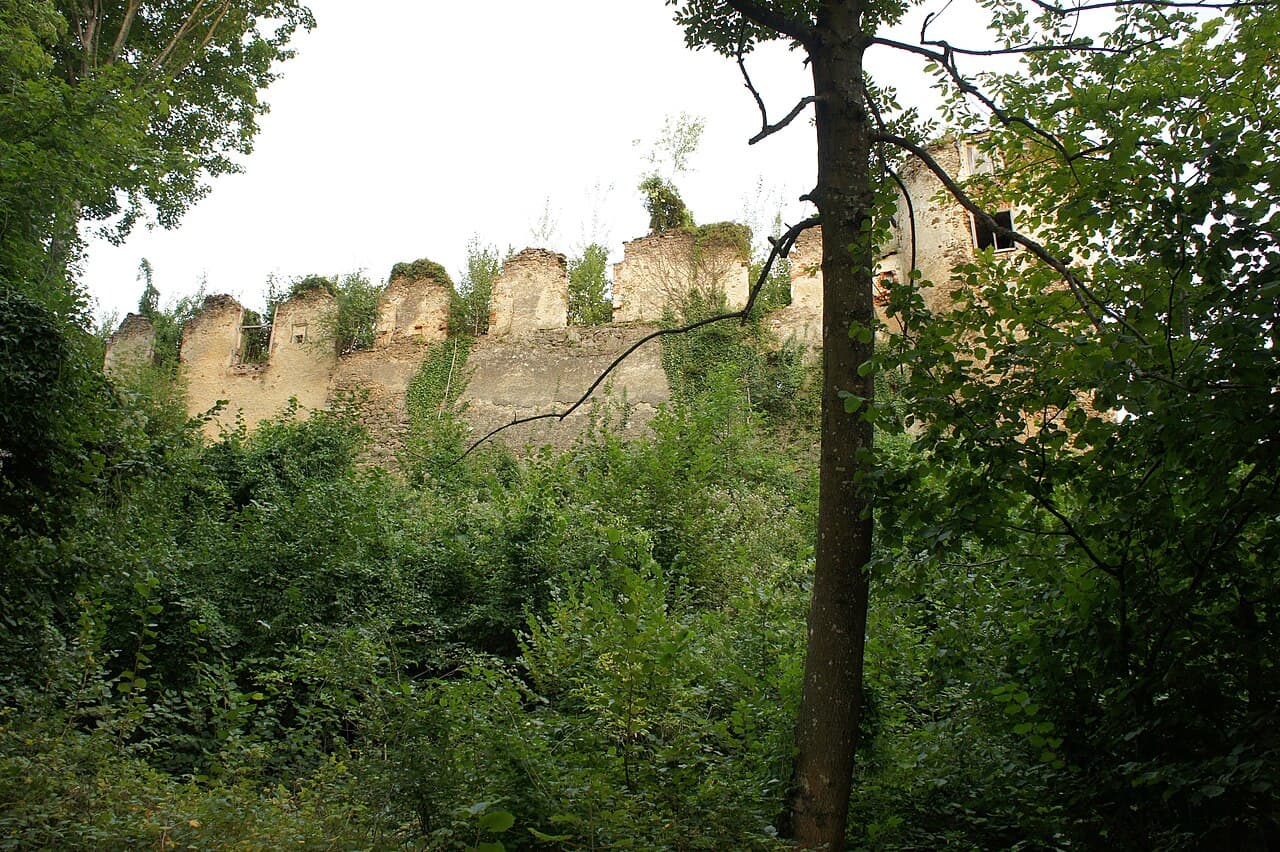
Other structural elements typical of hill castles, such as defensive walls, gatehouses, and towers, are now largely in ruin, but their foundations and partial walls provide insight into the castle's comprehensive defensive system.
Decline and current condition
Despite its long history of occupation and use, Schloss Bärnegg fell into disrepair in recent decades. The castle is now classified as ruins, with many of its original features partially preserved but showing significant wear due to lack of maintenance. The site is protected as a cultural heritage monument, ensuring the preservation of its historical and architectural value for future generations.
Visitors to the site can explore the remains of the arcaded courtyard and the chapel's foundations, gaining a tangible sense of the castle's layered history. The surrounding landscape, combining natural vegetation and farmland, offers a glimpse into the castle's historical context within a rural working environment.
Cultural significance and heritage protection
Schloss Bärnegg is recognized as an important cultural monument in Austria, representing the architectural and historical development of hill castles in the region. Its preservation as a ruin allows scholars and visitors alike to study the evolution of medieval fortifications and their adaptation to residential and religious uses over several centuries.
The castle's arcaded courtyard and chapel remain key features that illustrate the blending of military, residential, and spiritual functions typical of many European castles transitioning from the medieval period into the early modern era.
Efforts to maintain and protect Schloss Bärnegg contribute to the broader understanding of Austria's medieval heritage and the role of hill castles in shaping regional history.
Frequently asked questions (FAQ)
- How do I get to Schloss Bärnegg?
- Schloss Bärnegg is located near the town of Schäffern in Styria, Austria. Visitors can reach the site by car or local transport followed by a short hike up the hill where the ruins stand.
- What remains can I see at Schloss Bärnegg?
- Visitors can explore the ruins of the arcaded courtyard and the foundations of the early 18th-century chapel. Remnants of defensive walls and other structures are also visible, illustrating the castle's historic layout.
- When was Schloss Bärnegg built?
- The castle was originally constructed in the 14th century, with the earliest written record dating to 1312. It underwent significant modifications in the 17th and early 18th centuries.
- Is Schloss Bärnegg accessible to the public?
- Yes, the ruins are accessible to the public as a protected cultural heritage site. However, visitors should be prepared for uneven terrain and limited facilities on site.
- What architectural style is Schloss Bärnegg?
- Schloss Bärnegg reflects late medieval hill castle architecture with later additions such as the 17th-century arcaded courtyard and the early 18th-century chapel, blending defensive and residential elements.
Photo gallery

Information
Current owner
Cultural heritage authority
Loading map...
Visitor reviews
No reviews yet. Been here? Write the first review and help other travelers!
Write the first reviewVisited this castle? Share your experience
Your review helps other travelers and adds first-hand knowledge to our encyclopedia.