Bernstein Castle
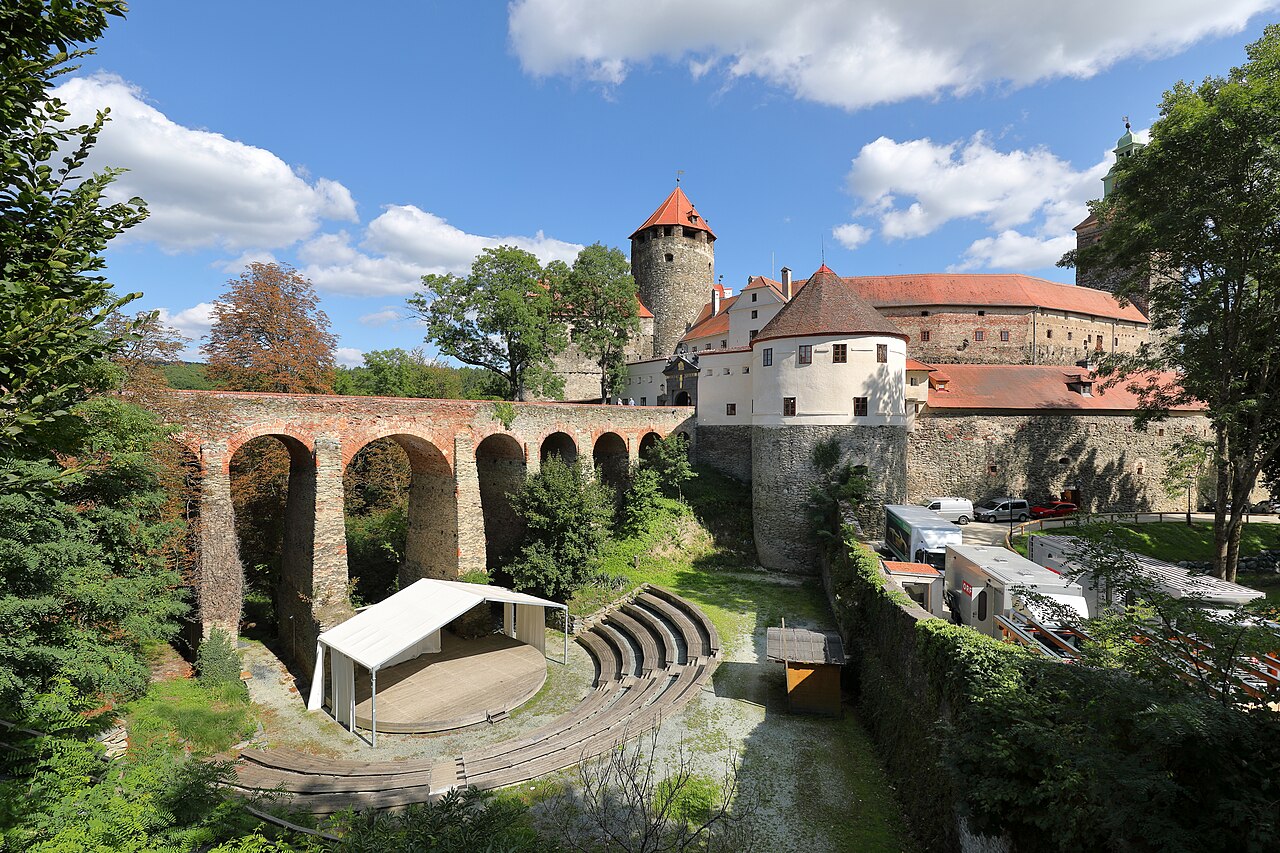
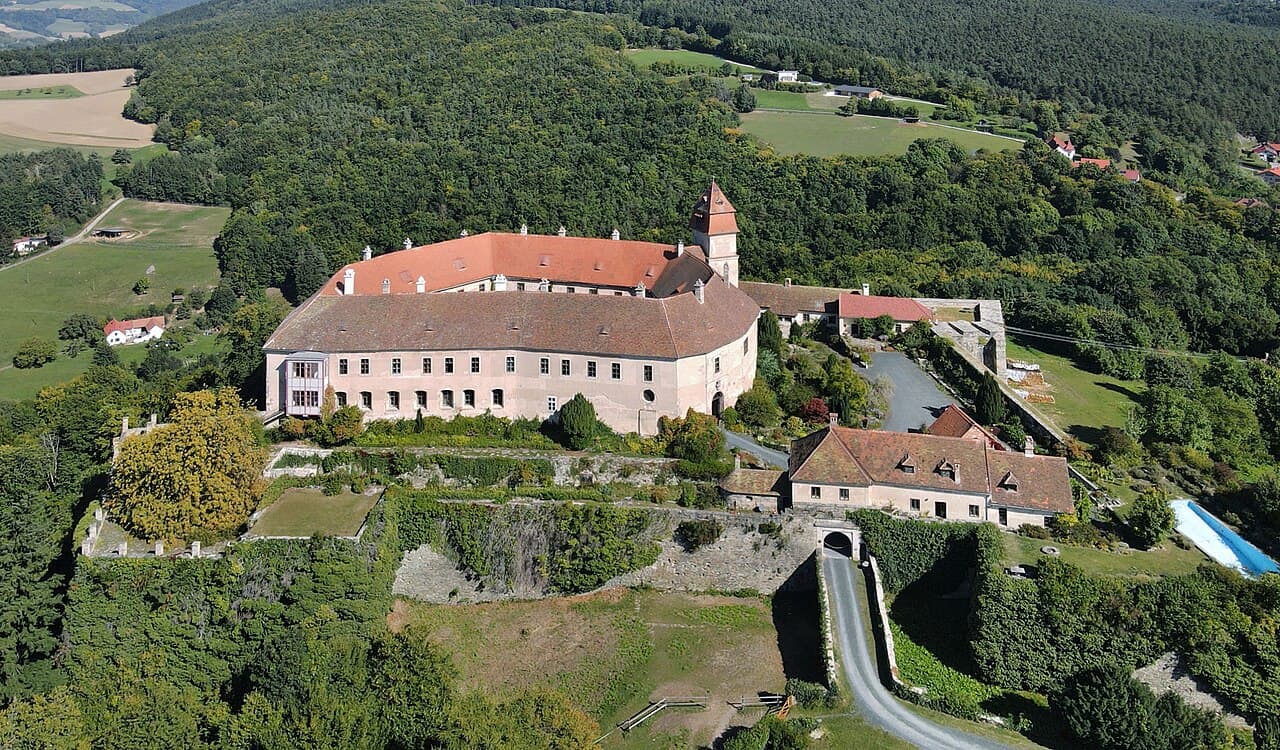
Bernstein Castle is a striking medieval fortress located in the municipality of Bernstein in Austria's Burgenland region. Perched atop a hill at 615 meters above sea level, it holds the distinction of being the highest castle in Burgenland. The castle's origins date back to the 12th century, with historical records first mentioning it in the early 13th century. However, archaeological and toponymic evidence suggests the site hosted an earlier fortification, as indicated by the nearby village of Grodnau, whose old Slavic name translates to "the village belonging to the castle." This connection points to the strategic importance of the location since early medieval times.
Throughout its long history, Bernstein Castle has been a significant stronghold at the crossroads of Central European powers, primarily under the Kingdom of Hungary. The surrounding region was part of the Archbishopric of Salzburg in 860 AD, with early settlements such as Rettenbach established near the castle hill. By 1199, the fortress had come under Hungarian control, marking the beginning of a complex history of ownership involving prominent rulers and noble families.
Medieval origins and shifting sovereignties
The castle's early history is marked by a series of transfers among powerful figures. Initially controlled by Hungarian kings, it was briefly under the rule of Duke Frederick II of Austria in the early 13th century, before being reconquered by King Béla IV of Hungary in 1236. Subsequently, in 1260, the castle was granted to Count Heinrich II of Güssing, a notable nobleman of the region.
In 1336, after the defeat of local aristocrats, King Charles Robert of Anjou incorporated Bernstein Castle into the Hungarian crown lands. Later, in 1388, Queen Maria of Anjou bestowed the castle upon the influential Kanizsai family, who initiated significant rebuilding efforts starting in 1389. The fortress briefly returned to royal possession under King Matthias Corvinus in 1482, before being pledged by Emperor Frederick III to Hans von Königsberg in 1487. These shifts reflect the castle's strategic importance at the borderlands between Austria and Hungary.
Defense against ottoman sieges and architectural evolution
Bernstein Castle is renowned for withstanding two major Ottoman sieges during the reign of Sultan Suleiman the Magnificent in 1529 and 1532. These attacks underscored the need for enhanced fortifications, leading to the construction of a ring of bastions around the castle complex. Designed by the Italian architect Francesco de Pozzo, these bastions were built to provide refuge for the local population and to strengthen the castle's defenses against artillery and prolonged assaults.
In 1604, the castle endured another prolonged siege by a coalition force of Turks, Hungarians, and Tatars led by the rebel leader István Bocskai. Despite the intensity of the attack, Bernstein remained unconquered, demonstrating its formidable defensive capabilities.
The castle suffered significant damage in 1617 when an explosion in the powder magazine destroyed parts of the interior. Following this event, Ludwig Königsberg ordered a comprehensive reconstruction of the castle's inner sections in the Baroque style. This renovation involved the removal of the original Gothic keep and towers, reflecting changing architectural tastes and military needs. The knights' hall from this period remains a highlight, featuring an elaborate stucco ceiling that exemplifies Baroque artistry within a medieval fortress.
Architectural features and preserved elements
The castle's layout is characteristic of a hill castle, with a well-defined defensive complex including an inner gate and an outer courtyard. The bastion ring encircling the fortress is a notable example of early modern military architecture adapted to withstand cannon fire and siege warfare. These bastions, combined with thick stone walls and strategic positioning, underscore the castle's role as a refuge and military bastion.
Inside, visitors can explore unique historical spaces such as a 16th-century alchemists' kitchen, which hints at the presence of early scientific or mystical practices within the castle. Additionally, a preserved torture chamber offers insight into the judicial and punitive measures employed during the castle's operational period.
Ownership transitions and modern use
Following its long tenure under the Königsberg family, ownership of Bernstein Castle passed to Count Ádám Batthyány in 1644. The Batthyány family controlled the fortress until 1864, when Gustav Batthyány sold it to his steward Edward O’Egan. Shortly thereafter, the castle was acquired by Eduard von Almásy, whose descendants continue to own the property.
In the mid-20th century, part of the castle was converted into a hotel and restaurant, blending historical preservation with modern hospitality. The castle remains privately owned but is accessible to visitors by prior arrangement, allowing guests to experience its rich history and architectural grandeur firsthand.
Cultural significance and legends
Bernstein Castle is steeped in local folklore, most famously the legend of the "White Lady". This ghostly figure is said to be the restless spirit of Giovanna de’ Frescobaldi, wife of Lorentz von Ujlak, whose tragic love story dates back to the reign of Matthias Corvinus. The tale has contributed to the castle's mystique and cultural heritage, attracting visitors intrigued by its haunted reputation.
The castle's scenic location overlooking the Tauchental valley and its well-preserved fortifications have also made it a popular site for filmmakers and cultural events, further cementing its place in Austria's historical landscape.
Frequently asked questions (FAQ)
- How do I get to Bernstein Castle?
- Bernstein Castle is located in Bernstein im Burgenland, Austria, and is easily accessible by car or public transport. The nearest train station is in Oberwart, from where you can take a local bus or taxi to reach the castle.
- What is the historical significance of Bernstein Castle?
- Bernstein Castle, dating back to the 13th century, served as a strategic fortress and residence for various noble families. It played a vital role in the region's history, witnessing numerous battles and serving as a symbol of power and prestige in Burgenland.
- When was Bernstein Castle built?
- Construction of Bernstein Castle began in the early 13th century, specifically around the year 1200. Over the centuries, it has undergone several renovations and expansions, reflecting various architectural styles.
- Can I visit Bernstein Castle year-round?
- Yes, Bernstein Castle is open to visitors throughout the year, although specific opening hours may vary by season. It's advisable to check the official website for the most accurate information regarding visiting times and any seasonal events.
- Why is Bernstein Castle a popular tourist destination?
- Bernstein Castle attracts visitors due to its rich history, stunning architecture, and picturesque views of the surrounding countryside. Additionally, the castle hosts various cultural events, making it a vibrant part of the local community.
- Is it possible to take guided tours of Bernstein Castle?
- Yes, guided tours are available at Bernstein Castle, providing visitors with in-depth knowledge about its history and architecture. These tours are conducted in multiple languages, ensuring that all guests can fully appreciate the castle's significance.
- What are the ticket prices for visiting Bernstein Castle?
- Ticket prices for Bernstein Castle are generally affordable, with discounts available for students, seniors, and children. It's recommended to check the official website for current pricing and any special offers that may be available during your visit.
- What are the best times to visit Bernstein Castle?
- The best times to visit Bernstein Castle are during the spring and early autumn months when the weather is pleasant, and the landscape is particularly beautiful. Visiting during weekdays also helps avoid large crowds, allowing for a more enjoyable experience.
- Are there any nearby attractions to explore after visiting Bernstein Castle?
- Yes, there are several nearby attractions, including the charming town of Oberwart and the scenic landscapes of the Burgenland region. Additionally, visitors can explore other historical sites and enjoy local wineries that showcase the area’s rich culture.
Photo gallery

Information
Website
Visit websiteSources & official resources
Verify the information above using these authoritative references.
Loading map...
Visitor reviews
No reviews yet. Been here? Write the first review and help other travelers!
Write the first reviewVisited this castle? Share your experience
Your review helps other travelers and adds first-hand knowledge to our encyclopedia.