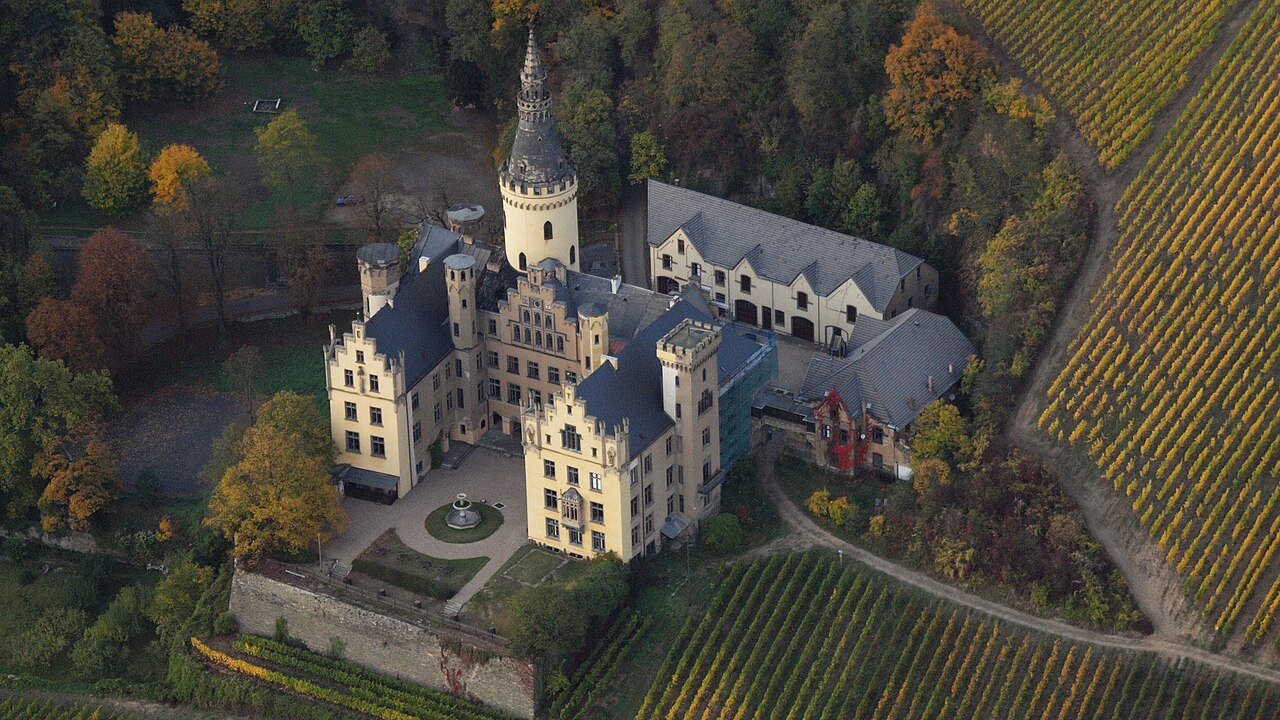
Schloss Ahrenthal
Schloss Ahrenthal is a historic castle located in the Rheinland-Pfalz region of Germany. Originally constructed in 1728, the castle was commissioned by Count Franck Caspar Wilhelm von Hillesheim and designed by the architect Johann Adam Breunig. It was initially known as the 'farmhouse' of Arendhal, reflecting its primary function as an agricultural estate rather than a traditional fortress. The design features a distinctive U-shaped courtyard open to the castle, complemented by a carefully planned castle park that enhanced the estate's aesthetic and functional appeal.
Early construction and architectural design
The original construction began under Count Franck Caspar Wilhelm von Hillesheim, who envisioned a residence that combined agricultural utility with noble residence qualities. The baroque architectural style is evident in the layout and ornamental details, characteristic of the post-renaissance period in which the castle was built. The castle's structure was designed to integrate seamlessly with the surrounding landscape, utilizing local resources such as timber from the nearby Vehnerwald forest. The use of wood from this area is notable, and traces of excavation related to this timber harvesting remain visible today.
Ownership transitions and expansions
Following the death of Count Franck Caspar Wilhelm von Hillesheim, the construction and development of the castle were left incomplete. In 1785, the estate passed to one of the count's sisters after the death of Wilhelm Ernst Gottfried von Hillesheim, who left no heirs. Through her marriage to Imperial Count Ambrosius Franz von Spee, the castle became part of the von Spee family holdings. Since 1804, the castle has remained under the ownership of the von Spee lineage.
Under the direction of Count Wilhelm von Spee, significant construction took place based on the designs of two Düsseldorf architects, Bernard Tüschaus and Leo von Abbema. These renovations focused on enhancing the castle’s structural integrity and adapting it to the needs of the time, while maintaining the agricultural character of the estate.
Fire damage and 20th-century renovations
In the 1920s, a devastating fire destroyed the entire farmhouse section of the castle. The subsequent reconstruction prioritized the interior spaces over the exterior architectural form, leading to changes in the roof structures that diverged from the original designs. This reconstruction phase resulted in a blend of old and new architectural elements, reflecting the practical needs of the estate at the time rather than historical restoration.
Modern use and preservation
Despite its agricultural origins, Schloss Ahrenthal has evolved to accommodate commercial and educational uses. Since the 1990s, the estate has expanded its functions beyond agriculture, adapting buildings and grounds for various commercial purposes. Since 2011, the castle has served as a venue for seminars, combining its historic ambiance with modern utility.
The castle remains a significant example of a post-renaissance baroque farmhouse castle in the Rheinland-Pfalz region. Its history reflects the shifts in ownership, architectural trends, and functional adaptations typical of rural noble estates in Germany. The estate’s connection to the von Spee family and its ongoing use highlight the continuity of heritage and adaptation over nearly three centuries.
Frequently asked questions (FAQ)
- What is the historical significance of Schloss Ahrenthal?
- Schloss Ahrenthal is significant as a baroque farmhouse castle built in 1728, reflecting agricultural noble estates of post-renaissance Germany and continuous ownership by the von Spee family.
- Can I visit Schloss Ahrenthal for tours or events?
- Since 2011, Schloss Ahrenthal has been used for seminars and commercial purposes. Visitors should check locally for public access or event opportunities.
- What architectural style is Schloss Ahrenthal built in?
- The castle exemplifies the baroque architectural style typical of the post-renaissance period, with a U-shaped courtyard and designed castle park.
- When was Schloss Ahrenthal built and by whom?
- Construction began in 1728 under Count Franck Caspar Wilhelm von Hillesheim with architect Johann Adam Breunig overseeing the design.
- What happened to Schloss Ahrenthal in the 1920s?
- A fire in the 1920s destroyed the farmhouse section, leading to interior-focused reconstruction that altered the original roof structures.
Information
Architect
Johann Adam Breunig
Current owner
von Spee family
Loading map...
Visitor reviews
No reviews yet. Been here? Write the first review and help other travelers!
Write the first reviewVisited this castle? Share your experience
Your review helps other travelers and adds first-hand knowledge to our encyclopedia.